


Unsheltered Homelessness and Health: A Literature Review
- PMID: 37789936
- PMCID: PMC10546518
- DOI: 10.1016/j.focus.2022.100043
Unsheltered Homelessness and Health: A Literature Review
Abstract
Context: In recent years, cities across the world have seen widespread growth in unsheltered homelessness, in which a person sleeps in a place not meant for human habitation such as cars, parks, sidewalks, and abandoned buildings. It is widely understood that people experiencing homelessness have poorer health outcomes than the general population. Less is known about the health of people who are unsheltered, yet they may be exposed to greater health risks than their sheltered counterparts. The purpose of this literature review is to evaluate and summarize the evidence on unsheltered homelessness and health.
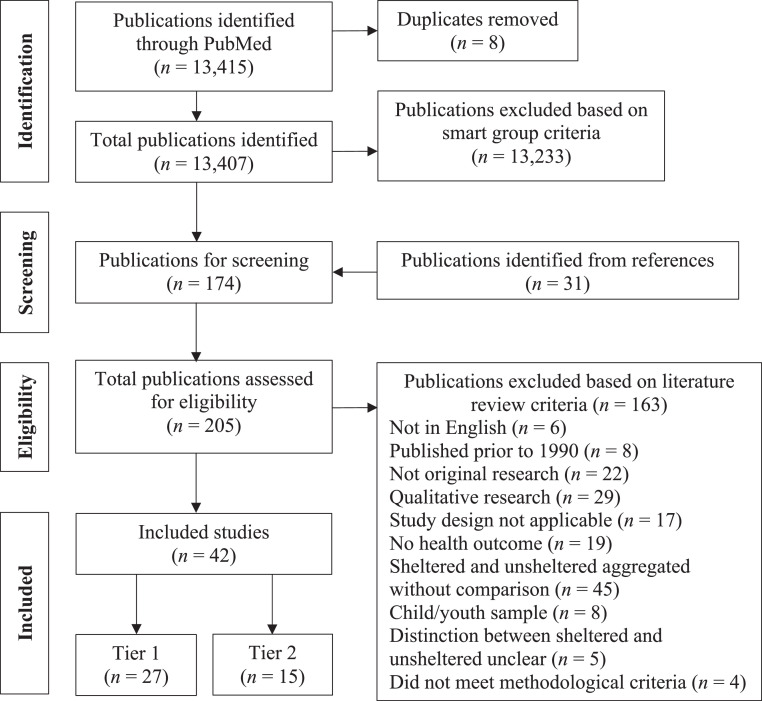
Evidence acquisition: A literature search was conducted using PubMed to identify publications on unsheltered homelessness and health. A total of 42 studies were included for review.
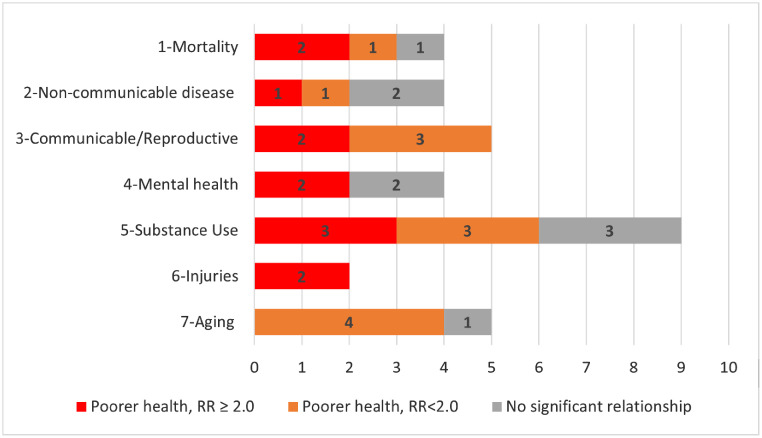
Evidence synthesis: Unsheltered populations experience higher rates of chronic disease, serious mental illness, and substance abuse than sheltered populations. Unsheltered homelessness is strongly associated with chronic homelessness that exacerbates serious mental illness and substance use, which is often co-occurring. Despite having large unmet health needs, unsheltered populations have lower healthcare utilization and often lack health insurance.
Conclusions: Evaluating the impact of shelter status on health outcomes has important implications for the allocation of housing and health services. Longitudinal studies are needed to examine the relationship between the duration of sheltered and unsheltered homelessness and health outcomes and explore the mediating mechanisms that lead to poor health among unsheltered populations. Despite these limitations, our results also suggest an urgent need to address the unique and severe challenges facing unsheltered populations and the need for intervention approaches that are sensitive to these unique disease burdens.
Keywords: Homelessness; health; social determinants of health; unsheltered homelessness.
© 2022 The Author(s).
Figures
References
-
- Henry M, de Sousa T, Roddey C, Gayen S, Bednar T. The 2020 Annual Homeless Assessment Report (AHAR) to Congress. U.S. Department of Housing and Urban Development. https://www.huduser.gov/portal/sites/default/files/pdf/2020-AHAR-Part-1.pdf. Published January 2021. Accessed December 2021.
