. 2023 Nov 1;325(5):E624-E637.
doi: 10.1152/ajpendo.00181.2023. Epub 2023 Oct 4.

GCN2 is required to maintain core body temperature in mice during acute cold

Affiliations

GCN2 is required to maintain core body temperature in mice during acute cold

Jordan L Levy et al. Am J Physiol Endocrinol Metab. .

Abstract

Nonshivering thermogenesis in rodents requires macronutrients to fuel the generation of heat during hypothermic conditions. In this study, we examined the role of the nutrient sensing kinase, general control nonderepressible 2 (GCN2) in directing adaptive thermogenesis during acute cold exposure in mice. We hypothesized that GCN2 is required for adaptation to acute cold stress via activation of the integrated stress response (ISR) resulting in liver production of FGF21 and increased amino acid transport to support nonshivering thermogenesis. In alignment with our hypothesis, female and male mice lacking GCN2 failed to adequately increase energy expenditure and veered into torpor. Mice administered a small molecule inhibitor of GCN2 were also profoundly intolerant to acute cold stress. Gcn2 deletion also impeded liver-derived FGF21 but in males only. Within the brown adipose tissue (BAT), acute cold exposure increased ISR activation and its transcriptional execution in males and females. RNA sequencing in BAT identified transcripts that encode actomyosin mechanics and transmembrane transport as requiring GCN2 during cold exposure. These transcripts included class II myosin heavy chain and amino acid transporters, critical for maximal thermogenesis during cold stress. Importantly, Gcn2 deletion corresponded with higher circulating amino acids and lower intracellular amino acids in the BAT during cold stress. In conclusion, we identify a sex-independent role for GCN2 activation to support adaptive thermogenesis via uptake of amino acids into brown adipose.NEW & NOTEWORTHY This paper details the discovery that GCN2 activation is required in both male and female mice to maintain core body temperature during acute cold exposure. The results point to a novel role for GCN2 in supporting adaptive thermogenesis via amino acid transport and actomyosin mechanics in brown adipose tissue.

Keywords: activating transcription factor 4 (ATF4); energy expenditure; eukaryotic initiation factor 2 (eIF2); hypothermia; mechanistic target of rapamycin complex 1 (mTORC1).


Conflict of interest statement

R.C.W. is a member of the advisory board of HiberCell, Inc. K.A.S. consults for HiberCell, Inc. and Aclaris Therapeutics and receives research support from HiberCell, Inc. T.G.A. consults for HiberCell, Inc. None of the other authors has any conflicts of interest, financial or otherwise, to disclose.

Figures
None
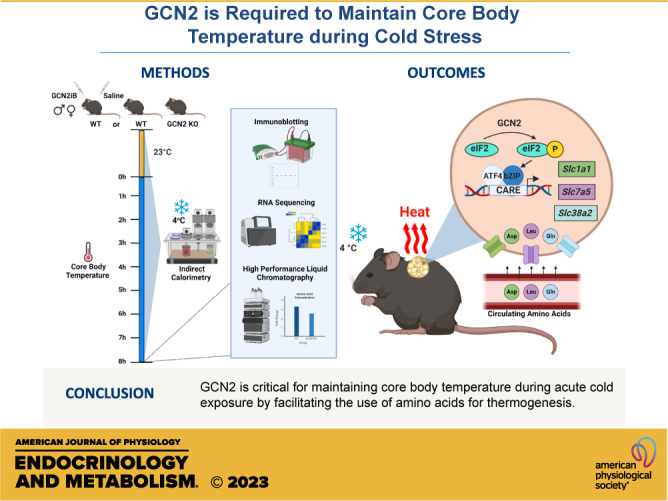
Graphical abstract
Figure 1.
Figure 1.
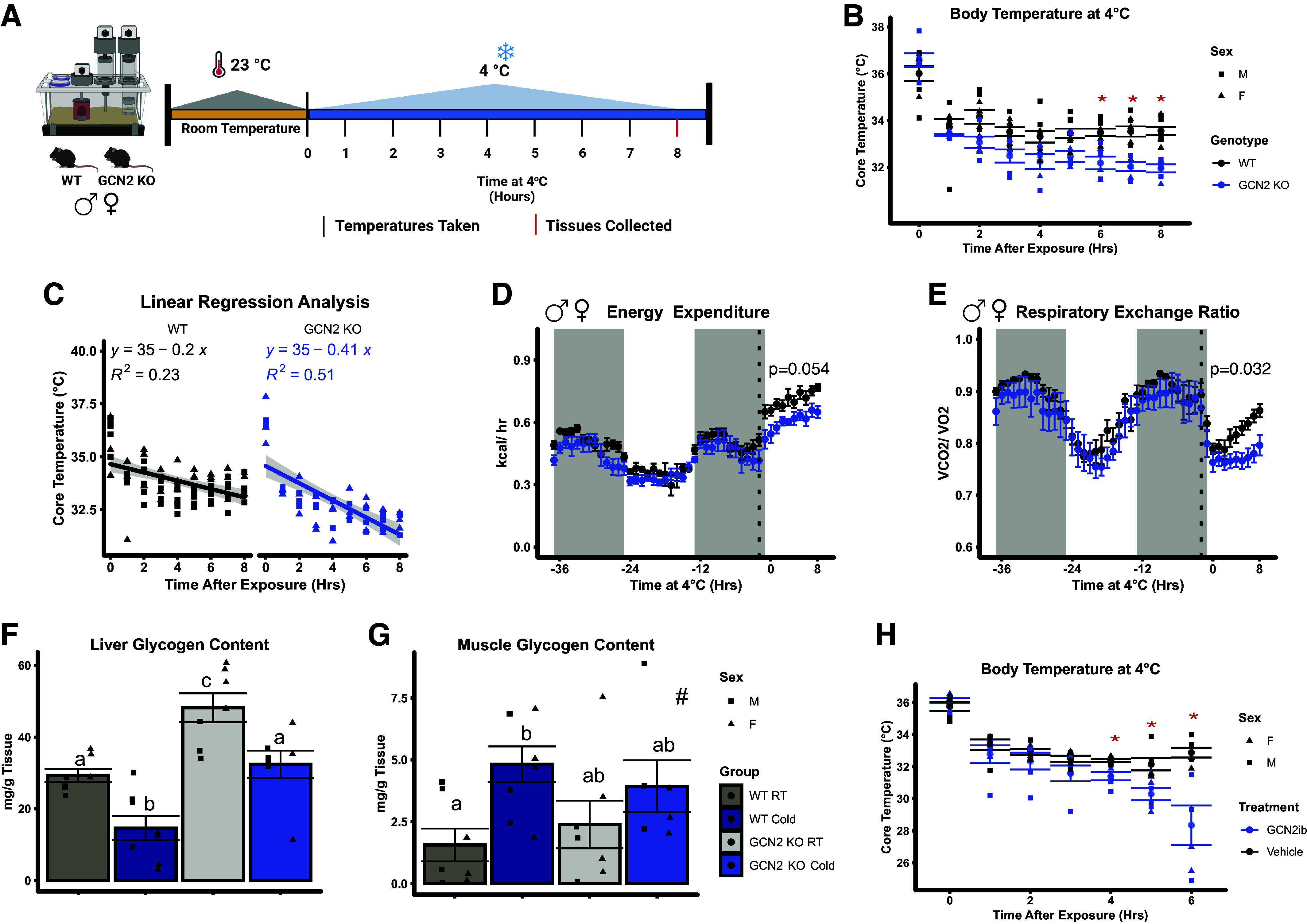
Loss of GCN2 impedes the thermogenic response to acute cold exposure. A: visual representation of the experimental design. B: hourly rectal temperatures of male and female wild type (WT) and Gcn2 knockout (GCN2 KO) mice housed at 4°C for 8 h during the light cycle. C: linear regression analysis of the core body temperature of WT and GCN2 KO mice over the 8 h cold exposure period. Whole body energy expenditure (D) and respiratory exchange ratio (E) of male and female WT and GCN2 KO mice. The dotted vertical line represents the time at which the temperature in the CLAMS began to descend to 4°C. The gray backdrop represents the time at which the lights were off in the CLAMS. P values represent the results of our statistical analyses performed during the acute exposure period. Liver (F) and skeletal muscle (G) glycogen content of mice held at 23°C room temperature (RT) or following 8 h exposure to 4°C (Cold) during the light cycle. H: hourly rectal temperatures of GCN2iB (30 mg/kg) or vehicle treated male and female WT mice housed at 4°C for 6 h during the light cycle. Rectal temperature measurements are shown as individual data points ± SE for each respective group and timepoint. CLAMS data are expressed as means ± SE. Bar chart values are presented as means ± SE with individual data points overlaid. The shape of the individual datapoints in B, C, and FH denotes the sex of the mice. CLAMS data in D were analyzed using a General Linear Model in CalR. All other data were analyzed using a two-factor ANOVA followed by a Tukey’s post hoc test. #Main effect of temperature, P < 0.05. *Main effect of genotype, P < 0.05. Groups not sharing a common letter are different and indicate a statistical interaction. n = 6–8 male and female mice per group. Panel A was created with BioRender.
Figure 2.
Figure 2.
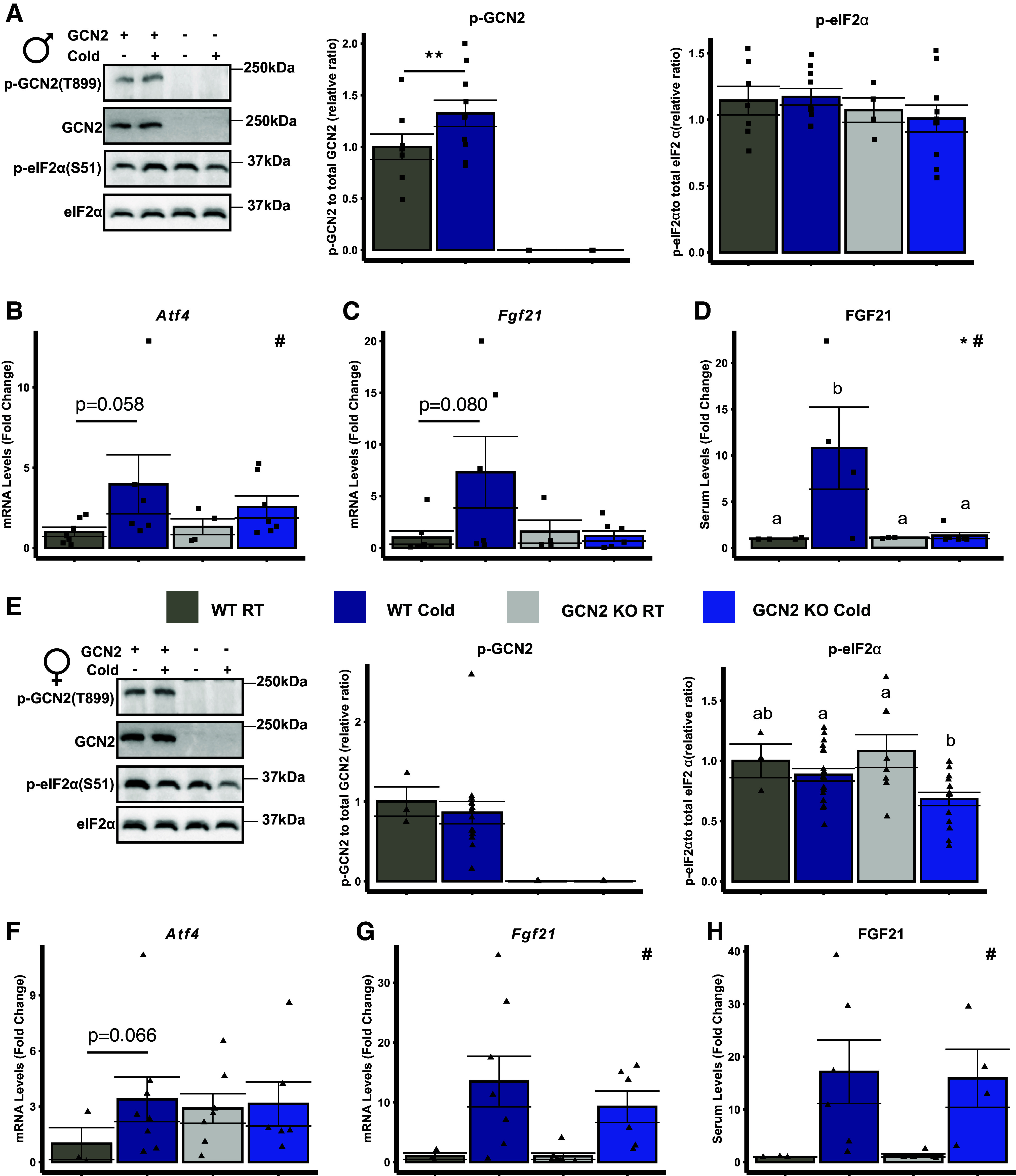
GCN2 is required for cold-induced hepatic FGF21 secretion in male mice only. A: representative immunoblots and ratios of hepatic phosphorylated GCN2 and eIF2α relative to their respective total protein in male wild type (WT) and Gcn2 knockout (GCN2 KO) mice held at 23°C room temperature (RT) or following 8 h exposure to 4°C (Cold) during the light cycle. + and – signify the presence or absence of GCN2 or Cold. Hepatic mRNA concentrations of Atf4 (B) and Fgf21 (C) in male mice at the end of the experiment. D: normalized serum FGF21 levels in male mice at the end of the experiment. E: representative immunoblots and ratios of hepatic phosphorylated GCN2 and eIF2α to their respective total protein in female WT and GCN2 KO mice held at RT or following 8 h of Cold during the light cycle. + and – signify the presence of absence of GCN2 or Cold. Hepatic mRNA concentrations of Atf4 (F) and Fgf21 (G) in female mice at the end of the experiment. H: normalized serum FGF21 levels in female mice at the end of the experiment. All values are expressed relative to the WT RT group. Serum FGF21 values ranged from 18 to 1,500 pg/mL. GCN2 phosphorylation was analyzed by Student’s t test, **P < 0.05. Data were analyzed by two-factor ANOVA or Kruskal–Wallis test followed by a Tukey’s post hoc test. *Main effect of genotype, P < 0.05; #main effect of temperature, P < 0.05. Groups not sharing a common letter indicate a statistically significant interaction, P < 0.05. Bar chart values are presented as means ± SE with individual data points overlaid. n = 3–8 mice per group.
Figure 3.
Figure 3.
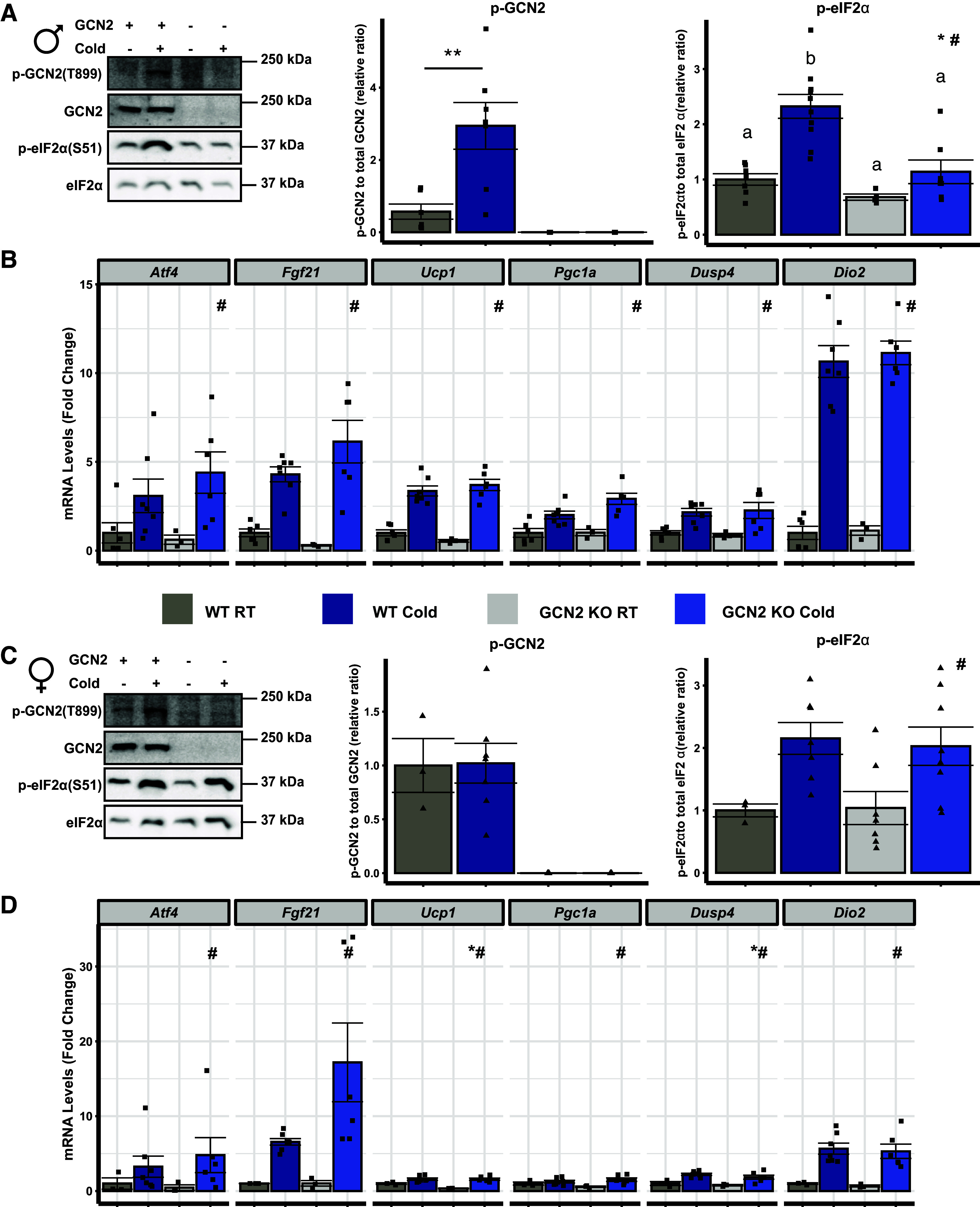
ISR activation does not directly regulate nonshivering thermogenesis in brown adipose tissue during acute cold exposure. A: representative immunoblots and relative ratios of phosphorylated GCN2 and eIF2α to their respective total protein in brown adipose tissue (BAT) from male wild type (WT) and Gcn2 knockout (GCN2 KO) mice held at 23°C room temperature (RT) or following 8 h exposure to 4°C (Cold) during their light cycle. + and – signify the presence of absence of GCN2 or Cold. B: relative mRNA levels of Atf4, Fgf21, Ucp1, Ppargc1a, Dusp4, and Dio2 in the BAT of male mice. C: representative immunoblots and ratios of phosphorylated GCN2 and eIF2α relative to their respective total protein in BAT samples of female WT and GCN2 KO mice held at RT or following Cold during their light cycle. + and – signify the presence of absence of GCN2 or Cold. D: BAT mRNA concentrations of Atf4, Fgf21, Ucp1, Ppargc1a, Dusp4, and Dio2 in female mice. All values are expressed relative to WT RT. GCN2 phosphorylation was analyzed by Student’s t test, **P < 0.05. All other data were analyzed by two-factor ANOVA or Kruskal–Wallis test followed by a Tukey’s post hoc test. *Main effect of genotype, P < 0.05; #main effect of temperature, P < 0.05. Groups not sharing a common letter indicate a statistically significant interaction, P < 0.05. Bar chart values are presented as means ± SE with individual data points overlaid. n = 3–8 mice per group.
Figure 4.
Figure 4.
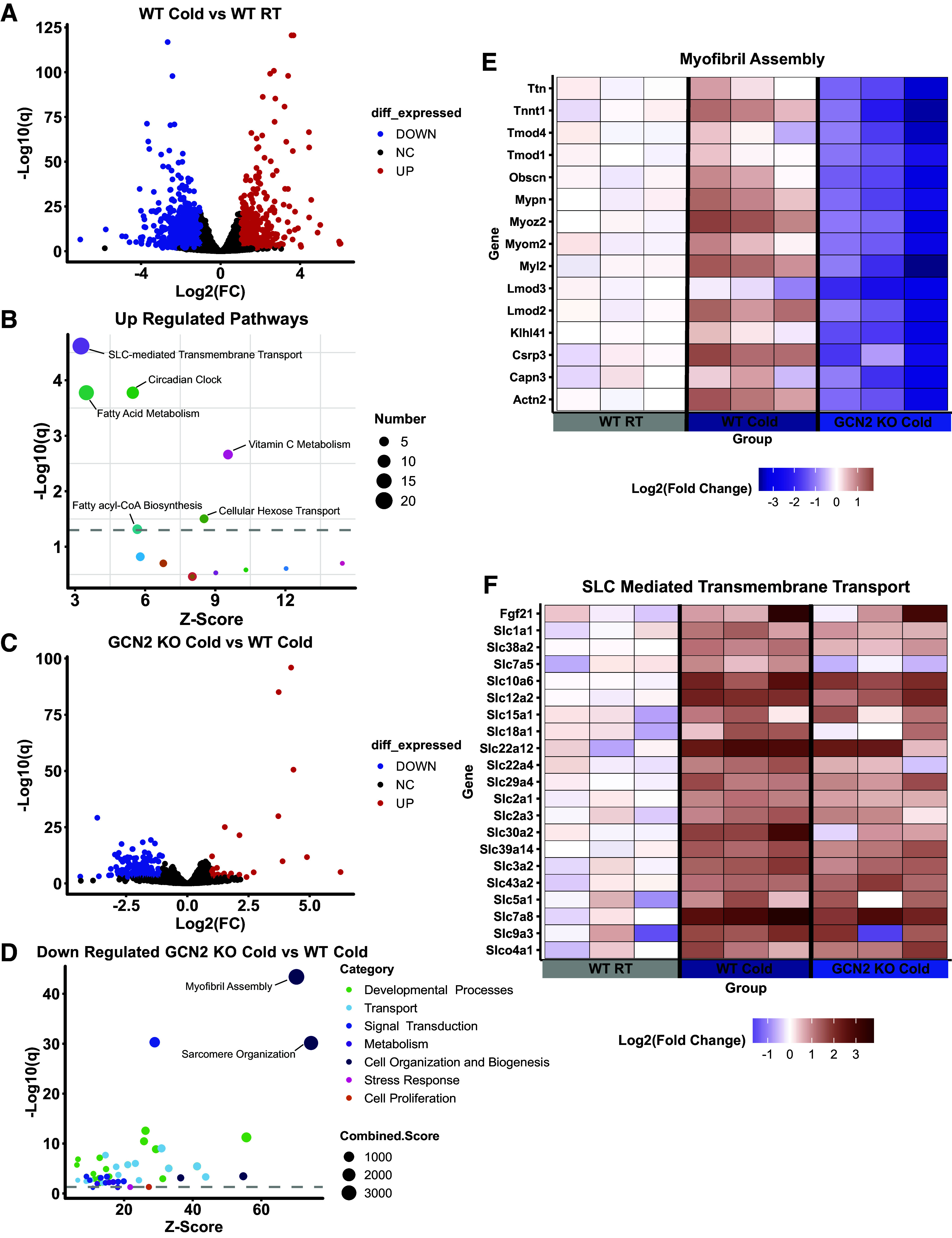
GCN2 is required for upregulation of SLC transporters and myosin heavy chain genes in bat during acute cold exposure. A: volcano plot illustrating differentially expressed transcripts from the brown adipose tissue of wild type (WT) mice following 8 h exposure to 4°C (Cold) as compared with mice held at 23°C room temperature (RT). The scatterplot represents statistical significance (−log10(q)] vs. magnitude of change [log2(FC) on x-axis]. The dots represent individual genes. Black dots represent unchanged (NC) genes. Blue dots represent genes that were significantly decreased (DOWN). Red dots represent genes that were significantly increased (UP). The false discovery rate cutoff was q < 0.05 and absolute (log2FC)>1. B: scatter plot representing significantly upregulated biological pathways in WT Cold mice compared with RT using the Reactome Pathways Database. The size of each circle represents the number of genes within the pathway. The dotted line represents the false discovery rate cutoff, with circles above having a q value of <0.05. C: volcano plot illustrating differentially expressed transcripts when comparing Gcn2 knockout (GCN2 KO) Cold mice relative to WT Cold mice. D: scatter plot representing significantly downregulated pathways in GCN2 KO Cold mice compared with WT Cold using the Gene Ontology Database. The size of each circle represents the combined score {[−log10(q)] *(z-score)}. The dotted line represents the false discovery rate, with circles above having a P-adjusted value (q) < 0.05. E: heat map illustrating the pathway term Myofibril Assembly in individual samples. For each gene, the log2(fold-change) is expressed relative to the average expression of the WT RT group. F: heat map illustrating the pathway term SLC-Mediated Transmembrane Transport in individual samples. For each gene, the log2(fold-change) is expressed relative to the average expression of the WT RT group. n = 3 mice per group, groups contain both male and female mice. SLC, solute carrier.
Figure 5.
Figure 5.
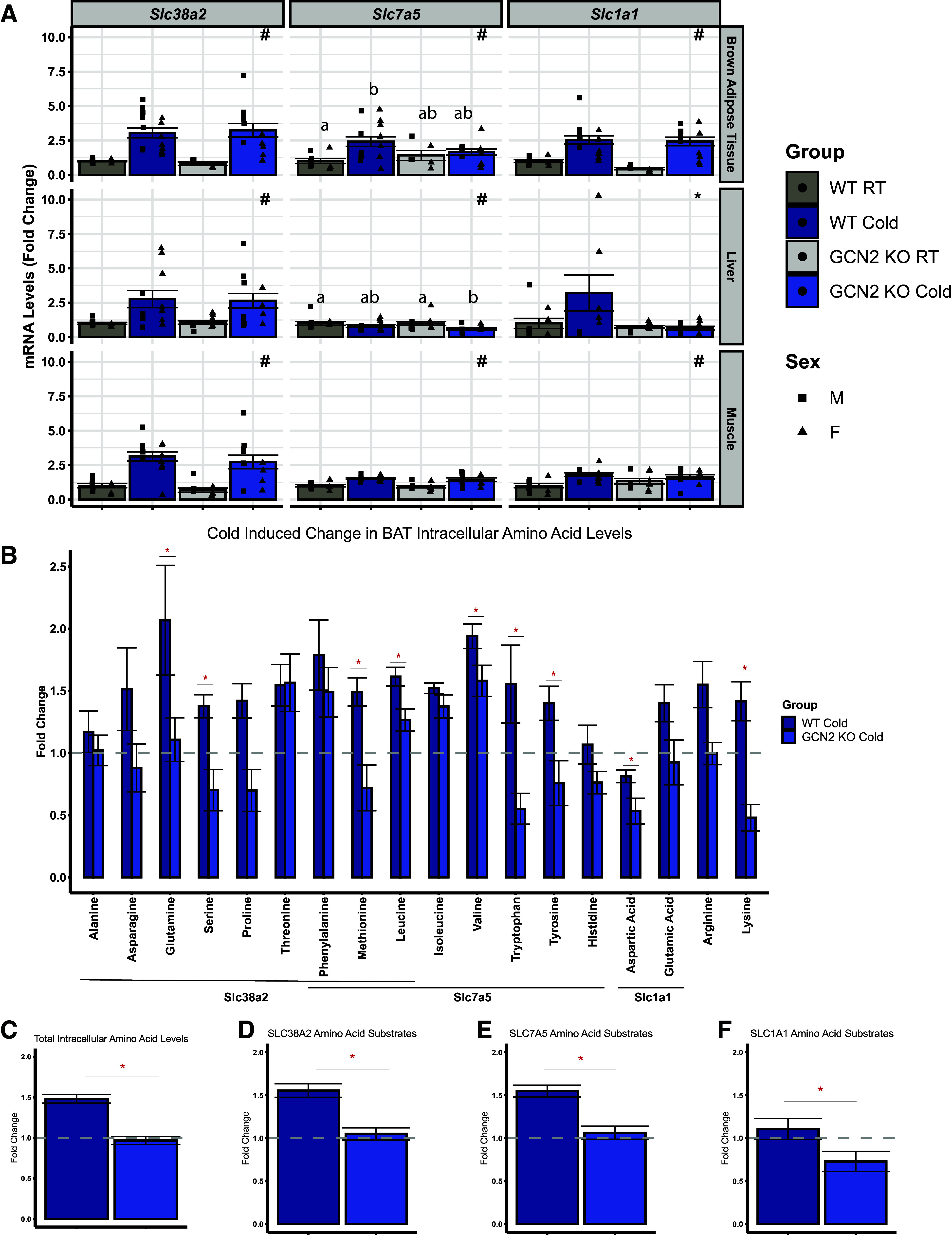
GCN2 is required to maintain intracellular amino acid levels in BAT during acute cold exposure. A: relative Slc38a2, Slc7a5, and Slc1a1 mRNA levels in the brown adipose tissue (BAT), liver, and muscle (gastrocnemius and plantaris) of male and female wild type (WT) and Gcn2 knockout (GCN2 KO) mice held at room temperature (RT, 23°C) or following 8 h exposure to 4°C (Cold) during their light cycle. B: fold-change in intracellular amino acid levels within the BAT of cold-treated WT and GCN2 KO mice. The lines underneath the x-axis span the amino acid substrates for the transporters Slc38a2, Slc7a5, and Slc1a1. C: fold-change in total intracellular BAT amino acid levels following 8 h of Cold in WT and GCN2 KO mice. Fold-change of SLC38A2 (D), SLC7A5 (E), and SLC1A1 (F) amino acid substrates following the 8 h of Cold in WT and GCN2 KO Mice. All values are expressed relative to WT RT for each respective amino acid and gene. In B–F, the dashed line represents the amino acid levels in WT mice held at RT. Bar chart values are presented as means ± SE with individual datapoints overlayed. mRNA expression data were analyzed by two-factor ANOVA or Kruskal–Wallis test followed by a Tukey’s post hoc test to determine main (genotype, temperature) and interaction effects. *Main effect of genotype, P < 0.05; #main effect of temperature, P < 0.05. Groups not sharing a common letter indicate a statistically significant interaction, P < 0.05. n = 7–15 mice per group for qPCR experiments. Intracellular amino acid levels were compared using a one-tailed Student’s t test. n = 4 mice per group for HPLC analysis. Groups include both male and female mice.

References

    1. Bjertnæs LJ, Næsheim TO, Reierth E, Suborov EV, Kirov MY, Lebedinskii KM, Tveita T. Physiological changes in subjects exposed to accidental hypothermia: an update. Front Med (Lausanne) 9: 824395, 2022. doi: 10.3389/fmed.2022.824395. - DOI - PMC - PubMed
    1. Wood T, Thoresen M. Physiological responses to hypothermia. Semin Fetal Neonatal Med 20: 87–96, 2015. doi: 10.1016/j.siny.2014.10.005. - DOI - PubMed
    1. Banet M, Hensel H, Liebermann H. The central control of shivering and non-shivering thermogenesis in the rat. J Physiol 283: 569–584, 1978. doi: 10.1113/jphysiol.1978.sp012520. - DOI - PMC - PubMed
    1. Razzoli M, Emmett MJ, Lazar MA, Bartolomucci A. β-Adrenergic receptors control brown adipose UCP-1 tone and cold response without affecting its circadian rhythmicity. FASEB J 32: 5640–5646, 2018. doi: 10.1096/fj.201800452R. - DOI - PMC - PubMed
    1. Fedorenko A, Lishko PV, Kirichok Y. Mechanism of fatty-acid-dependent UCP1 uncoupling in brown fat mitochondria. Cell 151: 400–413, 2012. doi: 10.1016/j.cell.2012.09.010. - DOI - PMC - PubMed

Publication types