Impact of individual and environmental factors on dietary or lifestyle interventions to prevent type 2 diabetes development: a systematic review
- PMID: 37794109
- PMCID: PMC10551013
- DOI: 10.1038/s43856-023-00363-0
Impact of individual and environmental factors on dietary or lifestyle interventions to prevent type 2 diabetes development: a systematic review
Abstract
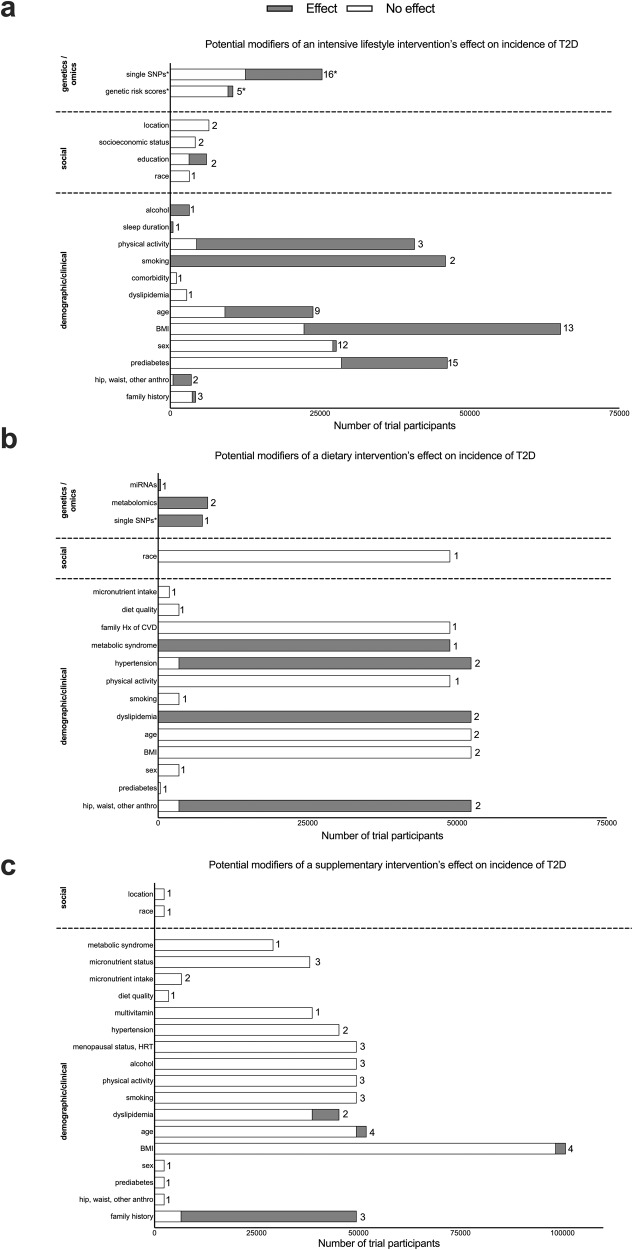
Background: The variability in the effectiveness of type 2 diabetes (T2D) preventive interventions highlights the potential to identify the factors that determine treatment responses and those that would benefit the most from a given intervention. We conducted a systematic review to synthesize the evidence to support whether sociodemographic, clinical, behavioral, and molecular factors modify the efficacy of dietary or lifestyle interventions to prevent T2D.
Methods: We searched MEDLINE, Embase, and Cochrane databases for studies reporting on the effect of a lifestyle, dietary pattern, or dietary supplement interventions on the incidence of T2D and reporting the results stratified by any effect modifier. We extracted relevant statistical findings and qualitatively synthesized the evidence for each modifier based on the direction of findings reported in available studies. We used the Diabetes Canada Clinical Practice Scale to assess the certainty of the evidence for a given effect modifier.
Results: The 81 publications that met our criteria for inclusion are from 33 unique trials. The evidence is low to very low to attribute variability in intervention effectiveness to individual characteristics such as age, sex, BMI, race/ethnicity, socioeconomic status, baseline behavioral factors, or genetic predisposition.
Conclusions: We report evidence, albeit low certainty, that those with poorer health status, particularly those with prediabetes at baseline, tend to benefit more from T2D prevention strategies compared to healthier counterparts. Our synthesis highlights the need for purposefully designed clinical trials to inform whether individual factors influence the success of T2D prevention strategies.
Plain language summary
Clinical trials to prevent development of type 2 diabetes (T2D) that test dietary and lifestyle interventions have resulted in different results for different study participants. We hypothesized that the differing responses could be because of different personal, social and inherited factors. We searched different databases containing details of published research studies investigating this to look at the effect of these factors on prevention of the development of T2D. We found a small amount of evidence suggesting that those with poorer health, particularly those with a higher amount of sugar in their blood, tend to benefit more from T2D prevention strategies compared to healthier counterparts. Our results suggest that further clinical trials that are designed to examine the effect of personal and social factors on interventions for T2D prevention are needed to better determine the impact of these factors on the success of diet and lifestyle interventions for T2D.
© 2023. Springer Nature Limited.
Conflict of interest statement
The authors declare the following competing interests: R.W.M. and P.W.F. are employees of the Novo Nordisk Foundation, a private philanthropic enterprise foundation. The opinions expressed in this article do not necessarily reflect the perspectives of the Novo Nordisk Foundation. V.M. has acted as consultant and speaker and received research or educational grants from Novo Nordisk, MSD, Eli Lilly, Novartis, Boehringer Ingelheim, Lifescan J&J, Sanofi-Aventis, Roche Diagnostics, Abbott, and several Indian pharmaceutical companies, including USV, Dr. Reddy’s Laboratories, and Sun Pharma. None of the other authors have any conflicts of interest to declare.
Figures

References
-
- Tuomi T, et al. The many faces of diabetes: a disease with increasing heterogeneity. Lancet. 2014;383:1084–1094. - PubMed
-
- Tuomilehto J, et al. Prevention of type 2 diabetes mellitus by changes in lifestyle among subjects with impaired glucose tolerance. N. Engl. J. Med. 2001;344:1343–1350. - PubMed
-
- Pan XR, et al. Effects of diet and exercise in preventing NIDDM in people with impaired glucose tolerance. The Da Qing IGT and Diabetes Study. Diabetes Care. 1997;20:537–544. - PubMed
Grants and funding
LinkOut - more resources
Full Text Sources
Miscellaneous