


Abrupt permafrost thaw triggers activity of copiotrophs and microbiome predators
- PMID: 37796894
- PMCID: PMC10599396
- DOI: 10.1093/femsec/fiad123
Abrupt permafrost thaw triggers activity of copiotrophs and microbiome predators
Abstract
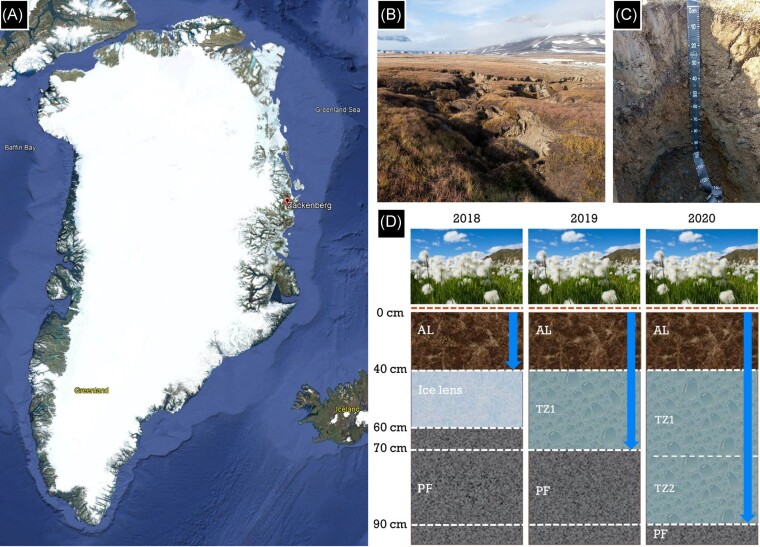
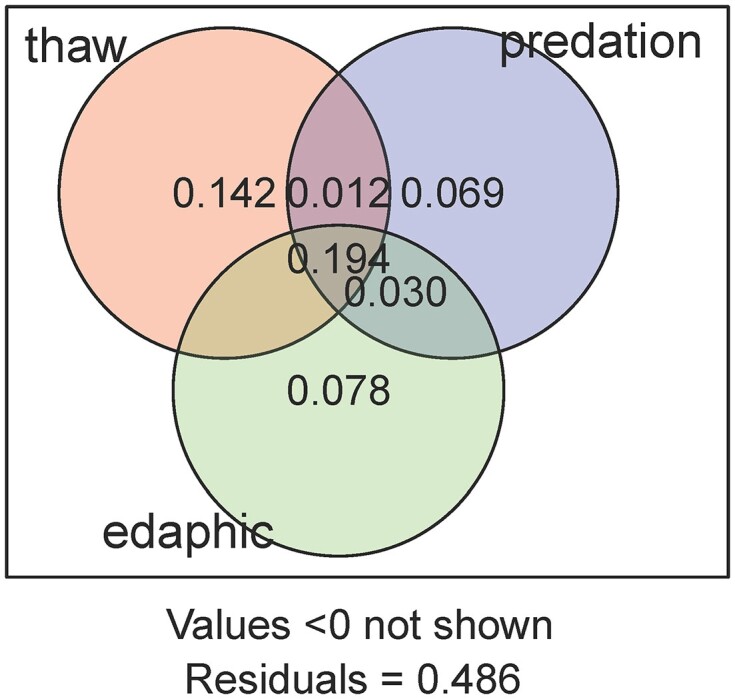
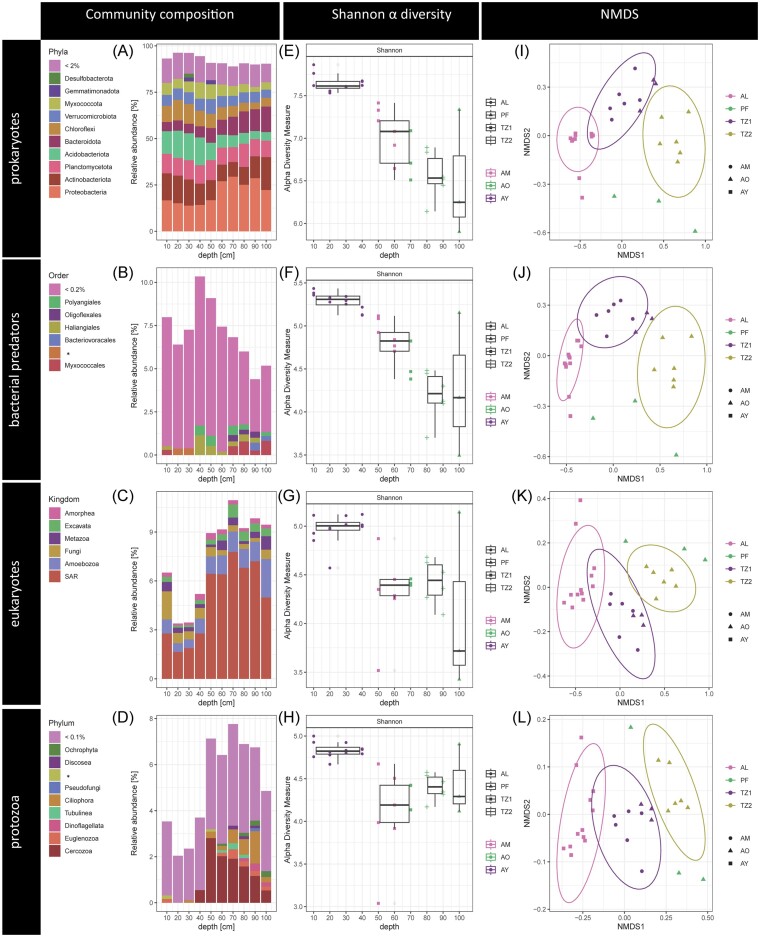
Permafrost soils store a substantial part of the global soil carbon and nitrogen. However, global warming causes abrupt erosion and gradual thaw, which make these stocks vulnerable to microbial decomposition into greenhouse gases. Here, we investigated the microbial response to abrupt in situ permafrost thaw. We sequenced the total RNA of a 1 m deep soil core consisting of up to 26 500-year-old permafrost material from an active abrupt erosion site. We analysed the microbial community in the active layer soil, the recently thawed, and the intact permafrost, and found maximum RNA:DNA ratios in recently thawed permafrost indicating a high microbial activity. In thawed permafrost, potentially copiotrophic Burkholderiales and Sphingobacteriales, but also microbiome predators dominated the community. Overall, both thaw-dependent and long-term soil properties significantly correlated with changes in community composition, as did microbiome predator abundance. Bacterial predators were dominated in shallower depths by Myxococcota, while protozoa, especially Cercozoa and Ciliophora, almost tripled in relative abundance in thawed layers. Our findings highlight the ecological importance of a diverse interkingdom and active microbial community highly abundant in abruptly thawing permafrost, as well as predation as potential biological control mechanism.
Keywords: abrupt erosion; copiotrophic; permafrost; protozoa; transcriptomics.
© The Author(s) 2023. Published by Oxford University Press on behalf of FEMS.
Conflict of interest statement
None declared.
Figures
References
-
- Abbott BW, Brown M, Carey JCet al. . We must stop fossil fuel emissions to protect permafrost ecosystems. Front Environ Sci. 2022;10:889428. 10.3389/fenvs.2022.889428. - DOI
-
- Achberger AM, Michaud AB, Vick-Majors TJet al. . Microbiology of subglacial environments. In: Margesin R (eds.), Psychrophiles: From Biodiversity to Biotechnology. Cham: Springer, 2017. 10.1007/978-3-319-57057-0_5 - DOI
-
- Alawi M, Lipski A, Sanders Tet al. . Cultivation of a novel cold-adapted nitrite oxidizing betaproteobacterium from the Siberian Arctic. ISME J. 2007;1:256–64. - PubMed
-
- AMAP . Arctic Climate Change Update 2021: Key Trends and Impacts. Summary for Policy-makers. Arctic Monitoring and Assessment Programme (AMAP), Tromsø, Norway, p. viii+148, 2021.
