Review
. 2023 Nov;39(4):575-597.
doi: 10.1016/j.cger.2023.05.011. Epub 2023 Jul 5.

Best Practices in End of Life and Palliative Care in the Emergency Department

Affiliations
Review

Best Practices in End of Life and Palliative Care in the Emergency Department

Thidathit Prachanukool et al. Clin Geriatr Med. 2023 Nov.

Abstract

Three-quarters of patients over the age of 65 visit the emergency department (ED) in the last six months of their lives. Approximately 20% of hospice residents have ED visits. These patients must decide whether to receive emergency care that prioritizes life support, which may not achieve their desired outcomes and might even be futile. The patients in these end-of-life stages could benefit from early palliative care or hospice consultation before they present to the ED. Furthermore, early integration of palliative care at the time of ED visits is important in establishing the goals of the entire treatment.

Keywords: Emergency department; Emergency medicine; End-of-life care; Palliative care.


Figures

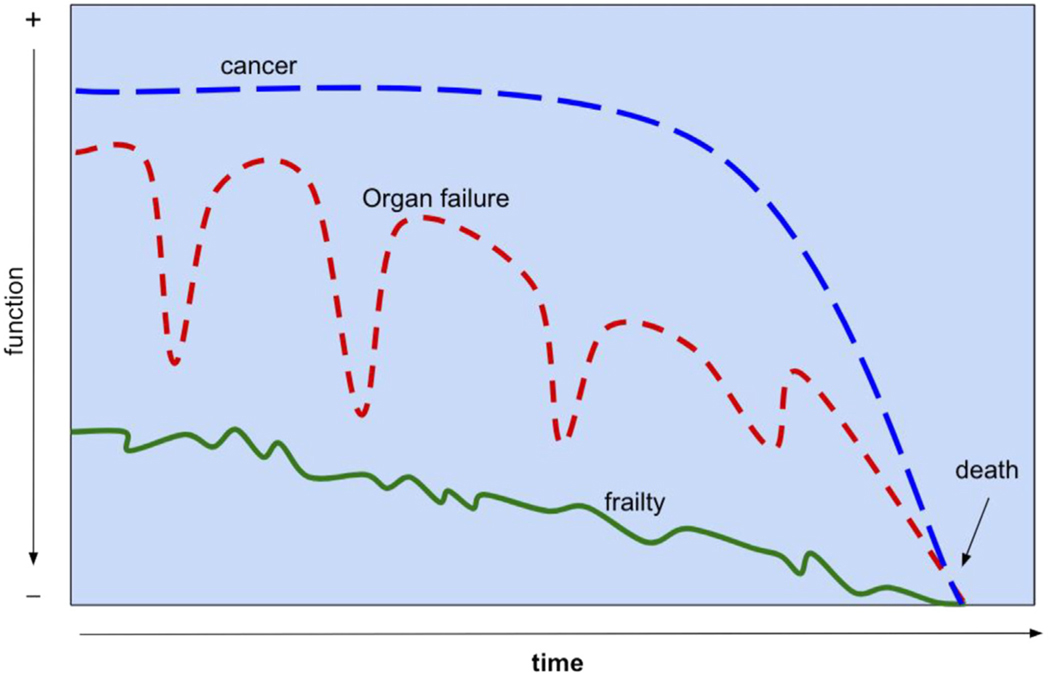
Fig. 1.
Fig. 1.
Common trajectories in serious illness. (Adapted from Lunney JR, Lynn J, Foley DJ, Lipson S, Guralnik JM. Patterns of Functional Decline at the End of Life. JAMA.2003;289(18):2387–2392. https://doi.org/10.1001/jama.289.18.2387.)
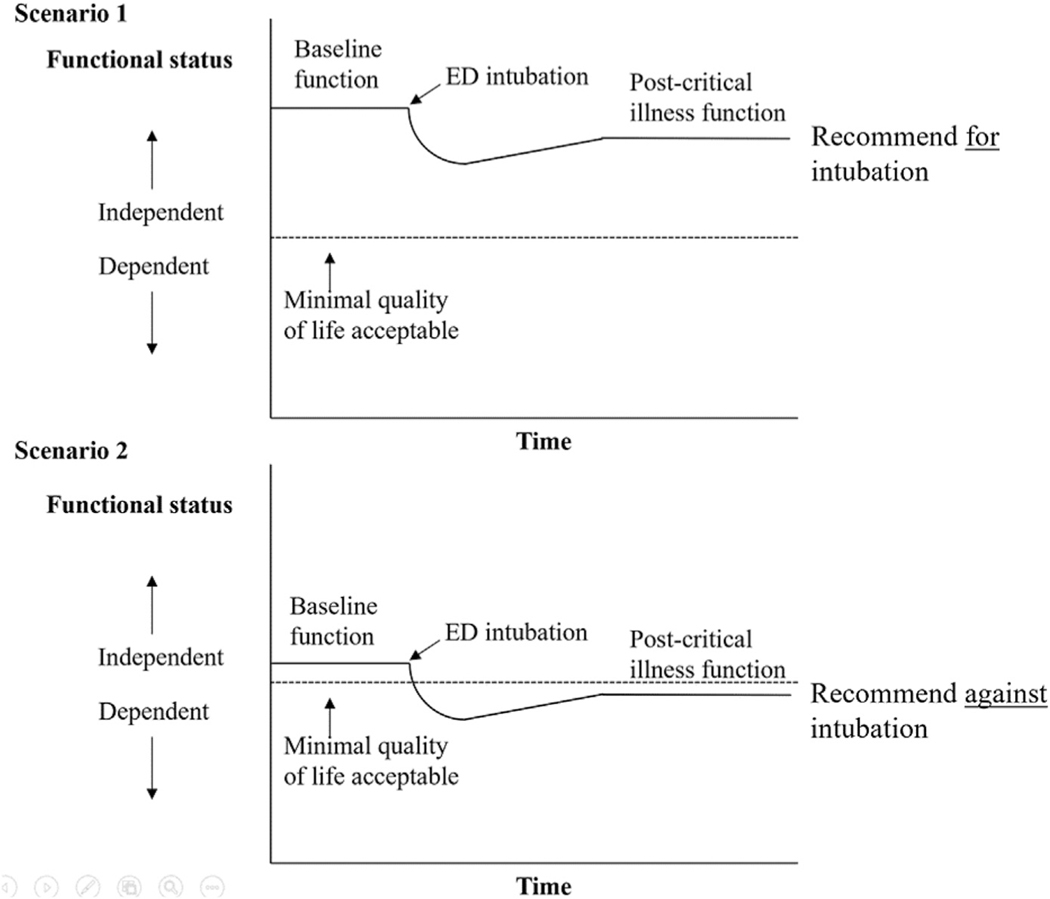
Fig. 2.
Fig. 2.
Recommendation based on quality of life acceptable to patients. (Adapted from Ouchi K, Lawton AJ, Bowman J, Bernacki R, George N. Managing Code Status Conversations for Seriously Ill Older Adults in Respiratory Failure. Ann Emerg Med. 2020 12; 76(6):751–756. PMID: 32747084; PMCID: PMC8219473.)

References

    1. George N, Bowman J, Aaronson E, et al. Past, present, and future of palliative care in emergency medicine in the USA. Acute Med Surg 2020;7(1):e497. - PMC - PubMed
    1. Smith AK, McCarthy E, Weber E, et al. Half of older Americans seen in emergency department in last month of life; most admitted to hospital, and many die there. Health Aff 2012;31(6):1277–85. - PMC - PubMed
    1. Aldridge MD, Epstein AJ, Brody AA, et al. The impact of reported hospice preferred practices on hospital utilization at the end of life. Med Care 2016; 54(7):657–63. - PMC - PubMed
    1. Grudzen CR, Richardson LD, Morrison M, et al. Palliative care needs of seriously ill, older adults presenting to the emergency department. Acad Emerg Med 2010; 17(11):1253–7. - PMC - PubMed
    1. Samaras N, Chevalley T, Samaras D, et al. Older patients in the emergency department: a review. Ann Emerg Med 2010;56(3):261–9. - PubMed