


Effects of Genetic Relatedness of Kin Pairs on Univariate ACE Model Performance
- PMID: 37799059
- PMCID: PMC11421410
- DOI: 10.1017/thg.2023.40
Effects of Genetic Relatedness of Kin Pairs on Univariate ACE Model Performance
Abstract
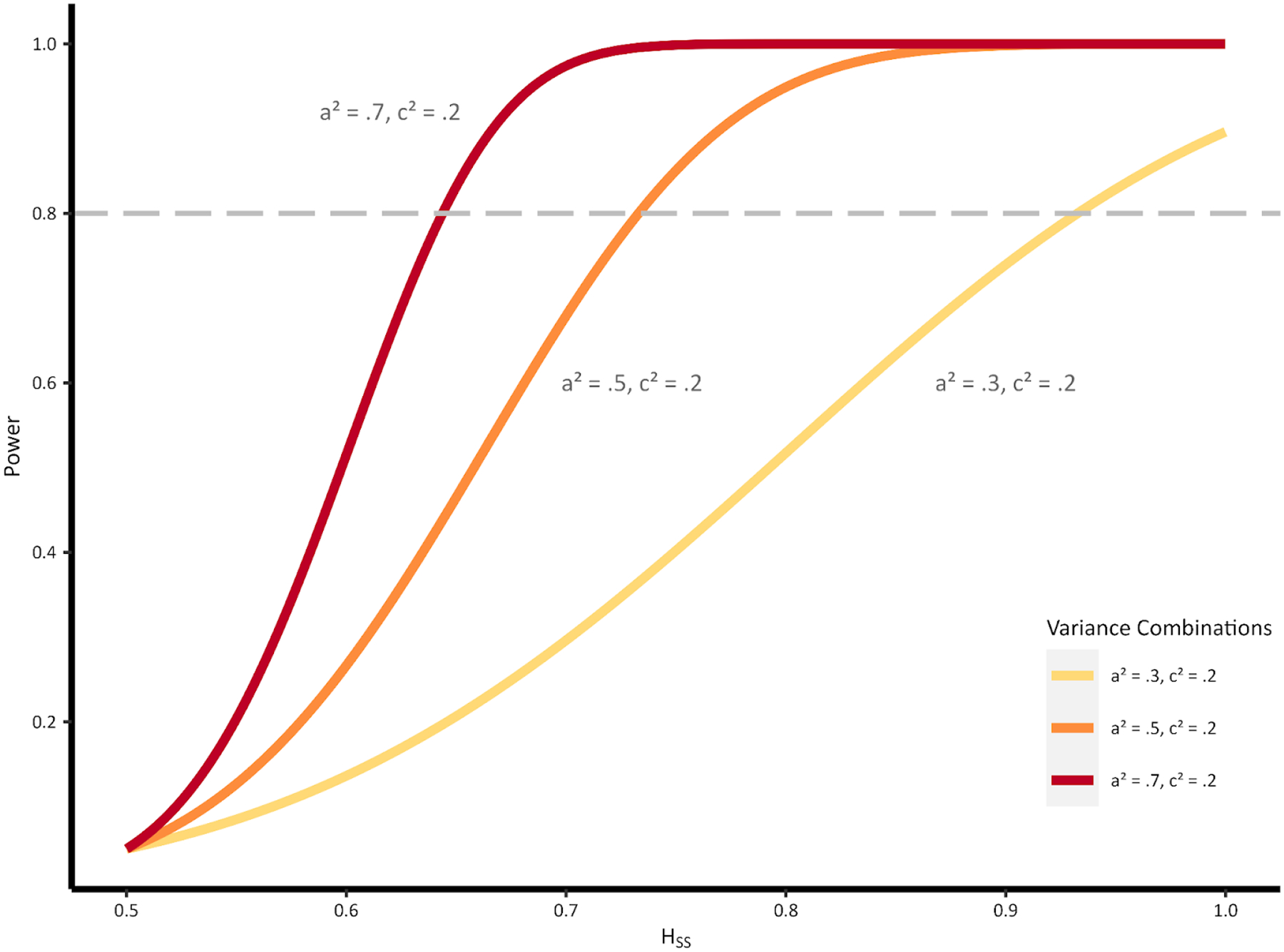
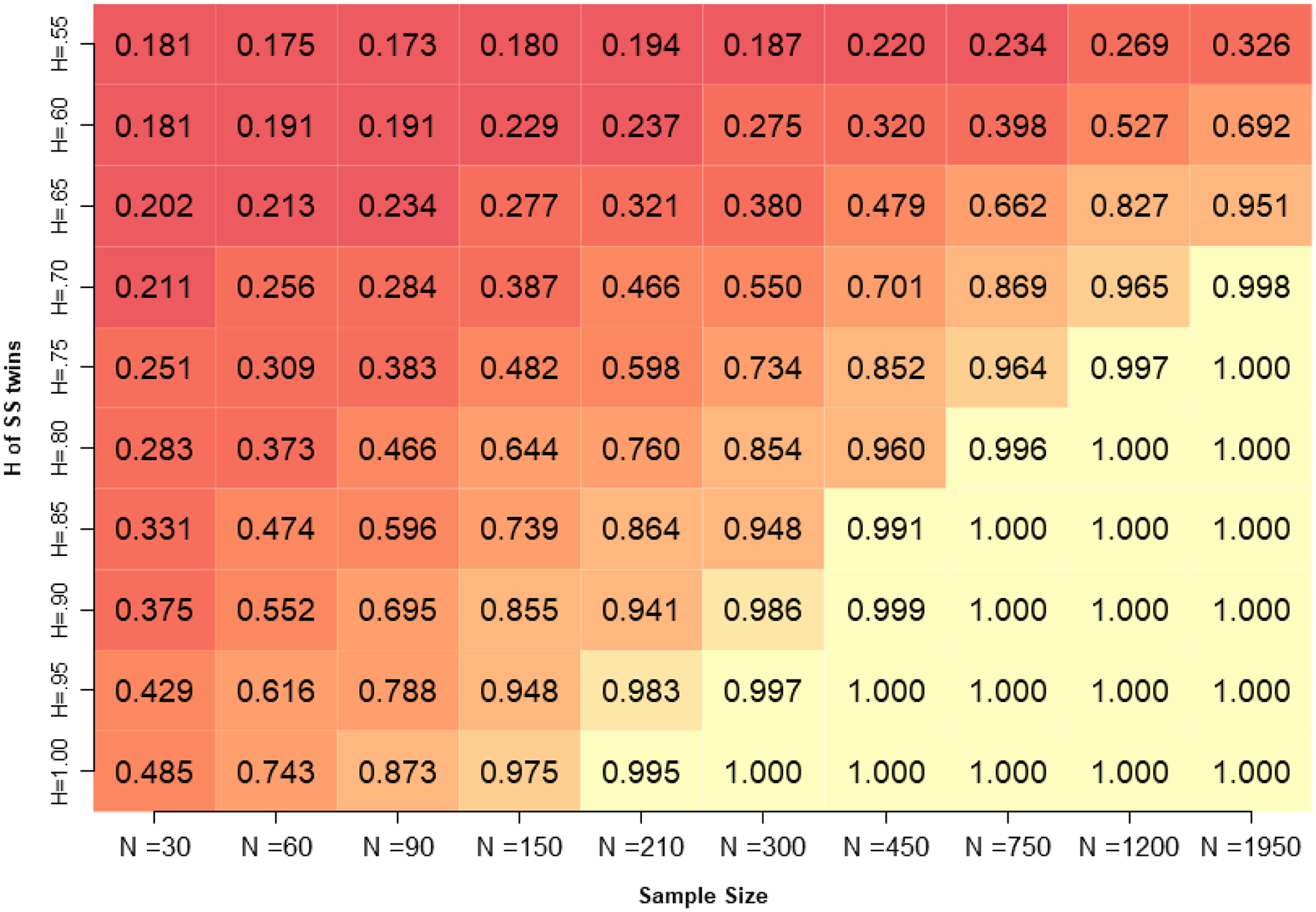
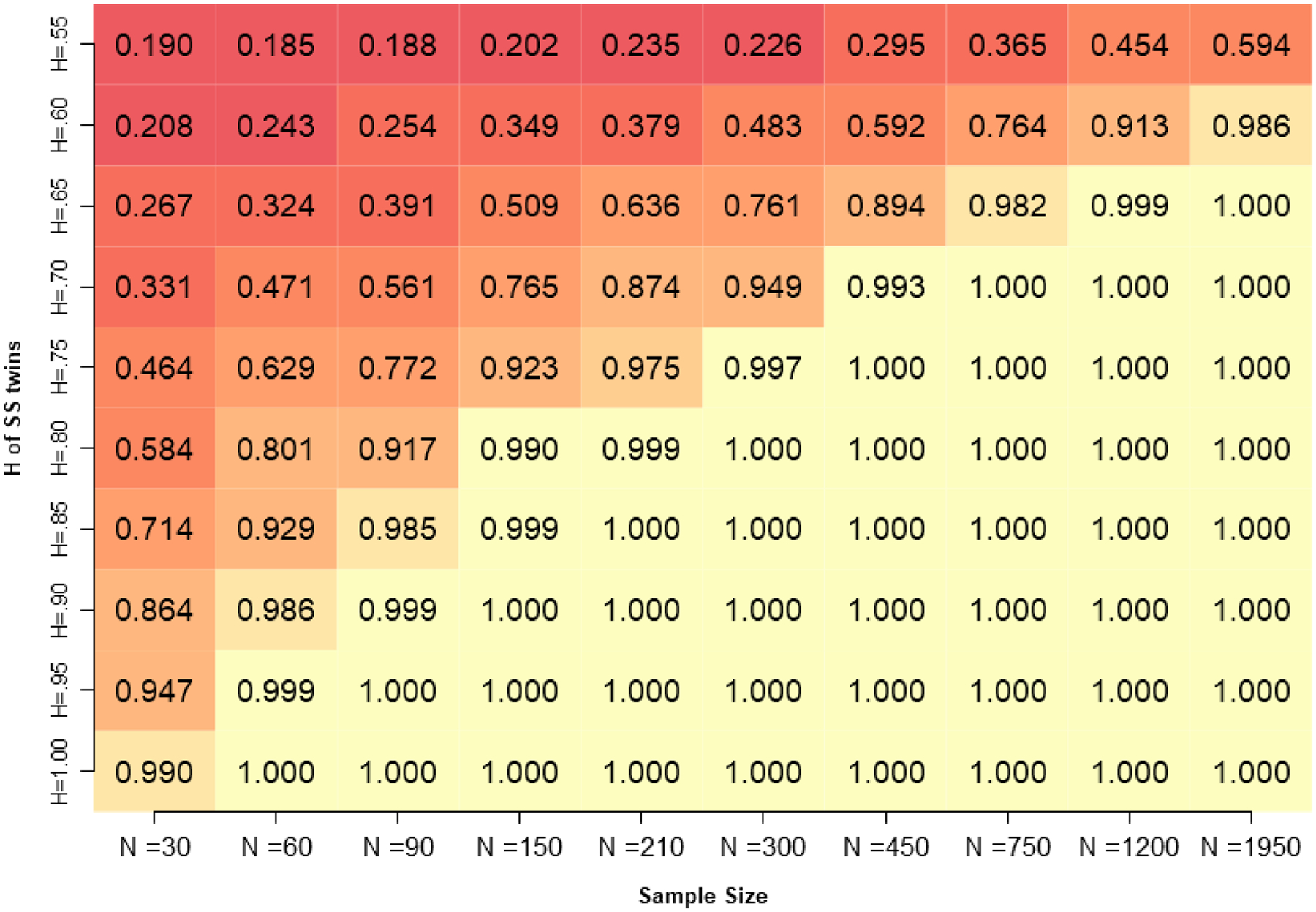
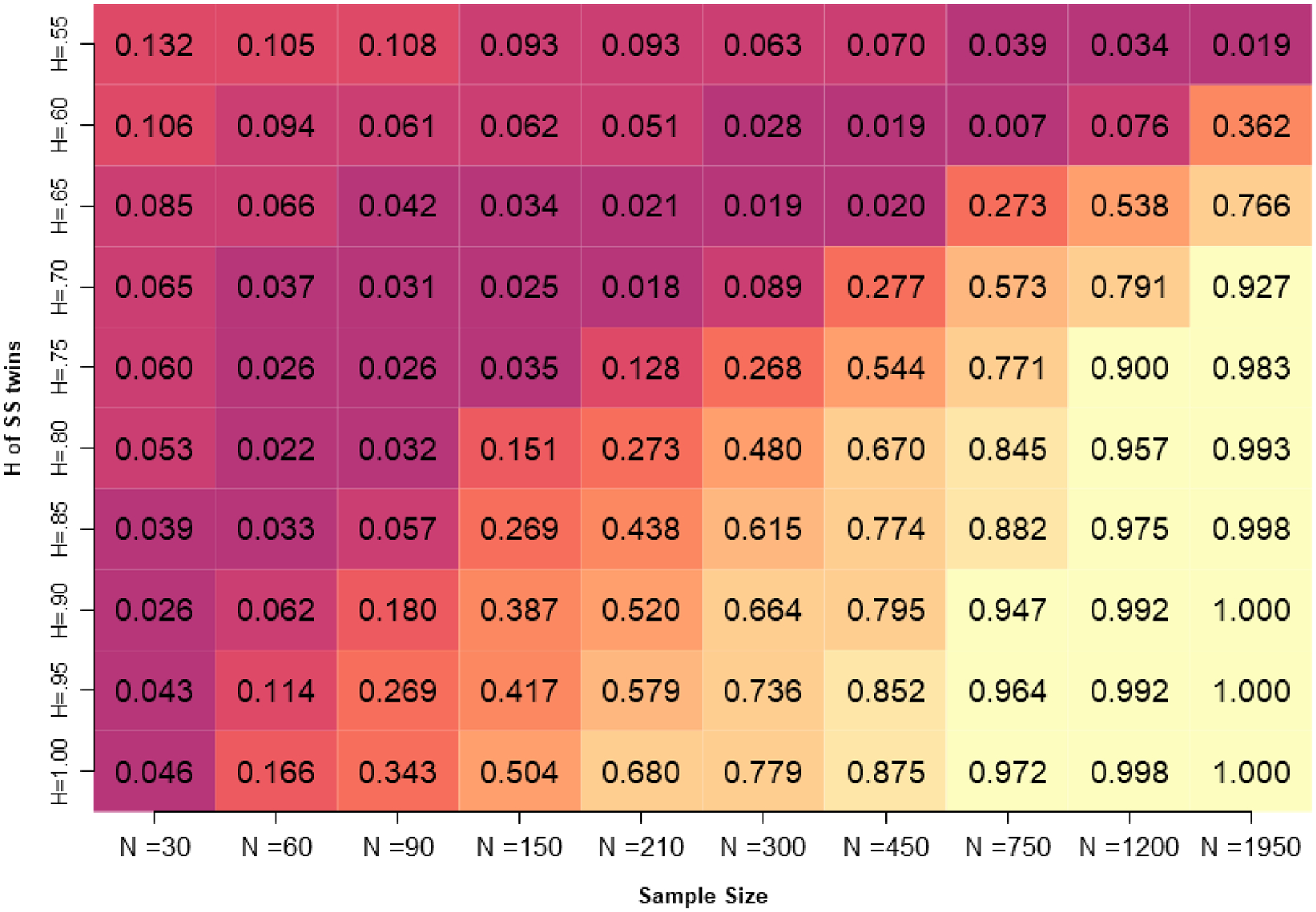
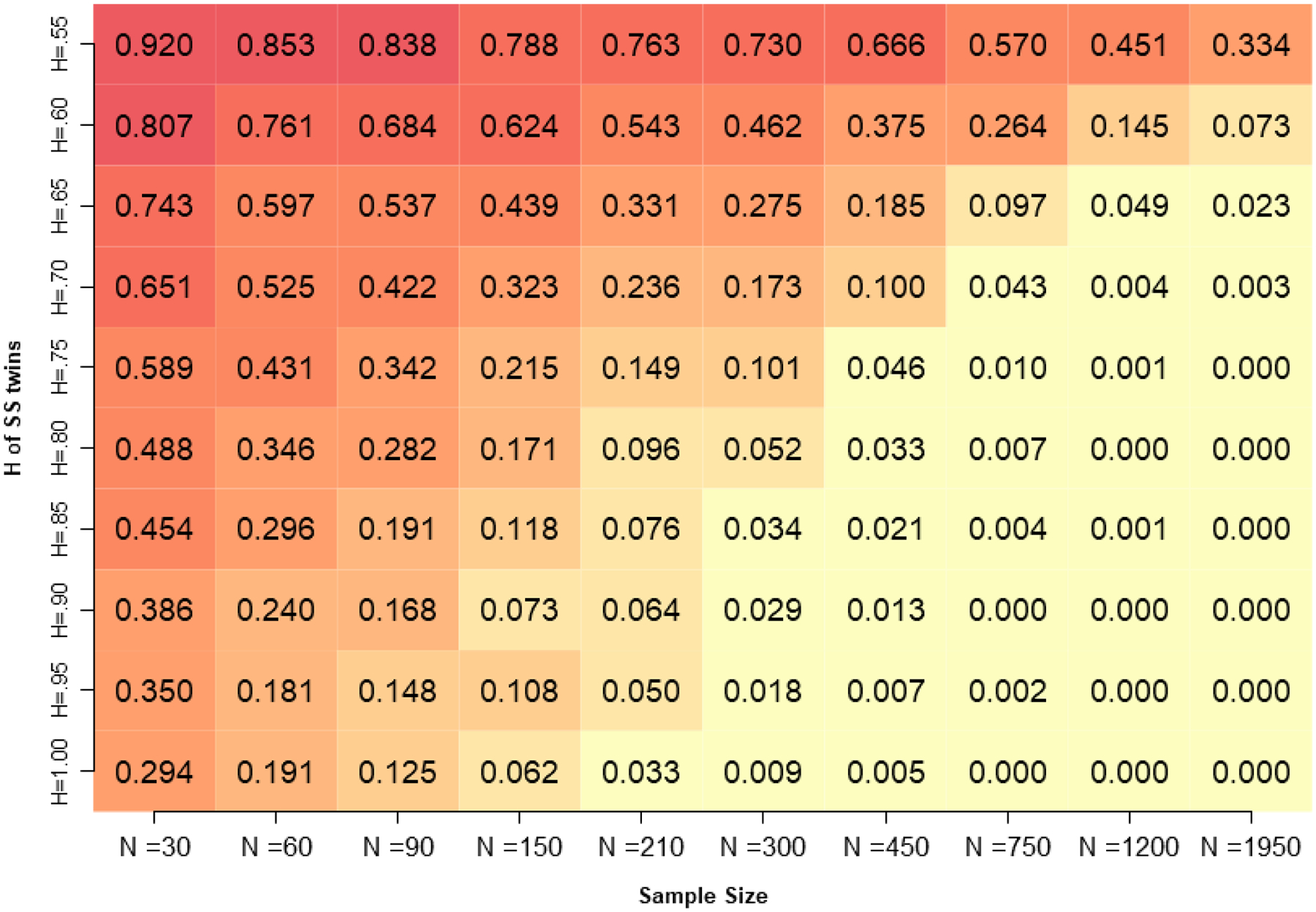
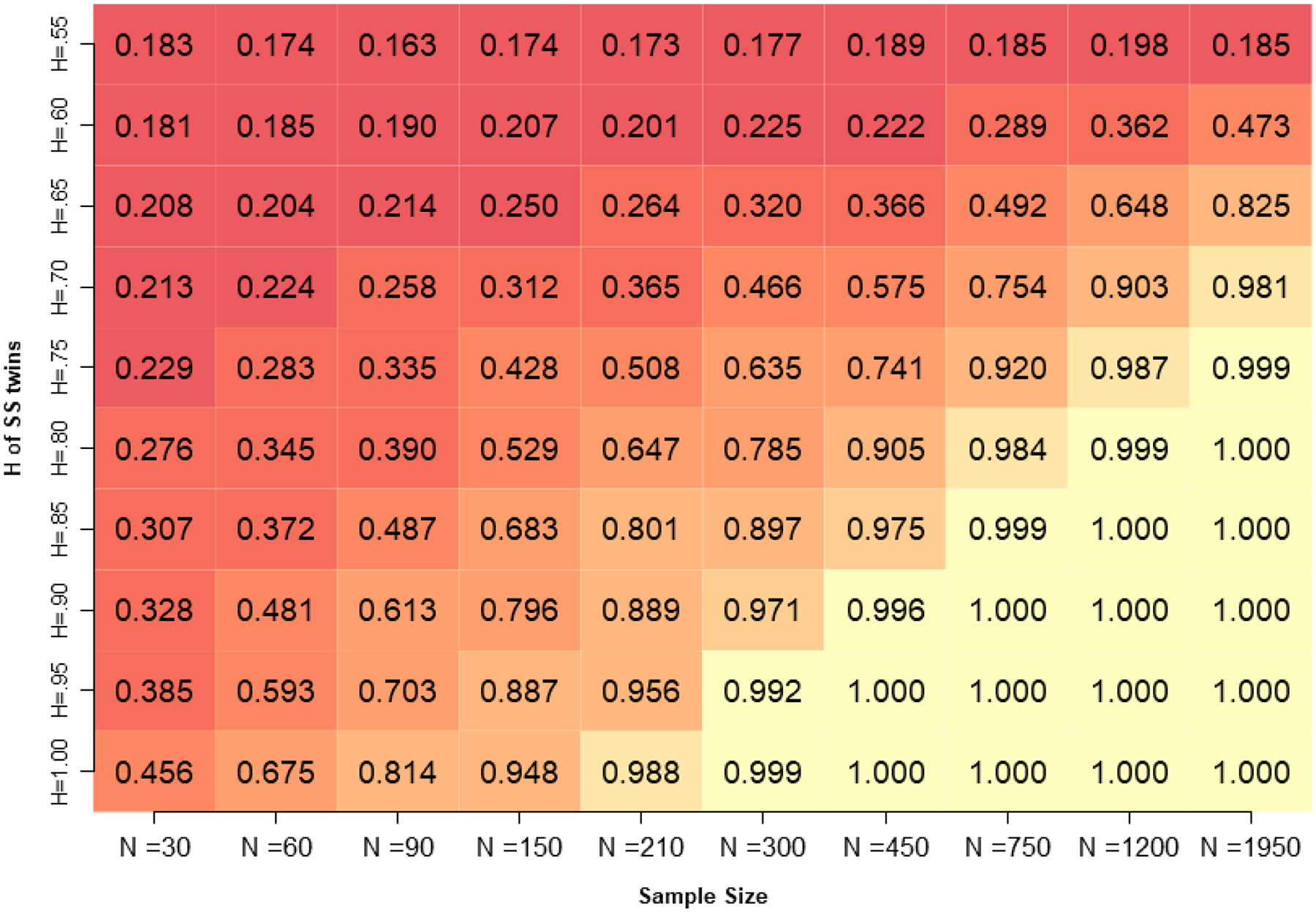
The current study explored the impact of genetic relatedness differences (ΔH) and sample size on the performance of nonclassical ACE models, with a focus on same-sex and opposite-sex twin groups. The ACE model is a statistical model that posits that additive genetic factors (A), common environmental factors (C), and specific (or nonshared) environmental factors plus measurement error (E) account for individual differences in a phenotype. By extending Visscher's (2004) least squares paradigm and conducting simulations, we illustrated how genetic relatedness of same-sex twins (HSS) influences the statistical power of additive genetic estimates (A), AIC-based model performance, and the frequency of negative estimates. We found that larger HSS and increased sample sizes were positively associated with increased power to detect additive genetic components and improved model performance, and reduction of negative estimates. We also found that the common solution of fixing the common environment correlation for sex-limited effects to .95 caused slightly worse model performance under most circumstances. Further, negative estimates were shown to be possible and were not always indicative of a failed model, but rather, they sometimes pointed to low power or model misspecification. Researchers using kin pairs with ΔH less than .5 should carefully consider performance implications and conduct comprehensive power analyses. Our findings provide valuable insights and practical guidelines for those working with nontwin kin pairs or situations where zygosity is unavailable, as well as areas for future research.
Keywords: ACE model; Sex limitation; Statistical power; Structural equation model; Twin design.
Conflict of interest statement
Conflicts of interest: We declare no conflict of interest.
Figures
References
-
- Akaike H (1998). Information Theory and an Extension of the Maximum Likelihood Principle. In Parzen E, Tanabe K, & Kitagawa G (Eds.), Selected Papers of Hirotugu Akaike (pp. 199–213). Springer. 10.1007/978-1-4612-1694-0_15 - DOI
-
- Beck JJ, Bruins S, Mbarek H, Davies GE, & Boomsma DI (2021). Biology and Genetics of Dizygotic and Monozygotic Twinning. In Khalil A, Lewi L, & Lopriore E (Eds.), Twin and Higher-order Pregnancies (pp. 31–50). Springer International Publishing. 10.1007/978-3-030-47652-6_3 - DOI
-
- Benyamin B, Deary IJ, & Visscher PM (2006). Precision and Bias of a Normal Finite Mixture Distribution Model to Analyze Twin Data When Zygosity is Unknown: Simulations and Application to IQ Phenotypes on a Large Sample of Twin Pairs. Behavior Genetics, 36(6), 935–946. 10.1007/s10519-006-9086-3 - DOI - PubMed
-
- Blau FD, Kahn LM, Brummund P, Cook J, & Larson-Koester M (2020). Is there still son preference in the United States? Journal of Population Economics, 33(3), 709–750. 10.1007/s00148-019-00760-7 - DOI
Grants and funding
LinkOut - more resources
Full Text Sources
Miscellaneous
