


Elective musculoskeletal surgery is associated with postoperative weight changes in pediatric and adolescent patients
- PMID: 37799309
- PMCID: PMC10549699
- DOI: 10.1177/18632521231198250
Elective musculoskeletal surgery is associated with postoperative weight changes in pediatric and adolescent patients
Abstract
Purpose: Patients of elective orthopedic surgeries often reduce activity levels during postoperative recovery. It is unclear whether these extended periods of modified activities lead to weight changes. The purpose of this study was to evaluate changes in body mass index percentile in pediatric patients over 2.5 years following primary musculoskeletal surgeries.
Methods: Institutional records for utilized current procedural terminology codes were used to identify patients aged 21 years or younger who underwent elective surgery at a single pediatric orthopedic institution between October 2016 and December 2018. Non-primary surgeries and patients without preoperative body mass index measurements were excluded. Demographic characteristics, height, weight, and body mass index within 30 months of surgery were collected. Body mass index relative to age was calculated. Analysis of body mass index changes at follow-up intervals of 3-7, 9-18, and 24-30 months after surgery was performed for the overall sample, within surgical categories, and within preoperative weight classifications.
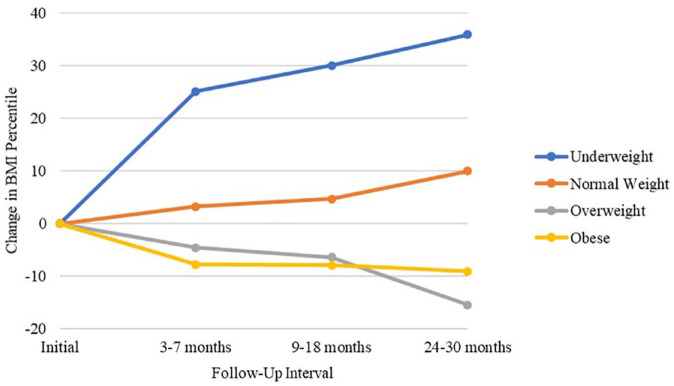
Results: A total of 1566 patients (53.1% female, average age 12.4 years) were included. Over one-third of patients were overweight or obese at presentation. The average change in body mass index percentile relative to baseline was increased at all follow-up intervals. Values reached significance at 9-18 months (p = .002) and 24-30 months (p = .001). While underweight and normal-weight patients had increased body mass index at all three timepoints, overweight or obese patients decreased.
Conclusions: Patients undergoing elective orthopedic procedures may experience significant changes in body mass index percentile postoperatively. At extremes of weight, patients experience improvement toward the mean, but most patients may undergo body mass index increases beyond what would be expected during normal growth.
Level of evidence: Retrospective level III.
Keywords: BMI; Pediatric; adolescent; orthopedic; postoperative; weight change.
© The Author(s) 2023.
Conflict of interest statement
The author(s) declared no potential conflicts of interest with respect to the research, authorship, and/or publication of this article.
Figures

References
-
- Accousti WK, Willis RB. Tibial eminence fractures. Orthop Clin North Am 2003; 34: 365–375. - PubMed
-
- De la Garza Ramos R, Nakhla J, Nasser R, et al. Effect of body mass index on surgical outcomes after posterior spinal fusion for adolescent idiopathic scoliosis. Neurosurg Focus 2017; 43(4): E5. - PubMed
LinkOut - more resources
Full Text Sources
Research Materials
