


Can in vitro embryo production be estimated from semen variables in Senepol breed by using artificial intelligence?
- PMID: 37808114
- PMCID: PMC10551135
- DOI: 10.3389/fvets.2023.1254940
Can in vitro embryo production be estimated from semen variables in Senepol breed by using artificial intelligence?
Abstract
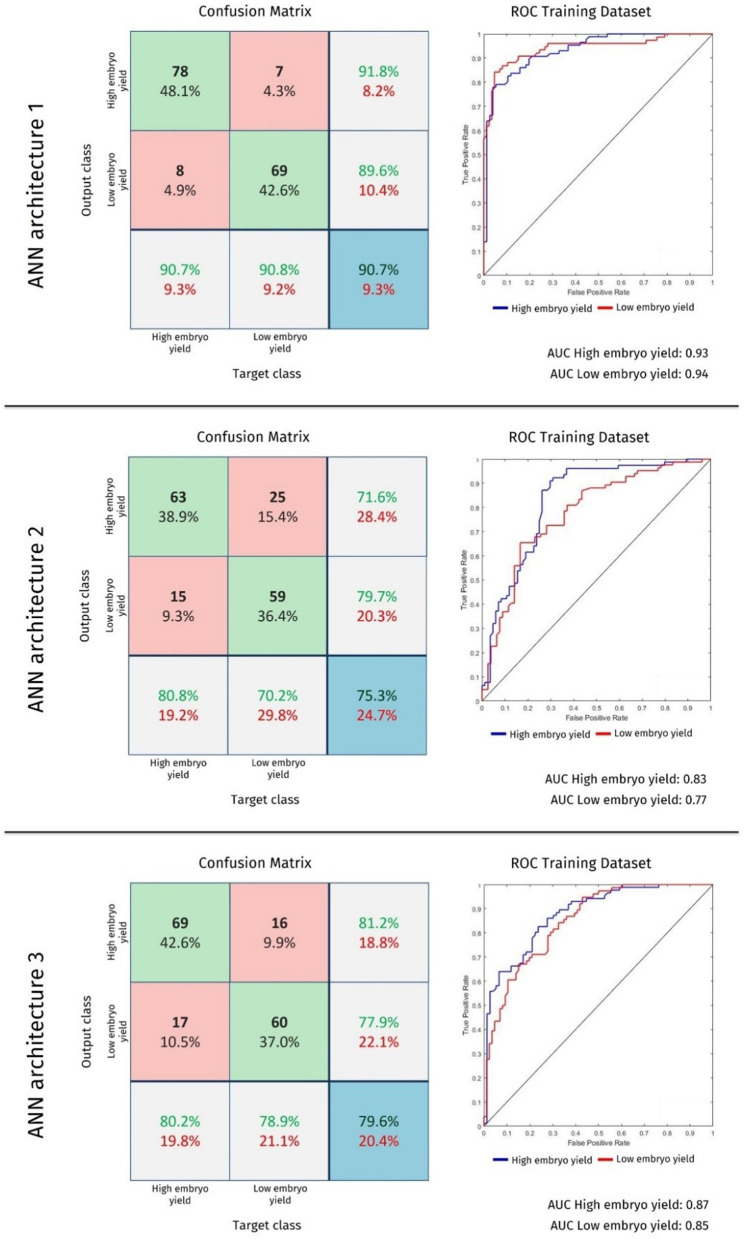
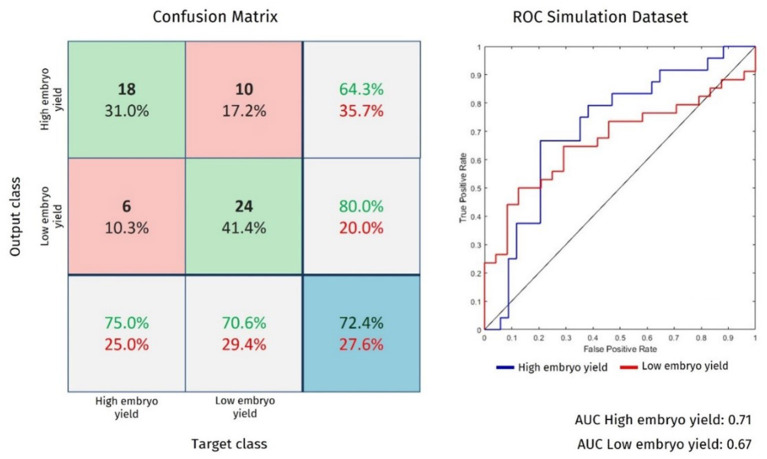
Thoroughly analyzing the sperm and exploring the information obtained using artificial intelligence (AI) could be the key to improving fertility estimation. Artificial neural networks have already been applied to calculate zootechnical indices in animals and predict fertility in humans. This method of estimating the results of reproductive biotechnologies, such as in vitro embryo production (IVEP) in cattle, could be valuable for livestock production. This study was developed to model IVEP estimates in Senepol animals based on various sperm attributes, through retrospective data from 290 IVEP routines performed using 38 commercial doses of semen from Senepol bulls. All sperm samples that had undergone the same procedure during sperm selection for in vitro fertilization were evaluated using a computer-assisted sperm analysis (CASA) system to define sperm subpopulations. Sperm morphology was also analyzed in a wet preparation, and the integrity of the plasma and acrosomal membranes, mitochondrial potential, oxidative status, and chromatin resistance were evaluated using flow cytometry. A previous study identified three sperm subpopulations in such samples and the information used in tandem with other sperm quality variables to perform an AI analysis. AI analysis generated models that estimated IVEP based on the season, donor, percentage of viable oocytes, and 18 other sperm predictor variables. The accuracy of the results obtained for the three best AI models for predicting the IVEP was 90.7, 75.3, and 79.6%, respectively. Therefore, applying this AI technique would enable the estimation of high or low embryo production for individual bulls based on the sperm analysis information.
Keywords: IVEP; artificial intelligence; bovine; fertility; sperm kinetics.
Copyright © 2023 Campanholi, Garcia Neto, Pinheiro, Nogueira, Rocha, Losano, Siqueira, Nichi, Assumpção, Basso, Monteiro and Gimenes.
Conflict of interest statement
SN was employed by Senepol 3G. AB was employed In Vitro Brasil at the time of the study and is currently employed by Salt Biotechnology. The remaining authors declare that the research was conducted in the absence of any commercial or financial relationships that could be construed as a potential conflict of interest.
Figures
References
-
- Rodríguez-Martínez H. Semen evaluation techniques and their relationship with fertility. Anim Reprod. (2013) 10:148–59.
-
- Vincent P, Underwood SL, Dolbec C, Bouchard N, Kroetsch T, Blondin P. Bovine semen quality control in artificial inseminations centers. Anim Reprod. (2012) 9:153–65.
-
- Celeghini ECC, Arruda RP, Florez-Rodriguez SA, Santos FB, Alves MBR, Oliveira BMM. Impacto da qualidade do sêmen sobre a fertilidade a campo em bovinos. Rev Bras Reprod Anim. (2017) 41:40–5.
-
- Oliveira LZ, Arruda RP, Andrade AFC, Celeghini ECC, Reeb PD, Martins JPN, et al. . Assessment of in vitro sperm characteristics and their importance in the prediction of conception rate in a bovine timed-AI program. Anim Reprod Sci. (2013) 137:145–55. 10.1016/j.anireprosci.2013.01.010 - DOI - PubMed
LinkOut - more resources
Full Text Sources
