


Soluble biomarkers of HIV-1-related systemic immune activation are associated with high plasma levels of growth factors implicated in the pathogenesis of Kaposi sarcoma in adults
- PMID: 37809059
- PMCID: PMC10552755
- DOI: 10.3389/fimmu.2023.1216480
Soluble biomarkers of HIV-1-related systemic immune activation are associated with high plasma levels of growth factors implicated in the pathogenesis of Kaposi sarcoma in adults
Abstract
Background: Human Herpesvirus-8 (HHV-8) is the etiologic agent of Kaposi's sarcoma (KS), a multicentric angio-proliferative cancer commonly associated with Human Immunodeficiency Virus (HIV) infection. KS pathogenesis is a multifactorial condition hinged on immune dysfunction yet the mechanisms underlying the risk of developing KS in HHV-8 seropositive adults remains unclear. Here we explored whether soluble markers of HIV-1-related systemic immune activation (SIA) and angiogenesis (VEGF and FGF acidic) are involved in the pathogenesis of KS in adults with HHV8.
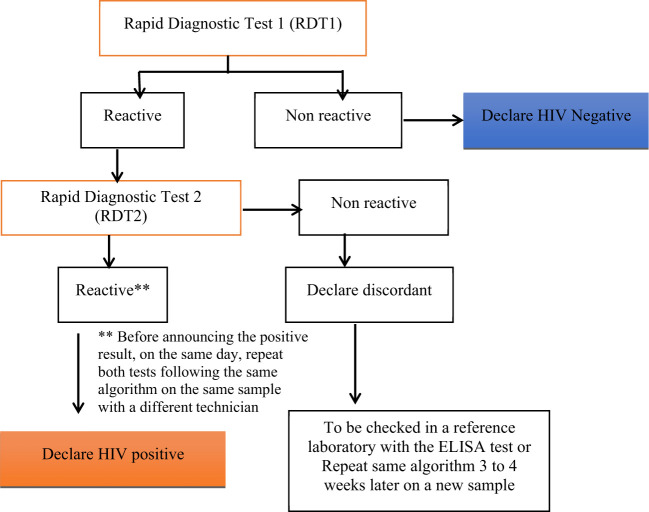
Methodology: Blood samples from 99 HIV-1 infected and 60 HIV-1 uninfected adults were collected in Yaoundé, Cameroon. CD3+/CD4+ T cell counts and HIV-1 plasma viral load were determined using the Pima Analyzer and the RT-PCR technique, respectively. Plasma levels of SIA biomarkers (sCD163, sCD25/IL-2Rα, and sCD40/TNFRSF5) and biomarkers of progression to KS (VEGF and FGF acidic) were measured using the Luminex assay. Seropositivity (IgG) for HHV-8 was determined using the ELISA method.
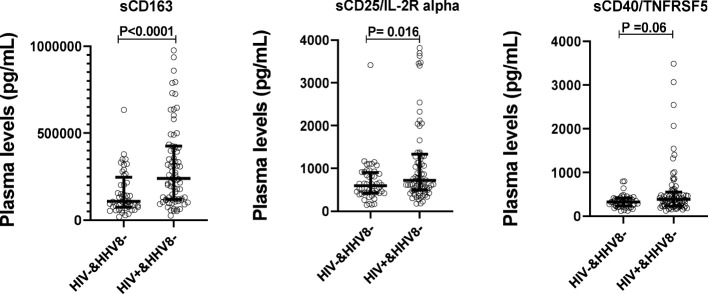
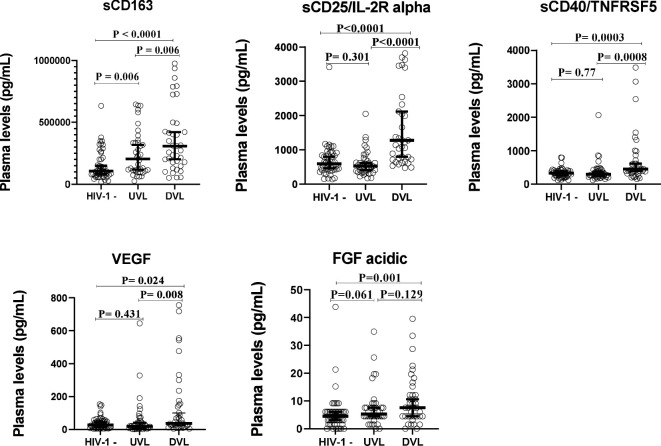
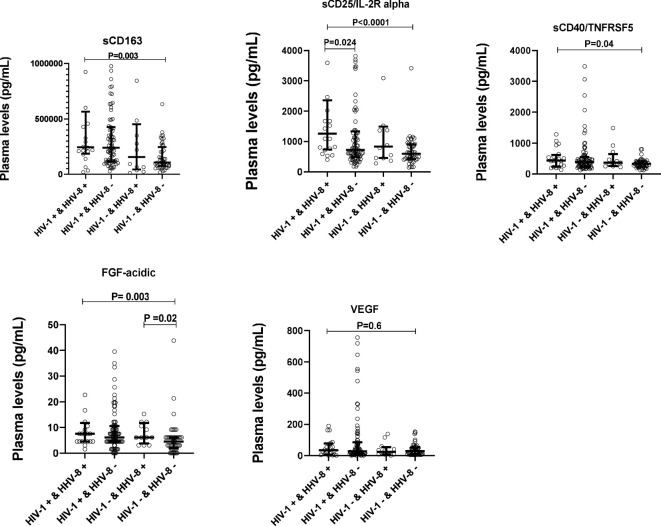
Results: Overall, 20.2% (20/99) of HIV-1 infected and 20% (12/60) of HIV-1 uninfected participants were seropositive for HHV8. Levels of sCD163, sCD25/IL-2Rα, sCD40/TNFRSF5, and FGF acidic were higher in the HIV-1 and HHV8 co-infection groups compared to the HIV-1 and HHV8 uninfected groups (all P <0.05). In addition, Higher plasma levels of VEGF correlated with sCD163 (rs = 0.58, P =0.0067) and sCD40/TNFRSF5 (rs = 0.59, P = 0.0064), while FGF acidic levels correlated with sCD40/TNFRSF5 (rs = 0.51, P = 0.022) in co-infected. In HIV-1 mono-infected donors, VEGF and FGF acidic levels correlated with sCD163 (rs =0.25, P = 0.03 and rs = 0.30, P = 0.006 respectively), sCD25/IL-2Rα (rs = 0.5, P <0.0001 and rs = 0.55, P <0.0001 respectively) and sCD40/TNFRSF5 (rs = 0.7, P <0.0001 and rs = 0.59, P <0.0001 respectively) and even in patients that were virally suppressed sCD25/IL-2Rα (rs = 0.39, P = 0.012 and rs = 0.53, P = 0.0004 respectively) and sCD40/TNFRSF5 (rs = 0.81, P <0.0001 and rs = 0.44, P = 0.0045 respectively).
Conclusion: Our findings suggest that although the development of KS in PLWH is multifactorial, HIV-associated SIA might be among the key drivers in coinfections with HHV8 and is independent of the patients' viremic status.
Keywords: FGF acidic; HIV-1; IgG anti HHV8; VEGF; systemic immune activation.
Copyright © 2023 Nana, Esemu, Besong, Atchombat, Ogai, Sobgui, Nana, Seumko’o, Awanakan, Ekali, Leke, Okamoto, Ndhlovu and Megnekou.
Conflict of interest statement
The authors declare that the research was conducted in the absence of any commercial or financial relationships that could be construed as a potential conflict of interest.
Figures
References
Publication types
MeSH terms
Substances
Grants and funding
LinkOut - more resources
Full Text Sources
Medical
Research Materials
