


Association of baseline and changes in adiponectin, homocysteine, high-sensitivity C-reactive protein, interleukin-6, and interleukin-10 levels and metabolic syndrome incidence: Tehran lipid and glucose study
- PMID: 37809533
- PMCID: PMC10559325
- DOI: 10.1016/j.heliyon.2023.e19911
Association of baseline and changes in adiponectin, homocysteine, high-sensitivity C-reactive protein, interleukin-6, and interleukin-10 levels and metabolic syndrome incidence: Tehran lipid and glucose study
Abstract
Background: Metabolic syndrome (MetS) is accompanied by chronic low-grade inflammation, and inflammatory markers like high-sensitivity C-reactive protein(hs-CRP), interleukin-6(IL-6), and homocysteine(Hcy) contribute to inflammation, obesity, and insulin resistance. Adiponectin(AdipoQ) and interleukin-10(IL-10) are anti-inflammatory markers that play protective roles in MetS. This study aimed to investigate the association between these biochemical marker changes and MetS in a sample of the Tehranian population during six years of follow-up.
Methods: In this longitudinal study, 340 adults at baseline and after a six-year follow-up, aged ≥18 years, were selected randomly from the Tehran Lipid and Glucose Study (TLGS). MetS was defined according to the Joint Interim Statement (JIS) criteria. Individuals were categorized into four groups based on their MetS status at baseline and follow-up: 1) non-MetS: participants who did not have MetS at both baseline and follow-up; 2) incident MetS: participants who did not have MetS at baseline but developed MetS during the follow-up ; 3) recovery MetS: participants who had MetS at baseline but no longer had MetS during the follow-up; 4) persistent MetS: participants who had MetS both at baseline and follow-up.
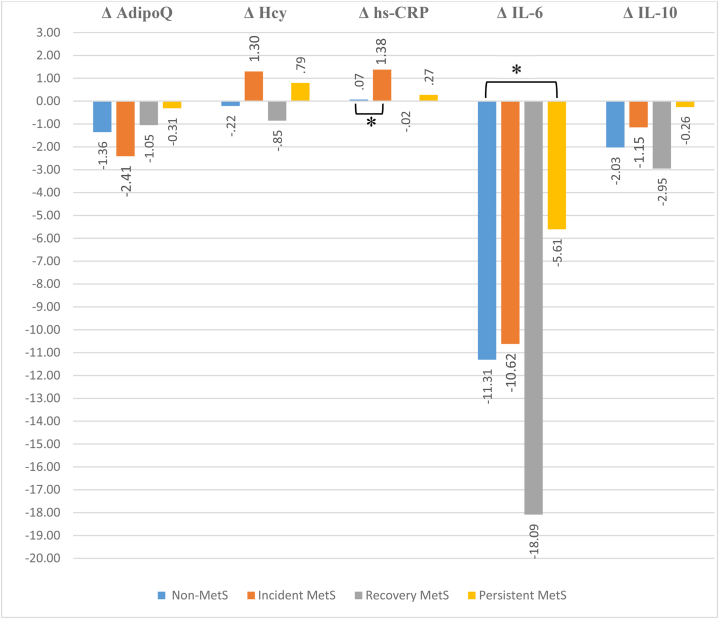
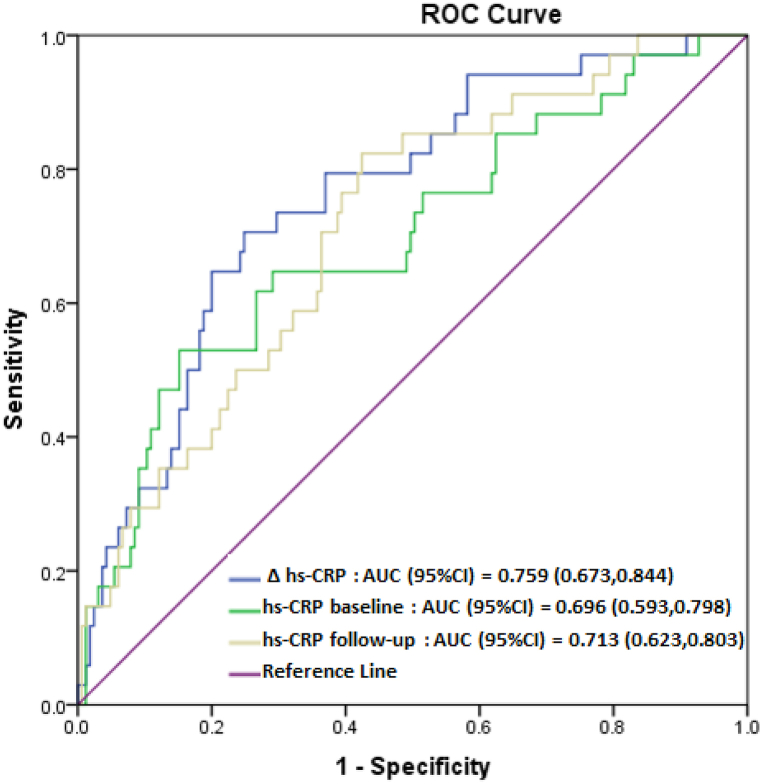
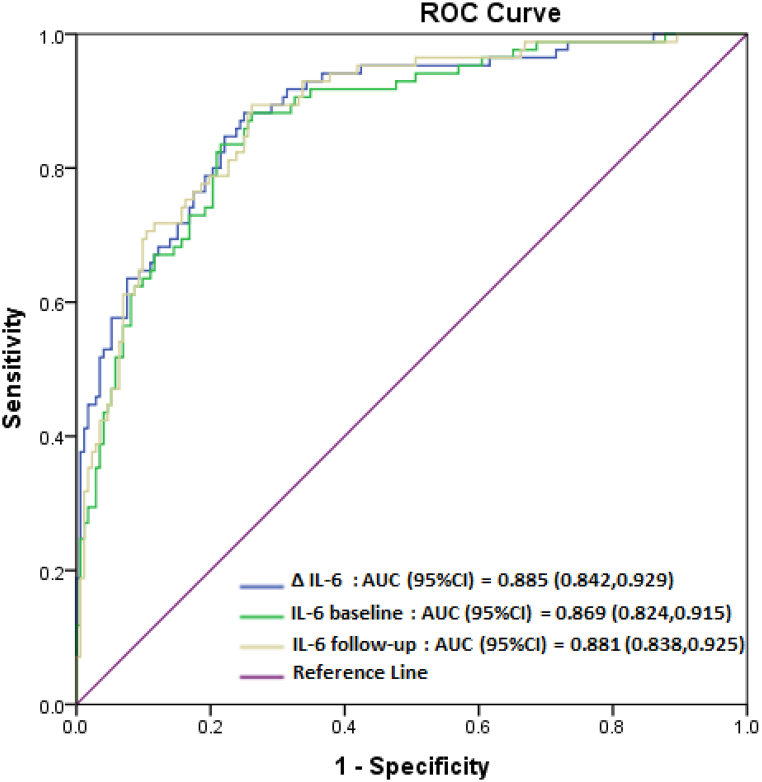
Results: The mean follow-up time was 6.1 years. There were 176 subjects in the non-MetS group, 35 in the incident MetS group, 41 in the recovery MetS group, and 88 in the persistent MetS group. Increases in the levels of both hs-CRP 1.40 (95% CI: 1.15, 1.71, p = 0.001) and IL-6 1.09 (95% CI: 1.03, 1.17, p = 0.004) significantly increased the odds of the incident and persistent MetS, respectively. The area under the ROC curve (AUC) was more than 0.69 (p < 0.000) for hs-CRP in predicting MetS incidence and more than 0.86 (p < 0.000) for IL-6 in predicting MetS persistence.
Conclusion: After a six-year average follow-up, hs-CRP and IL-6 levels were deemed more reliable predictors of MetS incidence and persistence, respectively.
Keywords: Cytokine; Inflammation; Longitudinal study; Metabolic syndrome; TLGS.
© 2023 The Authors.
Conflict of interest statement
The authors declare that they have no known competing financial interests or personal relationships that could have appeared to influence the work reported in this paper.
Figures
References
-
- Keaney J.F., Jr., Curfman G.D., Jarcho J.A. A pragmatic view of the new cholesterol treatment guidelines. N. Engl. J. Med. 2014;370(3):275–278. - PubMed
-
- Faam B., et al. Association between abdominal obesity and hs-CRP, IL-6 and HCY in tehranian adults: TLGS. Iranian Journal of Diabetes and Metabolism. 2014;13(2):163–171.
-
- Zarkesh M., et al. The relationship between metabolic syndrome, cardiometabolic risk factors and inflammatory markers in a Tehranian population: the Tehran Lipid and Glucose Study. Intern Med. 2012;51(24):3329–3335. - PubMed
LinkOut - more resources
Full Text Sources
Research Materials
Miscellaneous
