Case Reports
. 2023 Sep 22:5:ojad088.
doi: 10.1093/asjof/ojad088. eCollection 2023.

Management of Lipedema Beyond Liposuction: A Case Study

Case Reports

Management of Lipedema Beyond Liposuction: A Case Study

Victoria N Bouillon et al. Aesthet Surg J Open Forum. .

Abstract

Lipedema is a pathologic accumulation of adipose tissue in the subcutaneous layer of the extremities. This connective tissue disorder, which predominately affects females, is often misdiagnosed despite an incidence of ∼11%. Misdiagnosis often leads to delays in appropriate treatment, further increasing the morbidity of the condition. The authors report their facilities' experience in treating a patient with lipedema, requiring multiple surgical interventions involving liposuction and skin debulking to achieve desired aesthetic outcomes. The patient presented to the plastic surgery clinic with severe lipedema of the bilateral lower extremities. She previously underwent a panniculectomy and bilateral lower extremity liposuction without achieving the desired aesthetic results. Prior conservative management and liposuction alone were both unsuccessful treatment options and she required debulking procedures, along with further liposuction, as definitive management. The patient underwent 2 procedures at the clinic, both consisting of liposuction and panniculectomy of the lower extremities and buttocks. The procedures were conducted 1 year apart but were able to achieve the patient's desired aesthetics goals. Management of lipedema can be challenging, but not impossible. This case report shows that local excision is a viable option for treatment if minimally invasive options yield limited results.


Figures

Figure 1.
Figure 1.
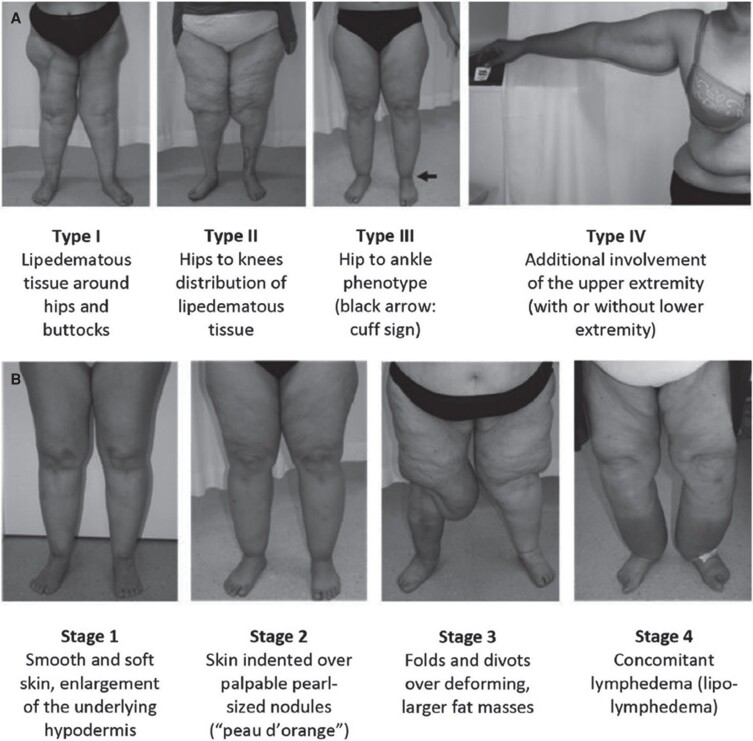
(A) Types and (B) stages of lipedema. Published with permission from Buso et al under the terms of the Creative Commons Attribution-NonCommercial License (https://creativecommons.org/licenses/by-nc/4.0/).
Figure 2.
Figure 2.
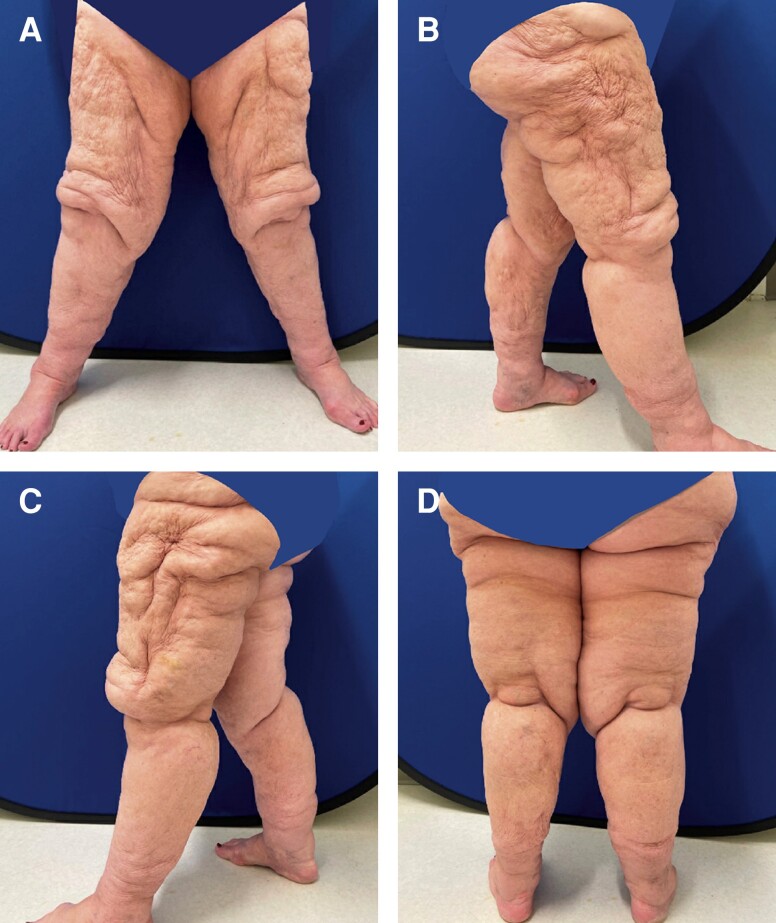
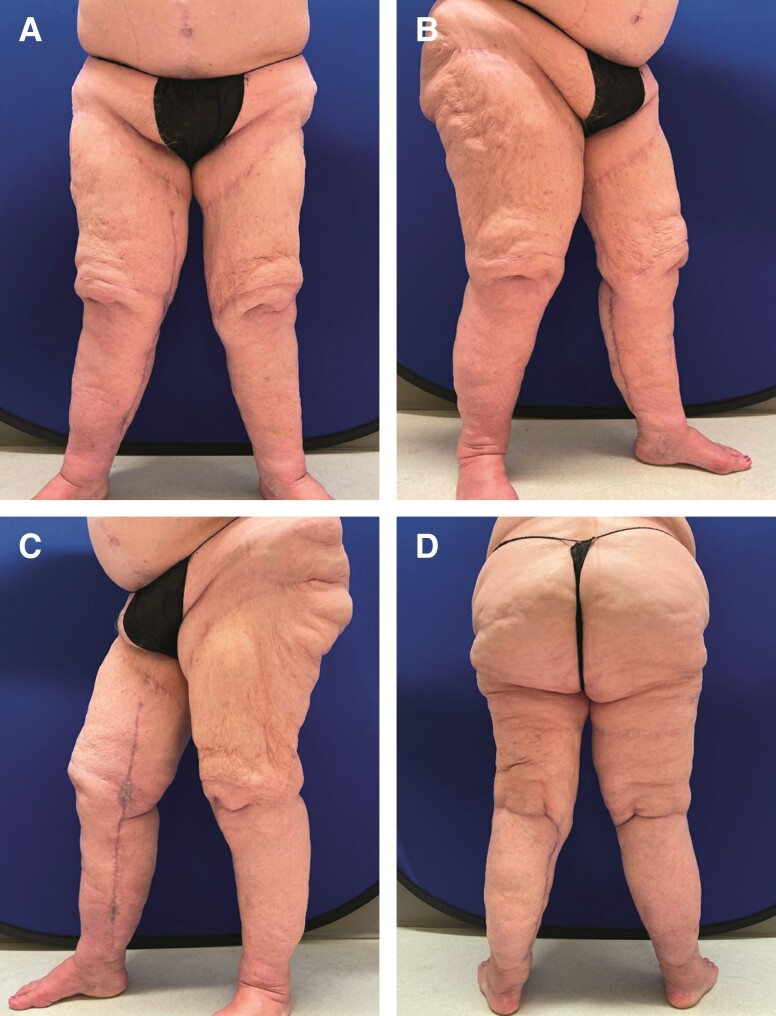
A 68-year-old female patient reported to the plastic surgery clinic with a chief complaint of excessive skin over her bilateral lower extremities. The patient had liposuction on the anterior lower extremities a year prior but stated that she did not achieve the desired aesthetic results. She is shown in (A) frontal view, (B) right lateral view, (C) left lateral view, and (D) posterior view.
Figure 3.
Figure 3.
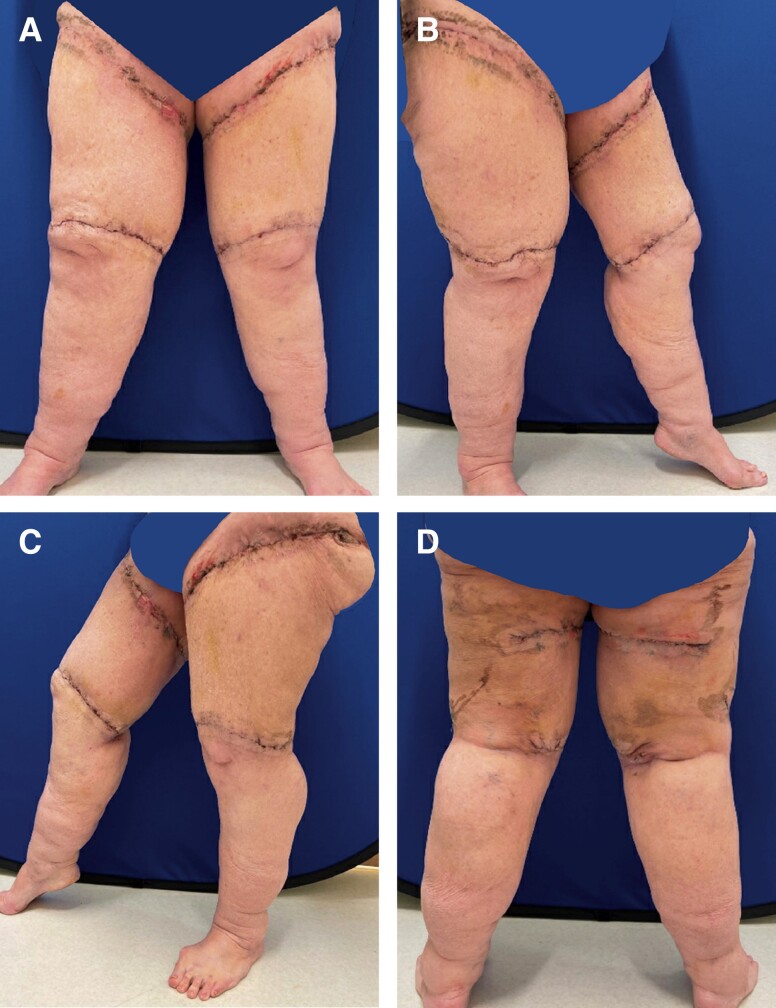
Patient on postoperative Day 14 reporting to clinic with aesthetic satisfaction after procedure for excision of excess skin and soft tissue and tumescent liposuction. 800 cc of tumescent fluid was instilled into each leg, and 1700 cc was extracted from each leg with liposctuion. Skin removal was conducted in the posterolateral buttock area, proximal thighs, and lower knees. She is shown at (A) frontal view, (B) right lateral view, (C) left lateral view, and (D) posterior view.
Figure 4.
Figure 4.
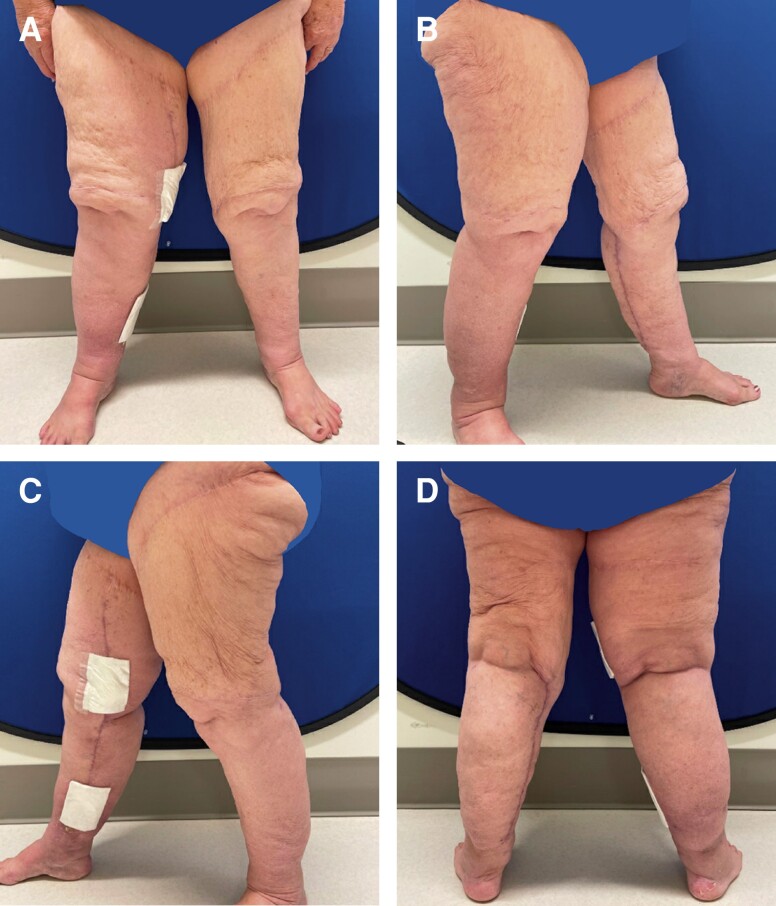
Patient on postoperative Day 12 after the second procedure for further debulking and liposuction. 1400 cc of tumescent fluid was instilled into both legs, and 2000 cc was extracted from the right and 350 cc was extracted from the lower left leg. The patient was pleased with the final aesthetic results. She is shown in (A) frontal view, (B) right lateral view, (C) left lateral view, and (D) posterior view.
Figure 5.
Figure 5.
Patient postoperative 3 months after the final debulking and liposuction procedure. The patient was satisfied with the final results, with the patient stating she had both a functional and cosmetic improvement from the initial presentation 2 years prior. She is shown in (A) frontal view, (B) right lateral view, (C) left lateral view, and (D) posterior view.

References

    1. Fife CE, Maus EA, Carter MJ. Lipedema: a frequently misdiagnosed and misunderstood fatty deposition syndrome. Adv Skin Wound Care. 2010;23(2):81–92; quiz 93-94. doi: 10.1097/01.ASW.0000363503.92360.91 - DOI - PubMed
    1. Child AH, Gordon KD, Sharpe P, et al. . Lipedema: an inherited condition. Am J Med Genet A. 2010;152A(4):970–976. doi: 10.1002/ajmg.a.33313 - DOI - PubMed
    1. Grundy SM. Adipose tissue and metabolic syndrome: too much, too little or neither. Eur J Clin Invest. 2015;45(11):1209–1217. doi: 10.1111/eci.12519 - DOI - PMC - PubMed
    1. Szél E, Kemény L, Groma G, Szolnoky G. Pathophysiological dilemmas of lipedema. Med Hypotheses. 2014;83(5):599–606. doi: 10.1016/j.mehy.2014.08.011 - DOI - PubMed
    1. Al-Ghadban S, Cromer W, Allen M, et al. . Dilated blood and lymphatic microvessels, angiogenesis, increased macrophages, and adipocyte hypertrophy in lipedema thigh skin and fat tissue. J Obes. 2019;2019:8747461. doi: 10.1155/2019/8747461 - DOI - PMC - PubMed

Publication types

LinkOut - more resources