


Acyl-AcpB, a FabT corepressor in Streptococcus pyogenes
- PMID: 37811985
- PMCID: PMC10601718
- DOI: 10.1128/jb.00274-23
Acyl-AcpB, a FabT corepressor in Streptococcus pyogenes
Abstract
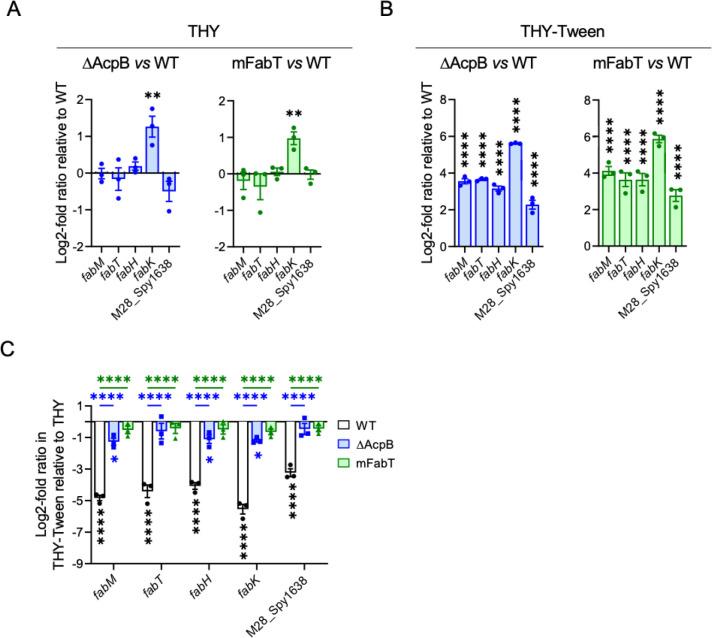
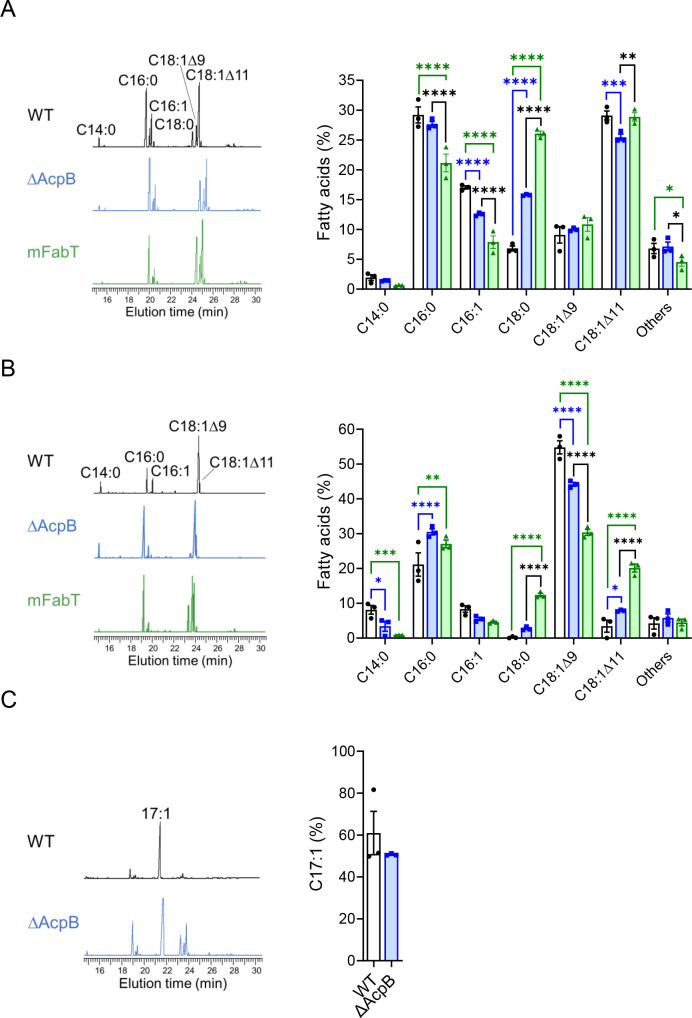
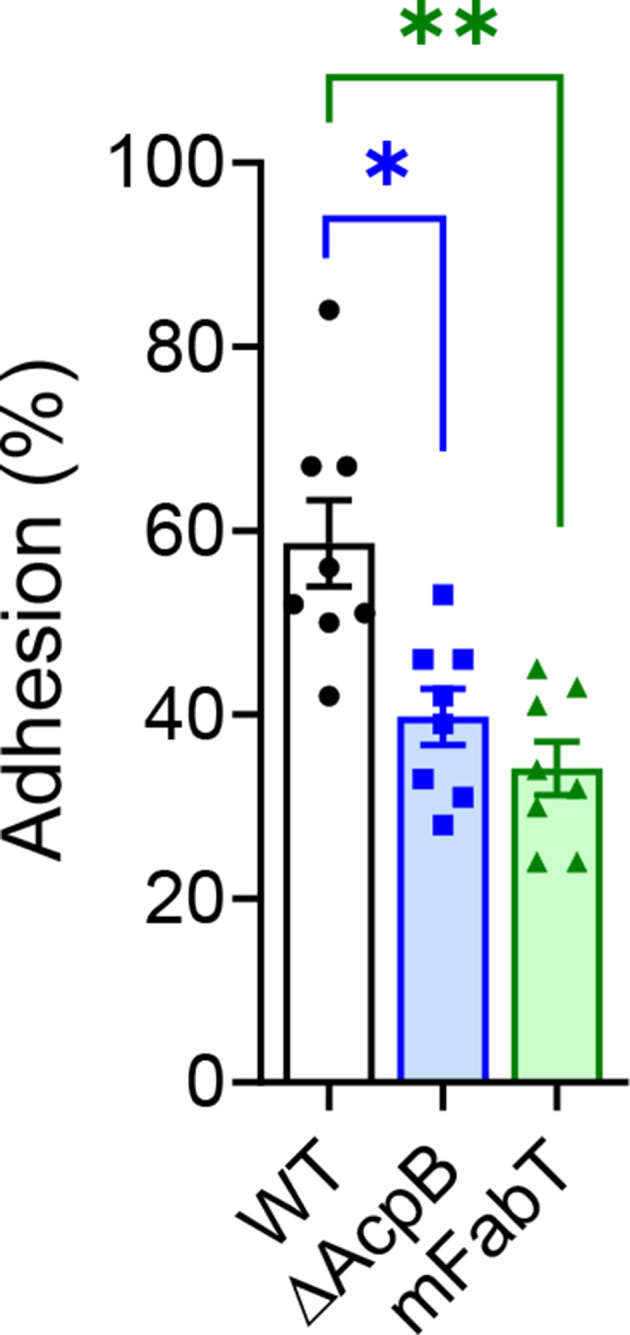
Membranes are a universal barrier to all cells. Phospholipids, essential bacterial membrane components, are composed of a polar head and apolar fatty acid (FA) chains. Most bacterial FAs are synthesized by the Type II FA synthesis pathway (FASII). In Streptococcaceae, Enterococci, and Lactococcus lactis, a unique feedback mechanism controls the FASII gene expression. FabT, encoded in the FASII main locus, is the repressor, and it is activated by long-chain acyl-acyl carrier protein (acyl-ACP). Many Streptococci, Enterococcus faecalis, but not L. lactis, possess two ACPs. The AcpA-encoding gene is within the FASII locus and is coregulated with the FASII genes. Acyl-AcpA is the end product of FASII. The AcpB-encoding gene is in operon with plsX encoding an acyl-ACP:phosphate acyltransferase. The role of acyl-AcpB as FabT corepressor is controversial. Streptococcus pyogenes, which causes a wide variety of diseases ranging from mild non-invasive to severe invasive infections, possesses AcpB. In this study, by comparing the expression of FabT-controlled genes in an acpB-deleted mutant with those in a wild-type and in a fabT mutant strain, grown in the presence or absence of exogenous FAs, we show that AcpB is the S. pyogenes FabT main corepressor. Its deletion impacts membrane FA composition and bacterial adhesion to eucaryotic cells, highlighting the importance of FASII control. Importance Membrane composition is crucial for bacterial growth or interaction with the environment. Bacteria synthesize fatty acids (FAs), membrane major constituents, via the Type II FAS (FASII) pathway. Streptococci control the expression of the FASII genes via a transcriptional repressor, FabT, with acyl-acyl carrier proteins (ACPs) as corepressor. Streptococcus pyogenes that causes a wide variety of diseases ranging from mild non-invasive to severe invasive infections possesses two ACPs. acpA, but not acpB, is a FASII gene. In this study, we show that acyl-AcpBs are FabT main corepressors. Also, AcpB deletion has consequences on the membrane FA composition and bacterial adhesion to host cells. In addition to highlighting the importance of FASII control in the presence of exogeneous FAs for the adaptation of bacteria to their environment, our data indicate that FASII gene repression is mediated by a corepressor whose gene expression is not repressed in the presence of exogenous FAs.
Keywords: Acyl-ACP; Streptococcus pyogenes; corepressor; fatty acid synthesis; regulation.
Conflict of interest statement
The authors declare no conflict of interest.
Figures
References
-
- Lambert C, Bachmann C, Gaillard M, Hautcoeur A, Gloux K, Guilbert T, Méhats C, Prost B, Solgadi A, Abreu S, Andrieu M, Poyart C, Gruss A, Fouet A. 2023. The double-edged role of FASII regulator FabT in Streptococcus pyogenes infection. Biorxiv. doi: 10.1101/2023.06.07.543851 - DOI
Publication types
MeSH terms
Substances
LinkOut - more resources
Full Text Sources
Research Materials
Miscellaneous
