


Metabolic and mitochondrial dysregulation in CD4+ T cells from HIV-positive women on combination anti-retroviral therapy
- PMID: 37816026
- PMCID: PMC10564234
- DOI: 10.1371/journal.pone.0286436
Metabolic and mitochondrial dysregulation in CD4+ T cells from HIV-positive women on combination anti-retroviral therapy
Abstract
Background: For optimal functionality, immune cells require a robust and adaptable metabolic program that is fueled by dynamic mitochondrial activity. In this study, we investigate the metabolic alterations occurring in immune cells during HIV infection and antiretroviral therapy by analyzing the uptake of metabolic substrates and mitochondrial phenotypes. By delineating changes in immune cell metabolic programming during HIV, we may identify novel potential therapeutic targets to improve anti-viral immune responses.
Methods: After consent and voluntary participation was confirmed, whole blood was drawn from HIV uninfected women and women with chronic HIV infection on long-term combination antiretroviral therapy (HIV/cART). Peripheral blood mononuclear cells-derived immune cells were directly incubated with different fluorescently tagged metabolites and markers of mitochondrial activity: FITC-2-NBDG (2-[N-(7-nitrobenz-2-oxa-1,3-diazol-4-yl) amino]-2-deoxy-D-glucose), FITC-BODIPY (4,4-Difluoro-5,7-Dimethyl-4-Bora-3a,4a-Diaza-s-Indacene-3-Hexadecanoic Acid), FITC-MitoTracker Green and APC-MitoTracker Deep Red. The uptake of glucose and fats and the mitochondrial mass and potential were measured using flow cytometry. All values are reported quantitatively as geometric means of fluorescence intensity.
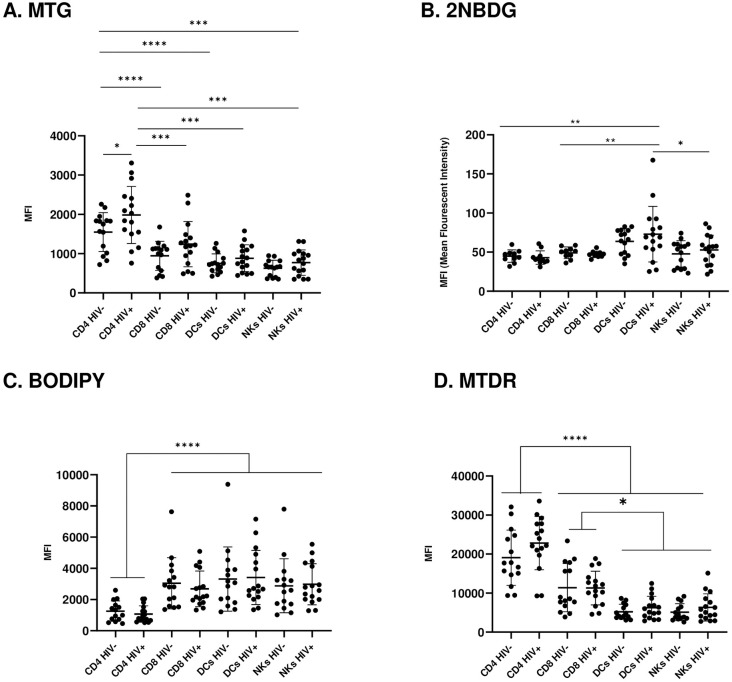
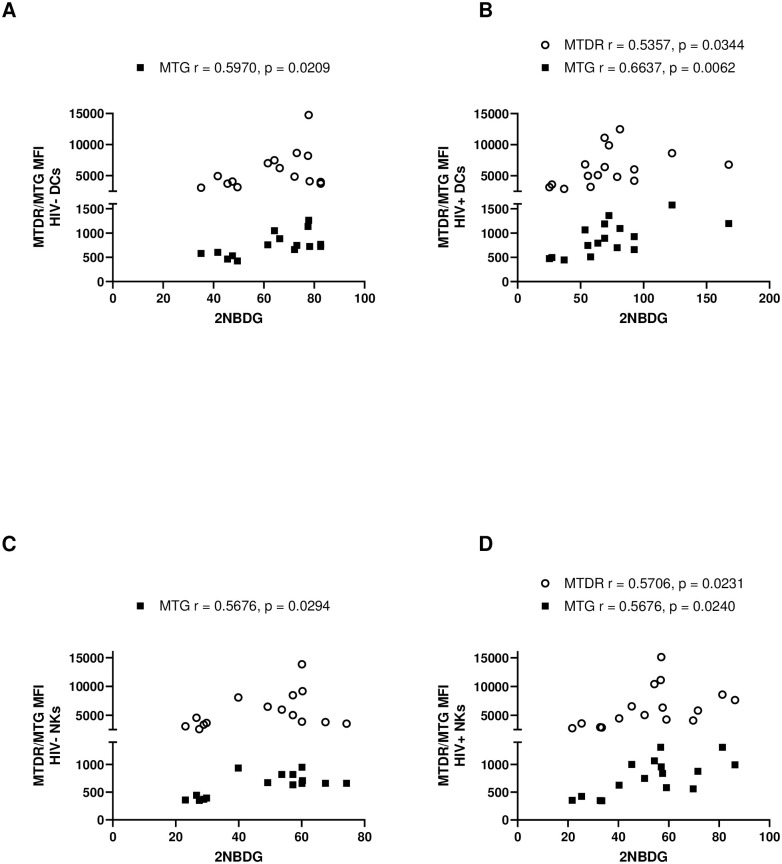
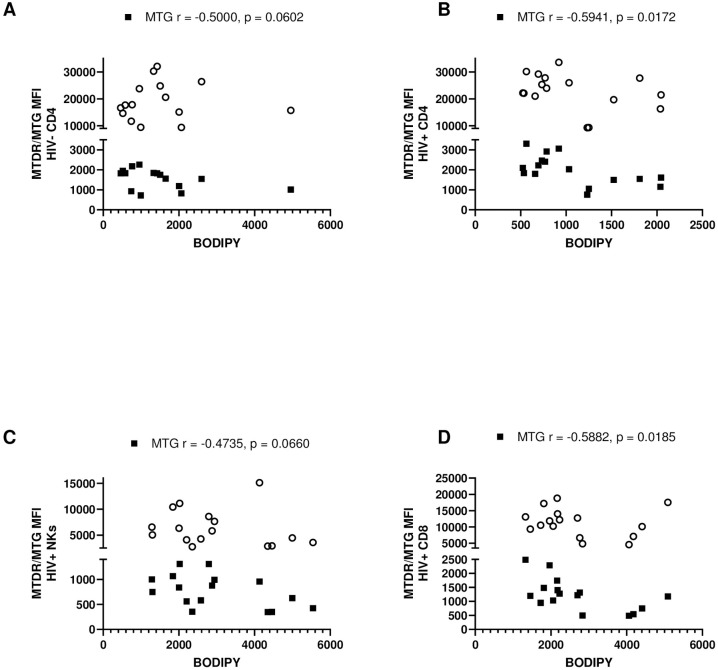
Results: During chronic HIV infection, cellular uptake of glucose increases in HIV+ dendritic cells in particular. CD4+ T cells had the lowest uptake of glucose and fats compared to all other cells regardless of HIV status, while CD8+ T cells took up more fatty acids. Interestingly, despite the lower utilization of glucose and fats in CD4+ T cells, mitochondrial mass increased in HIV+ CD4+ T cells compared to HIV negative CD4+ T-cells. HIV+ CD4+ T cells also had the highest mitochondrial potential.
Conclusions: Significant disparities in the utilization of substrates by leukocytes during chronic HIV/cART exist. Innate immune cells increased utilization of sugars and fats while adaptive immune cells displayed lower glucose and fat utilization despite having a higher mitochondrial activity. Our findings suggest that cART treated HIV-infected CD4+ T cells be dysfunctional or may prefer alternative fuel sources not included in these studies. This underscores the importance of understanding the metabolic effects of HIV treatment on immune function.
Copyright: © 2023 Akiso et al. This is an open access article distributed under the terms of the Creative Commons Attribution License, which permits unrestricted use, distribution, and reproduction in any medium, provided the original author and source are credited.
Conflict of interest statement
The authors have declared that no competing interests exist.
Figures
References
-
- Rezinciuc S, Bezavada L, Bahadoran A, Duan S, Wang R, Lopez-Ferrer D, et al. Dynamic metabolic reprogramming in dendritic cells: An early response to influenza infection that is essential for effector function. PLOS Pathogens. 2020;16(10):e1008957. doi: 10.1371/journal.ppat.1008957 - DOI - PMC - PubMed
Publication types
MeSH terms
Substances
LinkOut - more resources
Full Text Sources
Medical
Research Materials
