


Proximal hip fractures in 71,920 elderly patients: incidence, epidemiology, mortality and costs from a retrospective observational study
- PMID: 37817094
- PMCID: PMC10566057
- DOI: 10.1186/s12889-023-16776-4
Proximal hip fractures in 71,920 elderly patients: incidence, epidemiology, mortality and costs from a retrospective observational study
Abstract
Background: The risk of proximal femoral fractures increases with aging, causing significant morbidity, disability, mortality and socioeconomic pressure. The aims of the present work are (1) to investigate the epidemiology and incidence of these fractures among the elderly in the Region of Lombardy; (2) to identify the factors influencing survival; (3) to identify the factors influencing hospitalization and post-operative costs.
Methods: The Region of Lombardy provided anonymized datasets on hospitalized patients with a femoral neck fracture between 2011 and 2016, and anonymized datasets on extra-hospital treatments to track the patient history between 2008 and 2019. Statistical evaluations included descriptive statistics, survival analysis, Cox regression and multiple linear models.
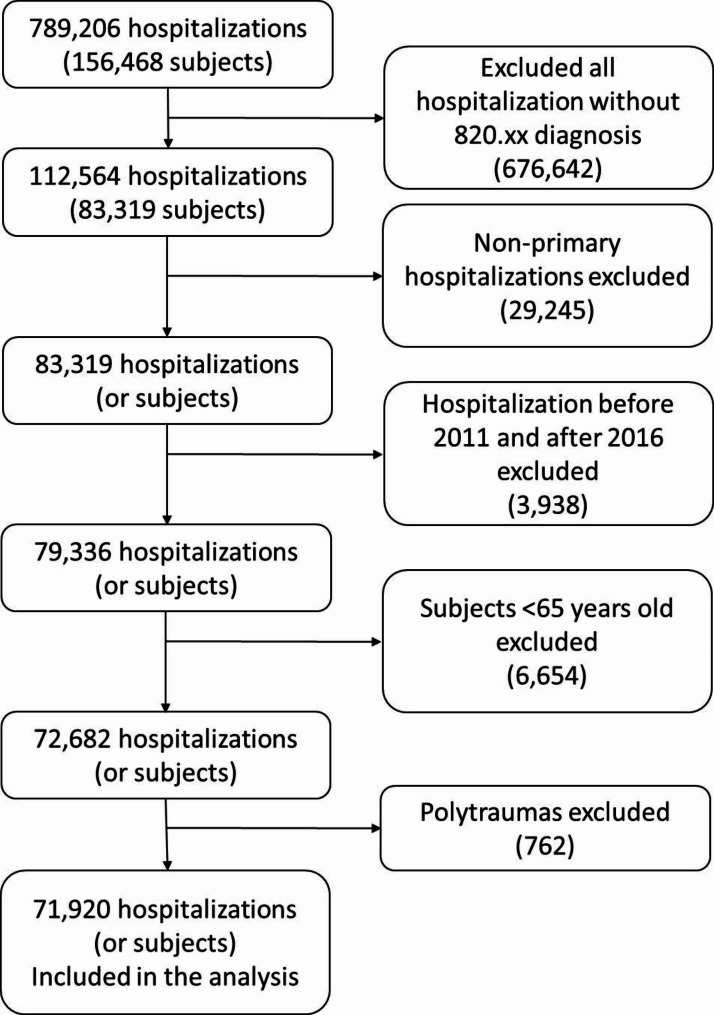
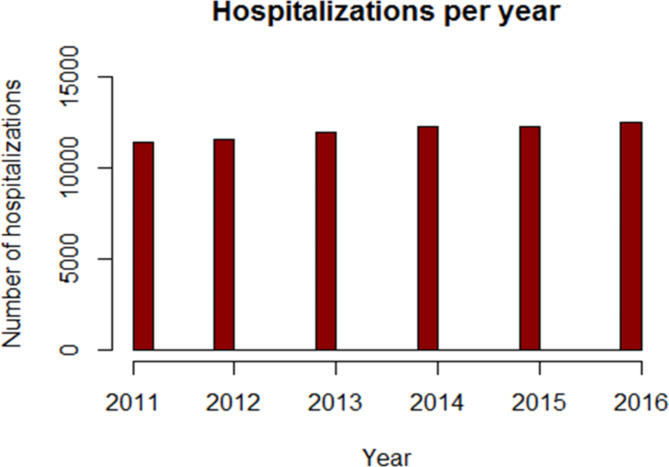
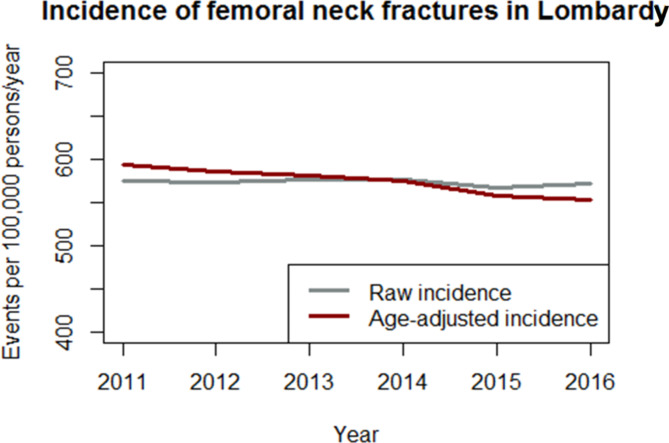
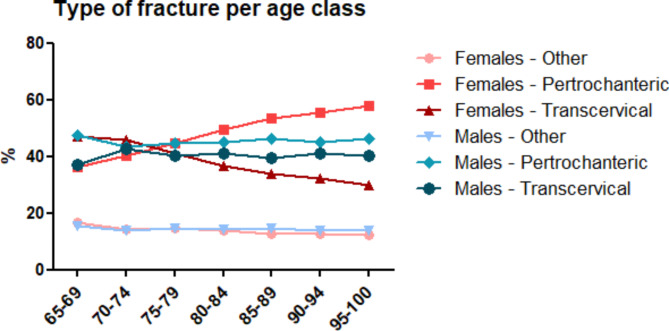
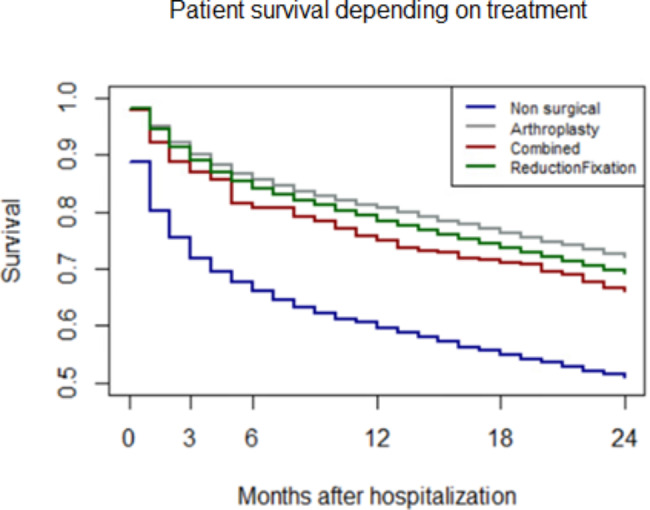
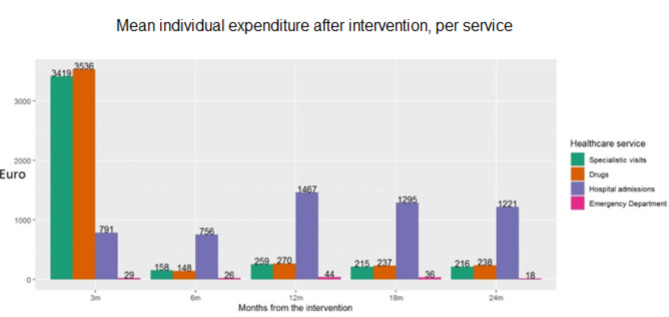
Results: 71,920 older adults suffered a femoral fracture in Lombardy between 2011 and 2016. 76.3% of patients were females and the median age was 84. The raw incidence of fractures was stable from year 2011 to year 2016, while the age-adjusted incidence diminished. Pertrochanteric fractures were more spread than transcervical fractures. In patients treated with surgery, receiving treatment within 48 h reduced the hazard of death within the next 24 months. Combined surgical procedures led to increased hazard in comparison with arthroplasty alone, while no differences were observed between different arthroplasties and reduction or fixation. In patients treated conservatively, age and male gender were associated with higher hazard of death. All patients considered, the type of surgery was the main factor determining primary hospitalization costs. A higher number of surgeries performed by the index hospital in the previous year was associated with financial savings. The early intervention significantly correlated with minor costs.
Conclusions: The number of proximal femoral fractures is increasing even if the age-adjusted incidence is decreasing. This is possibly due to prevention policies focused on the oldest cohort of the population. Two policies proved to be significantly beneficial in clinical and financial terms: the centralization of patients in high-volume hospitals and a time limit of 48 h from fracture to surgery.
Trial registration: Non applicable.
Keywords: Elderly; Healthcare policy; Lombardy; Mortality; Osteoporosis; Prevention; Proximal femoral fracture; Social determinants of health; Value-based care.
© 2023. BioMed Central Ltd., part of Springer Nature.
Conflict of interest statement
The authors declare no competing interests.
Figures
References
Publication types
MeSH terms
LinkOut - more resources
Full Text Sources
Medical
