


Lower-Socioeconomic Status Patients Have Extremely High-Risk Factor Profiles on Entry to Cardiac Rehabilitation
- PMID: 37820180
- PMCID: PMC10843557
- DOI: 10.1097/HCR.0000000000000826
Lower-Socioeconomic Status Patients Have Extremely High-Risk Factor Profiles on Entry to Cardiac Rehabilitation
Abstract
Purpose: Patients with lower socioeconomic status (SES) have higher rates of cardiovascular events, yet are less likely to engage in secondary prevention such as cardiac rehabilitation (CR). Given the low number of lower-SES patients entering CR, characterization of this population has been difficult. Our CR program specifically increased recruitment of lower-SES patients, allowing for careful comparison of medical, psychosocial, and behavioral risk factors between lower- and higher-SES patients eligible for secondary prevention.
Methods: Demographic and clinical characteristics were prospectively gathered on consecutive individuals entering phase 2 CR from January 2014 to December 2022. Patients were classified as lower SES if they had Medicaid insurance. Statistical methods included chi-square and nonpaired t tests. A P value of <.01 was used to determine significance.
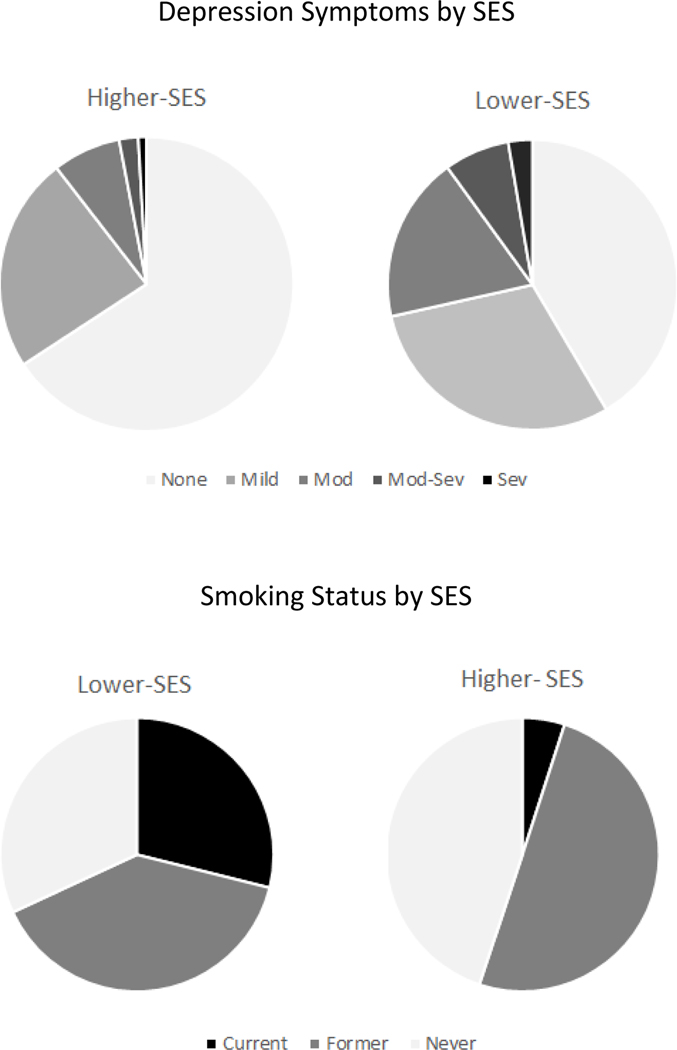
Results: The entire cohort consisted of 3131 individuals. Compared with higher-SES patients, lower-SES individuals (n = 405; 13%) were a decade younger (57.1 ± 10.4 vs 67.2 ± 11.2 yr), 5.8 times more likely to be current smokers (29 vs 5%), 1.7 times more likely to have elevated depressive symptoms, and significantly higher body mass index, waist circumference, and glycated hemoglobin A 1c , with more abnormal lipid profiles (all P s < .001). Despite being a decade younger, lower-SES patients had lower measures of cardiorespiratory fitness and self-reported physical function (both P s < .001).
Conclusion: Lower-SES patients have a remarkably prominent high-risk cardiovascular disease profile, resulting in a substantially higher risk for a recurrent coronary event than higher-SES patients. Accordingly, efforts must be made to engage this high-risk population in CR. It is incumbent on CR programs to ensure that they are appropriately equipped to intervene on modifiable risk factors such as low cardiorespiratory fitness, obesity, depression, and smoking.
Copyright © 2023 Wolters Kluwer Health, Inc. All rights reserved.
Conflict of interest statement
Figures


References
-
- CDC. https://www.cdc.gov/nchs/hus/report.htm accessed June 3, 2023
-
- Tsao CW, Aday AW, Almarzooq ZI, et al. Heart Disease and Stroke Statistics-2022 Update: A Report From the American Heart Association. Circulation. 2022;145(8): e153–e639. - PubMed
-
- Alter DA, Chong A, Austin PC, et al.; SESAMI Study Group. Socioeconomic status and mortality after acute myocardial infarction. Ann Intern Med. 2006;144(2):82–93. - PubMed
Publication types
MeSH terms
Grants and funding
LinkOut - more resources
Full Text Sources
Medical
