. 2024 Jan;43(1):e202300262.
doi: 10.1002/minf.202300262. Epub 2023 Nov 14.

A community effort in SARS-CoV-2 drug discovery

Johannes SchimunekPhilipp SeidlKatarina ElezTim HempelTuan LeFrank NoéSimon OlssonLluís RaichRobin WinterHatice GokcanFilipp GusevEvgeny M GutkinOlexandr IsayevMaria G KurnikovaChamali H NarangodaRoman ZubatyukIvan P BoskoKonstantin V FursAnna D KarpenkoYury V KornoushenkoMikita ShuldauArtsemi YushkevichMohammed B BenabderrahmanePatrick Bousquet-MelouRonan BureauBeatrice ChartonBertrand C CirouGérard GilWilliam J AllenSuman SirimullaStanley WatowichNick AntonopoulosNikolaos EpitropakisAgamemnon KrasoulisVassilis ItsikalisStavros TheodorakisIgor KozlovskiiAnton MaliutinAlexander MedvedevPetr PopovMark ZaretckiiHamid Eghbal-ZadehChristina HalmichSepp HochreiterAndreas MayrPeter RuchMichael WidrichFrancois BerengerAshutosh KumarYoshihiro YamanishiKam Y J ZhangEmmanuel BengioYoshua BengioMoksh J JainMaksym KorablyovCheng-Hao LiuGilles MarcouEnrico GlaabKelly BarnsleySuhasini M IyengarMary Jo OndrechenV Joachim HauptFlorian KaiserMichael SchroederLuisa PuglieseSimone AlbaniChristina AthanasiouAndrea BeccariPaolo CarloniGiulia D'ArrigoEleonora GianquintoJonas GoßenAnton HankeBenjamin P JosephDaria B KokhSandra KovachkaCandida ManelfiGoutam MukherjeeAbraham Muñiz-ChicharroFrancesco MusianiAriane Nunes-AlvesGiulia PaiardiGiulia RossettiS Kashif SadiqFrancesca SpyrakisCarmine TalaricoAlexandros TsengenesRebecca C WadeConner CopelandJeremiah GaiserDaniel R OlsonAmitava RoyVishwesh VenkatramanTravis J WheelerHaribabu ArthanariKlara BlaschitzMarco CespugliVedat DurmazKonstantin FackeldeyPatrick D FischerChristoph GorgullaChristian GruberKarl GruberMichael HetmannJamie E KinneyKrishna M Padmanabha DasShreya PanditaAmit SinghGeorg SteinkellnerGuilhem TesseyreGerhard WagnerZi-Fu WangRyan J YustDmitry S DruzhilovskiyDmitry A FilimonovPavel V PogodinVladimir PoroikovAnastassia V RudikLeonid A StolbovAlexander V VeselovskyMaria De RosaGiada De SimoneMaria R GulottaJessica LombinoNedra MekniUgo PerriconeArturo CasiniAmanda EmbreeD Benjamin GordonDavid LeiKatelin PrattChristopher A VoigtKuang-Yu ChenYves JacobTim KrischunsPierre LafayeAgnès ZettorM Luis RodríguezKris M WhiteDaren FearonFrank Von DelftMartin A WalshDragos HorvathCharles L Brooks 3rdBabak FalsafiBryan FordAdolfo García-SastreSang Yup LeeNadia NaffakhAlexandre VarnekGünter KlambauerThomas M Hermans

A community effort in SARS-CoV-2 drug discovery

Johannes Schimunek et al. Mol Inform. 2024 Jan.

Abstract

The COVID-19 pandemic continues to pose a substantial threat to human lives and is likely to do so for years to come. Despite the availability of vaccines, searching for efficient small-molecule drugs that are widely available, including in low- and middle-income countries, is an ongoing challenge. In this work, we report the results of an open science community effort, the "Billion molecules against COVID-19 challenge", to identify small-molecule inhibitors against SARS-CoV-2 or relevant human receptors. Participating teams used a wide variety of computational methods to screen a minimum of 1 billion virtual molecules against 6 protein targets. Overall, 31 teams participated, and they suggested a total of 639,024 molecules, which were subsequently ranked to find 'consensus compounds'. The organizing team coordinated with various contract research organizations (CROs) and collaborating institutions to synthesize and test 878 compounds for biological activity against proteases (Nsp5, Nsp3, TMPRSS2), nucleocapsid N, RdRP (only the Nsp12 domain), and (alpha) spike protein S. Overall, 27 compounds with weak inhibition/binding were experimentally identified by binding-, cleavage-, and/or viral suppression assays and are presented here. Open science approaches such as the one presented here contribute to the knowledge base of future drug discovery efforts in finding better SARS-CoV-2 treatments.

Keywords: COVID-19; SARS-CoV-2; drug discovery; machine learning.


Conflict of interest statement

CONFLICT OF INTEREST STATEMENT

Nick Antonopoulos, Agamemnon Krasoulis, Vassilis Pitsikalis and Stavros Theodorakis (all members of the deeplab team) have filed non-provisional patent application PCT/EP2021/084447 in the name of Deeplab IKE relating to machine learning for efficient protein-ligand virtual screening.

Figures
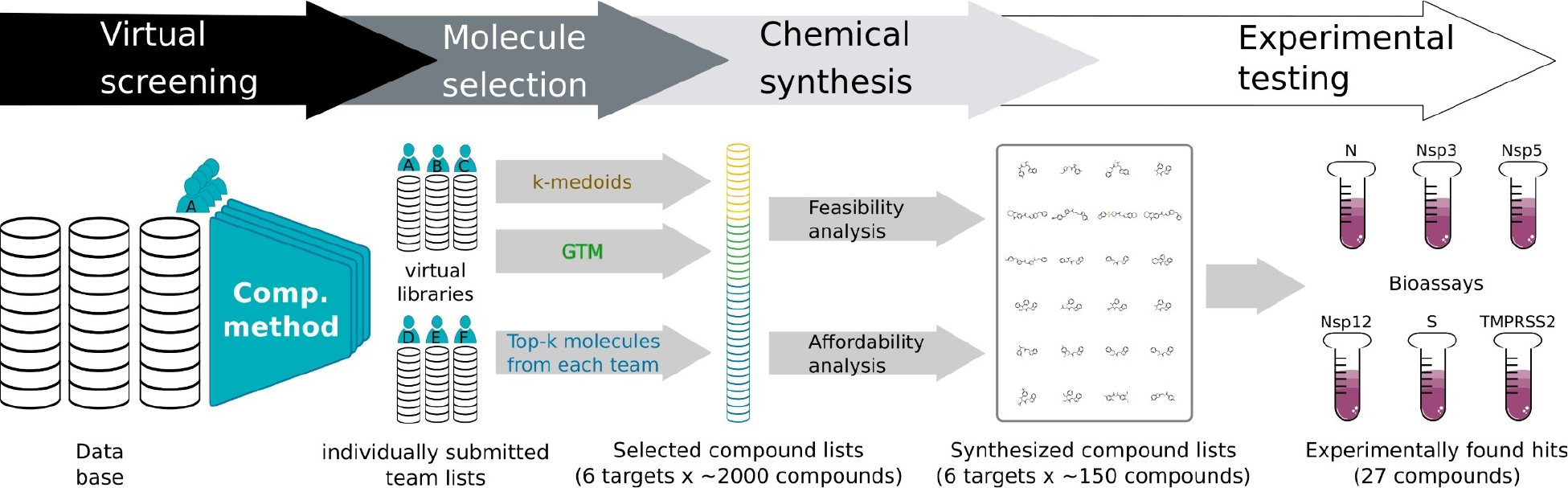
FIGURE 1
FIGURE 1
Overview of the main stages of the Billion Molecules Against COVID-19 Challenge.
FIGURE 2
FIGURE 2
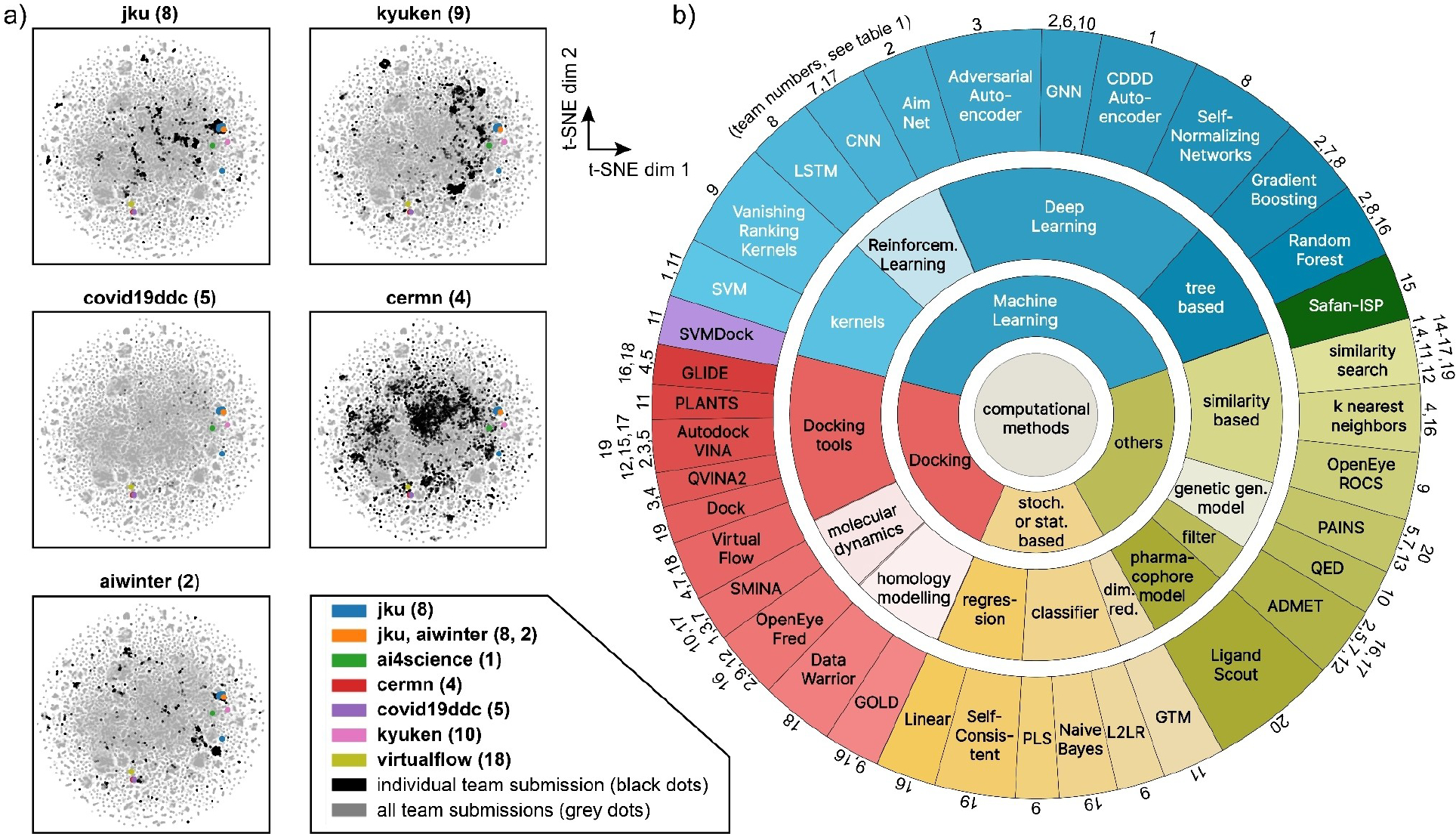
a) Scatterplots in t-SNE coordinates which show the Nsp5 experimental hits (colored dots) and the submitted compounds by the teams (black dots for single team in each panel, gray dots for all submitted compounds by all teams). For t-SNE plots for each individual team see Figure S9a,b and Supporting Information Section 3. b) Overview of computational methods used by the different teams. Numbers correspond to participating teams (see Table 1).
FIGURE 3
FIGURE 3
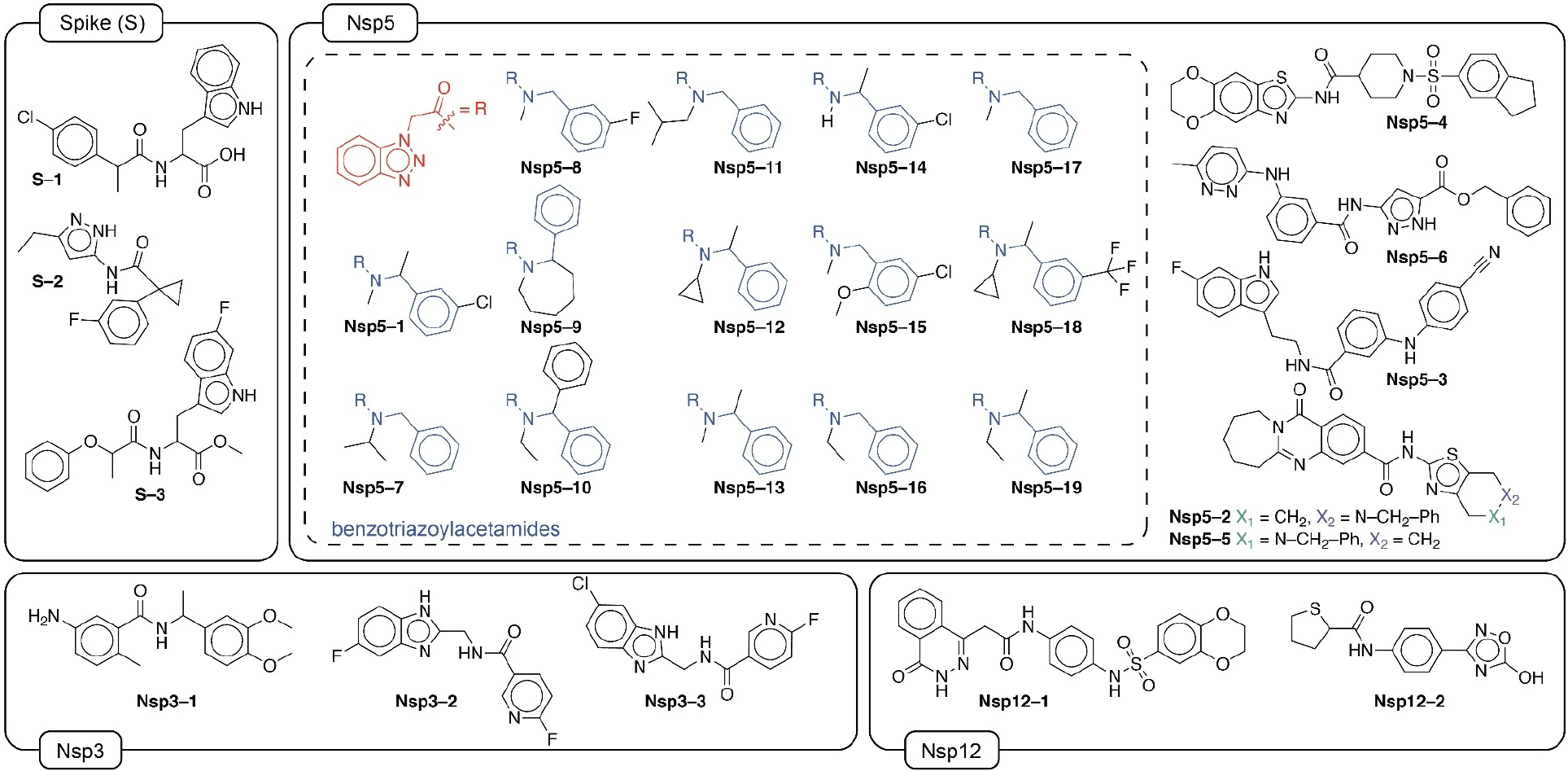
Chemical structures of 27 hit compounds that bind to one of the protein targets or have biological activity. Molecules are grouped with respect to the experimental protein target they were found to have activity, which is not always the one that was initially predicted by the teams. The benzotriazolyl acetamide family (14 compounds) of Nsp5 is shown in the dashed box.
FIGURE 4
FIGURE 4
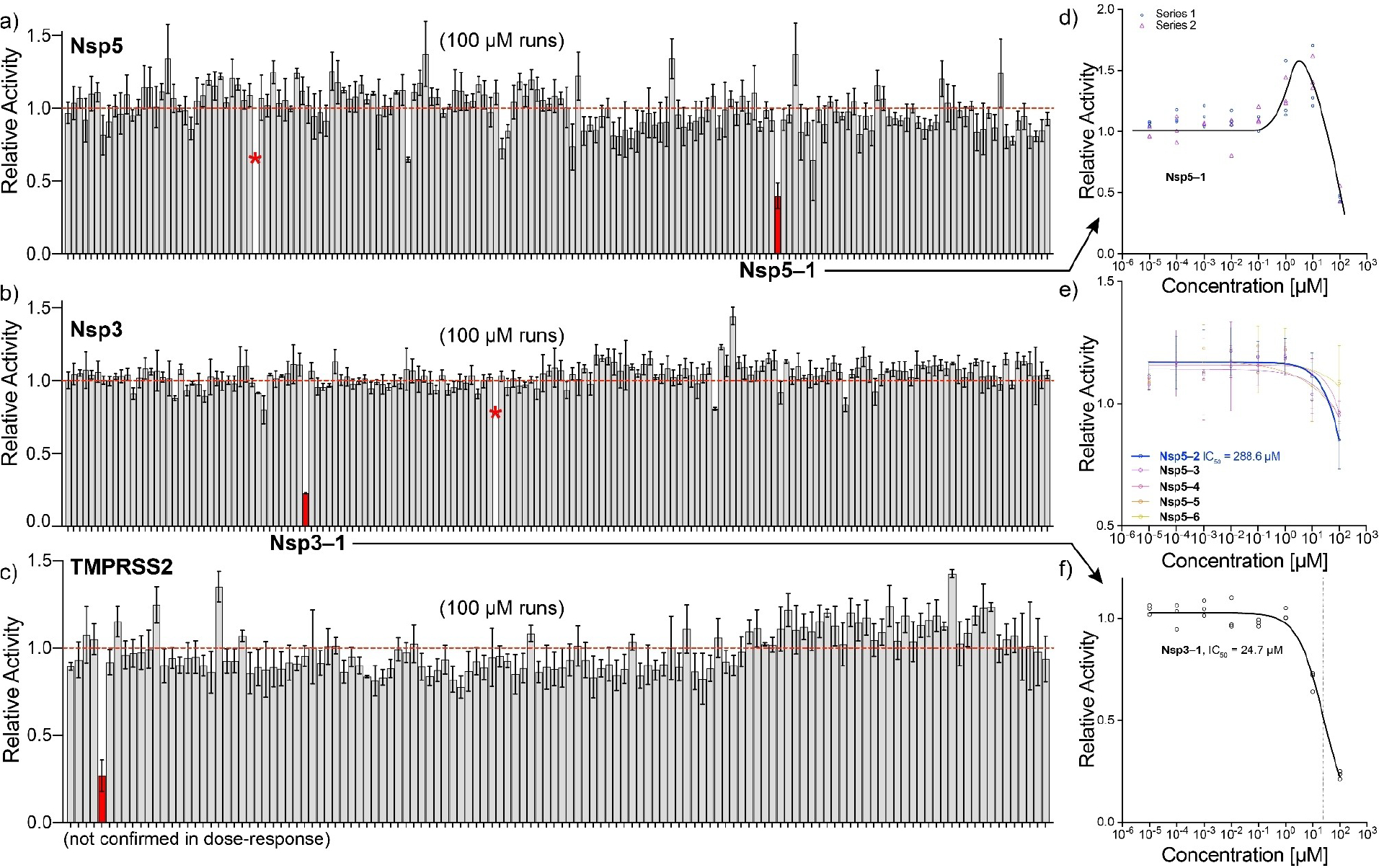
Overview of protease cleavage assays. a–c) relative activity over triplicate experiments at a fixed compound concentration of 100 μM for Nsp5, Nsp3 and TMPRSS2, respectively. Red bars show compounds that reduce cleavage (relative) activity by more than 50%. Asterisks show highly fluorescent compounds that could not be analyzed. Not all compound labels are listed for clarity. d–f) dose-response curves at different compound concentrations. Solid lines in panel e–f show fits, panel d to guide the eye.
FIGURE 5
FIGURE 5
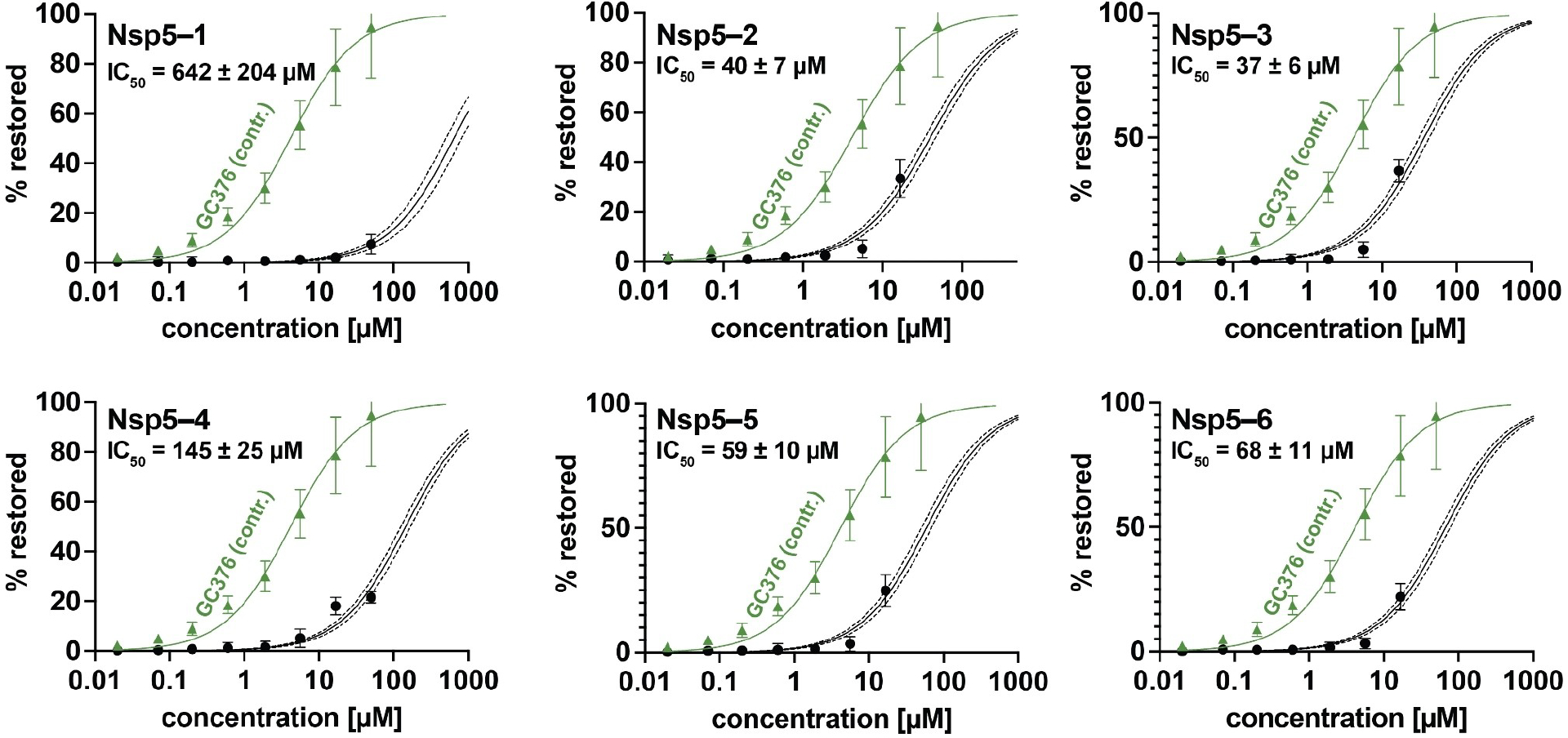
Dose-response curves of compounds in cell-based Nsp5 protease assay. IC50 values are also in Table 3 below. Solid line: curve fit result. Dashed lines: 95% confidence interval. Data are expressed as the mean ± standard deviation of 3 independent experiments each performed in triplicate. Green triangles show positive controls for inhibitor GC376 (see Supporting Information section 4.3.2). Cytotoxicity was detected above 20 μM, so higher concentrations were excluded.
FIGURE 6
FIGURE 6
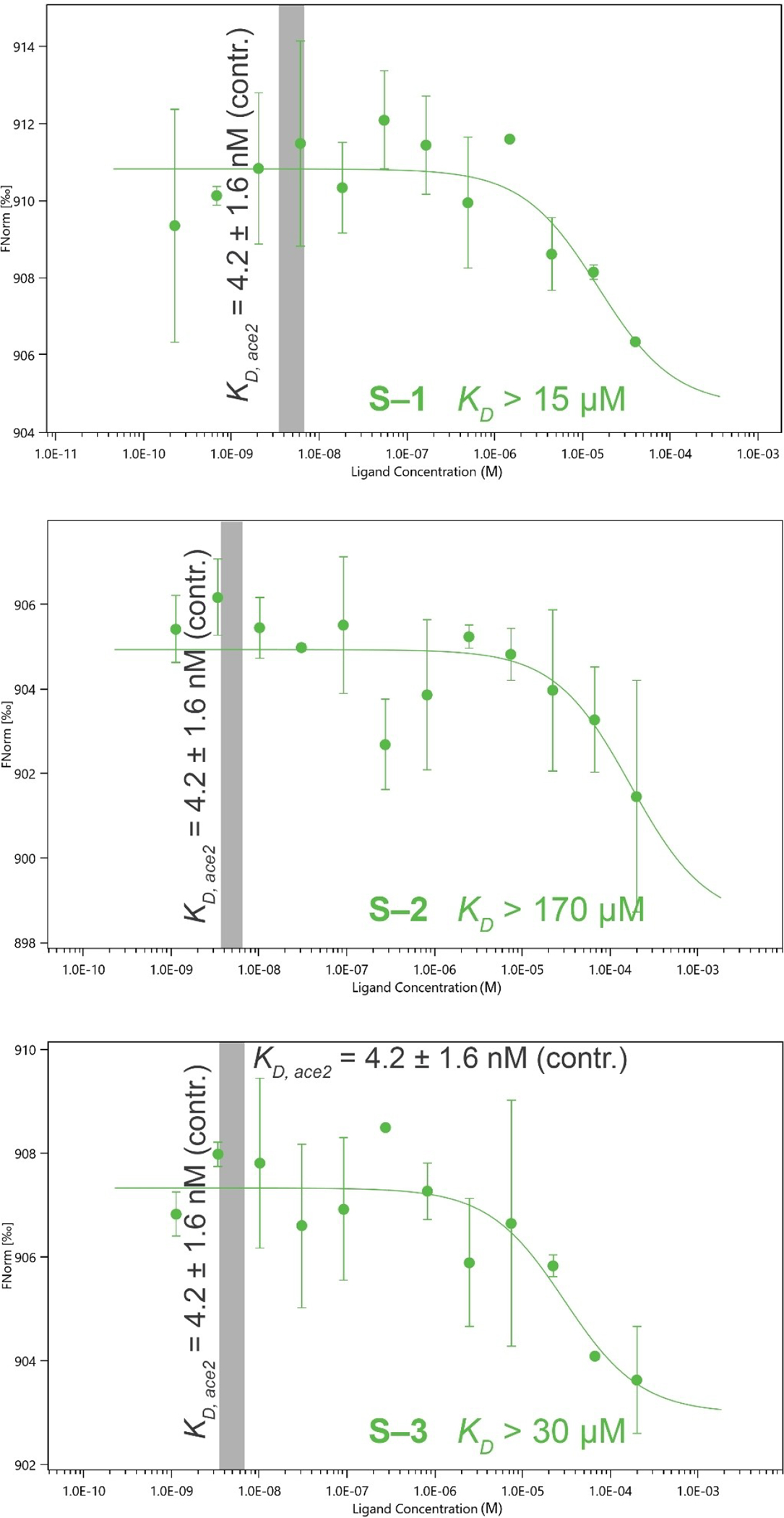
Binding curves of S compounds using Microscale thermophoresis performed in triplicate. Error bars show standard deviations. The gray region shows the KD for positive control Ace2. See Supporting Information Section 4.2 for details on assay conditions.
FIGURE 7
FIGURE 7
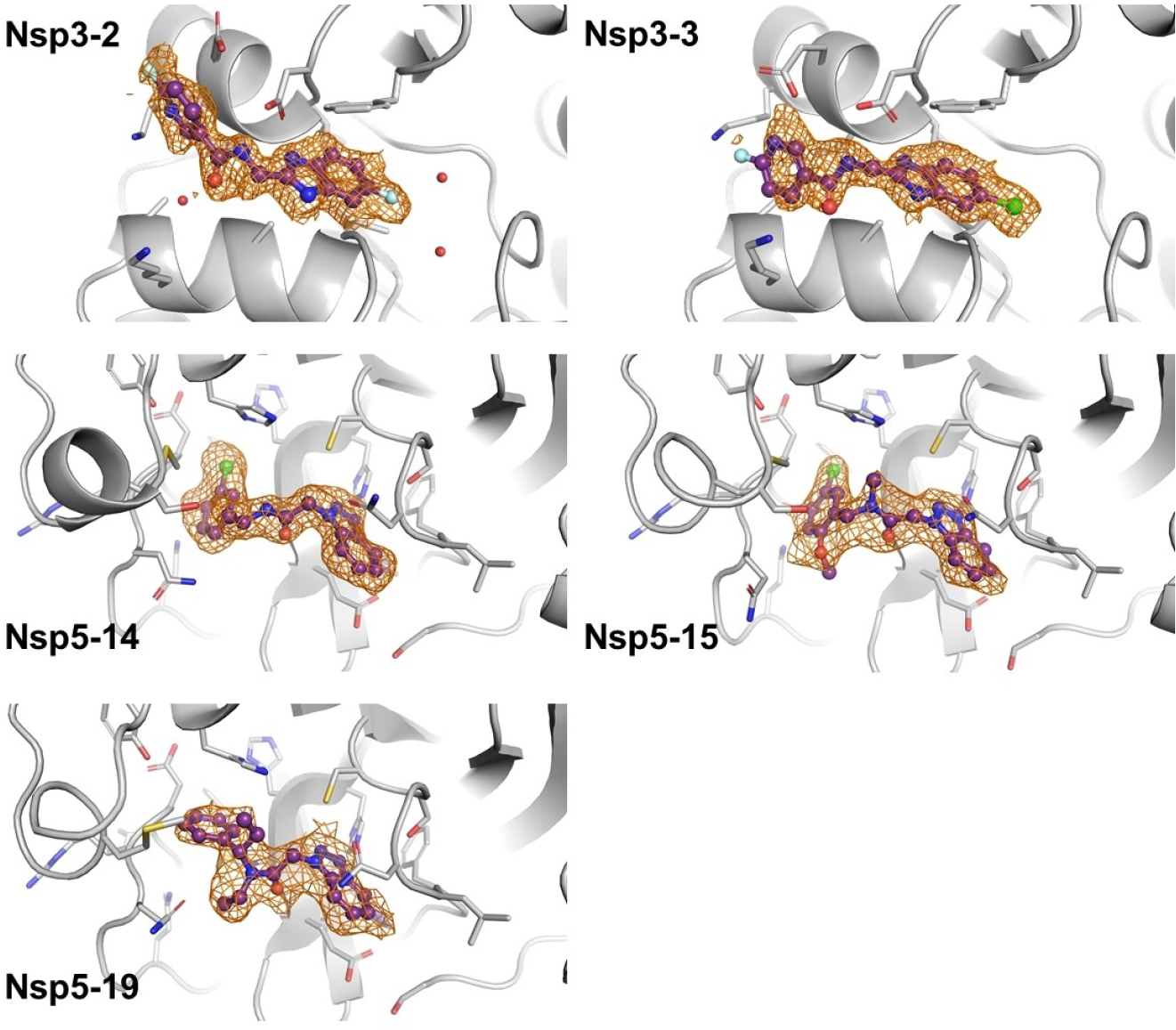
Crystal structures with examples of the Nsp5 benzotriazolyl acetamide family and Nsp3 (macrodomain) binders. The compounds are shown with purple sticks and balls and the PanDDA event map is shown as an orange mesh. PDB files can be downloaded from https://github.com/hermanslab/COVID-19.
FIGURE 8
FIGURE 8
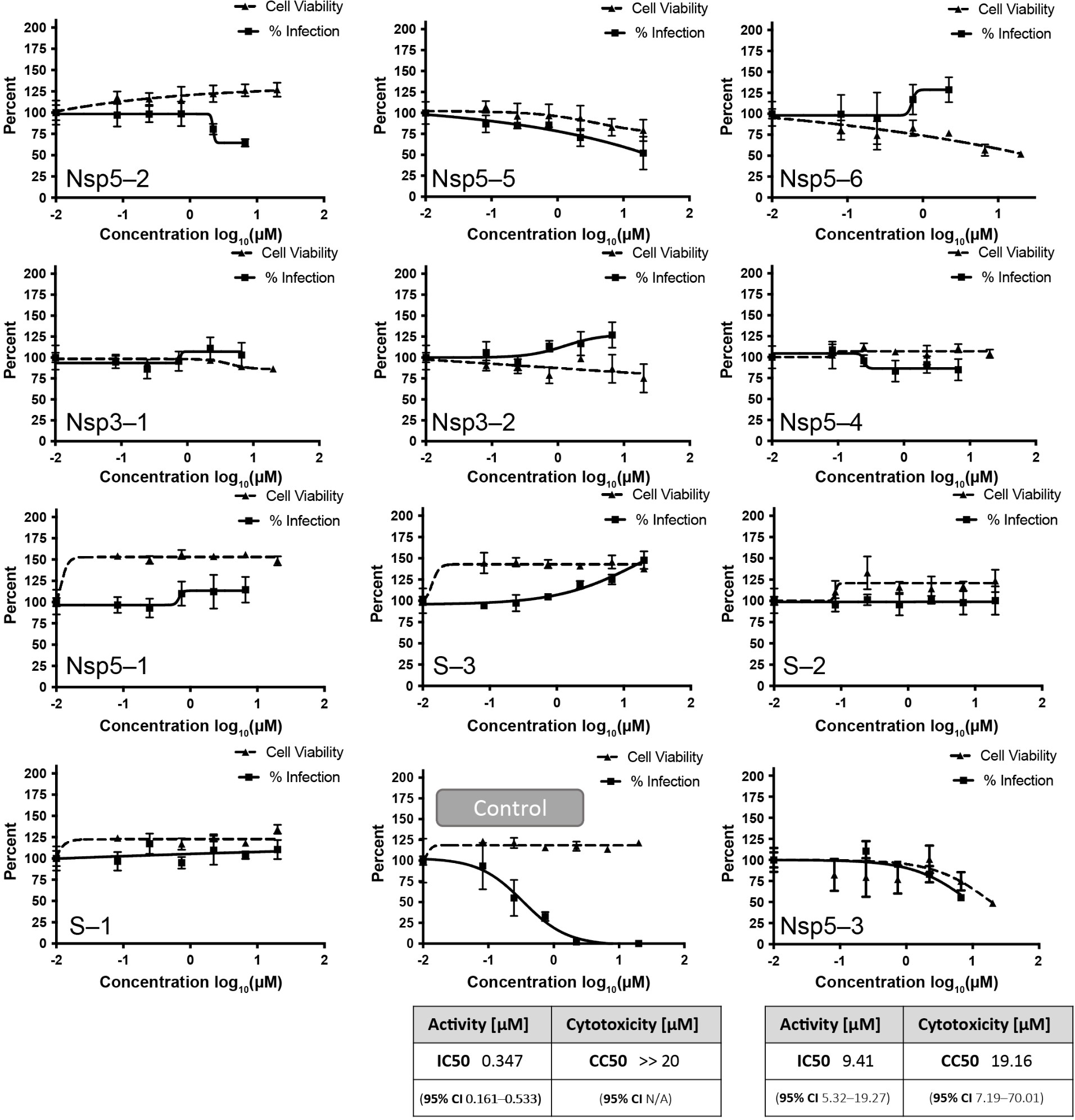
Viral reduction assays of compounds found by the teams compared to Remdesivir as the control. Error bars show standard deviations over triplicate measurements. An IC50 value could only be determined for Nsp53.

References

    1. Polack FP, Thomas SJ, Kitchin N, Absalon J, Gurtman A, Lockhart S, Perez JL, Pérez Marc G, Moreira ED, Zerbini C, Bailey R, Swanson KA, Roychoudhury S, Koury K, Li P, Kalina WV, Cooper D, Frenck RW, Hammitt LL, Türeci Ö, Nell H, Schaefer A, Ünal S, Tresnan DB, Mather S, Dormitzer PR, Şahin U, Jansen KU, Gruber WC, Engl N J. Med. 2020, 383, 2603–2615. - PMC - PubMed
    1. Araf Y, Akter F, Tang Y, Fatemi R, Parvez Md. S. A., Zheng C, Hossain Md. G., J. Med. Virol. 2022, 94, 1825–1832. - PMC - PubMed
    1. Bowe B, Xie Y, Al-Aly Z, Nat. Med. 2022, 28, 2398–2405. - PMC - PubMed
    1. Owen DR, Allerton CMN, Anderson AS, Aschenbrenner L, Avery M, Berritt S, Boras B, Cardin RD, Carlo A, Coffman KJ, Dantonio A, Di L, Eng H, Ferre R, Gajiwala KS, Gibson SA, Greasley SE, Hurst BL, Kadar EP, Kalgutkar AS, Lee JC, Lee J, Liu W, Mason SW, Noell S, Novak JJ, Obach RS, Ogilvie K, Patel NC, Pettersson M, Rai DK, Reese MR, Sammons MF, Sathish JG, Singh RSP, Steppan CM, Stewart AE, Tuttle JB, Updyke L, Verhoest PR, Wei L, Yang Q, Zhu Y, Y, Science 2021, 374, 1586–1593. - PubMed
    1. Hammond J, Leister-Tebbe H, Gardner A, Abreu P, Bao W, Wisemandle W, Baniecki M, Hendrick VM, Damle B, Simón-Campos A, Pypstra R, Rusnak JM, Engl N J. Med. 2022, 386, 1397–1408. - PMC - PubMed