


Evaluation of the Effect of Perfluorohexane Sulfonate on the Proliferation of Human Liver Cells
- PMID: 37835138
- PMCID: PMC10572997
- DOI: 10.3390/ijerph20196868
Evaluation of the Effect of Perfluorohexane Sulfonate on the Proliferation of Human Liver Cells
Abstract
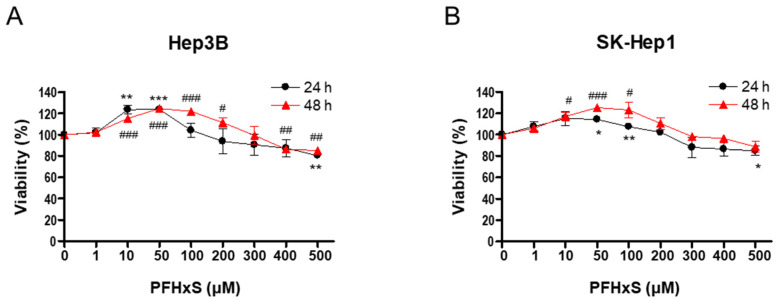
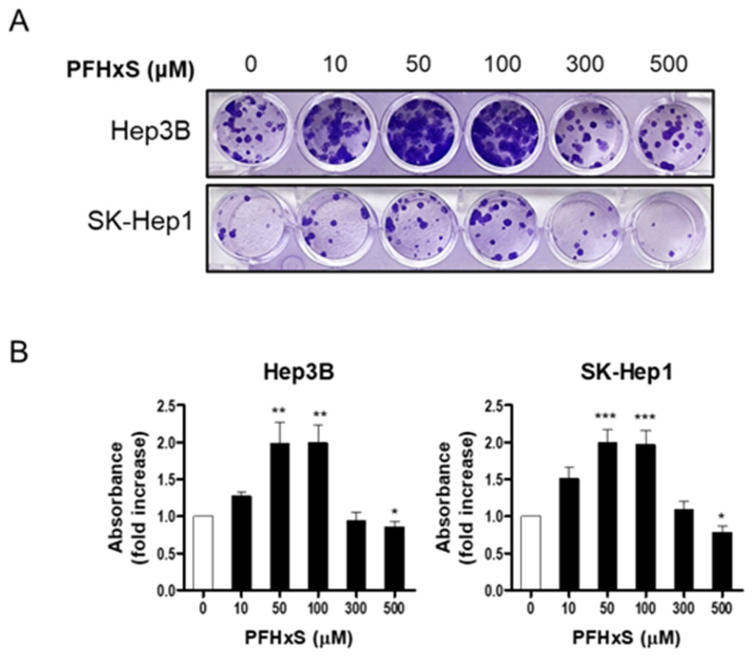
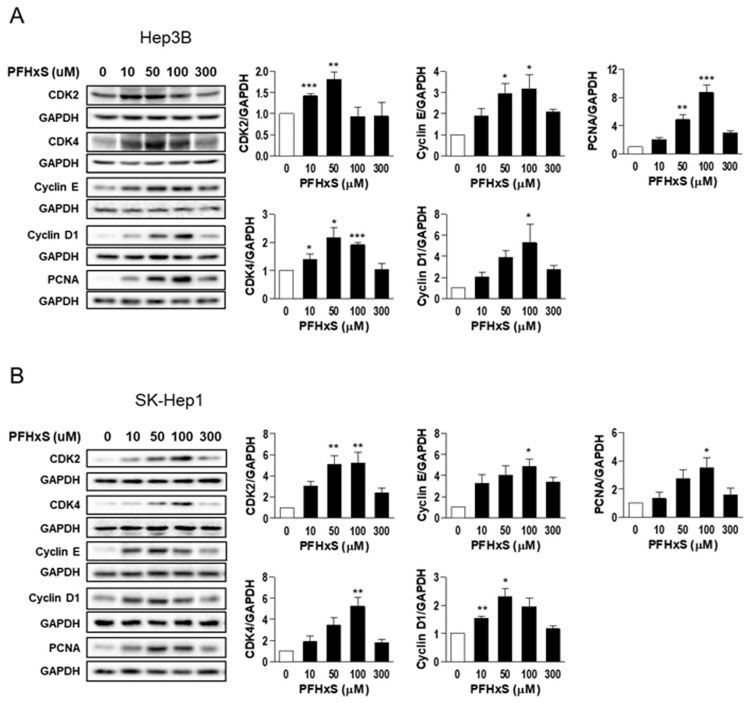
Perfluorohexane sulfonate (PFHxS) is a widely detected replacement for legacy long-chain perfluoroalkyl substances (PFAS) in the environment and human blood samples. Its potential toxicity led to its recent classification as a globally regulated persistent organic pollutant. Although animal studies have shown a positive association between PFHxS levels and hepatic steatosis and hepatocellular hypertrophy, the link with liver toxicity, including end-stage liver cancer, remains inconclusive. In this study, we examined the effects of PFHxS on the proliferation of Hep3B (human hepatocellular carcinoma) and SK-Hep1 (human liver sinusoidal endothelial cells). Cells were exposed to different PFHxS concentrations for 24-48 h to assess viability and 12-14 days to measure colony formation. The viability of both cell lines increased at PFHxS concentrations <200 μM, decreased at >400 μM, and was highest at 50 μM. Colony formation increased at <300 μM and decreased at 500 μM PFHxS. Consistent with the effect on cell proliferation, PFHxS increased the expression of proliferating cell nuclear antigen (PCNA) and cell-cycle molecules (CDK2, CDK4, cyclin E, and cyclin D1). In summary, PFHxS exhibited a biphasic effect on liver cell proliferation, promoting survival and proliferation at lower concentrations and being cytotoxic at higher concentrations. This suggests that PFHxS, especially at lower concentrations, might be associated with HCC development and progression.
Keywords: cell-cycle progression; colony formation; human hepatocellular carcinoma; liver cancer; perfluorohexane sulfonate.
Conflict of interest statement
The authors declare that they have no known competing financial interests or personal relationships that could appear to have influenced the work reported in this paper.
Figures
References
-
- Ebnesajjad S. PDL Handbook Series. William Andrew; Norwich, NY, USA: 2013. Introduction to Fluoropolymers: Materials, Technology and Applications.
Publication types
MeSH terms
Substances
LinkOut - more resources
Full Text Sources
Medical
Research Materials
Miscellaneous
