Review
. 2023 Oct 6;28(19):6954.
doi: 10.3390/molecules28196954.

Functionalized Calixarenes as Promising Antibacterial Drugs to Face Antimicrobial Resistance

Affiliations
Review

Functionalized Calixarenes as Promising Antibacterial Drugs to Face Antimicrobial Resistance

Maxime Mourer et al. Molecules. .

Abstract

Since the discovery of polyphenolic resins 150 years ago, the study of polymeric compounds named calix[n]arene has continued to progress, and those skilled in the art perfectly know now how to modulate this phenolic ring. Consequently, calix[n]arenes are now used in a large range of applications and notably in therapeutic fields. In particular, the calix[4]arene exhibits multiple possibilities for regioselective polyfunctionalization on both of its rims and offers researchers the possibility of precisely tuning the geometry of their structures. Thus, in the crucial research of new antibacterial active ingredients, the design of calixarenes finds its place perfectly. This review provides an overview of the work carried out in this aim towards the development of intrinsically active prodrogues or metallic calixarene complexes. Out of all the work of the community, there are some excellent activities emerging that could potentially place these original structures in a very good position for the development of new active ingredients.

Keywords: antibacterial activity; antibacterial drugs; antimicrobial resistance; bacterial infections; calixarenes; functionalized calixarenes; nosocomial infections; small molecules.


Conflict of interest statement

The authors declare no conflict of interest.

Figures
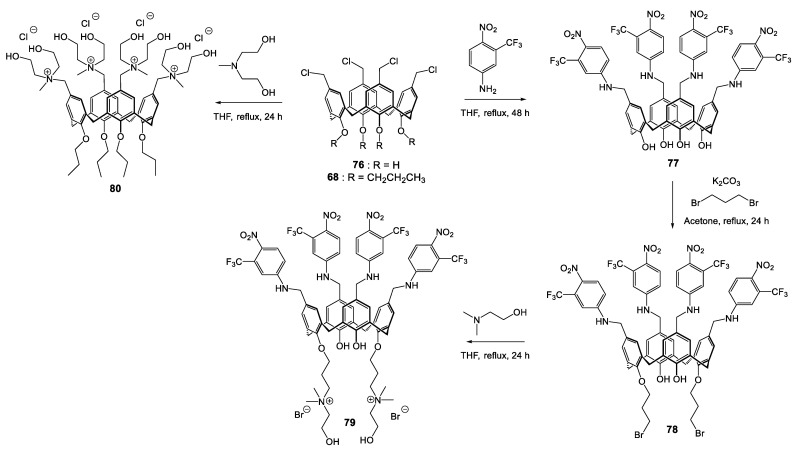
Scheme 8
Scheme 8
Synthetic route for the preparation of polycationic calixarenes 79 and 80 [137,140].
Figure 1
Figure 1
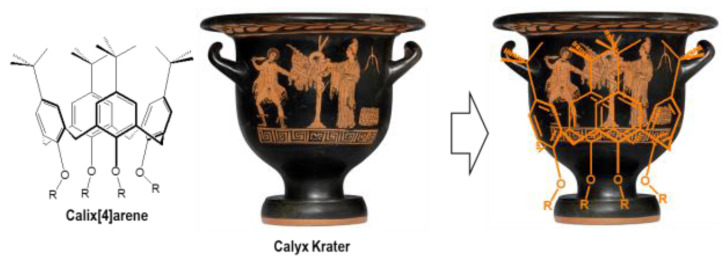
Analogy between calix[n]arene and a calyx krater.
Figure 2
Figure 2
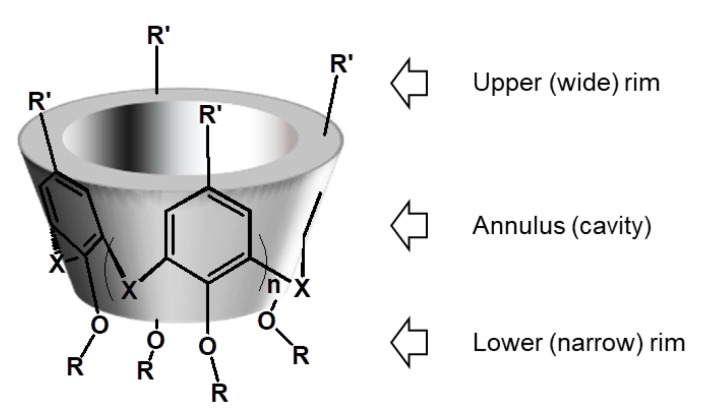
General structure of calix[n]arene. X = CH2 or S and n = 4, 6, or 8 for the most representative of them.
Figure 3
Figure 3
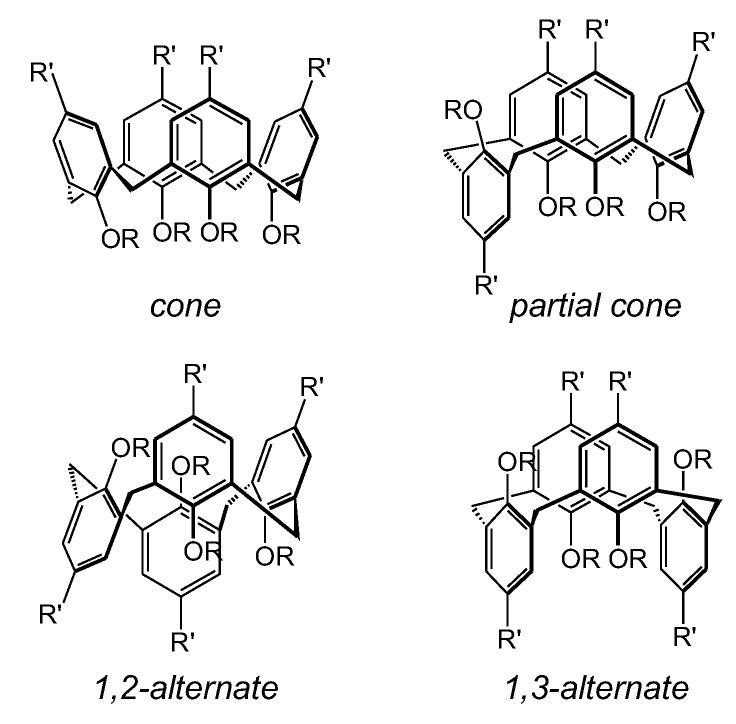
The four possible conformations of substituted calix[4]arene.
Figure 4
Figure 4
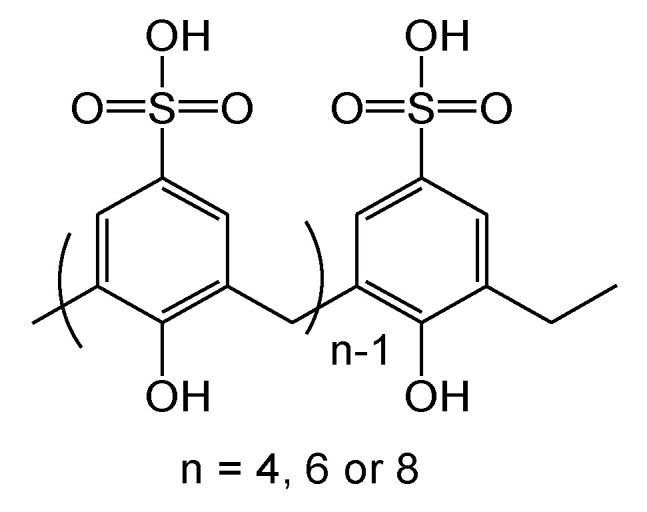
Structure of para-sulfonated calix[4, 6, or 8]arenes [95].
Figure 5
Figure 5
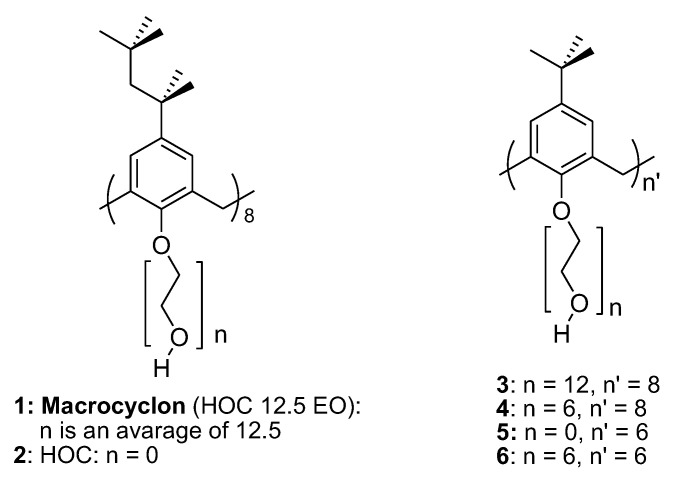
Schematic structures of the new antimycobacterial calixarenes [111,112].
Figure 6
Figure 6
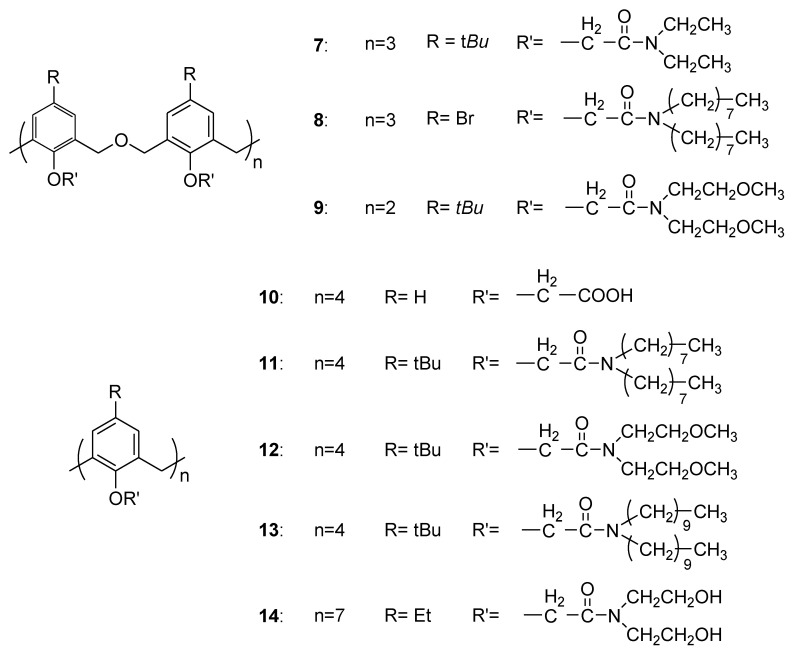
Structure of some calixarenes and oxacalixarenes presenting antibacterial activities [114].
Scheme 1
Scheme 1
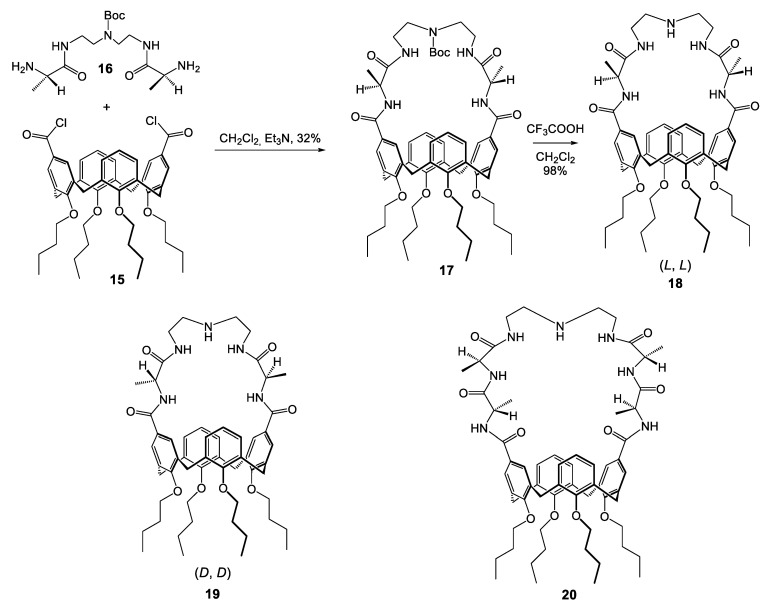
Synthetic way leading to the peptidocalix[4]arene 18 and structures of its analogues 19 and 20 [115].
Figure 7
Figure 7
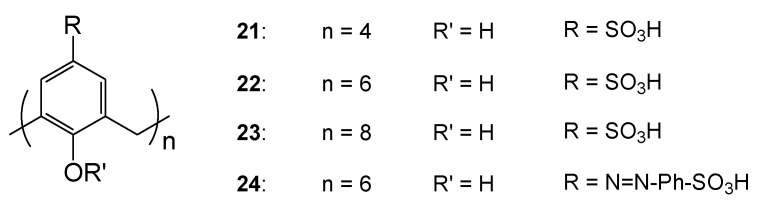
Calixarenic structures 21 to 24 [77,109].
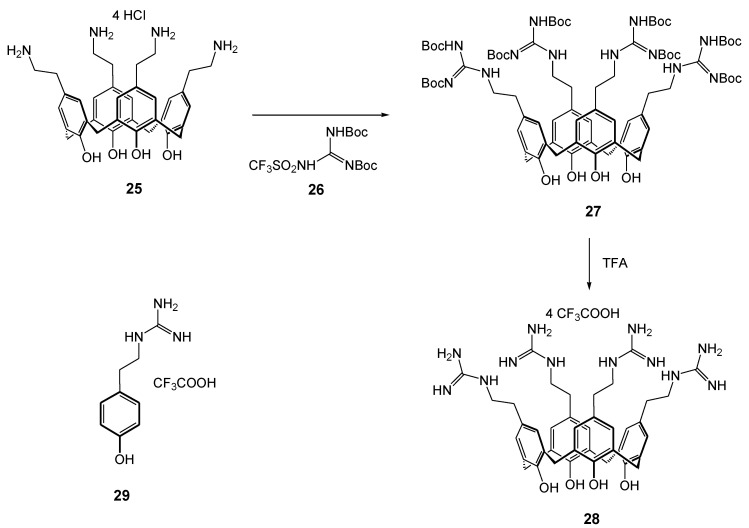
Scheme 2
Scheme 2
Synthetic pathway to compound 28, and representation of its monomer analogue 29 [72]. Boc: tert-Butoxycarbonyl.
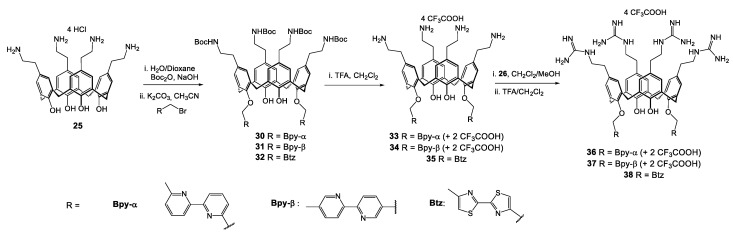
Scheme 3
Scheme 3
Synthetic pathway to tetra-guanidinium bis-heterocyclic compounds 36 to 38 [128]. Boc: tert-Butoxycarbonyl, Bpy-α: 6-[6′methyl-2,2′-bipyridine], Bpy-β: 5-[5′-methyl-2,2′-bipyridine], Btz: 4-[4′-methyl-2,2′-bithiazole], TFA: trifluoroacetic acid.
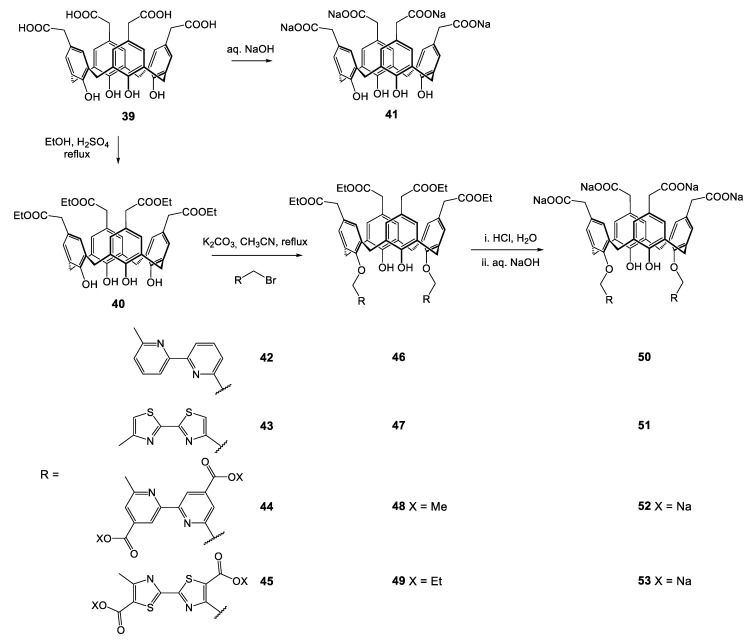
Scheme 4
Scheme 4
Synthetic pathway to water-soluble calix[4]arenes incorporating carboxylate groups 50 to 53 [129].
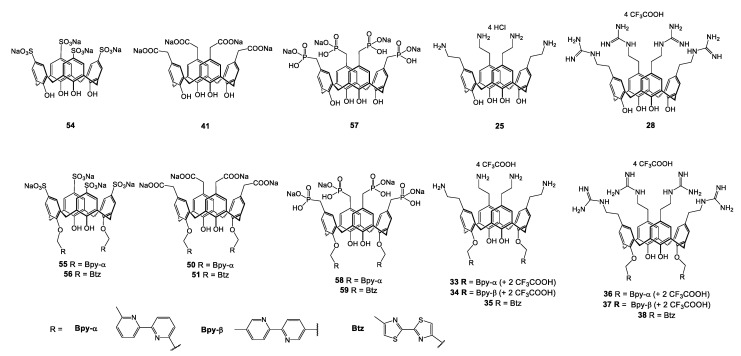
Figure 8
Figure 8
Negatively and positively charged calix[4]arenes tested on M. tuberculosis [132]. Boc: tert-Butoxycarbonyl, Bpy-α: 6-[6′methyl-2,2′-bipyridine], Bpy-β: 5-[5′-methyl-2,2′-bipyridine], Btz: 4-[4′-methyl-2,2′-bithiazole].
Scheme 5
Scheme 5
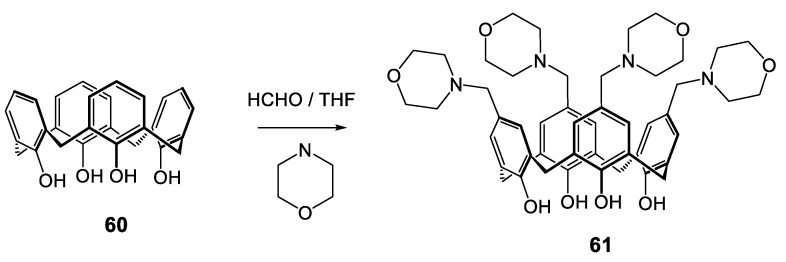
Synthetic pathway of tetra-morpholinocalix[4]arene 61 [133].
Scheme 6
Scheme 6
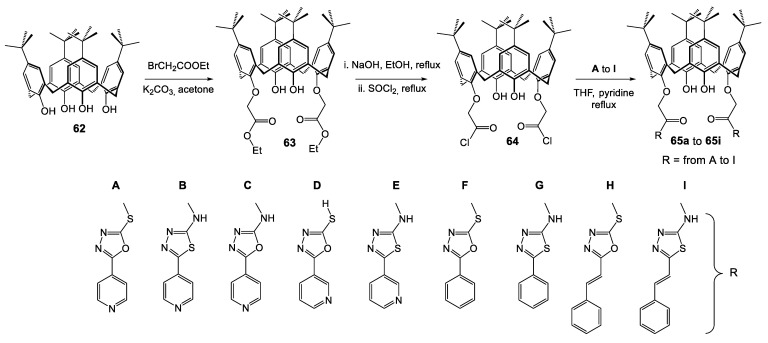
Synthetic pathway to compounds 65a to 65i, and representation of subunits 1,3,4-thiadiazole and 1,3,4-oxadiazole heterocycles A to I [134].
Scheme 7
Scheme 7
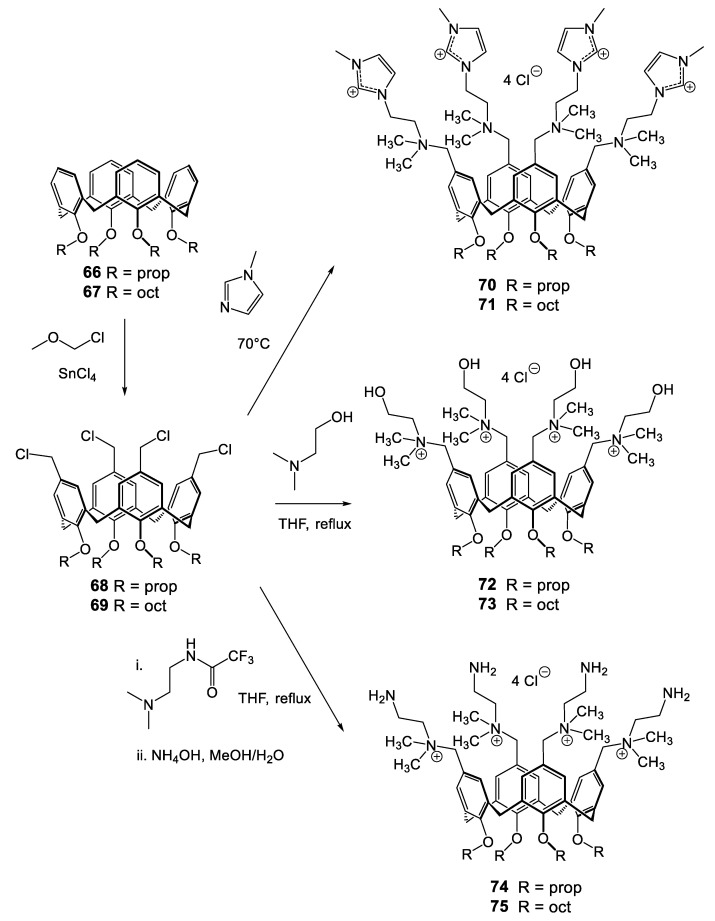
Synthetic pathway to cationic calixarenes modified with methylimidazolium (70, 71), choline (72, 73) and ethylenediamine (74, 75) groups [135]. prop: propyl, oct: octyl.
Figure 9
Figure 9
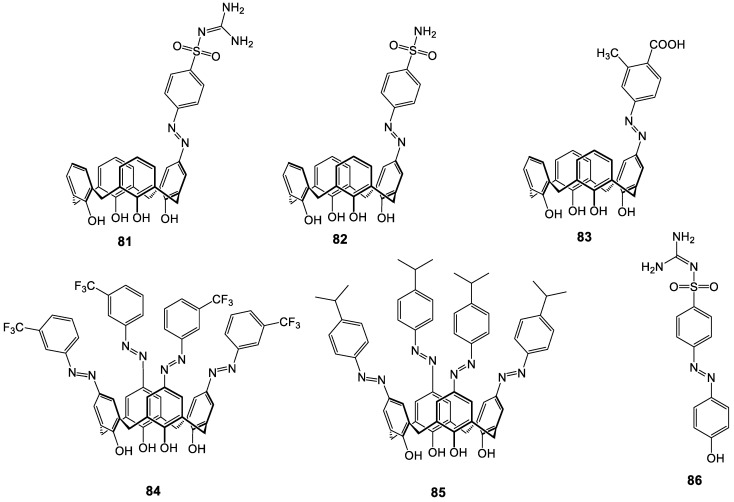
Mono-azo 81, 82, 83, tetra-azo 84, 85 calixarene derivatives and monomer 86 [141].
Scheme 9
Scheme 9
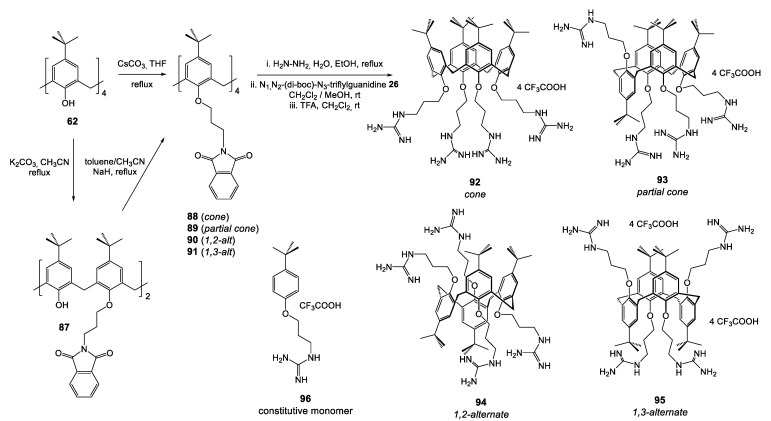
Synthetic pathway to four conformer guanidinium derivatives 92, 93, 94, 95 and structure of monomeric analogue 96 [103].
Figure 10
Figure 10
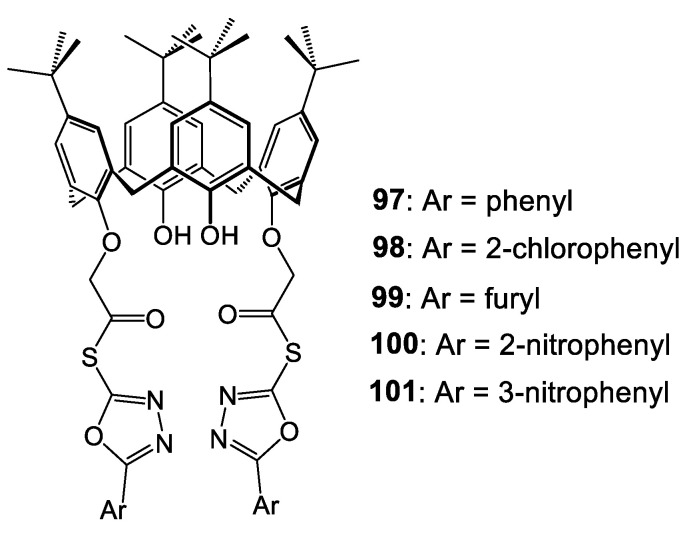
Structure of oxadiazole-based calixarenes 97 to 101 [146].
Scheme 10
Scheme 10
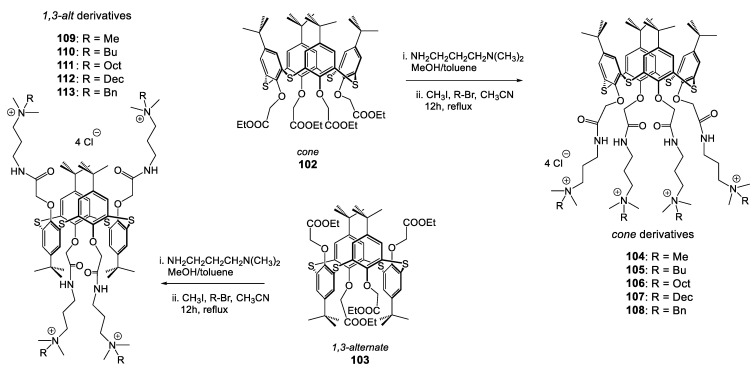
Synthetic route for the preparation of quaternary ammonium salts of thiacalix[4]arene 104 to 113 [147]. Me: methyl, Bu: butyl, Oct: octyl, Dec: decyl, Bn: benzyl.
Scheme 11
Scheme 11
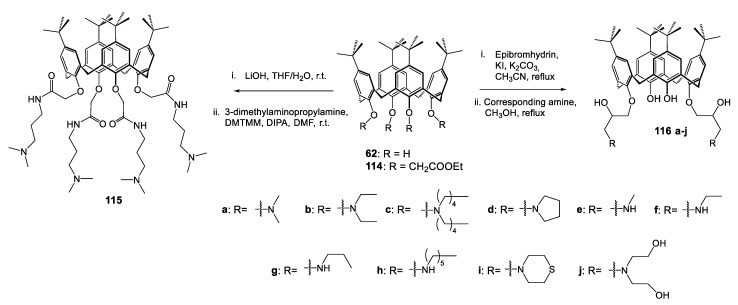
Synthetic way to obtain new cationic amphiphilic calix[4]arene derivatives 115 and 116a-j [148]. DMTMM: 4-(4,6-dimethoxy-1,3,5-triazin-2-yl)-4-methyl-morpholinium chloride, DIPA: diisopropylamine.
Scheme 12
Scheme 12
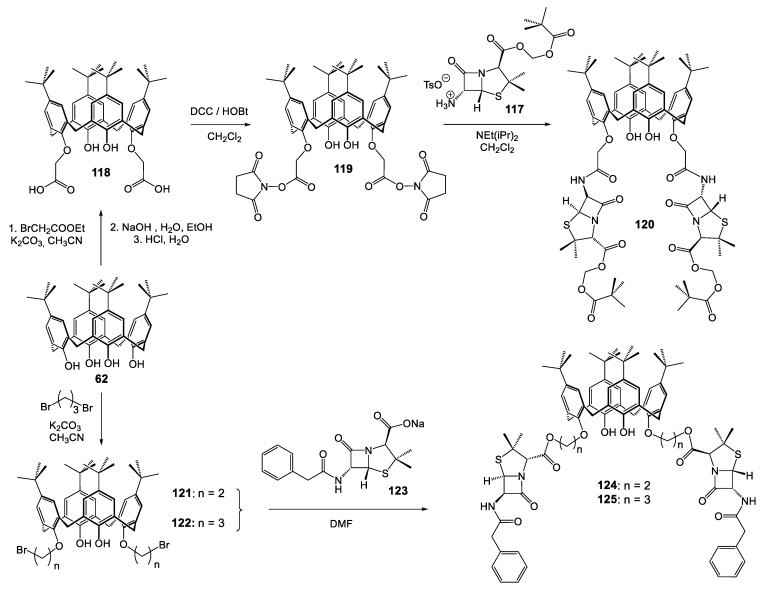
Synthetic way to obtain the penicillinic podands 120, 124, and 125 [149,150].
Scheme 13
Scheme 13
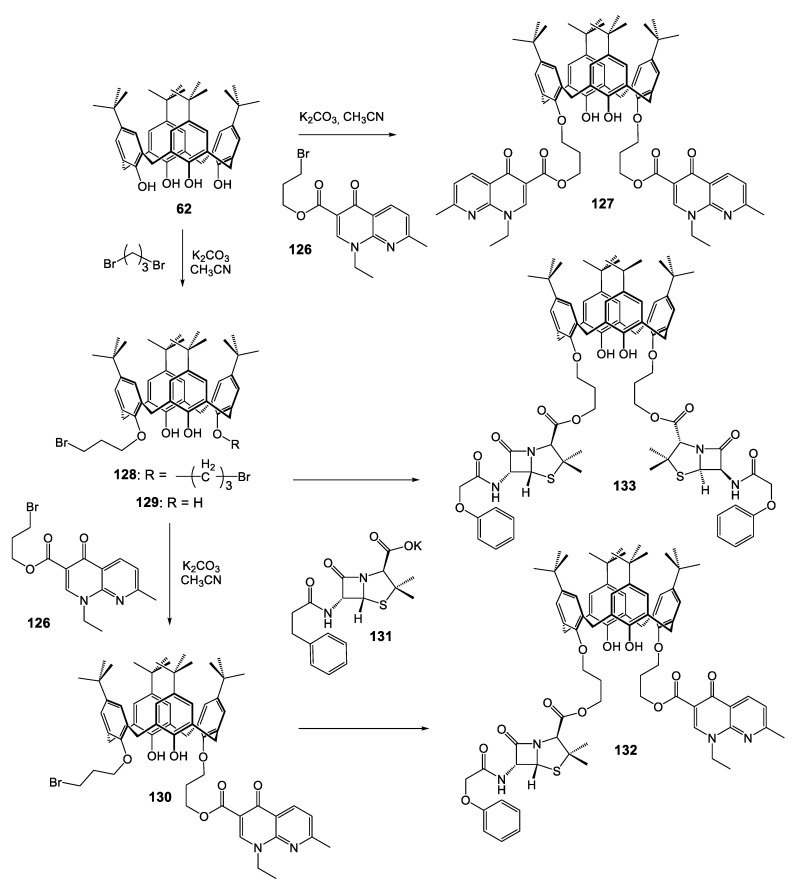
Synthetic pathway leading to the dissymmetric podand (penicillin V and nalidixic acid) 132, the corresponding bis-nalidixic 127, and bis-penicillin V 133 [151,152,153].
Figure 11
Figure 11
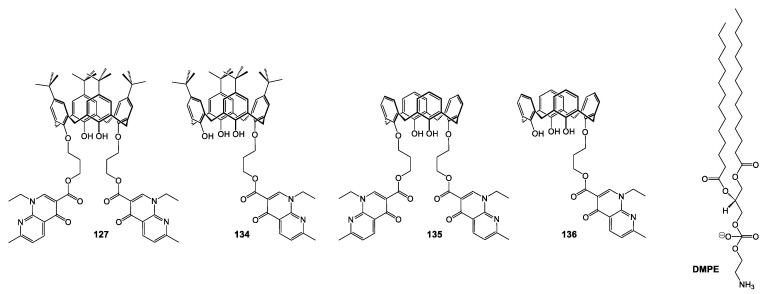
Schematic structures of the nalidixate podands 127, 134, 135, 136, and 1,2-dimyristoyl-sn-glycero-3-phosphoethanolamine (DMPE) [154].
Scheme 14
Scheme 14
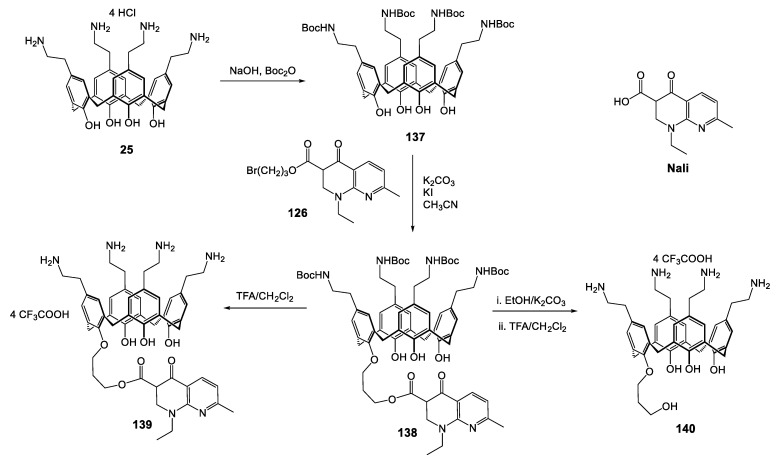
Synthetic pathway to podands 139 and 140 [156].
Scheme 15
Scheme 15
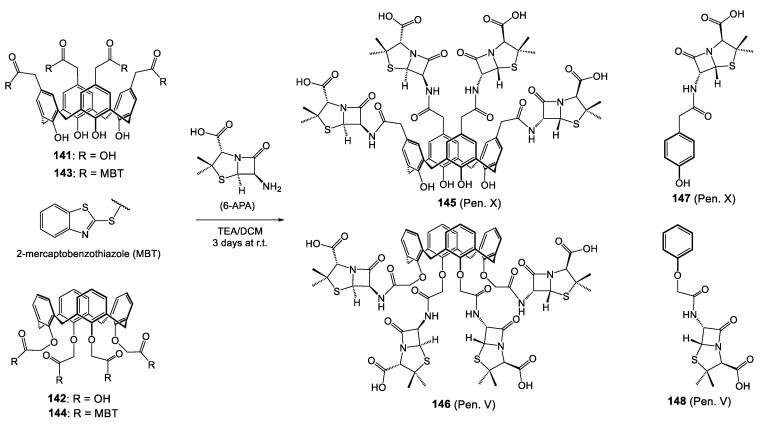
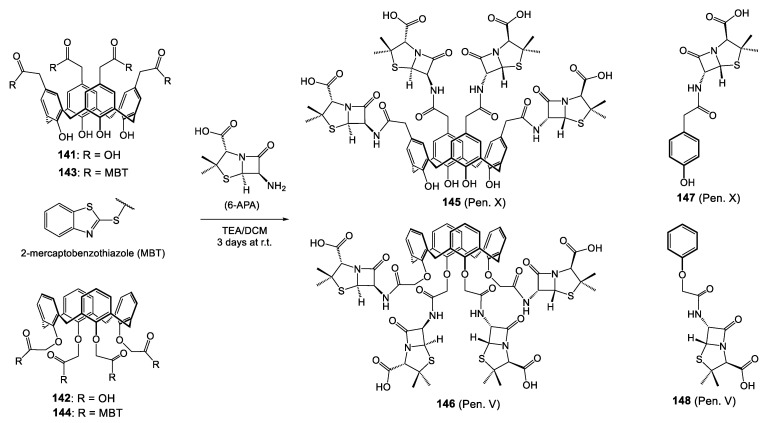
Synthetic pathway of calixpenams 145 (Pen. X), 146 (Pen. V) and their corresponding single penams 147 (Pen. X) and 148 (Pen. V) [157].
Scheme 16
Scheme 16
Synthetic pathway of calixcephems 151 (Ceph. X) and 152 (Ceph. V) and their corresponding single cephems 153 (Ceph. X) and 154 (Ceph. V) [158]. BSU: N,N′-bis(trimethylsilyl)urea, Py: pyridine.
Scheme 17
Scheme 17
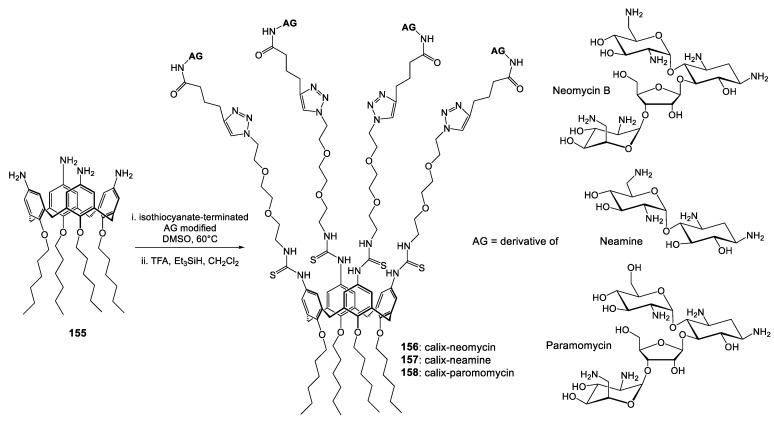
Synthetic pathway to calixarene-derivative- aminoglycoside-based 156, 157, and 158 [162].
Scheme 18
Scheme 18
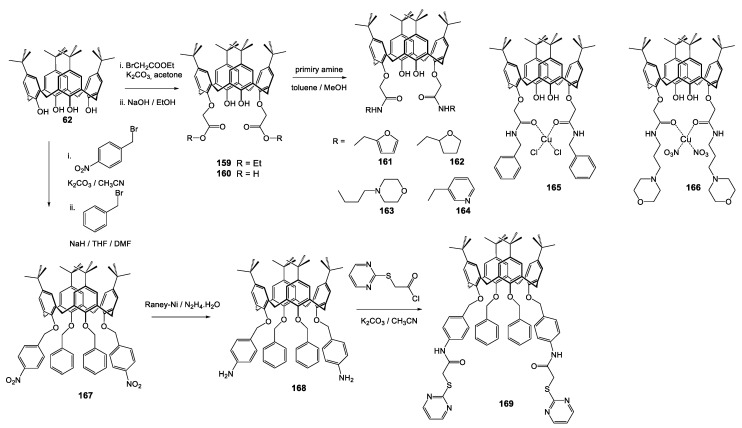
Synthetic route for obtaining ligand 161, 162, 163, 165, and 169 [163,164].
Scheme 19
Scheme 19
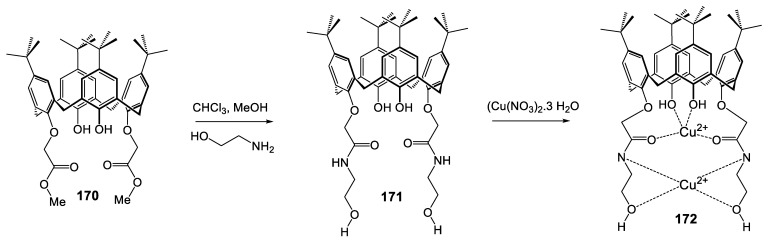
Synthetic pathway of binuclear copper complex 172 [166].
Scheme 20
Scheme 20
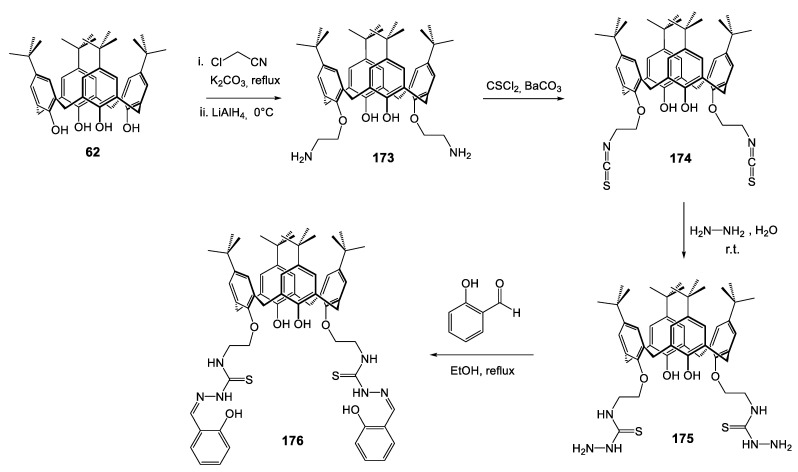
Synthetic route for obtaining of ligands 175 and 176 [167].

References

    1. Chinemerem Nwobodo D., Ugwu M.C., Oliseloke Anie C., Al-Ouqaili M.T.S., Chinedu Ikem J., Victor Chigozie U., Saki M. Antibiotic Resistance: The Challenges and Some Emerging Strategies for Tackling a Global Menace. J. Clin. Lab. Anal. 2022;36:e24655. doi: 10.1002/jcla.24655. - DOI - PMC - PubMed
    1. Coque T.M., Cantón R., Pérez-Cobas A.E., Fernández-de-Bobadilla M.D., Baquero F. Antimicrobial Resistance in the Global Health Network: Known Unknowns and Challenges for Efficient Responses in the 21st Century. Microorganisms. 2023;11:1050. doi: 10.3390/microorganisms11041050. - DOI - PMC - PubMed
    1. Ayukekbong J.A., Ntemgwa M., Atabe A.N. The Threat of Antimicrobial Resistance in Developing Countries: Causes and Control Strategies. Antimicrob. Resist. Infect. Control. 2017;6:47. doi: 10.1186/s13756-017-0208-x. - DOI - PMC - PubMed
    1. Dutescu I.A., Hillier S.A. Encouraging the Development of New Antibiotics: Are Financial Incentives the Right Way Forward? A Systematic Review and Case Study. Infect Drug Resist. 2021;14:415–434. doi: 10.2147/IDR.S287792. - DOI - PMC - PubMed
    1. Miethke M., Pieroni M., Weber T., Brönstrup M., Hammann P., Halby L., Arimondo P.B., Glaser P., Aigle B., Bode H.B., et al. Towards the Sustainable Discovery and Development of New Antibiotics. Nat Rev Chem. 2021;5:726–749. doi: 10.1038/s41570-021-00313-1. - DOI - PMC - PubMed

MeSH terms

LinkOut - more resources