Review
. 2023 Oct 16;4(1):33.
doi: 10.1186/s43556-023-00142-2.

The mechanism of ferroptosis and its related diseases

Affiliations
Review

The mechanism of ferroptosis and its related diseases

Shijian Feng et al. Mol Biomed. .

Abstract

Ferroptosis, a regulated form of cellular death characterized by the iron-mediated accumulation of lipid peroxides, provides a novel avenue for delving into the intersection of cellular metabolism, oxidative stress, and disease pathology. We have witnessed a mounting fascination with ferroptosis, attributed to its pivotal roles across diverse physiological and pathological conditions including developmental processes, metabolic dynamics, oncogenic pathways, neurodegenerative cascades, and traumatic tissue injuries. By unraveling the intricate underpinnings of the molecular machinery, pivotal contributors, intricate signaling conduits, and regulatory networks governing ferroptosis, researchers aim to bridge the gap between the intricacies of this unique mode of cellular death and its multifaceted implications for health and disease. In light of the rapidly advancing landscape of ferroptosis research, we present a comprehensive review aiming at the extensive implications of ferroptosis in the origins and progress of human diseases. This review concludes with a careful analysis of potential treatment approaches carefully designed to either inhibit or promote ferroptosis. Additionally, we have succinctly summarized the potential therapeutic targets and compounds that hold promise in targeting ferroptosis within various diseases. This pivotal facet underscores the burgeoning possibilities for manipulating ferroptosis as a therapeutic strategy. In summary, this review enriched the insights of both investigators and practitioners, while fostering an elevated comprehension of ferroptosis and its latent translational utilities. By revealing the basic processes and investigating treatment possibilities, this review provides a crucial resource for scientists and medical practitioners, aiding in a deep understanding of ferroptosis and its effects in various disease situations.

Keywords: Diseases; Ferroptosis; Iron metabolism; Lipid peroxidation; Regulatory networks; Therapeutic strategies.


Conflict of interest statement

The authors declare that they have no competing interests.

Figures
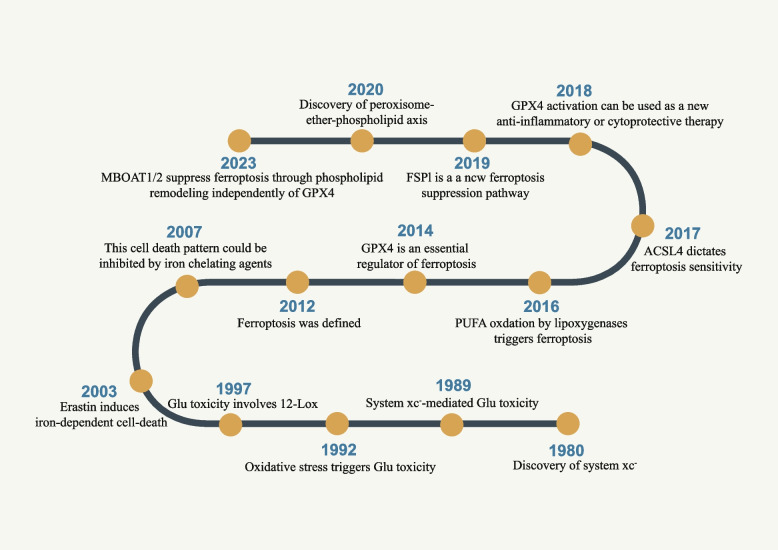
Fig. 1
Fig. 1
Timeline diagram depicting essential discoveries in the field of ferroptosis research. The exploration of ferroptosis originated from the identification of system xc-, which was initially reported in 1980. Nevertheless, the specific term "ferroptosis" was officially coined and introduced in the scientific community in 2012
Fig. 2
Fig. 2
The involvement of ferroptosis in various human diseases. Ferroptosis has played important roles in multiple system diseases, such as lung diseases, nervous system diseases, heart diseases, breast diseases, gastric diseases, liver diseases, pancreatic diseases, kidney diseases, intestines diseases, reproductive diseases, skin diseases, musculoskeletal system diseases and so on
Fig. 3
Fig. 3
Several intrinsic or cell-autonomous mechanisms profoundly impact cellular susceptibility to ferroptosis. This non-exhaustive compilation encompasses metabolic pathways that intricately regulate iron levels, polyunsaturated fatty acids (PUFA), glutathione peroxidase 4 (GPX4), and ferroptosis suppressor protein 1 (FSP1). Abbreviations: TF: transferrin; TFR1: transferrin receptor 1; NRF2: nuclear factor erythroid 2–related factor 2; IREB2: Iron Responsive Element Binding Protein 2; HSPB1: heat shock protein beta 1; PKC: protein kinase C; Actin cytockeleton: a collection of actin filaments with their accessory and regulatory proteins; Ferritin: a protein that stores iron; SFXN1: siderofexin 1; MUFA: Monounsaturated fatty acids; Acetyl-CoA: acetyl coenzyme; HMG-CoA: 3-hydroxy-3-methylglutaryl coenzyme; IPP: isopentenyl pyrophosphate; FPP: Fertilization promoting peptide; GGPP: geranylgeranyl pyrophosphate; CoQ: coenzyme-Q; CoQH2: reduced coenzyme Q; ROS: Reactive oxygen species; GSH: glutathione; GSSG: glutathione disulfide; NADPH: nicotinamide adenine dinucleotide phosphate; NADP + : Nicotinamide Adenine Dinucleotide Phosphate; MESH1: metazoan SpoT homolog-1
Fig. 4
Fig. 4
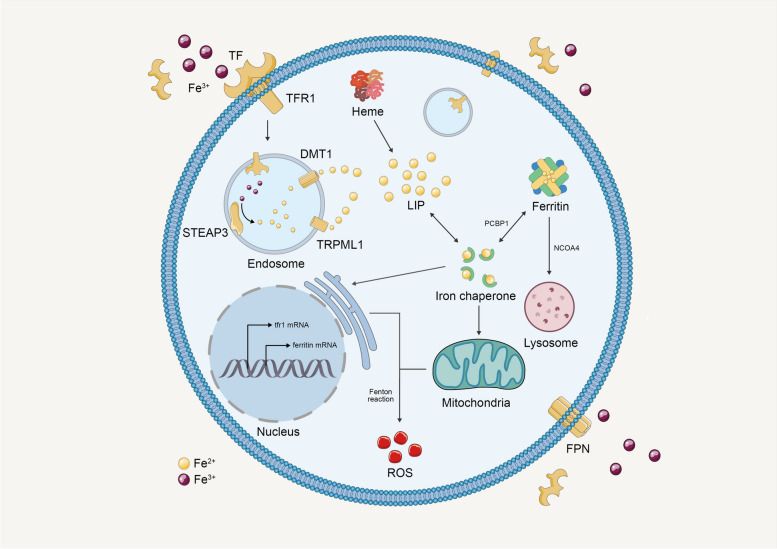
Iron metabolism in ferroptosis. Abbreviations: STEAP3: Six-Transmembrane Epithelial Antigen of Prostate 3; TRPML1: transient receptor potential mucolipin 1; DMT-1: divalent metal transporter 1; NCOA4: Nuclear receptor coactivator 4; FPN: ferroportin
Fig. 5
Fig. 5
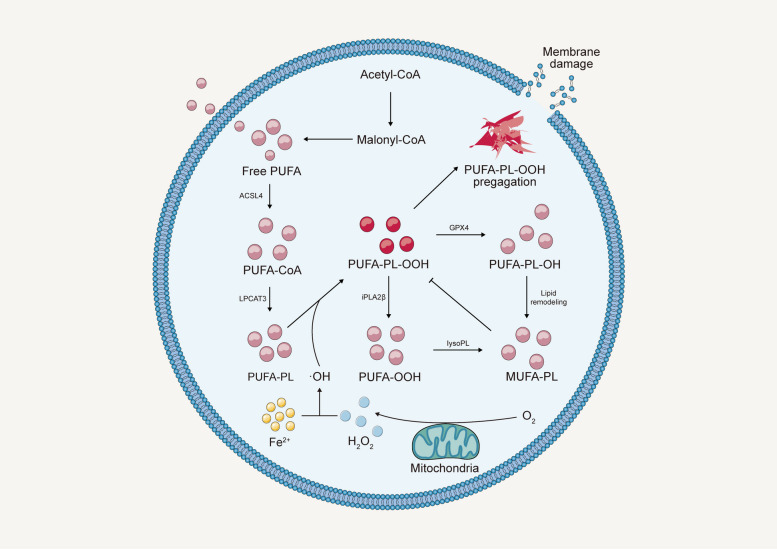
Lipid peroxidation in ferroptosis. Abbreviations: ACSL-4: acyl-CoA synthetase long chain family member 4; LPCAT3: lysophosphatidylcholine acyltransferase 3; LysoPL: lysophospholipase
Fig. 6
Fig. 6
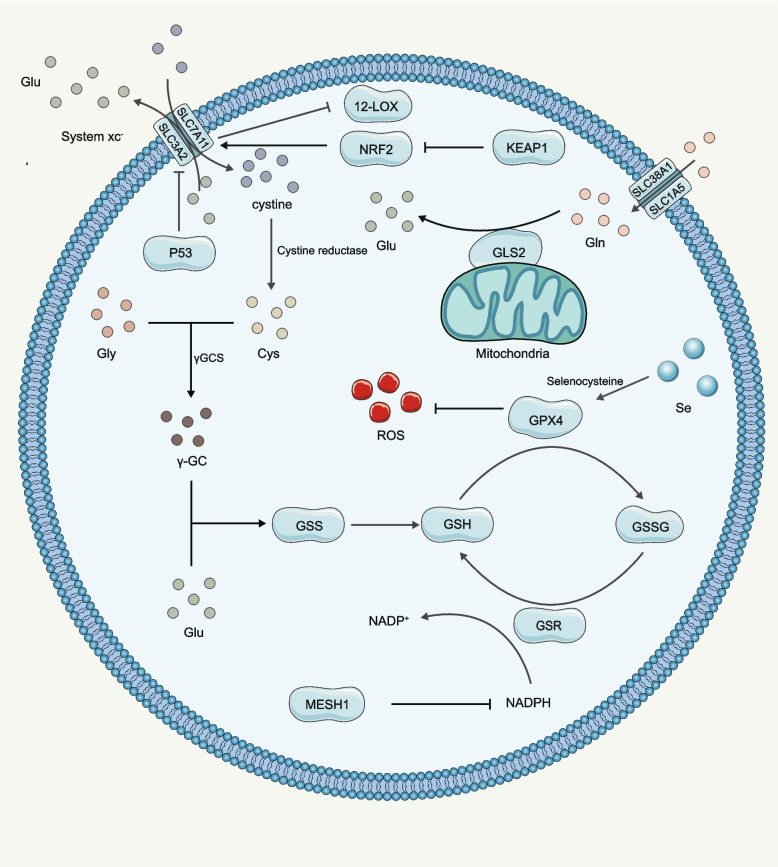
The role of GPX4 in ferroptosis. Abbreviations: Glu: glutamic acid; Gln: Glutamine; Cys: cysteine; Gly: Glycine; P53: a tumor suppressor protein; KEAP1: Kelch-like ECH-associated protein; 12-LOX: 12-lipoxygenase; GLS2: glutaminase 2; γ-GC: γ-glutamylcysteine; GSS: glutathione synthetase; GSR: glutathione reductase
Fig. 7
Fig. 7
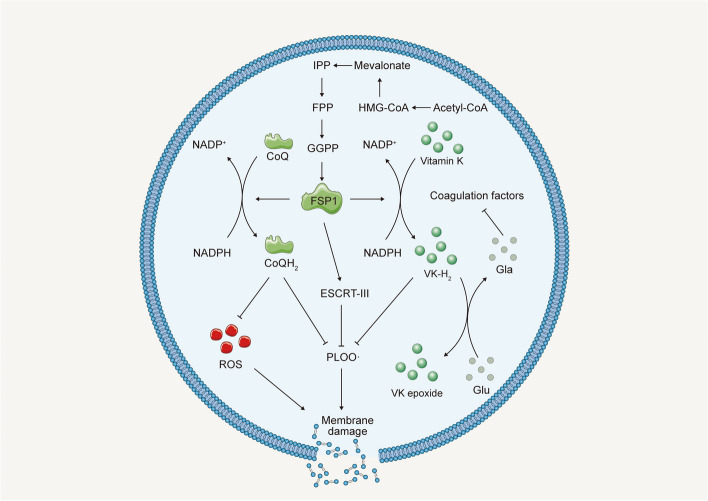
The role of FSP1 in ferroptosis. Abbreviations: VK: Vitamin K

References

    1. Bertheloot D, Latz E, Franklin BS. Necroptosis, pyroptosis and apoptosis: an intricate game of cell death. Cell Mol Immunol. 2021;18(5):1106–1121. doi: 10.1038/s41423-020-00630-3. - DOI - PMC - PubMed
    1. Das S, Shukla N, Singh SS, Kushwaha S, Shrivastava R. Mechanism of interaction between autophagy and apoptosis in cancer. Apoptosis. 2021;26(9–10):512–533. doi: 10.1007/s10495-021-01687-9. - DOI - PubMed
    1. Raj S, Jaiswal SK, DePamphilis ML. Cell death and the p53 enigma during mammalian embryonic development. Stem Cells. 2022;40(3):227–238. doi: 10.1093/stmcls/sxac003. - DOI - PMC - PubMed
    1. Kist M, Vucic D. Cell death pathways: intricate connections and disease implications. EMBO J. 2021;40(5):e106700. doi: 10.15252/embj.2020106700. - DOI - PMC - PubMed
    1. Dolma S, Lessnick SL, Hahn WC, Stockwell BR. Identification of genotype-selective antitumor agents using synthetic lethal chemical screening in engineered human tumor cells. Cancer Cell. 2003;3(3):285–296. doi: 10.1016/s1535-6108(03)00050-3. - DOI - PubMed

LinkOut - more resources