


Unfavourable beliefs about oral health and safety of dental care during pregnancy: a systematic review
- PMID: 37840149
- PMCID: PMC10577919
- DOI: 10.1186/s12903-023-03439-4
Unfavourable beliefs about oral health and safety of dental care during pregnancy: a systematic review
Abstract
Background: Oral conditions such as gingivitis and periodontitis are correlated with adverse pregnancy outcomes such as preeclampsia, preterm birth and low birth weight. Oral health-related unfavourable beliefs can have negative influences on oral health behaviours including hesitation in accessing preventative dental treatments and dental service utilization. The objective of this systematic review was to examine unfavourable beliefs that expectant or new mothers frequently hold about oral health and the safety of dental care during pregnancy.
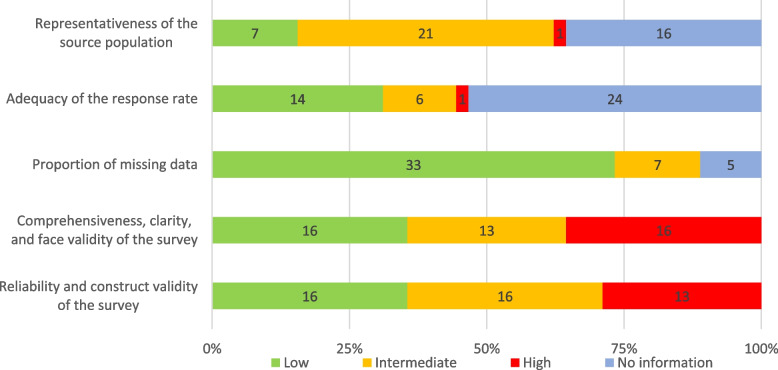
Methods: An electronic database search on PubMed, Scopus, CINAHL, and MEDLINE (Ovid) followed by forward and backward citation tracing of the included studies was conducted. All English primary studies regardless of the year of publication were independently screened by two reviewers to identify studies addressing unfavourable beliefs about oral health and dental care during pregnancy. The CLARITY tool was applied to assess the risk of bias in the included studies.
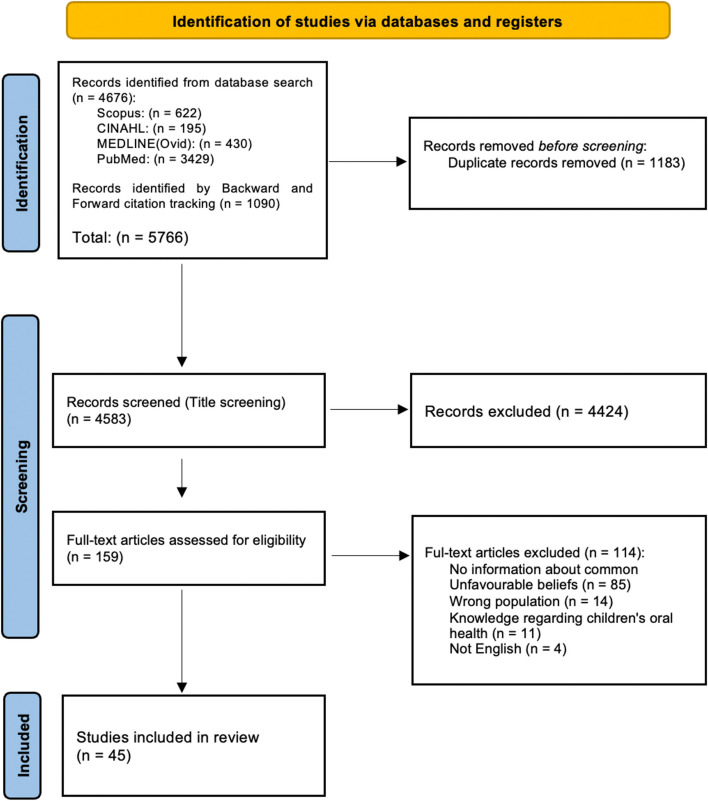
Results: Out of a total of 5766 records, 39 quantitative and six qualitative studies met the inclusion criteria. The commonly held unfavourable beliefs were regarding the safety of dental services utilization and dental treatment procedures, the adverse impacts of pregnancy on oral health, and oral hygiene necessity during pregnancy. The most discussed unfavourable beliefs included "pregnant women lose their teeth because of pregnancy" (n = 18), "dental treatments are not safe and harm the fetus" (n = 17), and "the developing baby absorbs calcium from the mother's teeth" (n = 14).
Conclusions: Unfavourable beliefs about oral health and dental care utilization are common among pregnant women and new mothers. The literature suggests that a low level of oral health knowledge and seeking information from social networks can contribute to such beliefs. This has implications for health promotion.
Keywords: Beliefs; Dental service utilization; Oral health; Pregnancy.
© 2023. BioMed Central Ltd., part of Springer Nature.
Conflict of interest statement
The authors declare no competing interests.
Figures
References
-
- Misra R, Kaster EC. Health Beliefs. In: Loue S, Sajatovic M, editors. Encyclopedia of Immigrant Health. New York: Springer New York; 2012. p. 766–8. Available from: http://link.springer.com/10.1007/978-1-4419-5659-0_332 [cited 18 Jul 2023]. - DOI
-
- Dai E, Sun Y, Wang S. Ginger cannot cure cancer: battling fake health news with a comprehensive data repository. Proc Int AAAI Conf Weblogs Soc Media. 2020;26(14):853–862. doi: 10.1609/icwsm.v14i1.7350. - DOI
-
- Demoulin C, Gabriel L, Nève de Mévergnies O, Henket L, Roussel N, Goubert L, et al. Several low back pain‐related misbeliefs are still around in 2020: a cross‐sectional survey in Belgium. Physiotherapy Res Intl. 2022;27(1). Available from: https://onlinelibrary.wiley.com/doi/10.1002/pri.1927 [cited 7 Sep 2022]. - DOI - PubMed
-
- Okunlola MA, Lamptey E, Senkyire EK, Dorcas S, Dooshima BA. Perceived myths and misconceptions about the novel COVID-19 outbreak. SciMed J. 2020;2(3):108–17. doi: 10.28991/SciMedJ-2020-0203-1. - DOI
Publication types
MeSH terms
LinkOut - more resources
Full Text Sources
Medical
Miscellaneous
