


The role of microbiota in the development and treatment of gastric cancer
- PMID: 37841431
- PMCID: PMC10572359
- DOI: 10.3389/fonc.2023.1224669
The role of microbiota in the development and treatment of gastric cancer
Abstract
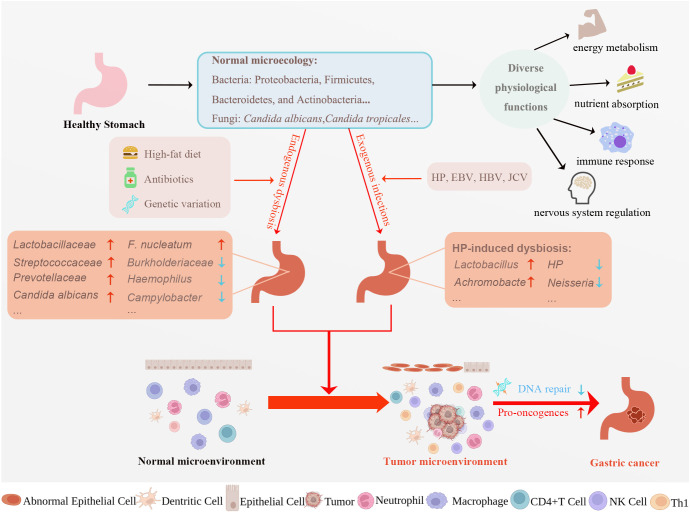
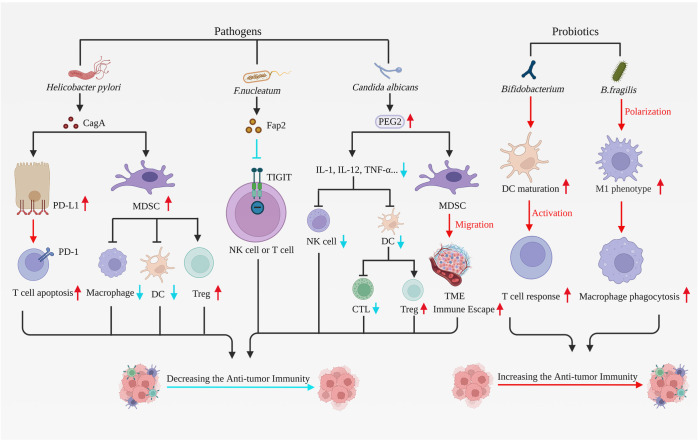
The stomach was once considered a sterile organ until the discovery of Helicobacter pylori (HP). With the application of high-throughput sequencing technology and macrogenomics, researchers have identified fungi and fivemajor bacterial phyla within the stomachs of healthy individuals. These microbial communities exert regulatory influence over various physiological functions, including energy metabolism and immune responses. HP is a well-recognized risk factor for gastric cancer, significantly altering the stomach's native microecology. Currently, numerous studies are centered on the mechanisms by which HP contributes to gastric cancer development, primarily involving the CagA oncoprotein. However, aside from exogenous infections such as HP and EBV, certain endogenous dysbiosis can also lead to gastric cancer through multiple mechanisms. Additionally, gut microbiota and its metabolites significantly impact the development of gastric cancer. The role of microbial therapies, including diet, phages, probiotics and fecal microbiota transplantation, in treating gastric cancer should not be underestimated. This review aims to study the mechanisms involved in the roles of exogenous pathogen infection and endogenous microbiota dysbiosis in the development of gastric cancer. Also, we describe the application of microbiota therapy in the treatment and prognosis of gastric cancer.
Keywords: Epstein-Barr virus (EBV); Helicobacter pylori (HP); gastric cancer; immunotherapy; microbiota.
Copyright © 2023 Wang, Han, Wang, Han, Ban, Dai, Dong, Sun and Xu.
Conflict of interest statement
MB is employed by Kanghui Biotechnology Co., Ltd. The remaining authors declare that the research was conducted in the absence of any commercial or financial relationships that could be constructed as a potential conflict of interest.
Figures
References
Publication types
LinkOut - more resources
Full Text Sources
Research Materials
Miscellaneous
