Use of micro and macroalgae extracts for the control of vector mosquitoes
- PMID: 37842039
- PMCID: PMC10569164
- DOI: 10.7717/peerj.16187
Use of micro and macroalgae extracts for the control of vector mosquitoes
Abstract
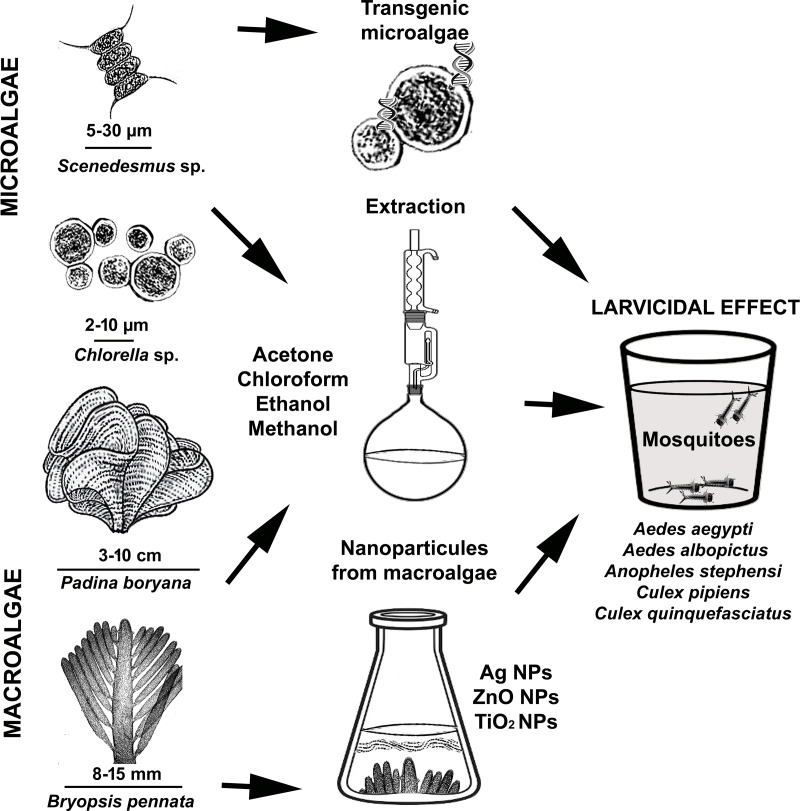
Mosquitoes are one of the most dangerous vectors of human diseases such as malaria, dengue, chikungunya, and Zika virus. Controlling these vectors is a challenging responsibility for public health authorities worldwide. In recent years, the use of products derived from living organisms has emerged as a promising approach for mosquito control. Among these living organisms, algae are of great interest due to their larvicidal properties. Some algal species provide nutritious food for larvae, while others produce allelochemicals that are toxic to mosquito larvae. In this article, we reviewed the existing literature on the larvicidal potential of extracts of micro- and macroalgae, transgenic microalgae, and nanoparticles of algae on mosquitoes and their underlying mechanisms. The results of many publications show that the toxic effects of micro- and macroalgae on mosquitoes vary according to the type of extraction, solvents, mosquito species, exposure time, larval stage, and algal components. A few studies suggest that the components of algae that have toxic effects on mosquitoes show through synergistic interaction between components, inhibition of feeding, damage to gut membrane cells, and inhibition of digestive and detoxification enzymes. In conclusion, algae extracts, transgenic microalgae, and nanoparticles of algae have shown significant larvicidal activity against mosquitoes, making them potential candidates for the development of new mosquito control products.
Keywords: Extract; Larvicidal; Macroalgae; Microalgae; Mosquito.
©2023 Tufan-Cetin and Cetin.
Conflict of interest statement
The authors declare there are no competing interests.
Figures
References
-
- Ahmad R, Chu WL, Lee HL, Phang SM. Effect of ten chlorophytes on larval survival, development and adult body size of the mosquito Aedes aegypti. Southeast Asian Journal of Tropical Medicine and Public Health. 2004;35(1):79–87. - PubMed
-
- Alarcón-Elbal PM, Rodríguez-Sosa MA, Ruiz-Matuk C, Tapia L, Arredondo Abreu CA, Fernández González AA, Rodríguez Lauzurique RM, Paulino-Ramírez R. Breeding sites of synanthropic mosquitoes in zika-affected areas of the Dominican Republic. Journal of the American Mosquito Control Association. 2021;37(1):10–19. doi: 10.2987/20-6953.1. - DOI - PubMed
-
- Alarif WM, Abou-Elnaga ZS, Ayyad SEN, Al-lihaibi SS. Insecticidal metabolites from the green alga Caulerpa racemosa. CLEAN–Soil, Air, Water. 2010;38(5–6):548–557. doi: 10.1002/clen.201000033. - DOI
-
- Ali MS, Ravikumar S, Beula JM. Mosquito larvicidal activity of seaweeds extracts against Anopheles stephensi, Aedes aegypti and Culex quinquefasciatus. Asian Pacific Journal of Tropical Disease. 2013;3(3):196–201. doi: 10.1016/S2222-1808(13)60040-7. - DOI
Publication types
MeSH terms
Substances
LinkOut - more resources
Full Text Sources
Medical