


Emerging role of the host microbiome in neuropsychiatric disorders: overview and future directions
- PMID: 37845499
- PMCID: PMC10730413
- DOI: 10.1038/s41380-023-02287-6
Emerging role of the host microbiome in neuropsychiatric disorders: overview and future directions
Abstract
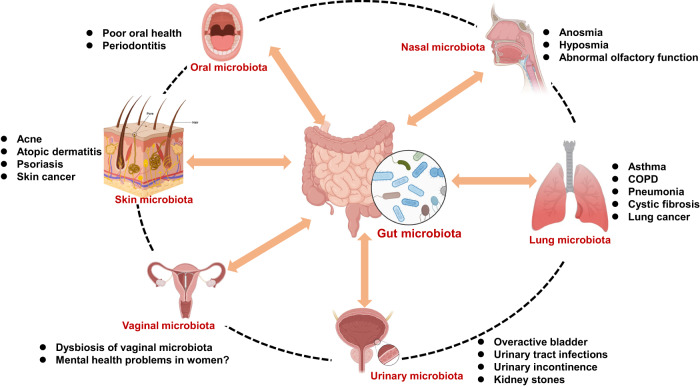
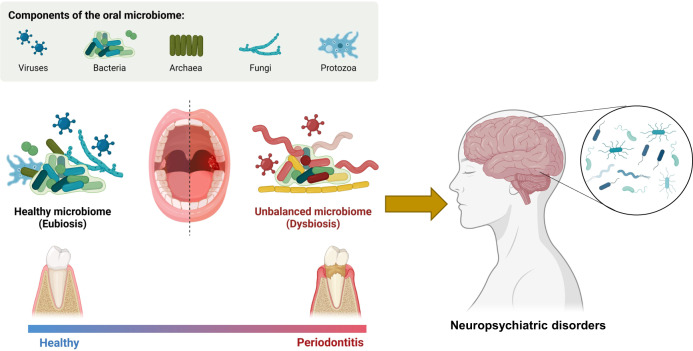
The human body harbors a diverse ecosystem of microorganisms, including bacteria, viruses, and fungi, collectively known as the microbiota. Current research is increasingly focusing on the potential association between the microbiota and various neuropsychiatric disorders. The microbiota resides in various parts of the body, such as the oral cavity, nasal passages, lungs, gut, skin, bladder, and vagina. The gut microbiota in the gastrointestinal tract has received particular attention due to its high abundance and its potential role in psychiatric and neurodegenerative disorders. However, the microbiota presents in other body tissues, though less abundant, also plays crucial role in immune system and human homeostasis, thus influencing the development and progression of neuropsychiatric disorders. For example, oral microbiota imbalance and associated periodontitis might increase the risk for neuropsychiatric disorders. Additionally, studies using the postmortem brain samples have detected the widespread presence of oral bacteria in the brains of patients with Alzheimer's disease. This article provides an overview of the emerging role of the host microbiota in neuropsychiatric disorders and discusses future directions, such as underlying biological mechanisms, reliable biomarkers associated with the host microbiota, and microbiota-targeted interventions, for research in this field.
© 2023. The Author(s).
Conflict of interest statement
KH is the inventor of filed patent applications on “The use of
Figures



References
-
- GBD 2019 Mental Disorders Collaborators. Global, regional, and national burden of 12 mental disorders in 204 countries and territories, 1990-2019: a systematic analysis for the Global Burden of Disease Study 2019. Lancet Psych. 2022;9:137–50. doi: 10.1016/S2215-0366(21)00395-3.. - DOI - PMC - PubMed
-
- Yuan K, Zheng YB, Wang YJ, Sun YK, Gong YM, Huang YT, et al. A systematic review and meta-analysis on prevalence of and risk factors associated with depression, anxiety and insomnia in infectious diseases, including COVID-19: a call to action. Mol Psych. 2022;27:3214–22. doi: 10.1038/s41380-022-01638-z.. - DOI - PMC - PubMed
-
- Al-Hakeim HK, Al-Rubaye HT, Al-Hadrawi DS, Almulla AF, Maes M. Long-COVID post-viral chronic fatigue and affective symptoms are associated with oxidative damage, lowered antioxidant defenses and inflammation: a proof of concept and mechanism study. Mol Psych. 2023;28:564–78. doi: 10.1038/s41380-022-01836-9.. - DOI - PMC - PubMed
Publication types
MeSH terms
Grants and funding
LinkOut - more resources
Full Text Sources
Medical
