. 2023 Oct 18;14(1):6599.
doi: 10.1038/s41467-023-42413-0.

The ClpX protease is essential for inactivating the CI master repressor and completing prophage induction in Staphylococcus aureus

Affiliations

The ClpX protease is essential for inactivating the CI master repressor and completing prophage induction in Staphylococcus aureus

Mohammed A Thabet et al. Nat Commun. .

Abstract

Bacteriophages (phages) are the most abundant biological entities on Earth, exerting a significant influence on the dissemination of bacterial virulence, pathogenicity, and antimicrobial resistance. Temperate phages integrate into the bacterial chromosome in a dormant state through intricate regulatory mechanisms. These mechanisms repress lytic genes while facilitating the expression of integrase and the CI master repressor. Upon bacterial SOS response activation, the CI repressor undergoes auto-cleavage, producing two fragments with the N-terminal domain (NTD) retaining significant DNA-binding ability. The process of relieving CI NTD repression, essential for prophage induction, remains unknown. Here we show a specific interaction between the ClpX protease and CI NTD repressor fragment of phages Ф11 and 80α in Staphylococcus aureus. This interaction is necessary and sufficient for prophage activation after SOS-mediated CI auto-cleavage, defining the final stage in the prophage induction cascade. Our findings unveil unexpected roles of bacterial protease ClpX in phage biology.


Conflict of interest statement

The authors declare no competing interests.

Figures
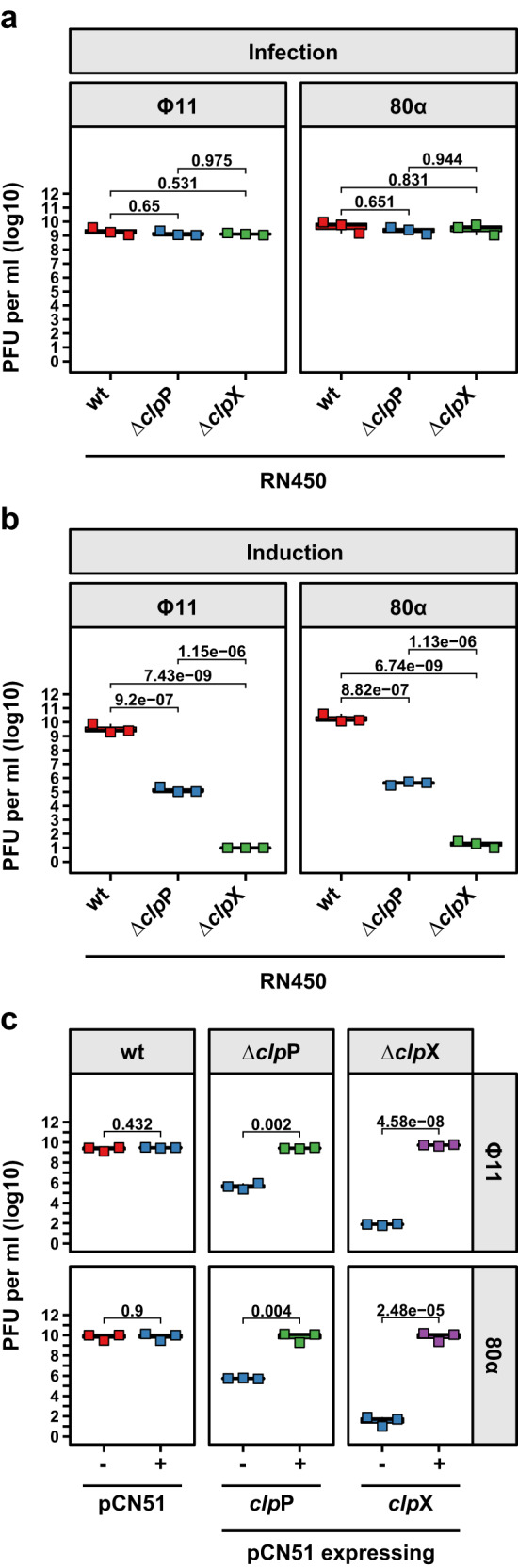
Fig. 1
Fig. 1. ClpP and ClpX are involved in phage induction but not phage infection.
The defined RN450 derivative strains were either a infected with the indicated phages or b lysogenic derivatives thereof induced by MitC addition. c The clpP and clpX genes were cloned into the cadmium-inducible expression plasmid pCN51, introduced into the defined strains, and induced by MitC addition. Expression from the pCN51 plasmids was maintained throughout the experiment by the addition of 1 μM CdCl2. ac Plaque formation was assessed on a lawn of RN4220. Bold horizontal lines in each boxplot represent the median and lower and upper hinges of the first and third quartiles, respectively (n = 3 biological replicates). Assessment of statistically significant differences between groups was performed using ANOVA followed by Tukey’s HSD post-test a, b or a two-sided Student’s t test c on log10 transformed data. p values are indicated above the respective comparison.
Fig. 2
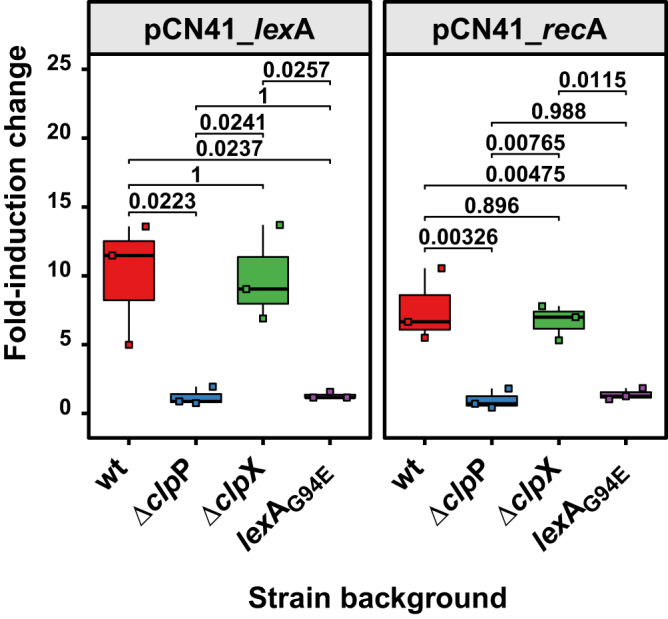
Fig. 2. Distinct roles for ClpP and ClpX in SOS response induction.
Reporter plasmids were designed to place the β-lactamase reporter gene (blaZ) of plasmid pCN41 under the control of the SOS-controlled promoters of lexA or recA. RN4220 derivative strains containing the indicated plasmids were grown to exponential phase, split and the SOS response was induced in one half of the culture with MitC while the other half was left untreated. Samples were taken 90 min after induction. Fold induction change of MitC-induced against non-induced samples is shown. Bold horizontal lines in each boxplot represent the median and lower and upper hinges of the first and third quartiles, respectively (n = 3 biological replicates). Assessment of statistically significant differences between groups was performed using ANOVA followed by Tukey’s HSD post-test. p values are indicated above each comparison.
Fig. 3
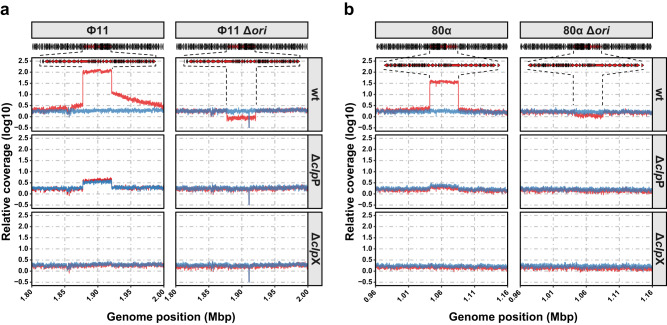
Fig. 3. ClpP and ClpX are required for phage induction.
a, b Quantitative whole-genome sequencing analysis of the indicated RN450 derivative strains lysogenic for either Φ11 (a) or 80α (b) or their respective origin of replication (ori) mutants. The indicated strains were induced with MitC and DNA was isolated either before (blue) or after 1 hour of induction (red) with MitC. DNA was then subjected to whole-genome sequencing and mapped to the relevant bacterial genomes.
Fig. 4
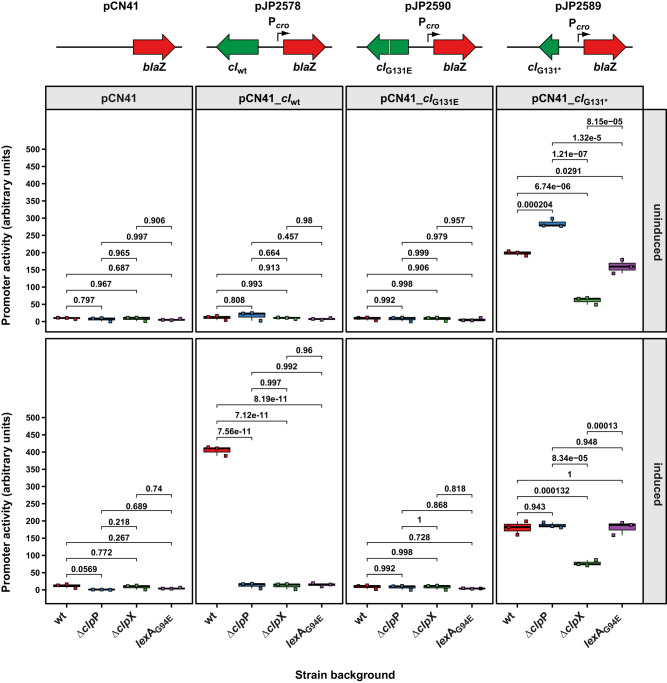
Fig. 4. Distinct roles for ClpP and ClpX in phage induction.
Plasmid pCN41-derived reporter plasmids were designed to place the β-lactamase reporter gene (blaZ) under the control of the Φ11 cro promoter. These plasmids also contained the genes encoding for either the Φ11 WT CI (cIWT), an SOS-insensitive CI mutant (cIG131E) or the post-cleavage N-terminal domain of CI alone (cIG131*). Strains containing the indicated plasmids were grown to exponential phase, split and the SOS response induced in one-half of the culture with MitC. Samples were taken 90 min after induction. Bold horizontal lines in each boxplot represent the median and lower and upper hinges of the first and third quartiles, respectively (n = 3 biological replicates). Assessment of statistically significant differences between groups was performed using ANOVA followed by Tukey’s HSD post-test. p values are indicated above each comparison.
Fig. 5
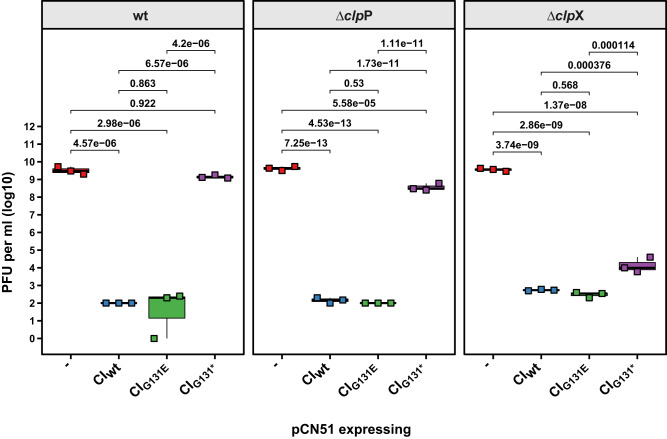
Fig. 5. The Φ11 CI N-terminal domain affects phage infection in the absence of either ClpP or ClpX.
Genes encoding either the Φ11 CI WT (CIWT), an SOS-insensitive version (CIG131E) or only its post-cleavage N-terminal fragment (CIG131*) were cloned into the inducible expression plasmid pCN51 and introduced into the indicated strains. Expression from these plasmids was maintained throughout the experiment by the addition of 1 μM CdCl2 during both growth and phage titration. Lawns of the defined, exponential phage, RN450 derivative strains were prepared on PB plates supplemented with 1 μM CdCl2 to maintain CI expression and serial dilutions of Φ11 lysate spotted onto these lawns. Bold horizontal lines in each boxplot represent the median and lower and upper hinges of the first and third quartiles, respectively (n = 3 biological replicates). Assessment of statistically significant differences between groups was performed using ANOVA followed by Tukey’s HSD post-test. p values are indicated above each comparison.
Fig. 6
Fig. 6. Interaction of ClpX and ClpP is not required for phage induction.
a The clpX wt gene (clpXwt) or a clpX gene encoding a ClpX mutant unable to interact with ClpP (ClpXI265E) were cloned into the inducible expression plasmid pCN51, introduced into either the RN4220 wt or its ΔclpX mutant derivative lysogenic for Φ11 or 80α and induced by MitC. Expression from these plasmids was maintained throughout the experiment by the addition of 1 μM CdCl2. Plaque formation was assessed on a lawn of RN4220. Bold horizontal lines in each boxplot represent the median and lower and upper hinges of the first and third quartiles, respectively (n = 3 biological replicates). Assessment of statistically significant differences between groups was performed using ANOVA followed by Tukey’s HSD post-test. b Samples of the same strains as in a were taken for DNA extraction at the time points indicated. Crude DNA lysates for Southern blotting analysis were then separated by agarose gel electrophoresis, transferred onto a nitrocellulose membrane, and replicating phage DNA visualised using a phage-specific DIG-labelled DNA probe. c Bacterial Two-Hybrid assay of either the Φ11 full-length CI protein (CIwt) or the post-cleavage CI N-terminal domain only (CIG131*). The gene encoding either the Φ11 full-length CI protein (CIwt) or c the post-cleavage CI N-terminal domain only (CIG131*) were cloned into pKT25 (pJP2636 or pJP2632, respectively), while genes encoding either WT clpX (clpXwt) or ClpX unable to interact with ClpP (clpXI265E) were cloned into pUT18c (pJP2642, pJP2638, respectively). The pUT18c- and pKT25-derivative plasmids were co-transformed into E. coli strain BTH101 and a single colony selected. Serial dilutions of an overnight culture were plated onto LB supplemented with kanamycin (30 µg ml−1), ampicillin (100 µg ml−1), 100 µM isopropyl β-d−1-thiogalactopyranoside (IPTG) and 20 µg ml−1 X-gal. BTH101 transformed with pUT18c-zip and pKNT25-zip or pUT18c and pKT25 served as positive or negative controls for protein–protein interactions, respectively.
Fig. 7
Fig. 7. ClpP and ClpX alter spontaneous prophage induction rates.
The indicated RN450 prophage lysogens were grown for MitC induction but were left untreated to monitor spontaneous prophage induction. Plaque formation was assessed on a lawn of RN4220 and normalised per experiment relative to phage titres in the wt strain background. Bold horizontal lines in each boxplot represent the median and lower and upper hinges of the first and third quartiles, respectively (n = 3 biological replicates). Assessment of statistically significant differences between groups was performed using a two-sided Student’s t test on log10 transformed data assessing the hypothesis that phage titres were not different from wt (fold-change = 0). p values are indicated above the respective comparison.
Fig. 8
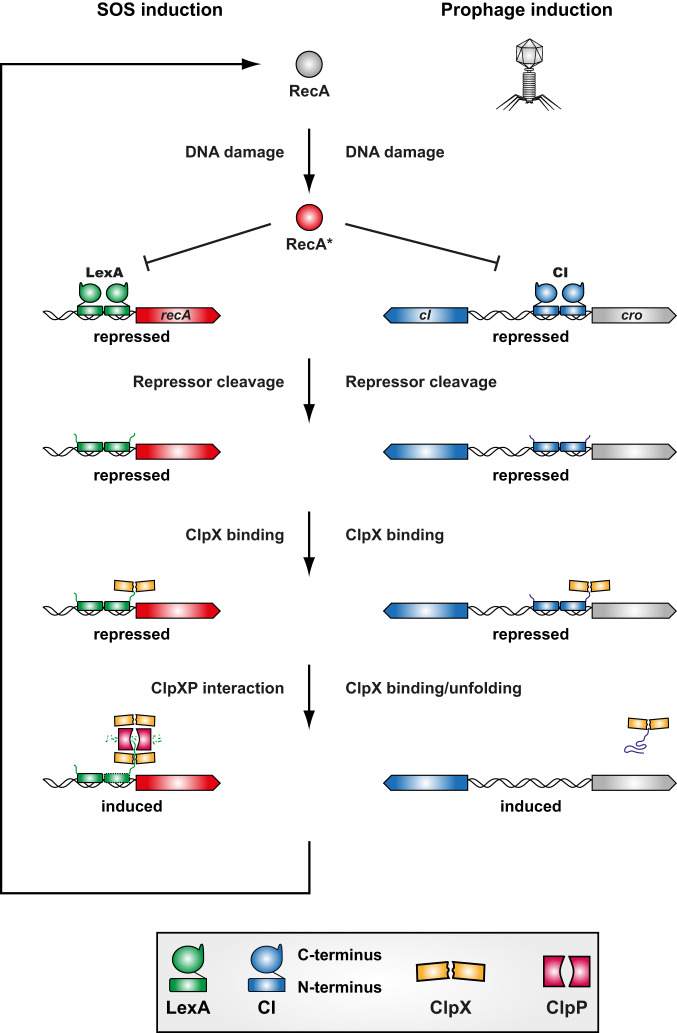
Fig. 8. Induction of the staphylococcal SOS response and prophages.
DNA damage activates the RecA (RecA*) protein which binds to both the LexA and the CI repressor catalysing their autocleavage. The repressor N-terminal domains retain some DNA-binding capacity. ClpX specifically binds to the N-terminal repressor domains after RecA* catalysed cleavage. For SOS induction, ClpX needs to interact with ClpP to facilitate the proteolytic degradation of the LexA N-terminus. This then also results in the increased expression of RecA further increasing SOS induction for as long as DNA damage is present. By contrast, prophage induction does not require the interaction of ClpX and ClpP and binding of ClpX to the N-terminal fragment of CI is sufficient for inducting the lytic phage cycle.

References

    1. Comeau AM, et al. Exploring the prokaryotic virosphere. Res. Microbiol. 2008;159:306–313. - PubMed
    1. Chiang YN, Penades JR, Chen J. Genetic transduction by phages and chromosomal islands: the new and noncanonical. PLoS Pathog. 2019;15:e1007878. - PMC - PubMed
    1. Ptashne M. A genetic switch: phage λ revisited, 3rd edn. Cold Spring Harbor Laboratory Press (2004).
    1. Casjens SR, Hendrix RW. Bacteriophage lambda: early pioneer and still relevant. Virology. 2015;479-480:310–330. - PMC - PubMed
    1. Maslowska KH, Makiela-Dzbenska K, Fijalkowska IJ. The SOS system: a complex and tightly regulated response to DNA damage. Environ. Mol. Mutagen. 2019;60:368–384. - PMC - PubMed

Publication types

MeSH terms

Substances