


CANVAS-related RFC1 mutations in patients with immune-mediated neuropathy
- PMID: 37853169
- PMCID: PMC10584897
- DOI: 10.1038/s41598-023-45011-8
CANVAS-related RFC1 mutations in patients with immune-mediated neuropathy
Abstract
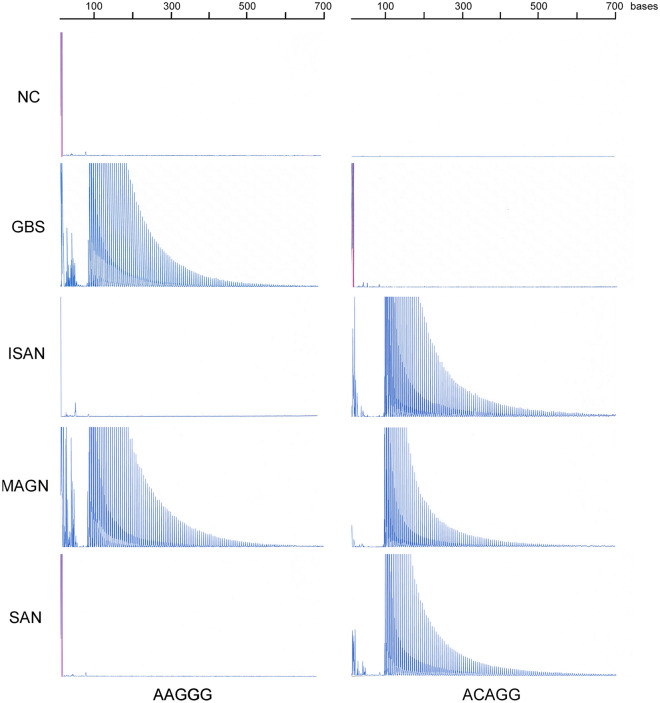
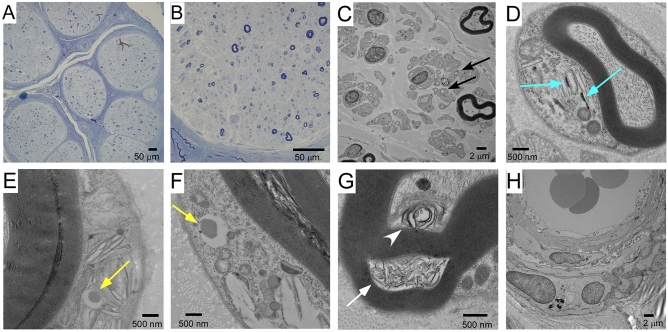
Cerebellar ataxia, neuropathy, and vestibular areflexia syndrome (CANVAS) has recently been attributed to biallelic repeat expansions in RFC1. More recently, the disease entity has expanded to atypical phenotypes, including chronic neuropathy without cerebellar ataxia or vestibular areflexia. Very recently, RFC1 expansions were found in patients with Sjögren syndrome who had neuropathy that did not respond to immunotherapy. In this study RFC1 was examined in 240 patients with acute or chronic neuropathies, including 105 with Guillain-Barré syndrome or Miller Fisher syndrome, 76 with chronic inflammatory demyelinating polyneuropathy, and 59 with other types of chronic neuropathy. Biallelic RFC1 mutations were found in three patients with immune-mediated neuropathies, including Guillain-Barré syndrome, idiopathic sensory ataxic neuropathy, or anti-myelin-associated glycoprotein (MAG) neuropathy, who responded to immunotherapies. In addition, a patient with chronic sensory autonomic neuropathy had biallelic mutations, and subclinical changes in Schwann cells on nerve biopsy. In summary, we found CANVAS-related RFC1 mutations in patients with treatable immune-mediated neuropathy or demyelinating neuropathy.
© 2023. Springer Nature Limited.
Conflict of interest statement
MH, MS, HT, and YN have received honoraria from Takeda. MH has received a research grant unrelated to this study from Takeda. HT and SK received honoraria from Japan Blood Product Organization. HT and SK have received honoraria from CSL Behring. All other authors declare no competing interests.
Figures
References
-
- Cortese A, Simone R, Sullivan R, Vandrovcova J, Tariq H, Yau WY, Humphrey J, Jaunmuktane Z, Sivakumar P, Polke J, Ilyas M, Tribollet E, Tomaselli PJ, Devigili G, Callegari I, Versino M, Salpietro V, Efthymiou S, Kaski D, Wood NW, Andrade NS, Buglo E, Rebelo A, Rossor AM, Bronstein A, Fratta P, Marques WJ, Zuchner S, Reilly MM, Houlden H. Biallelic expansion of an intronic repeat in RFC1 is a common cause of late-onset ataxia. Nat. Genet. 2019;51:649–658. doi: 10.1038/s41588-019-0372-4. - DOI - PMC - PubMed
-
- Ando M, Higuchi Y, Yuan JH, Yoshimura A, Higashi S, Takeuchi M, Hobara T, Kojima F, Noguchi Y, Takei J, Hiramatsu Y, Nozuma S, Sakiyama Y, Hashiguchi A, Matsuura E, Okamoto Y, Nagai M, Takashima H. Genetic and clinical features of cerebellar ataxia with RFC1 biallelic repeat expansions in Japan. Front. Neurol. 2022;13:952493. doi: 10.3389/fneur.2022.952493. - DOI - PMC - PubMed
-
- Yuan JH, Higuchi Y, Ando M, Matsuura E, Hashiguchi A, Yoshimura A, Nakamura T, Sakiyama Y, Mitsui J, Ishiura H, Tsuji S, Takashima H. Multi-type RFC1 repeat expansions as the most common cause of hereditary sensory and autonomic neuropathy. Front. Neurol. 2022;13:986504. doi: 10.3389/fneur.2022.986504. - DOI - PMC - PubMed
-
- Dominik N, Magri S, Curro R, Abati E, Facchini S, Corbetta M, MacPherson H, Di Bella D, Sarto E, Stevanovski I, Chintalaphani SR, Akcimen F, Manini A, Vegezzi E, Quartesan I, Montgomery KA, Pirota V, Crespan E, Perini C, Grupelli GP, Tomaselli PJ, Marques W, Genomics England Research C. Shaw J, Polke J, Salsano E, Fenu S, Pareyson D, Pisciotta C, Tofaris GK, Nemeth AH, Ealing J, Radunovic A, Kearney S, Kumar KR, Vucic S, Kennerson M, Reilly MM, Houlden H, Deveson I, Tucci A, Taroni F, Cortese A. Normal and pathogenic variation of RFC1 repeat expansions: Implications for clinical diagnosis. Brain. 2023 doi: 10.1093/brain/awad240. - DOI - PMC - PubMed
Publication types
MeSH terms
Substances
LinkOut - more resources
Full Text Sources
Medical
Research Materials
