


Development and evaluation of a wearable peripheral vascular compensation sensor in a swine model of hemorrhage
- PMID: 37854551
- PMCID: PMC10581812
- DOI: 10.1364/BOE.494720
Development and evaluation of a wearable peripheral vascular compensation sensor in a swine model of hemorrhage
Abstract
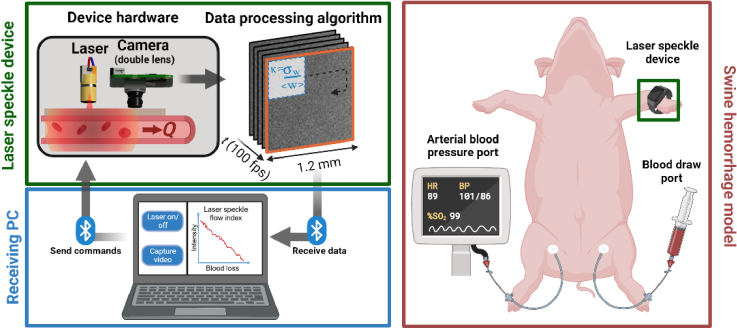
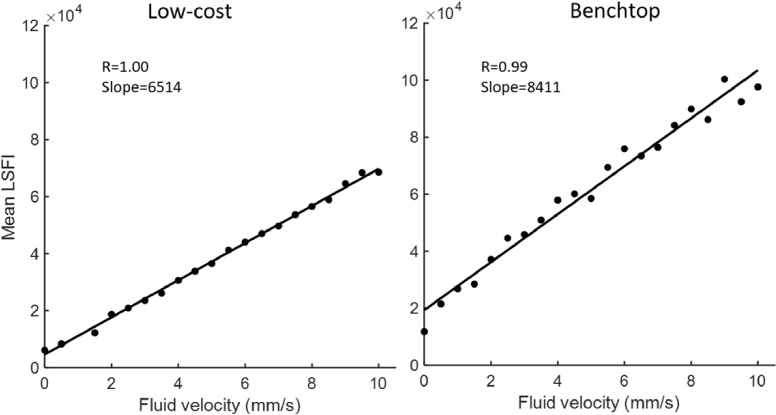
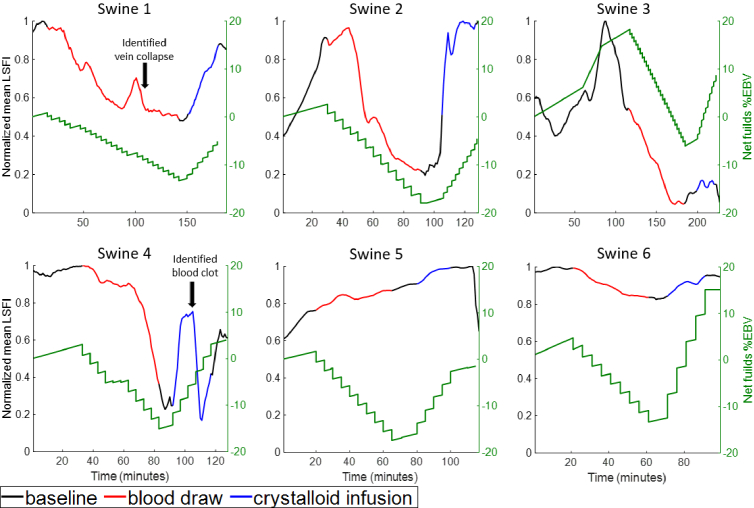
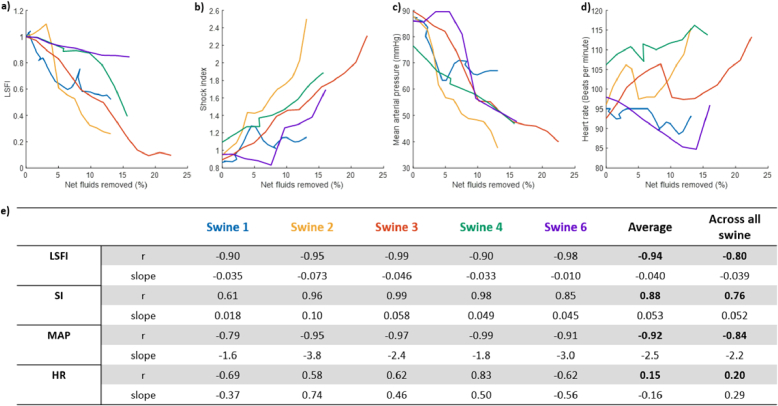
Postpartum hemorrhage (PPH) is the leading and most preventable cause of maternal mortality, particularly in low-resource settings. PPH is currently diagnosed through visual estimation of blood loss or monitoring of vital signs. Visual assessment routinely underestimates blood loss beyond the point of pharmaceutical intervention. Quantitative monitoring of hemorrhage-induced compensatory processes, such as the constriction of peripheral vessels, may provide an early alert for PPH. To this end, we developed a low-cost, wearable optical device that continuously monitors peripheral perfusion via laser speckle flow index (LSFI) to detect hemorrhage-induced peripheral vasoconstriction. The measured LSFI signal produced a linear response in phantom models and a strong correlation coefficient with blood loss averaged across subjects (>0.9) in a large animal model, with superior performance to vital sign metrics.
© 2023 Optica Publishing Group under the terms of the Optica Open Access Publishing Agreement.
Conflict of interest statement
Armor Medical (CO, LS), PCT/US2022/021048, “Hemodilution detector” (FBM, CO, LS)
Figures
Update of
-
Development and evaluation of a wearable peripheral vascular compensation sensor in a swine model of hemorrhage.bioRxiv [Preprint]. 2023 Feb 21:2023.02.20.529156. doi: 10.1101/2023.02.20.529156. bioRxiv. 2023. Update in: Biomed Opt Express. 2023 Sep 21;14(10):5338-5357. doi: 10.1364/BOE.494720. PMID: 36865173 Free PMC article. Updated. Preprint.
References
-
- Zwart J. J., Richters J. M., Ory F., de Vries J. I., Bloemenkamp K. W., van Roosmalen J., “Severe maternal morbidity during pregnancy, delivery and puerperium in the Netherlands: a nationwide population-based study of 371,000 pregnancies,” BJOG : An International J. Obstetrics and Gynaecol. 115(7), 842–850 (2008). 10.1111/j.1471-0528.2008.01713.x - DOI - PubMed
Grants and funding
LinkOut - more resources
Full Text Sources