Multicenter Study
. 2023 Oct 19;142(16):1387-1398.
doi: 10.1182/blood.2023020026.

Gut microbiota diversity before allogeneic hematopoietic stem cell transplantation as a predictor of mortality in children

Affiliations
Multicenter Study

Gut microbiota diversity before allogeneic hematopoietic stem cell transplantation as a predictor of mortality in children

Riccardo Masetti et al. Blood. .

Abstract

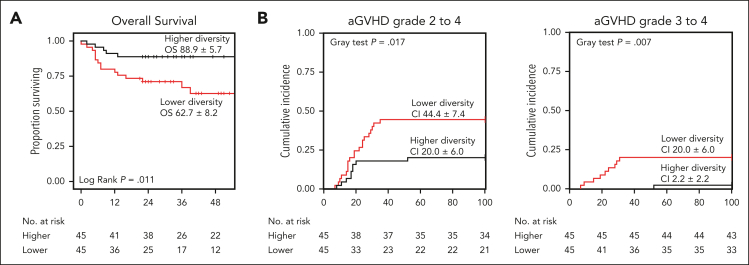
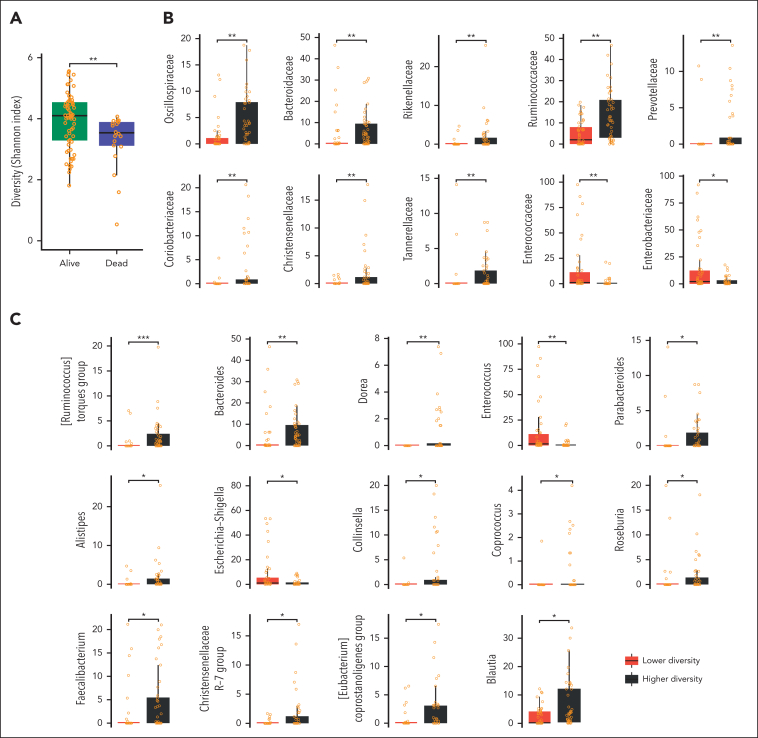
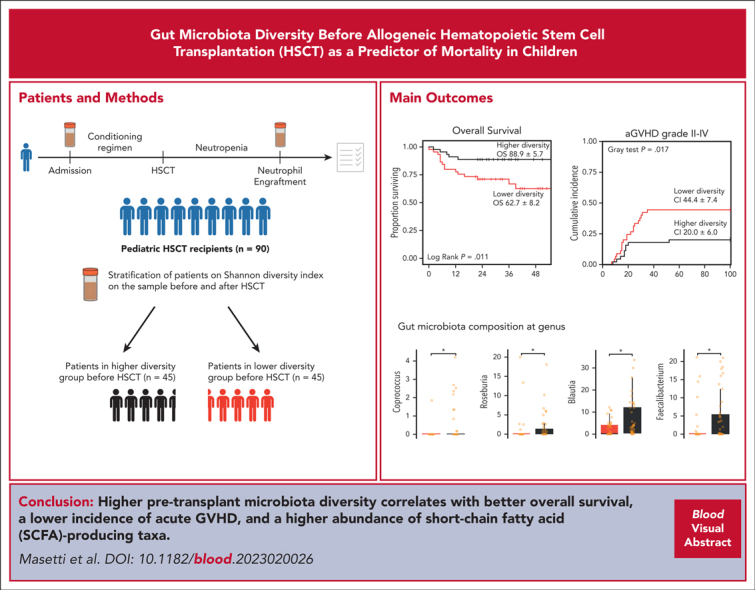
The correlation existing between gut microbiota diversity and survival after allogeneic hematopoietic stem cell transplantation (allo-HSCT) has so far been studied in adults. Pediatric studies question whether this association applies to children as well. Stool samples from a multicenter cohort of 90 pediatric allo-HSCT recipients were analyzed using 16S ribosomal RNA amplicon sequencing to profile the gut microbiota and estimate diversity with the Shannon index. A global-to-local networking approach was used to characterize the ecological structure of the gut microbiota. Patients were stratified into higher- and lower-diversity groups at 2 time points: before transplantation and at neutrophil engraftment. The higher-diversity group before transplantation exhibited a higher probability of overall survival (88.9% ± 5.7% standard error [SE] vs 62.7% ± 8.2% SE; P = .011) and lower incidence of grade 2 to 4 and grade 3 to 4 acute graft-versus-host disease (aGVHD). No significant difference in relapse-free survival was observed between the 2 groups (80.0% ± 6.0% SE vs 55.4% ± 10.8% SE; P = .091). The higher-diversity group was characterized by higher relative abundances of potentially health-related microbial families, such as Ruminococcaceae and Oscillospiraceae. In contrast, the lower-diversity group showed an overabundance of Enterococcaceae and Enterobacteriaceae. Network analysis detected short-chain fatty acid producers, such as Blautia, Faecalibacterium, Roseburia, and Bacteroides, as keystones in the higher-diversity group. Enterococcus, Escherichia-Shigella, and Enterobacter were instead the keystones detected in the lower-diversity group. These results indicate that gut microbiota diversity and composition before transplantation correlate with survival and with the likelihood of developing aGVHD.


Conflict of interest statement

Conflict-of-interest disclosure: The authors declare no competing financial interests.

Figures
None
Graphical abstract
Figure 1.
Figure 1.
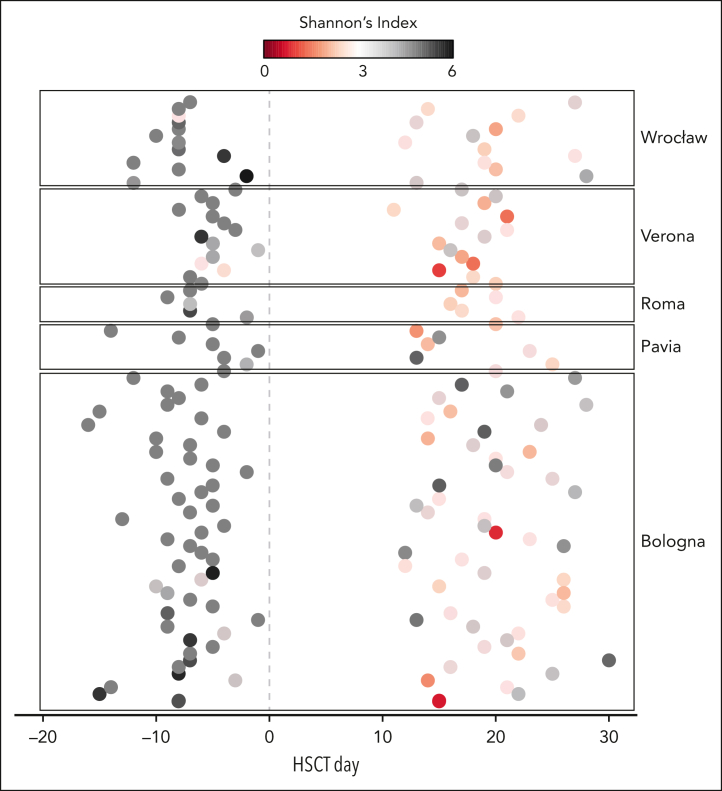
Temporal distribution of the samples from the multicenter pediatric allo-HSCT cohort analyzed in this study. Each point in the graph represents 1 of 180 fecal samples for the 90 patients included in this study, sampled before transplantation and at neutrophil engraftment. Samples are plotted based on the time relative to allo-HSCT (day 0) on the horizontal axis. The color code is based on alfa diversity as measured by the Shannon index.
Figure 2.
Figure 2.
Overall survival and aGVHD incidence in respect to pre-allo-HSCT GM diversity. Kaplan-Meier plot for OS (A) and cumulative incidence plots for grade 2 to 4 and 3 to 4 aGVHD (B) for the higher- and lower-diversity groups before allo-HSCT. CI, confidence interval.
Figure 3.
Figure 3.
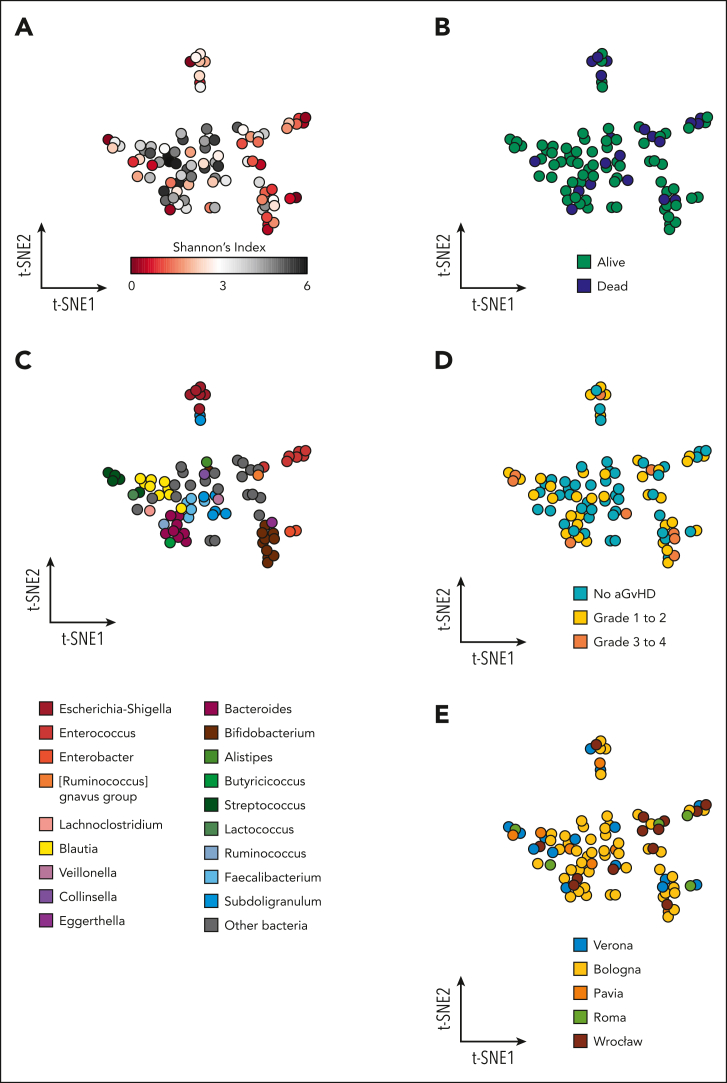
Pretransplant GM and outcomes in pediatric patients undergoing allo-HSCT. The GM composition at the genus level of the 90 patients before transplantation is represented according to the t-SNE algorithm. Each point represents a stool sample from a single patient, and the axes (t-SNE1 and t-SNE2) have arbitrary units. The more similar the samples are in microbiota composition, the closer they appear on the t-SNE plot. Higher-diversity samples (A) congregate in the center and tend to colocalize with favorable survival outcome (B). The outer ring is mostly composed of lower-diversity samples, which show a higher presence of Escherichia-Shigella, Enterococcus, Enterobacter, and Streptococcus when color-coded for the most abundant taxon detected (C). A similar trend can be observed for the onset of aGVHD (aGVHD) (D), especially grade 3 to 4 aGVHD. Samples from all 5 institutions are well distributed across the t-SNE space (E).
Figure 4.
Figure 4.
GM diversity and composition before allo-HSCT. (A) Boxplots showing the distribution of alfa diversity estimated with the Shannon index according to patient outcome (alive vs dead). Significant differences in the GM composition at the family (B) and genus (C) level between the higher- and lower-diversity groups. false discovery rate–corrected Wilcoxon rank-sum tests: ∗∗∗P < .001; ∗∗P < .01; ∗P < .05.
Figure 5.
Figure 5.
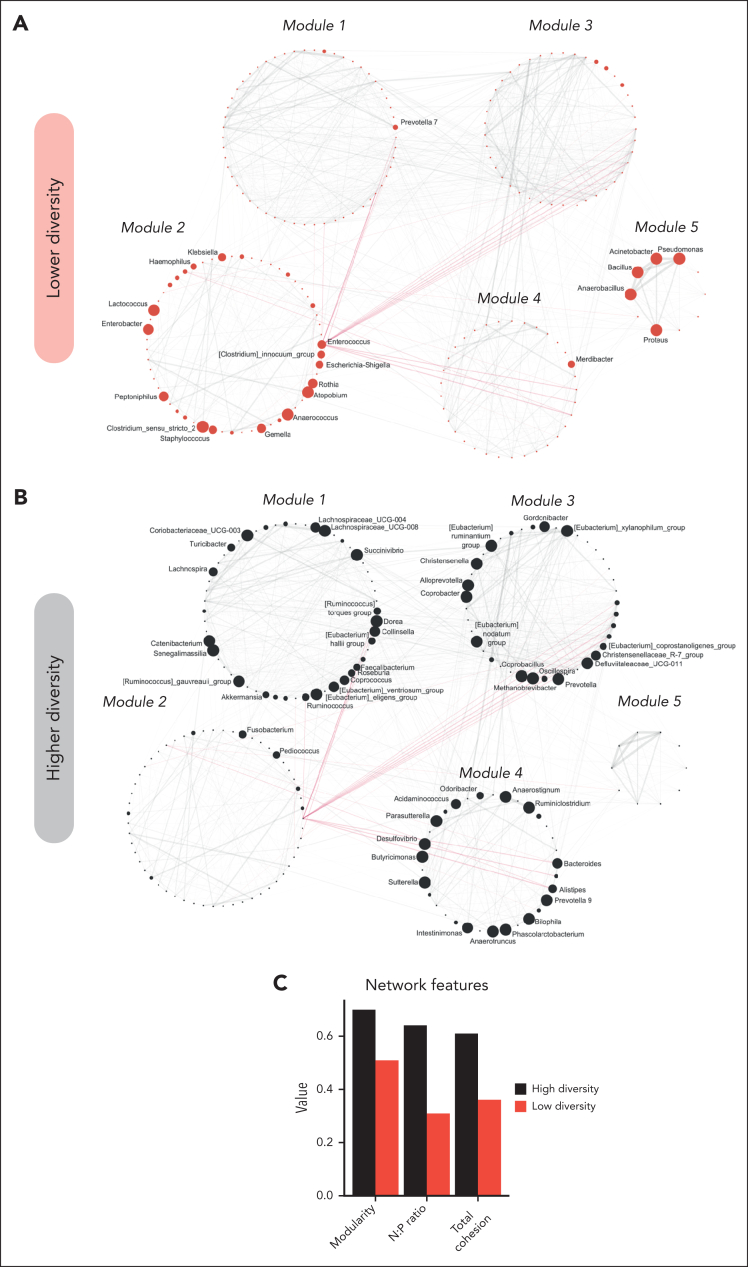
GM networks of the higher- and lower-diversity groups before allo-HSCT. Correlation networks of interactions reconstructed from genus-level compositional data in the lower- (A) and higher- (B) diversity groups before allo-HSCT. Red lines represent negative interactions, whereas solid gray lines stand for positive ones. Node size is proportional to the overabundance value of the corresponding genus in the GM configuration of the diversity group considered. Only nodes corresponding to genera showing overabundance ≥1.4 were displayed. Labels were displayed only for genera showing an overabundance of at least 1.5. The 5 different modules detected according to a statistical mechanics spin-glass model and simulated annealing are noted with labels. (C) Values of computed network features (ie, modularity, N:P ratio, and TC).

Comment in

References

    1. Copelan EA, Chojecki A, Lazarus HM, Avalos BR. Allogeneic hematopoietic cell transplantation; the current renaissance. Blood Rev. 2019;34:34–44. - PubMed
    1. Masetti R, Muratore E, Gori D, Prete A, Locatelli F. Allogeneic hematopoietic stem cell transplantation for pediatric acute myeloid leukemia in first complete remission: a meta-analysis. Ann Hematol. 2022;101(11):2497–2506. - PMC - PubMed
    1. Algeri M, Merli P, Locatelli F, Pagliara D. The role of allogeneic hematopoietic stem cell transplantation in pediatric leukemia. J Clin Med. 2021;10(17) - PMC - PubMed
    1. Ferrara JLM, Levine JE, Reddy P, Holler E. Graft-versus-host disease. Lancet. 2009;373(9674):1550–1561. - PMC - PubMed
    1. Zama D, Biagi E, Masetti R, et al. Gut microbiota and hematopoietic stem cell transplantation: where do we stand? Bone Marrow Transplant. 2017;52(1):7–14. - PubMed

Publication types