


Role of Glucagon-Like Peptide-1 (GLP-1) Receptor Agonists in Cardiovascular Risk Management in Patients With Type 2 Diabetes Mellitus: A Systematic Review
- PMID: 37859909
- PMCID: PMC10584355
- DOI: 10.7759/cureus.45487
Role of Glucagon-Like Peptide-1 (GLP-1) Receptor Agonists in Cardiovascular Risk Management in Patients With Type 2 Diabetes Mellitus: A Systematic Review
Abstract
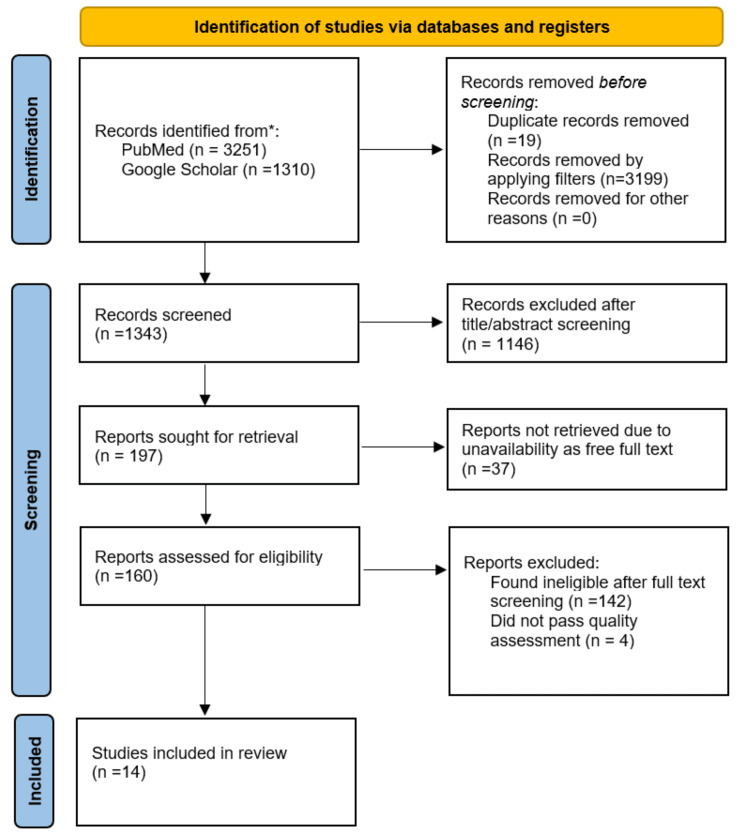
People with type 2 diabetes mellitus have a greater risk of developing cardiovascular problems. Since cardiovascular diseases are a major cause of mortality all over the world, we need to find more efficient measures to control this risk in the diabetes population in addition to conventional glycemic control. In this systematic review, we aim to explore the latest findings on the cardiovascular effects of glucagon-like peptide-1 (GLP-1) agonists and dual GLP-1/glucose-dependent insulinotropic peptide (GIP) agonists in patients with type 2 diabetes mellitus. We conducted a comprehensive literature search using PubMed and Google Scholar as the main sources for data collection. We followed the Preferred Reporting Items for Systematic Reviews and Meta-Analyses (PRISMA) 2020 recommendations for conducting this review. The outcomes of interest included mortality due to cardiovascular causes, non-fatal myocardial infarction, stroke, effects on cardiovascular risk factors, heart failure, and development of arrhythmias. After thorough literature screening and quality analysis, 14 articles were finally included for qualitative synthesis. GLP-1 receptor agonists appeared to be effective in reducing the risk of cardiovascular mortality, myocardial infarction, and stroke. They were found to reduce the risk of composite major adverse cardiovascular event (MACE) outcomes by 12-14% when compared to placebo. Their role in preventing heart failure and arrhythmias is uncertain, and further trials are needed to confirm the same. The cardiovascular outcomes of GLP-1/GIP dual agonists are currently under investigation. Studies completed to date show that they do not increase the risk of cardiovascular disease when compared to placebo.
Keywords: cardiovascular adverse events; cardiovascular outcomes; diabetes mellitus type 2; glp-1 receptor agonists; glp-1-gip co-agonist.
Copyright © 2023, Parab et al.
Conflict of interest statement
The authors have declared that no competing interests exist.
Figures
References
-
- Centers for Disease Control and Prevention, National Center for Health Statistics. About Multiple Cause of Death, 1999-2020. CDC WONDER Online Database website. Atlanta, GA: Centers for Disease Control and Prevention; 2022. [ Apr; 2023 ];https://wonder.cdc.gov/ 2022 21:2022.
-
- Heart Disease and Stroke Statistics-2022 Update: a report from the American Heart Association. Tsao CW, Aday AW, Almarzooq ZI, et al. Circulation. 2022;145:0–639. - PubMed
-
- Prevalence of diabetes and impact on cardiovascular events and mortality in patients with chronic coronary syndromes, across multiple geographical regions and ethnicities. Mak KH, Vidal-Petiot E, Young R, et al. Eur J Prev Cardiol. 2022;28:1795–1806. - PubMed
-
- International Diabetes Federation. Vol. 10. Brussels, Belgium: International Diabetes Federation; [ Apr; 2023 ]. 2021. IDF Diabetes Atlas, 10th Edition ; p. 2021.
Publication types
LinkOut - more resources
Full Text Sources
Other Literature Sources