The diversity, community dynamics, and interactions of the microbiome in the world's deepest blue hole: insights into extreme environmental response patterns and tolerance of marine microorganisms
- PMID: 37861344
- PMCID: PMC10883803
- DOI: 10.1128/spectrum.00531-23
The diversity, community dynamics, and interactions of the microbiome in the world's deepest blue hole: insights into extreme environmental response patterns and tolerance of marine microorganisms
Abstract
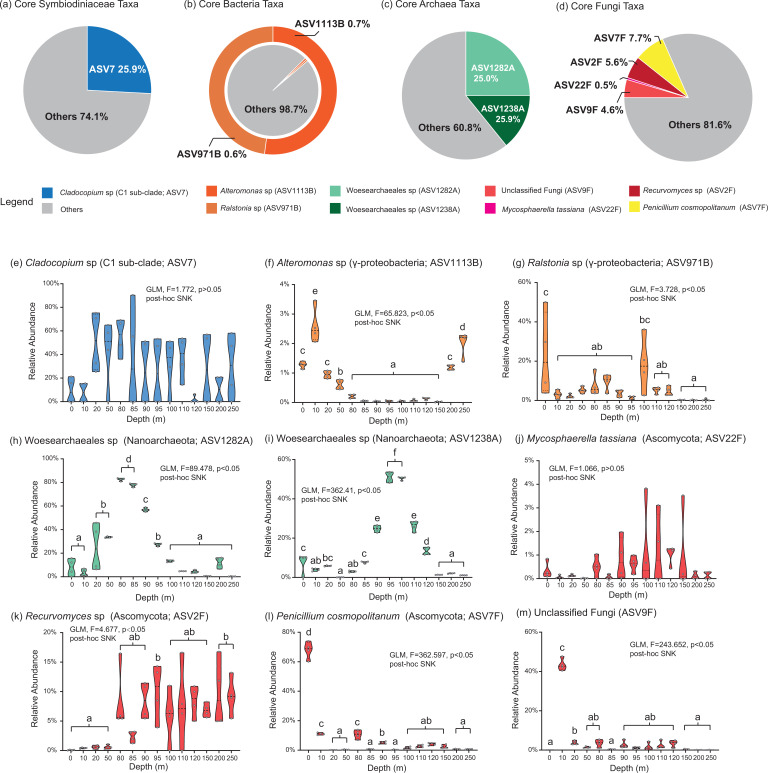
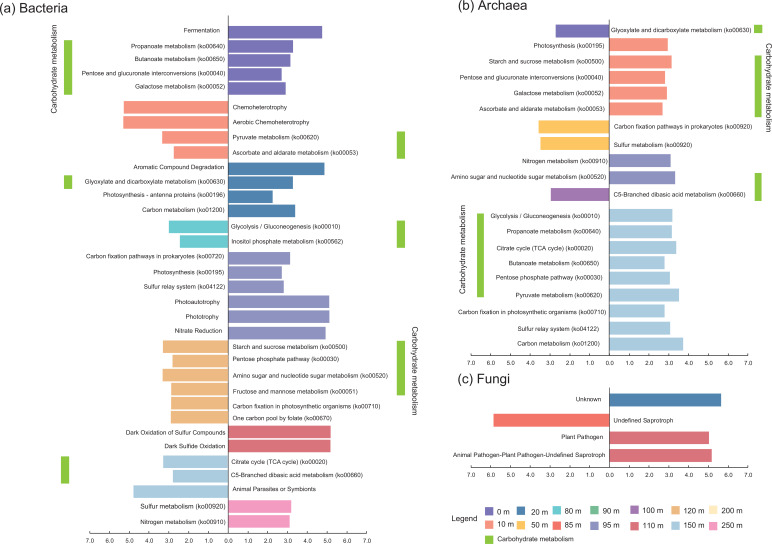
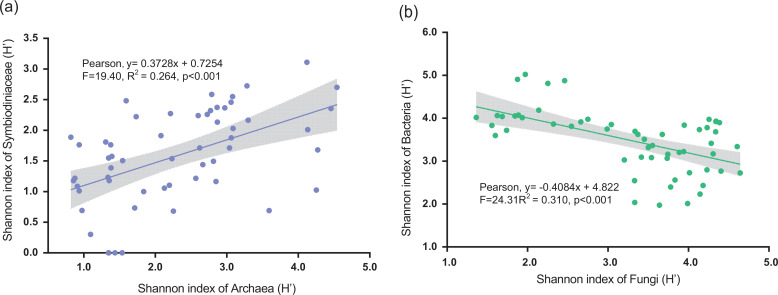
This study comprehensively examined the community dynamics, functional profiles, and interactions of the microbiome in the world's deepest blue hole. The findings revealed a positive correlation between the α-diversities of Symbiodiniaceae and archaea, indicating the potential reliance of Symbiodiniaceae on archaea in an extreme environment resulting from a partial niche overlap. The negative association between the α-diversity and β-diversity of the bacterial community suggested that the change rule of the bacterial community was consistent with the Anna Karenina effects. The core microbiome comprised nine microbial taxa, highlighting their remarkable tolerance and adaptability to sharp environmental gradient variations. Bacteria and archaea played significant roles in carbon, nitrogen, and sulfur cycles, while fungi contributed to carbon metabolism. This study advanced our understanding of the community dynamics, response patterns, and resilience of microorganisms populating the world's deepest blue hole, thereby facilitating further ecological and evolutional exploration of microbiomes in diverse extreme environments.
Keywords: deepest blue hole; extreme environment; microbiome community dynamics; response pattern; tolerance threshold.
Conflict of interest statement
The authors declare no conflict of interest.
Figures
References
-
- Mylroie JE, Carew JL, Moore AI. 1995. Blue holes: definition and genesis. Carbonates Evaporites 10:225–233. doi: 10.1007/BF03175407 - DOI
-
- Mylroie JE, Mylroie JR. 2011. Void development on carbonate coasts: creation of anchialine habitats. Hydrobiologia 677:15–32. doi: 10.1007/s10750-010-0542-y - DOI
-
- Martin JB, Gulley J, Spellman P. 2012. Tidal pumping of water between Bahamian blue holes, aquifers, and the ocean. J Hydrol 416:28–38. doi: 10.1016/j.jhydrol.2011.11.033 - DOI
-
- Humphreys WF, Bishop RE, Kršinić F, Sket B, Iliffe TM, Žic V, Moore WS, Cukrov N, Cukrov M, Boxshall GA, Pohlman JW. 2015. 'Anchialine' redefined as a subterranean estuary in a crevicular or cavernous geological setting. J Crust Biol 35:511–514. doi: 10.1163/1937240X-00002335 - DOI
-
- Pérez-Moreno J, Iliffe T, Bracken-Grissom H, Florida International University, Texas A&M University, Florida International University . 2016. Life in the underworld: anchialine cave biology in the era of speleogenomics. Int J Speleol 45:149–170. doi: 10.5038/1827-806X.45.2.1954 - DOI
Publication types
MeSH terms
Substances
Associated data
Grants and funding
LinkOut - more resources
Full Text Sources