


The efficacy and safety of aspirin in preventing venous thrombosis in major orthopedic surgery: An updated meta-analysis of randomized controlled trials
- PMID: 37861503
- PMCID: PMC10589573
- DOI: 10.1097/MD.0000000000035602
The efficacy and safety of aspirin in preventing venous thrombosis in major orthopedic surgery: An updated meta-analysis of randomized controlled trials
Abstract
Background: Major orthopedic surgery, including hip and knee replacement and lower extremity trauma fractures surgery, is associated with a high risk of venous thromboembolism (VTE), especially proximal deep vein thrombosis (DVT), and pulmonary embolism (PE), and is linked with high morbidity and mortality rates. Chemical anticoagulation is routinely used to prevent VTE, with previous meta-analyses reporting on the efficacy and safety of aspirin and other anticoagulants, however, opinions are divided. In the past 2 years, several large randomized controlled trials have been published, therefore, we reanalyzed aspirin efficacy and safety when compared with other anticoagulants in preventing VTE in major orthopedic surgery.
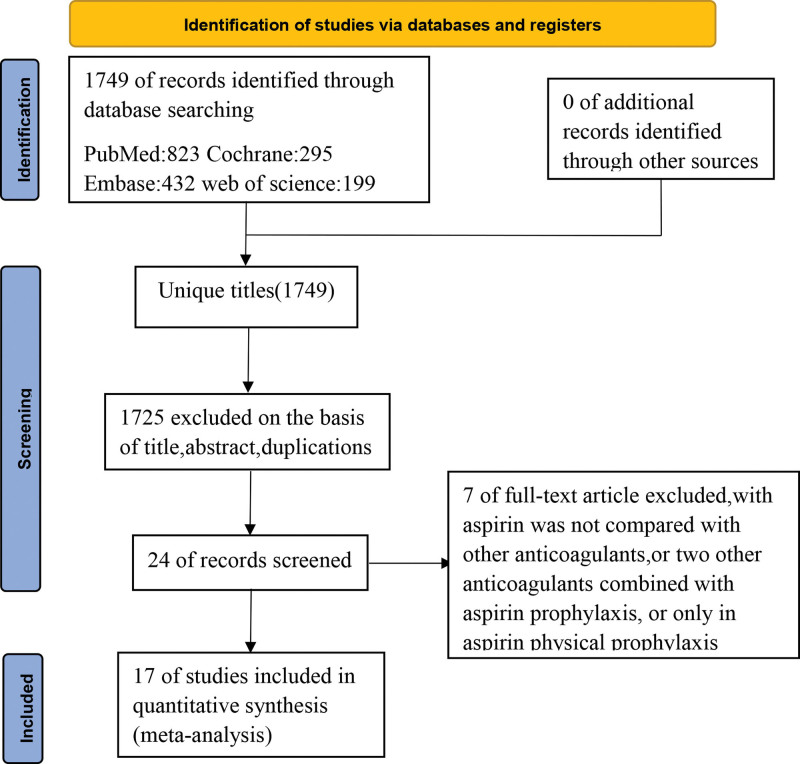
Methods: Using PubMed, The Cochrane Library, Embase, and Web of Science databases, we conducted a RCT search in August 2023. The main outcomes included VTE, proximal DVT or PE. Additional outcomes included bleeding events, wound complications, wound infections, blood transfusions, and death events.
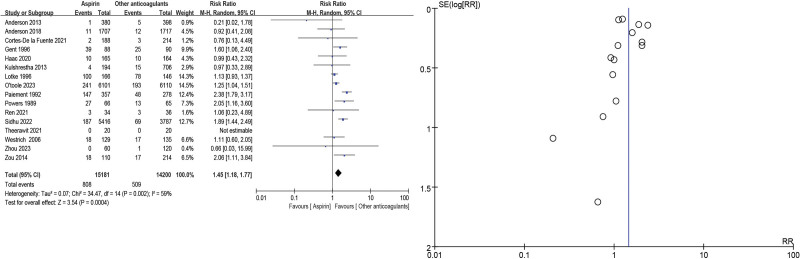
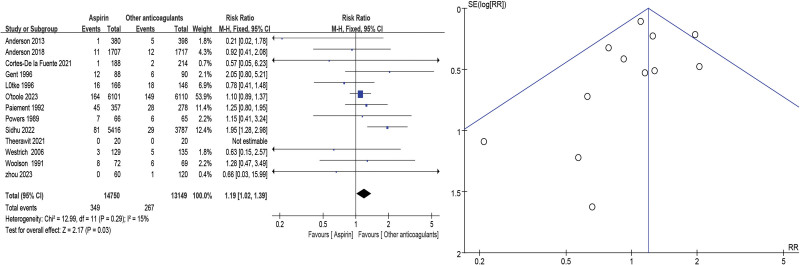
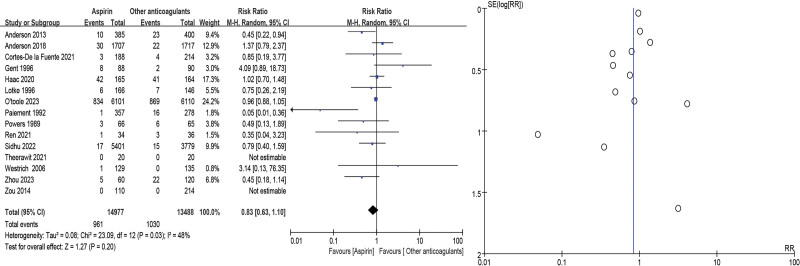
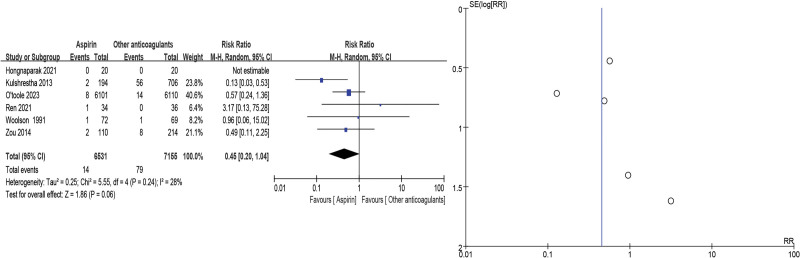
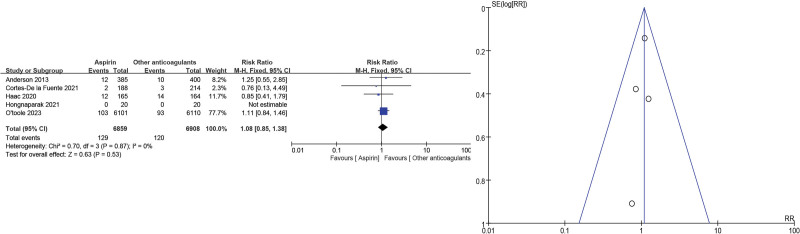
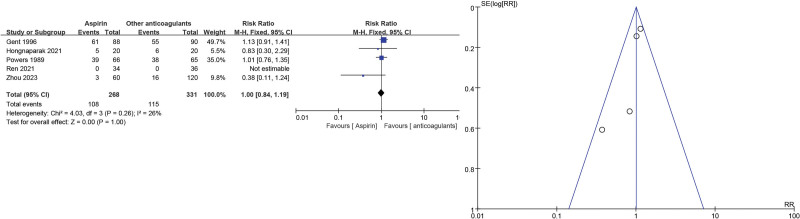
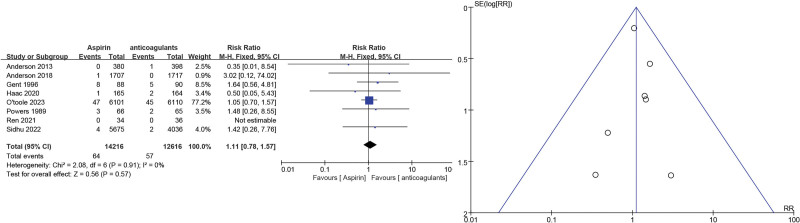
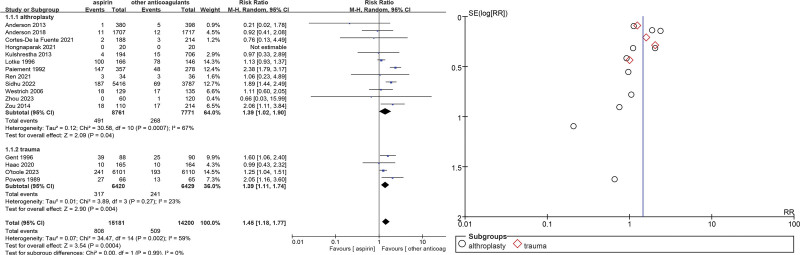
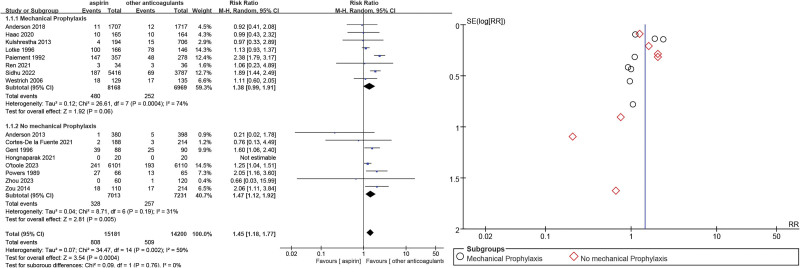
Results: In total, 17 eligible articles, involving 29,522 patients (15,253 aspirin vs 14,269 other anticoagulant cases), were included. Primary outcomes showed that VTE incidence was more high in the aspirin group when compared with other anticoagulants (risk ratio [RR] = 1.45, 95% confidence interval [CI] = 1.18-1.77, P = .0004) and proximal in the aspirin group the DVT and/or PE incidence was significantly higher in the aspirin group when compared with other anticoagulants (RR = 1.19, 95% CI = 1.02-1.39, P = .03). No significant secondary outcome differences were identified in the aspirin group when compared with other anticoagulants (bleeding events [RR] = 0.83, 95% CI = 0.63-1.10, P = .20); wound complications (RR = 0.45, 95% CI = 0.20-1.04, P = .06); wound infection (RR = 1.08, 95% CI = 0.85-1.38, P = .53); blood transfusion events (RR = 1.00, 95% CI = 0.84-1.19, P = 1.00) and death events (RR = 1.11, 95% CI = 0.78-1.57, P = .55).
Conclusions: Our updated meta-analysis showed that aspirin was inferior to when compared with other anticoagulants in VTE-related orthopedic major surgery, including proximal DVT and/or PE, and was more likely to form VTE. No differences between groups were identified for bleeding, wound complications, wound infections, transfusion, or death events.
Copyright © 2023 the Author(s). Published by Wolters Kluwer Health, Inc.
Conflict of interest statement
The authors have no funding and conflicts of interest to disclose.
Figures
References
-
- Piovella F, Wang CJ, Lu H, et al. Deep-vein thrombosis rates after major orthopedic surgery in Asia. An epidemiological study based on postoperative screening with centrally adjudicated bilateral venography. J Thromb Haemost. 2005;3:2664–70. - PubMed
-
- Koracevic GP. VTE ought to be divided not only in DVT and PTE, but also in subacute/chronic forms. Am J Emerg Med. 2019;37:978–9. - PubMed
-
- Venous thromboembolism in over 16s: reducing the risk of hospital-acquired deep vein thrombosis or pulmonary embolism. London: National Institute for Health and Care Excellence (NICE); 2019. - PubMed
Publication types
MeSH terms
Substances
LinkOut - more resources
Full Text Sources
Medical
Miscellaneous
