


Decision-making in anesthesiology: will artificial intelligence make intraoperative care safer?
- PMID: 37865848
- PMCID: PMC11100504
- DOI: 10.1097/ACO.0000000000001318
Decision-making in anesthesiology: will artificial intelligence make intraoperative care safer?
Abstract
Purpose of review: This article explores the impact of recent applications of artificial intelligence on clinical anesthesiologists' decision-making.
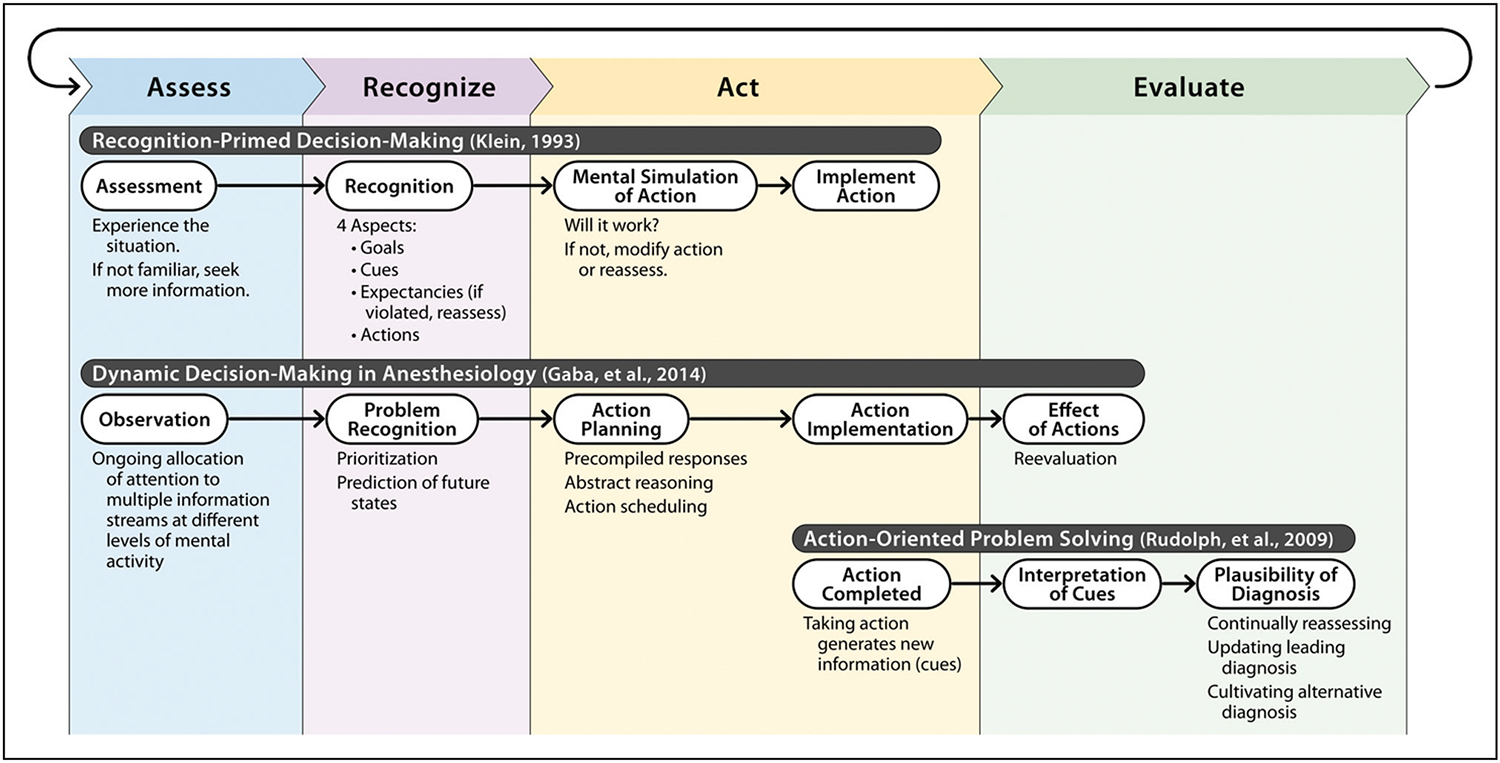
Recent findings: Naturalistic decision-making, a rich research field that aims to understand how cognitive work is accomplished in complex environments, provides insight into anesthesiologists' decision processes. Due to the complexity of clinical work and limits of human decision-making (e.g. fatigue, distraction, and cognitive biases), attention on the role of artificial intelligence to support anesthesiologists' decision-making has grown. Artificial intelligence, a computer's ability to perform human-like cognitive functions, is increasingly used in anesthesiology. Examples include aiding in the prediction of intraoperative hypotension and postoperative complications, as well as enhancing structure localization for regional and neuraxial anesthesia through artificial intelligence integration with ultrasound.
Summary: To fully realize the benefits of artificial intelligence in anesthesiology, several important considerations must be addressed, including its usability and workflow integration, appropriate level of trust placed on artificial intelligence, its impact on decision-making, the potential de-skilling of practitioners, and issues of accountability. Further research is needed to enhance anesthesiologists' clinical decision-making in collaboration with artificial intelligence.
Copyright © 2023 Wolters Kluwer Health, Inc. All rights reserved.
Conflict of interest statement
Conflicts of interest
All the authors are involved in an on-going national multicenter trial, Improving Medical Performance during Acute Crises Through Simulation (IMPACTS). M.B.W. is a consultant for Fresenius-Kabi/Ivenix on matters completely unrelated to the content of this manuscript. Otherwise, the authors do not have any conflicts of interest in the manuscript, including financial, consultant, institutional, and other relationships that might lead to bias or a conflict of interest.
Figures
References
-
- Zaouter C, Joosten A, Rinehart J, et al. Autonomous systems in anesthesia: where do we stand in 2020? A narrative review. Anesth Analg 2020; 130:1120–1132. - PubMed
-
- London MJ. Back to the OR of the future: how do we make it a good one? Anesthesiology 2021; 135:206–208. - PubMed
-
- Tremper KK. Back to the OR of the future: comment. Anesthesiology 2022; 136:393. - PubMed
-
- Naturalistic Decision Making Association. Principles of naturalistic decision making. 2023. [cited 2023 June 30]; Available at: https://naturalisticdecisionmaking.org/ndm-principles/. [Accessed 30 June 2023]
-
-
■Reale C, Salwei ME, Militello LG, et al. Decision-making during high-risk events: a systematic literature review. J Cogn Eng Decision Making 2023; 17:188–212.
This systematic literature review identified 32 empiric research articles that examine how trained professionals make naturalistic decisions under pressure across multiple domains.
-
Publication types
MeSH terms
Grants and funding
LinkOut - more resources
Full Text Sources
Medical
Research Materials
