Clinical Trial
. 2023 Nov;29(11):2844-2853.
doi: 10.1038/s41591-023-02612-0. Epub 2023 Oct 23.

CLDN6-specific CAR-T cells plus amplifying RNA vaccine in relapsed or refractory solid tumors: the phase 1 BNT211-01 trial

Affiliations
Clinical Trial

CLDN6-specific CAR-T cells plus amplifying RNA vaccine in relapsed or refractory solid tumors: the phase 1 BNT211-01 trial

Andreas Mackensen et al. Nat Med. 2023 Nov.

Abstract

The oncofetal antigen Claudin 6 (CLDN6) is highly and specifically expressed in many solid tumors, and could be a promising treatment target. We report dose escalation results from the ongoing phase 1/2 BNT211-01 trial evaluating the safety and feasibility of chimeric antigen receptor (CAR) T cells targeting the CLDN6 with or without a CAR-T cell-amplifying RNA vaccine (CARVac) at two dose levels (DLs) in relapsed/refractory CLDN6-positive solid tumors. The primary endpoints were safety and tolerability, maximum tolerated dose and recommended phase 2 dose (RP2D). Secondary endpoints included objective response rate (ORR) and disease control rate. We observed manageable toxicity, with 10 out of 22 patients (46%) experiencing cytokine release syndrome including one grade 3 event and 1 out of 22 (5%) with grade 1 immune effector cell-associated neurotoxicity syndrome. Dose-limiting toxicities occurred in two patients at the higher DL, resolving without sequelae. CAR-T cell engraftment was robust, and the addition of CARVac was well tolerated. The unconfirmed ORR in 21 evaluable patients was 33% (7 of 21), including one complete response. The disease control rate was 67% (14 of 21), with stable disease in seven patients. Patients with germ cell tumors treated at the higher DL exhibited the highest response rate (ORR 57% (4 of 7)). The maximum tolerated dose and RP2D were not established as the trial has been amended to utilize an automated manufacturing process. A repeat of the dose escalation is ongoing and will identify a RP2D for pivotal trials. ClinicalTrials.gov Identifier: NCT04503278 .


Conflict of interest statement

Y.H., T.H., Q.K.-F., A.M.S., C.S.-E., A.F., C.F., K.K., L.P., B.R., Ö.T. and U.Ş. are employees at BioNTech SE. E.W. previously worked as consultants to BioNTech SE. U.Ş. and Ö.T. are management board members of BioNTech SE (Mainz, Germany). U.Ş., Ö.T. and B.R. are inventors on patents and patent applications, which cover parts of this article. The remaining authors declare nocompeting interests.

Figures
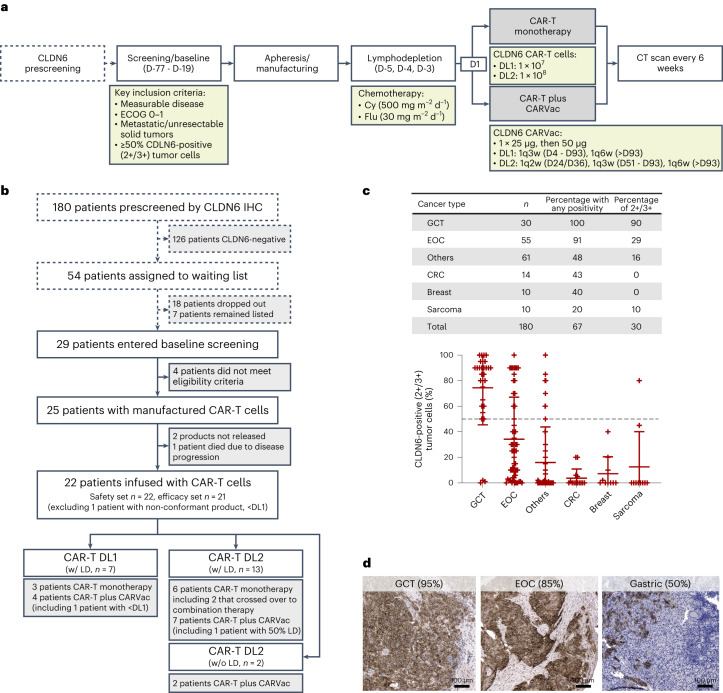
Fig. 1
Fig. 1. Trial design and enrollment.
a, Phase 1 bifurcated 3 + 3 dose escalation design. Screened patients were enrolled into either CLDN6 CAR-T monotherapy or a combination with CARVac, receiving a single dose of either 1 × 107 (DL1) or 1 × 108 (DL2) CLDN6 CAR-T cells. CARVac was administered with a starting dose at 25 µg, followed by 50 µg doses if tolerated. b, As of 5 November 2021 (enrollment of last patient dosed), 180 patients were prescreened and 54 classified as CLDN6-positive (50% of tumor cells ≥2+ CLDN6 membrane staining). Eighteen patients dropped out before the screening visit due to death (n = 9), worsening of condition (n = 7), loss to follow-up (n = 1) or refusal of participation (n = 1). Twenty-nine patients underwent full screening for trial eligibility, of which four patients did not meet eligibility criteria. Seven patients remained listed to be screened for trial eligibility, but did not consent for full trial eligibility screening, for example, because of decision to undergo other treatment approaches. CAR-T cell products were manufactured for all 25 enrolled patients. Of those, 22 were treated and included in the safety set, while one patient, who received CAR-T cells at <DL1, was excluded from the efficacy set. c, CLDN6 prescreening by semiquantitative immunohistochemistry assay, showing individual data points with mean ± standard deviation. Frequency of patients with CLDN6 2+/3+ expression with mean ± s.e.m. (black dashed line represents cutoff). Indications with <10 cases are summarized as ‘others’. d, Examples of CLDN6-positive cases treated within the trial. Thirteen GCT, four EOC and one each of DSRCT, gastric adenocarcinoma, serous carcinoma of the fallopian tube, endometrial carcinoma and CUP have been treated within the study (Table 1 and Supplementary Fig. 1). CRC, colorectal cancer; LD, lymphodepleting chemotherapy; w/, with; w/o, without.
Fig. 2
Fig. 2. Clinical response to CLDN6 CAR-T infusion ± CARVac.
a, Waterfall plot showing best percent change from baseline (screening, ~6 weeks before ACT) in sum of target lesion diameters. Efficacy evaluable population (n = 21) contains one patient that did not reach the first CT scan and was classified as PD (confirmed by X-ray). The table below indicates applied treatment, outcome and disease status at ACT (available for 12 patients). Redosing (n = 5) occurred after assessment of best response in all patients. b, Swimmer plots for all efficacy evaluable patients (n = 21). The patient with dose-reduced LD is marked with an asterisk. Diamonds represent outcome at tumor assessment (CR, PR, SD). Triangles indicate redosing with CAR-T cells at the same DL (orange) or crossover from monotherapy to combination therapy (yellow). Redosing was always performed as a combination treatment. All responses were assessed according to RECIST 1.1. The patient with CR had a residual radiographic abnormality interpreted as scar tissue, as there was no abnormal radiotracer uptake according to Positron Emission Tomography/Computed Tomography (PET-CT) 12 weeks post-ACT (Extended Data Fig. 5). Cancers of ‘other’ origin other than GCT and EOC were each a single case of DSRCT, GC, serous carcinoma of the fallopian tube, endometrial carcinoma and CUP. NE, non-evaluable; NR, not reached; PFS, progression-free survival.
Fig. 3
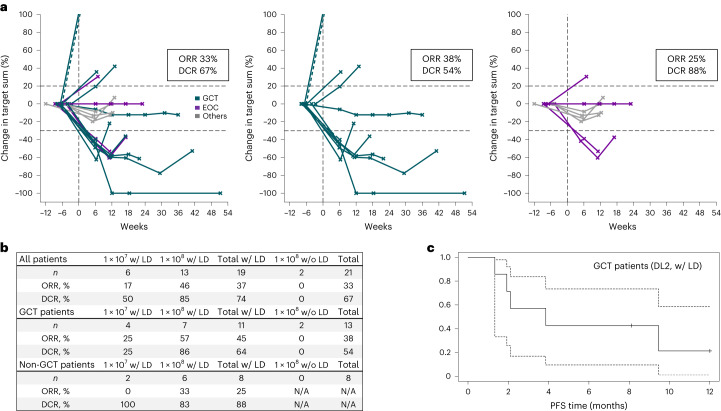
Fig. 3. Clinical responses in the GCT and non-GCT patient subgroups.
a, Spider plots indicating response durability in all patients (left, n = 21), GCT patients (middle, n = 13) and non-GCT patients (right, n = 8). Non-GCT patients include four EOC patients and one each of DSRCT, GC, serous carcinoma of the fallopian tube and endometrial carcinoma. Pretreatment CT scans are not included, as scans performed at screening (~6 weeks before ACT) served as baseline. b, Details on ORR and DCR of all patients as well as subgroups of GCT and non-GCT patients according to treatment (dose and LD). c, PFS analysis for n = 7 GCT patients treated at DL2 after LD with 95% confidence interval based on a log–log transformation of the survival function (dotted lines). ORR is unconfirmed.
Fig. 4
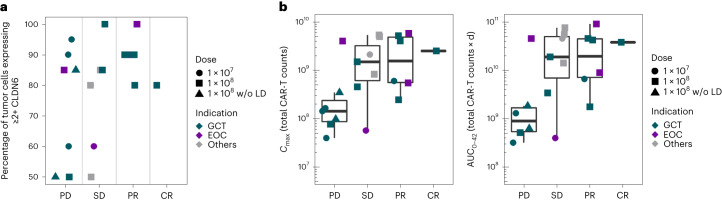
Fig. 4. Clinical outcome is directly correlated with homogeneity of CLDN6 tumor expression and CLDN6 CAR-T cell expansion.
a, Correlation of clinical outcome and CLDN6 expression of the corresponding tumor according to indication and treatment (dose and LD). b, Correlation analysis of CAR-T cell peak concentration (Cmax) (left) and AUC up to day 42 post-ACT (first tumor assessment) (right) with outcome. Cancers of ‘other’ origin other than GCT and EOC were single cases of DSRCT, GC, serous carcinoma of the fallopian tube and endometrial carcinoma. Box plots show median and upper and lower quartiles, with whiskers indicating 1.5× the interquartile range. Individual data points are overlaid.
Extended Data Fig. 1
Extended Data Fig. 1. Cytokine release syndrome is directly correlated with CLDN6 CAR-T cell engraftment.
a, IL-6 concentration post-ACT in patients who either experienced CRS (left panel) or did not (right panel). The only patient that developed G3 CRS is marked by ‘*’. One patient developed CRS G1 later than 50 days post-ACT, considered related to CARVac administration. b, Comparison of CAR-T cell peak concentration (Cmax, left panel) and AUC up to day 42 post-ACT (first tumor assessment, right panel) in patients with and without a CRS event. The patient experiencing G3 CRS is a GCT patient that did not receive LD (green triangle). Cancers of ‘other’ origin than GCT and EOC were each a single case of DSRCT, GC, serous carcinoma of the fallopian tube, endometrial carcinoma and CUP. Box plots show median and upper and lower quartiles, with whiskers indicating 1.5x the interquartile range. Individual data points are overlaid. ACT, adoptive cell transfer; AUC, area under curve; CRS, cytokine release syndrome; CUP, cancer of unknown primary; DL, dose level; DSRCT, desmoplastic small round cell tumor; EOC, epithelial ovarian cancer; G, grade; GC, gastric adenocarcinoma; GCT, germ cell tumor; LD, lymphodepleting chemotherapy.
Extended Data Fig. 2
Extended Data Fig. 2. Transient cytokine release upon CARVac administration.
Interferon-gamma and interferon-gamma inducible protein 10 serum levels were measured in a lymphodepleted patient prior to and following ACT of CAR-T cells (DL1, solid green line). CARVac (25 µg) dosing started 4 days post-ACT and was administered on d51, d72, and d93 (50 µg), denoted by green dashed lines. Cytokine measurements were taken prior to CARVac dosing, then 6 hr, 24 hr, and then weekly after each CARVac dose.
Extended Data Fig. 3
Extended Data Fig. 3. GCT patient with complete response and long-term CAR-T cell persistence after a single CAR-T cell dose.
The patient was initially diagnosed with a mixed GCT, had been heavily pretreated (5 lines of chemotherapy in total) including cisplatinum-based chemotherapy, HDCT/ASCT,gemcitabine/oxaliplatin/paclitaxel, multiple surgeries and radiotherapy. After the 3rd line chemotherapy consisting of HDCT carboplatine/etoposide, a late relapse 5 years later consisting of teratoma and yolk-sac tumor occurred. The patient experienced another relapse of a yolk-sac tumor component prior to trial entry and developed their first lung metastasis. The patient had rapidly progressing disease at accrual (increase in target sum of 37% between screening and ACT). 80% of their tumor cells had ≥2 + CLDN6 membrane staining positivity. a, PET-CT scans showing complete disappearance of the bulky lung metastasis and a complete metabolic response 12 weeks after treatment with a single dose of 1 × 108 CLDN6 CAR-T cells following LD. b, Measurement of tumor marker AFP indicates an ideal response (50% reduction within 7 days) to treatment immediately starting after ACT, with control for the entirety of follow-up. c, CAR-T cell counts show strong expansion of CAR-T cells and persistence. d, CT scans show the complete rejection of the bulky lung metastasis with maintained CR up to the latest scan (52 weeks post-ACT). ACT, adoptive cell transfer; AFP, alpha-fetoprotein; CR, complete response; GCT, germ cell tumor.
Extended Data Fig. 4
Extended Data Fig. 4. CLDN6 CAR-T cell frequency over time in all treated patients.
CAR-T cell engraftment and kinetics was recorded in all treated patients (n = 22) from day of ACT until end of FU or data cut-off. Assessments ongoing at the time of data cut-off are marked by arrowhead. Patients are grouped by cohorts at indicated DL (solid line) including the two patients treated with ‘
Extended Data Fig. 5
Extended Data Fig. 5. CAR-T cell peak numbers in patients treated with CLDN6 CAR-T cells +/- CARVac.
Peak numbers were reached on average within 18 days (range 17–24) for patient treated at DL1 (circles) and 15.6 days (range 8–24) for patients treated at DL2 (squares). 3 patients treated at DL1 received CARVac 4 days after ACT, 7 patients treated at DL2 received CARVac on day ≥ 23 post-ACT. Numbers are presented as CAR copies per µg genomic DNA. Shown are patients treated with LD, peak CAR-T number for one patient treated with a 50% reduced course of LD is shown as a non-filled square. Box plots show median and upper and lower quartiles, with whiskers indicating 1.5x the interquartile range. Individual data points are overlaid.
Extended Data Fig. 6
Extended Data Fig. 6. Multiply pretreated GCT patient with repeated response upon CLDN6 CAR-T cell + CARVac redosing.
The GCT patient (non-seminoma, yolk-sac subtype) had multiple lung metastases and rapidly progressing disease at accrual (increase in target sum of 40% between screening and ACT). Tumor biopsy and immunohistochemical analysis revealed 90% positivity for ≥2 + CLDN6 membrane staining. Following LD and ACT with 1 × 107 CLDN6 CAR-T cells in combination with multiple doses of CARVac (green dashes lines in B and C) he showed the only PR observed in patients treated at this lower dose level. First suspected new lesions occurred at week 18 post-ACT (red circle). Upon confirmed progression 22 weeks post-ACT (DOR of 3.7 m) and as an on-treatment biopsy was 100% CLDN6 positive, the patient was redosed (28 weeks post first ACT) at DL1 + CARVac after LD. The patient experienced another PR for multiple weeks until new lesions were confirmed (red circle). a, CT scans showing response of lung lesions after the first (ACT1) and the redosing (ACT2). b, Local measurement of tumor marker AFP indicates an ideal response (50% reduction within 7 days) to treatment immediately starting after ACT, reaching normalization and persistence of control for ~18 weeks. c, CAR-T cell kinetics by quantitative PCR analysis of DNA extracted from peripheral blood mononuclear cells (PBMCs). Note transient elevations in CAR-T cell counts after CARVac administrations (dashed green lines). Total CAR-T cell counts were calculated based on white blood cell count on the days of blood drawing (if available) and an assumed blood volume of 5 L. b and c: vertical grey lines are (re)dosing with CAR-T cells, dashed green lines are dosing with CARVac. ACT, adoptive cell transfer; AFP, alpha-fetoprotein; GCT, germ cell tumor; PD, progressive disease; PR, partial response; WK, week.; ULN, upper limit of normal.

Comment in

References

    1. Locke FL, et al. Long-term safety and activity of axicabtagene ciloleucel in refractory large B-cell lymphoma (ZUMA-1): a single-arm, multicentre, phase 1-2 trial. Lancet Oncol. 2019;20:31–42. doi: 10.1016/S1470-2045(18)30864-7. - DOI - PMC - PubMed
    1. Shah BD, et al. KTE-X19 for relapsed or refractory adult B-cell acute lymphoblastic leukaemia: phase 2 results of the single-arm, open-label, multicentre ZUMA-3 study. Lancet. 2021;398:491–502. doi: 10.1016/S0140-6736(21)01222-8. - DOI - PMC - PubMed
    1. Berdeja JG, et al. Ciltacabtagene autoleucel, a B-cell maturation antigen-directed chimeric antigen receptor T-cell therapy in patients with relapsed or refractory multiple myeloma (CARTITUDE-1): a phase 1b/2 open-label study. Lancet. 2021;398:314–324. doi: 10.1016/S0140-6736(21)00933-8. - DOI - PubMed
    1. Mailankody S, et al. GPRC5D-targeted CAR T cells for myeloma. N. Engl. J. Med. 2022;387:1196–1206. doi: 10.1056/NEJMoa2209900. - DOI - PMC - PubMed
    1. Flugel CL, et al. Overcoming on-target, off-tumour toxicity of CAR T cell therapy for solid tumours. Nat. Rev. Clin. Oncol. 2023;20:49–62. doi: 10.1038/s41571-022-00704-3. - DOI - PMC - PubMed

Publication types

Associated data