


Adequacy of in-mission training to treat tibial shaft fractures in mars analogue testing
- PMID: 37872309
- PMCID: PMC10593937
- DOI: 10.1038/s41598-023-43878-1
Adequacy of in-mission training to treat tibial shaft fractures in mars analogue testing
Abstract
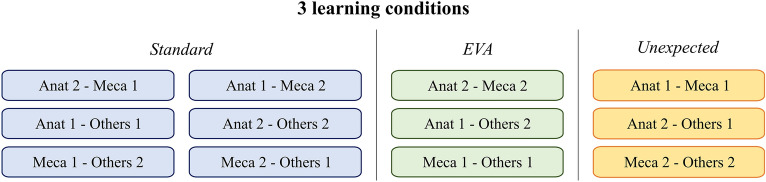
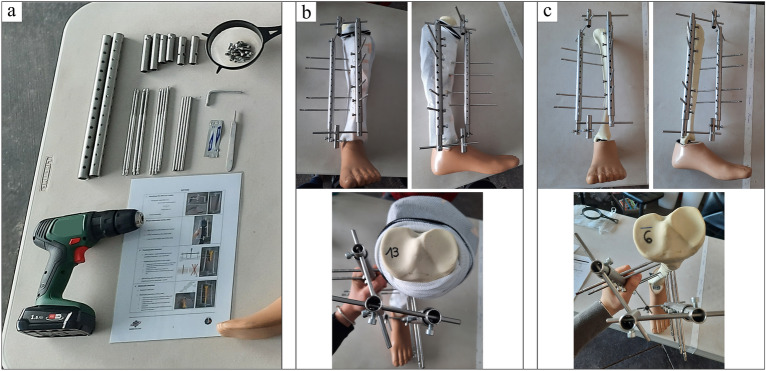
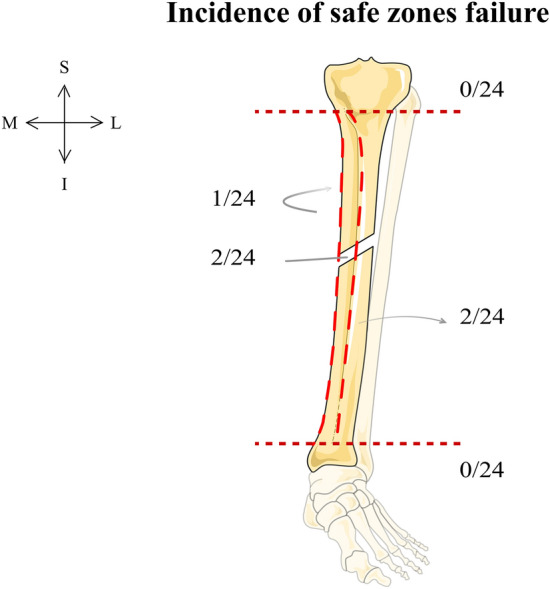
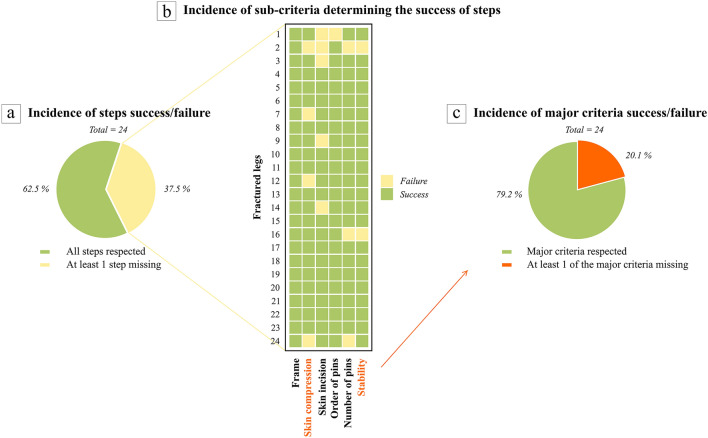
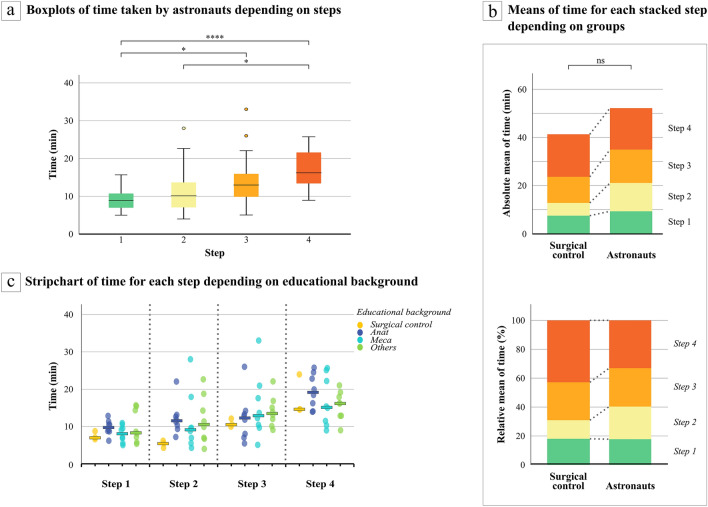
Long bone fractures are a concern in long-duration exploration missions (LDEM) where crew autonomy will exceed the current Low Earth Orbit paradigm. Current crew selection assumptions require extensive complete training and competency testing prior to flight for off-nominal situations. Analogue astronauts (n = 6) can be quickly trained to address a single fracture pattern and then competently perform the repair procedure. An easy-to-use external fixation (EZExFix) was employed to repair artificial tibial shaft fractures during an inhabited mission at the Mars Desert Research Station (Utah, USA). Bone repair safety zones were respected (23/24), participants achieved 79.2% repair success, and median completion time was 50.04 min. Just-in-time training in-mission was sufficient to become autonomous without pre-mission medical/surgical/mechanical education, regardless of learning conditions (p > 0.05). Similar techniques could be used in LDEM to increase astronauts' autonomy in traumatic injury treatment and lower skill competency requirements used in crew selection.
© 2023. Springer Nature Limited.
Conflict of interest statement
Authors have no conflict of interest to declare. This research did not directly receive any specific grant from funding agencies in the public, commercial, or not-for-profit sectors but this study would not have been possible without the participation to the Mars analogue mission funded by sponsors including Louvain4space, Sabca, Aerospacelab, B12 consulting, Oscar, UDH (Urgence Depollution Hydrocarbures), UCLouvain Fipe, SBIM (Société Belge d'Informatique Médicale), Space Application, SPW (Service Public de Wallonie), Ludovic de Meuus, Fonds Jeremy, WBI (Wallonie-Bruxelles International), which the authors would like to particularly thank. These funding sources were not involved in study design, in collection, analysis and interpretation of data nor in outcomes. Trade names and trademarks are used in this report for identification only. Their usage does not constitute an official endorsement, either expressed or implied, by the National Aeronautics and Space Administration or the NASA Human System Risk Board. This manuscript does not constitute an official policy or position, either expressed or implied, by the National Aeronautics and Space Administration.
Figures
References
-
- Swaffield TP, Neviaser AS, Lehnhardt K. Fracture risk in spaceflight and potential treatment options. Aerosp. Med. Hum. Perform. 2018;89:1060–1067. - PubMed
-
- Thirsk RB. Health care for deep space explorers. Ann. ICRP. 2020;49:182–184. - PubMed
-
- Landon LB, Rokholt C, Slack KJ, Pecena Y. Selecting astronauts for long-duration exploration missions: Considerations for team performance and functioning. REACH. 2017;5:33–56.
-
- LeBlanc A, Shackelford L, Schneider V. Future human bone research in space. Bone. 1998;22:113S–116S. - PubMed
Publication types
MeSH terms
LinkOut - more resources
Full Text Sources
Medical
Miscellaneous
