[Preprint]. 2023 Oct 13:2023.10.13.23296997.
doi: 10.1101/2023.10.13.23296997.

DengueSeq: A pan-serotype whole genome amplicon sequencing protocol for dengue virus

Affiliations

DengueSeq: A pan-serotype whole genome amplicon sequencing protocol for dengue virus

Chantal B F Vogels et al. medRxiv. .

Update in

  • DengueSeq: a pan-serotype whole genome amplicon sequencing protocol for dengue virus.
    Vogels CBF, Hill V, Breban MI, Chaguza C, Paul LM, Sodeinde A, Taylor-Salmon E, Ott IM, Petrone ME, Dijk D, Jonges M, Welkers MRA, Locksmith T, Dong Y, Tarigopula N, Tekin O, Schmedes S, Bunch S, Cano N, Jaber R, Panzera C, Stryker I, Vergara J, Zimler R, Kopp E, Heberlein L, Herzog KS, Fauver JR, Morrison AM, Michael SF, Grubaugh ND. Vogels CBF, et al. BMC Genomics. 2024 May 1;25(1):433. doi: 10.1186/s12864-024-10350-x. BMC Genomics. 2024. PMID: 38693476 Free PMC article.

Abstract

Background: The increasing burden of dengue virus on public health due to more explosive and frequent outbreaks highlights the need for improved surveillance and control. Genomic surveillance of dengue virus not only provides important insights into the emergence and spread of genetically diverse serotypes and genotypes, but it is also critical to monitor the effectiveness of newly implemented control strategies. Here, we present DengueSeq, an amplicon sequencing protocol, which enables whole-genome sequencing of all four dengue virus serotypes.

Results: We developed primer schemes for the four dengue virus serotypes, which can be combined into a pan-serotype approach. We validated both approaches using genetically diverse virus stocks and clinical specimens that contained a range of virus copies. High genome coverage (>95%) was achieved for all genotypes, except DENV2 (genotype VI) and DENV 4 (genotype IV) sylvatics, with similar performance of the serotype-specific and pan-serotype approaches. The limit of detection to reach 70% coverage was 101-102 RNA copies/μL for all four serotypes, which is similar to other commonly used primer schemes. DengueSeq facilitates the sequencing of samples without known serotypes, allows the detection of multiple serotypes in the same sample, and can be used with a variety of library prep kits and sequencing instruments.

Conclusions: DengueSeq was systematically evaluated with virus stocks and clinical specimens spanning the genetic diversity within each of the four dengue virus serotypes. The primer schemes can be plugged into existing amplicon sequencing workflows to facilitate the global need for expanded dengue virus genomic surveillance.

Keywords: Genomic surveillance; amplicon sequencing; dengue virus; next-generation sequencing; whole-genome sequencing.


Conflict of interest statement

Competing interests The authors declare that they have no competing interests.

Figures
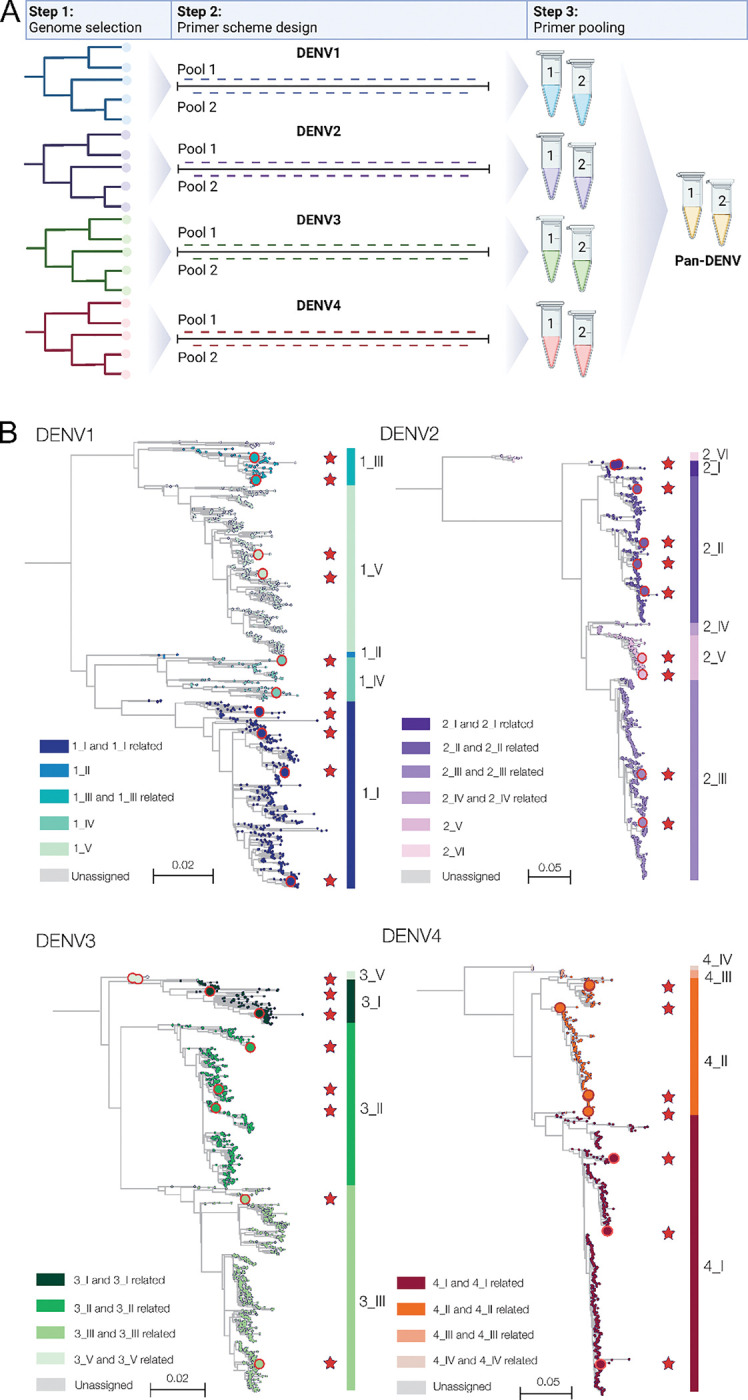
Fig. 1:
Fig. 1:. Overview of the DengueSeq primer design.
A) For each of the four serotypes, a selection of genetically diverse genomes was made as input for PrimalScheme. Using PrimalScheme, four serotype-specific primer schemes were generated. Each scheme consists of 35–37 primer pairs which are split into two pools. Pan-serotype primer pools can be created by combining the serotype-specific pools 1 and 2, with which all four serotypes can be sequenced. Figure created with BioRender.com. B) Dengue virus genomes representing the genotypes within each of the four serotypes used to design the primer schemes. Red circles and stars indicate the genomes used to design the primer schemes for each serotype.
Fig 2:
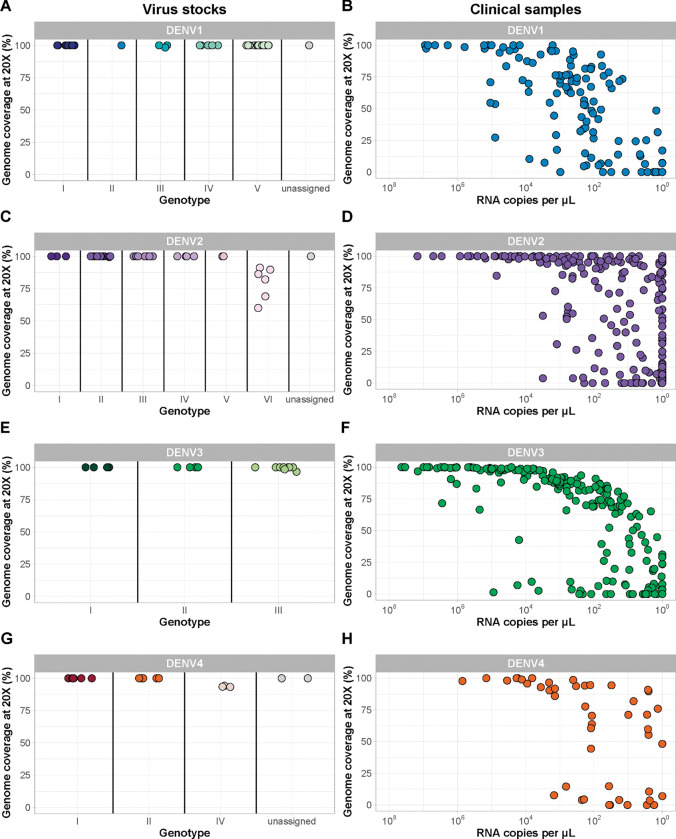
Fig 2:. Percent genome coverage at a depth of coverage of 20x for dengue virus stocks and clinical specimens.
A/C/E/G) Initial validation of the serotype-specific approach was validated by sequencing virus stocks representing the majority of genotypes within each of the four serotypes. Dengue virus 2 genotype VI and dengue virus 4 genotype IV comprise sylvatic viruses, which were the only genotypes for which genome coverage was consistently below 100%. B/D/F/H) Additional sequencing was done from clinical specimens of patients diagnosed with dengue. Specimens comprised a wider range of RNA titers, and lower genome coverage with lower RNA copies. Phylogenetic trees showing the genome sequences used for validation are shown in Fig. S3 (virus stocks) and Fig. S4 (clinical specimens).
Fig 3:
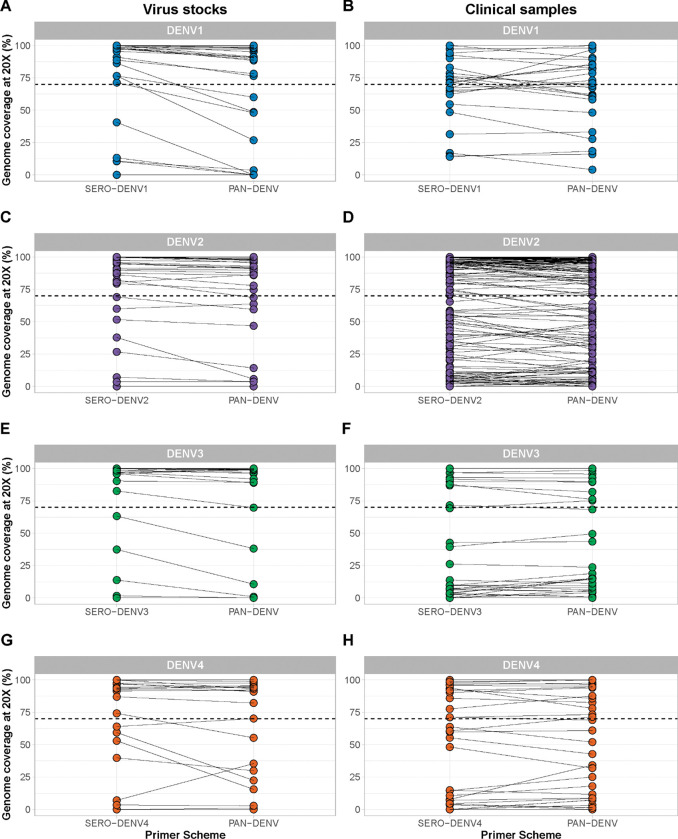
Fig 3:. Comparison of serotype-specific and pan-serotype sequencing approaches.
Dengue virus stock and clinical specimens were sequenced with both the serotype-specific and pan-serotype virus approaches to compare genome coverage between both methods. The pan-serotype approach was created by mixing the serotype-specific primer schemes into two pools (pool 1 and pool 2 for each of the combined schemes). All samples were tested with the CDC DENV1–4 multiplex qPCR assay, and libraries were prepared using the Illumina COVIDSeq test kit with serotype-specific or pan-serotype primer schemes. Connecting lines between dots indicate the same samples sequenced with both approaches and the dashed line indicates our threshold of 70% genome coverage.
Fig. 4:
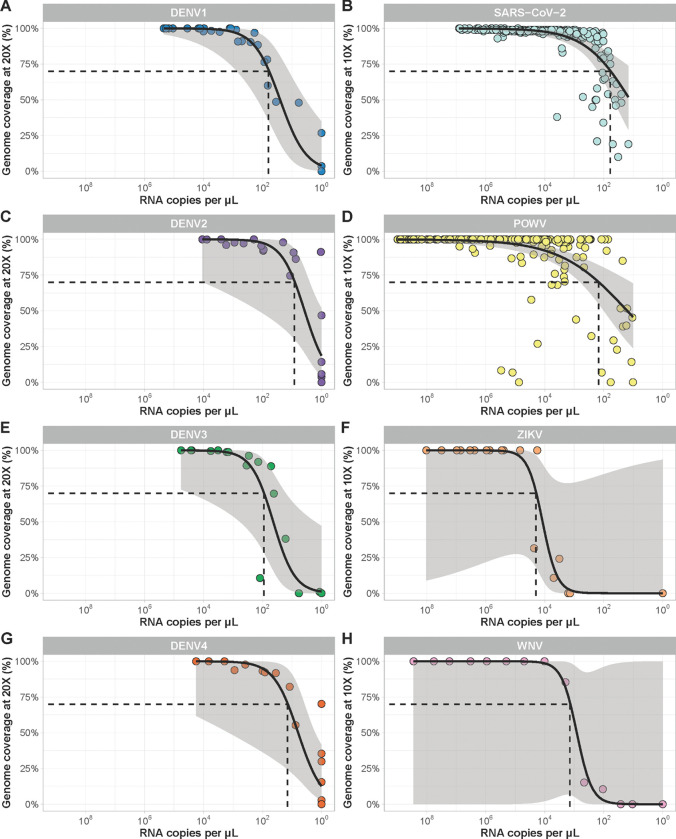
Fig. 4:. Limits of detection of pan-serotype approaches and primer schemes for other viruses.
A/C/E/G) Virus stocks were diluted to represent a wide range of RNA titers and were sequenced with the pan-serotype virus approach using the Illumina CovidSeq test kit. B) Clinical specimens testing positive for SARS-CoV-2 were sequenced using the ARTIC v4.1 primer scheme using the Illumina COVIDSeq test kit. D) Ixodes scapularis ticks testing positive for Powassan virus were sequenced with the Powassan virus primer scheme using the Illumina COVIDSeq test kit. F) Two Zika virus stocks were sequenced with the Zika virus primer scheme using the Illumina CovidSeq test kit. H) A West Nile virus stock was sequenced with the West Nile virus primer scheme using the Illumina CovidSeq test kit. Dots represent individual samples, and a line with confidence intervals was fitted using the geom_smooth function with the ‘glm’ method from ggplot2.
Fig. 5:
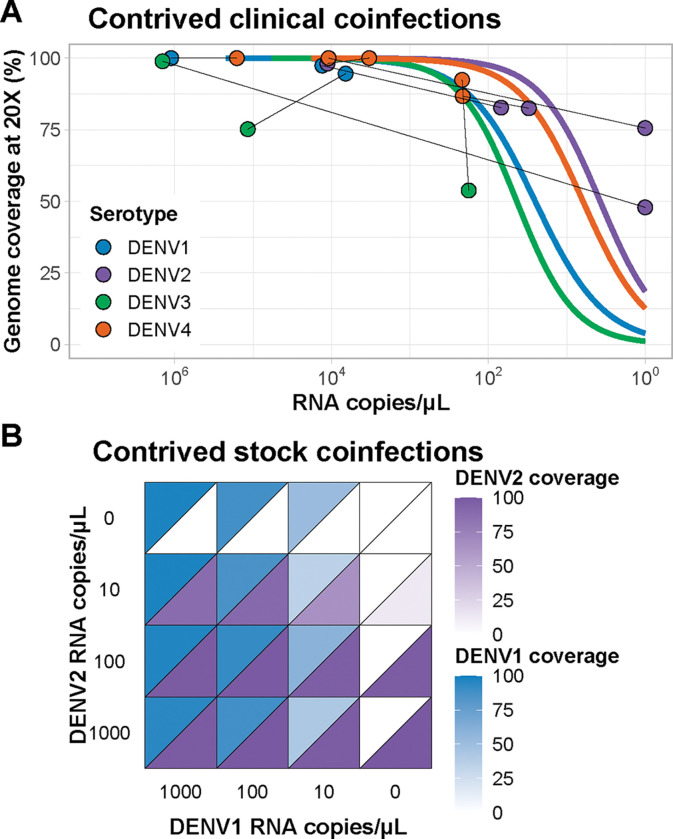
Fig. 5:. Detection of dengue virus coinfections using the pan-serotype primer scheme.
A) Clinical specimens containing different dengue virus serotypes were mixed to create contrived coinfections. A total of 8 contrived samples were created by mixing two different clinical specimens. Dots represent individual samples connected with lines to indicate mixed pairs and colored lines are expected genome coverage estimated from fitted logistic regression lines determined based on coverage data from Fig. 4. B) Two virus stocks (serotypes 1 and 2) were serially diluted and mixed at different concentrations to represent a range of virus titers in contrived stock coinfections.
Fig. 6:
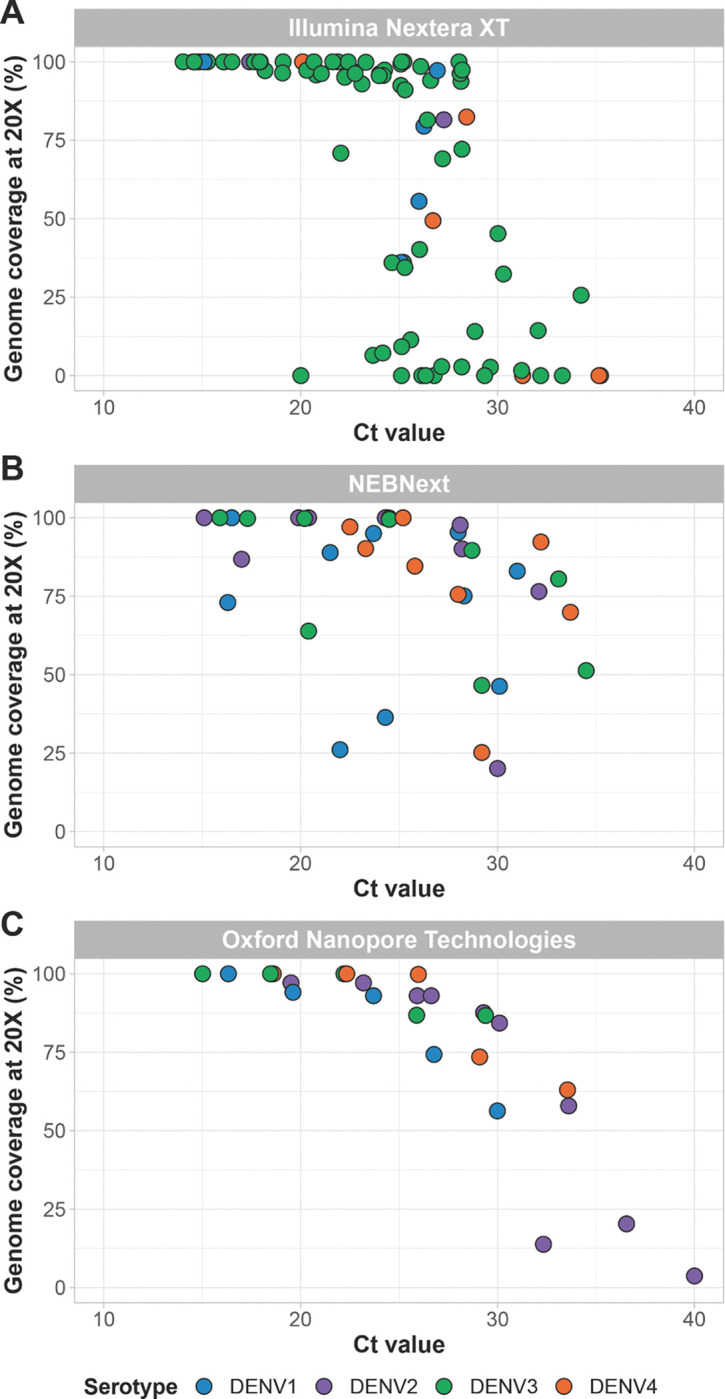
Fig. 6:. Alternative library prep methods used with the pan-serotype primer scheme.
A) The Florida Department of Health sequenced clinical specimens using the pan-serotype primer scheme with the Illumina Nextera XT kit. B) Clinical specimens were sequenced using the pan-serotype primer scheme with the NEB NEBNext library prep kit for Illumina. C) Amsterdam UMC sequenced virus stocks using the pan-serotype primer scheme with the “Midnight” protocol and sequenced on the Oxford Nanopore Technologies GridION.

Similar articles

References

    1. Brady OJ, Gething PW, Bhatt S, Messina JP, Brownstein JS, Hoen AG, et al. Refining the global spatial limits of dengue virus transmission by evidence-based consensus. PLoS Negl Trop Dis. 2012;6:e1760. - PMC - PubMed
    1. Zeng Z, Zhan J, Chen L, Chen H, Cheng S. Global, regional, and national dengue burden from 1990 to 2017: A systematic analysis based on the global burden of disease study 2017. EClinicalMedicine. 2021;32:100712. - PMC - PubMed
    1. Dengue – the Region of the Americas [Internet]. [cited 2023 Jul 26]. Available from: https://www.who.int/emergencies/disease-outbreak-news/item/2023-DON475
    1. Chen R, Vasilakis N. Dengue--quo tu et quo vadis? Viruses. 2011;3:1562–608. - PMC - PubMed
    1. Katzelnick LC, Coello Escoto A, Huang AT, Garcia-Carreras B, Chowdhury N, Maljkovic Berry I, et al. Antigenic evolution of dengue viruses over 20 years. Science. 2021;374:999–1004. - PMC - PubMed

Publication types