This is a preprint.
Predicting diagnostic conversion from major depressive disorder to bipolar disorder: an EHR based study from Colombia
- PMID: 37873340
- PMCID: PMC10593019
- DOI: 10.1101/2023.09.28.23296092
Predicting diagnostic conversion from major depressive disorder to bipolar disorder: an EHR based study from Colombia
Update in
-
Predicting Diagnostic Conversion From Major Depressive Disorder to Bipolar Disorder: An EHR Based Study From Colombia.Bipolar Disord. 2025 Feb;27(1):47-56. doi: 10.1111/bdi.13512. Epub 2024 Dec 12. Bipolar Disord. 2025. PMID: 39666719 Free PMC article.
Abstract
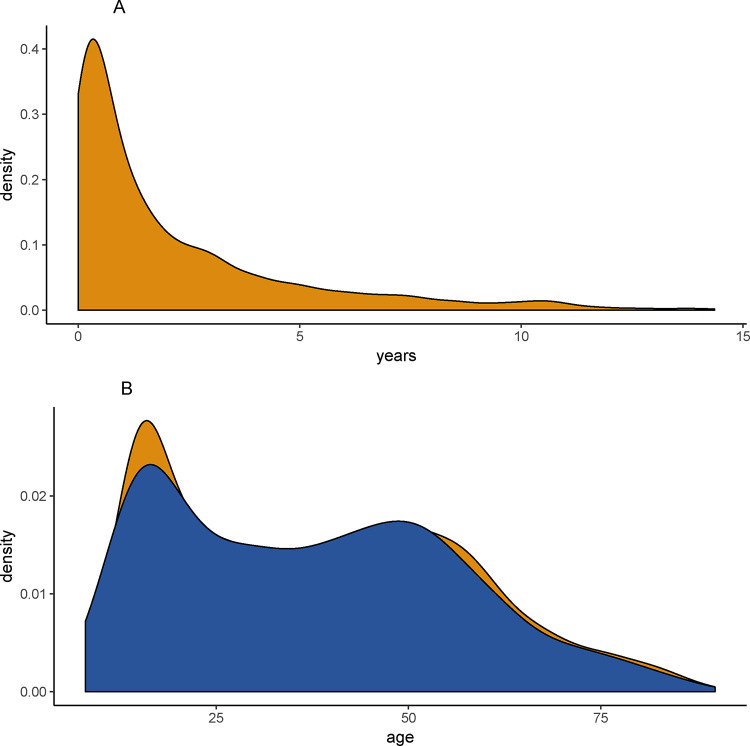
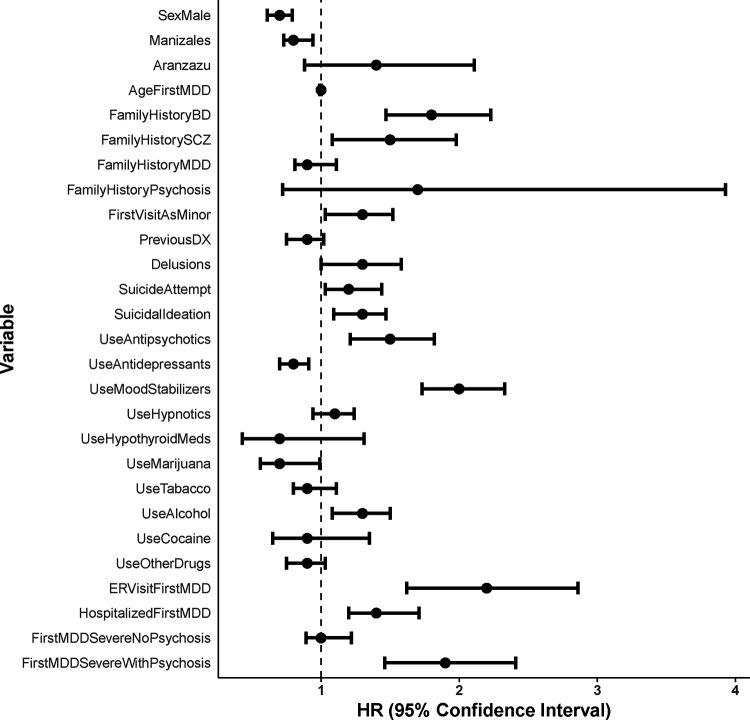
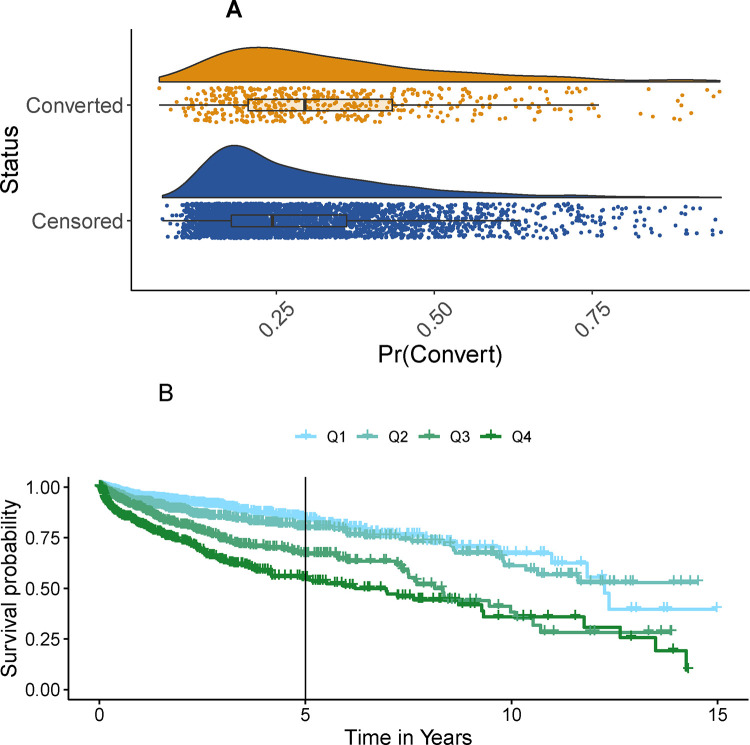
Bipolar Disorder (BD) is a severe and chronic disorder characterized by recurrent episodes of depression, mania, and/or hypomania. Most BD patients initially present with depressive symptoms, resulting in a delayed diagnosis of BD and poor clinical outcomes. This study leverages electronic health record (EHR) data from the Clínica San Juan de Dios Manizales in Colombia to identify features predictive of the transition from Major Depressive Disorder (MDD) to BD. Analyzing EHR data from 13,607 patients diagnosed with MDD over 15 years, we identified 1,610 cases of conversion to BD. Using a multivariate Cox regression model, we identified severity of the initial MDD episode, the presence of psychosis and hospitalization at first episode, family history of mood or psychotic disorders, female gender to be predictive of the conversion to BD. Additionally, we observed associations with medication classes (prescriptions of mood stabilizers, antipsychotics, and antidepressants) and clinical features (delusions, suicide attempt, suicidal ideation, use of marijuana and alcohol use/abuse) derived from natural language processing (NLP) of clinical notes. Together, these risk factors predicted BD conversion within five years of the initial MDD diagnosis, with a recall of 72% and a precision of 38%. Our study confirms many previously identified risk factors identified through registry-based studies (such as female gender and psychotic depression at the index MDD episode), and identifies novel ones (specifically, suicidal ideation and suicide attempt extracted from clinical notes). These results simultaneously demonstrate the validity of using EHR data for predicting BD conversion as well as underscore its potential for the identification of novel risk factors and improving early diagnosis.
Figures
References
-
- Baryshnikov I., Sund R., Marttunen M., Svirskis T., Partonen T., Pirkola S., & Isometsa E. T. (2020). Diagnostic conversion from unipolar depression to bipolar disorder, schizophrenia, or schizoaffective disorder: A nationwide prospective 15-year register study on 43 495 inpatients. Bipolar Disord, 22(6), 582–592. 10.1111/bdi.12929 - DOI - PubMed
Publication types
Grants and funding
LinkOut - more resources
Full Text Sources