


Development of New Genome Editing Tools for the Treatment of Hyperlipidemia
- PMID: 37887310
- PMCID: PMC10605581
- DOI: 10.3390/cells12202466
Development of New Genome Editing Tools for the Treatment of Hyperlipidemia
Abstract
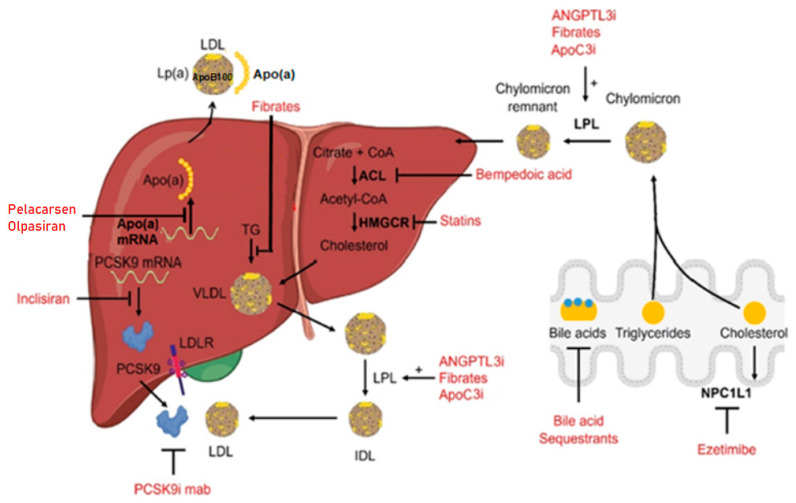
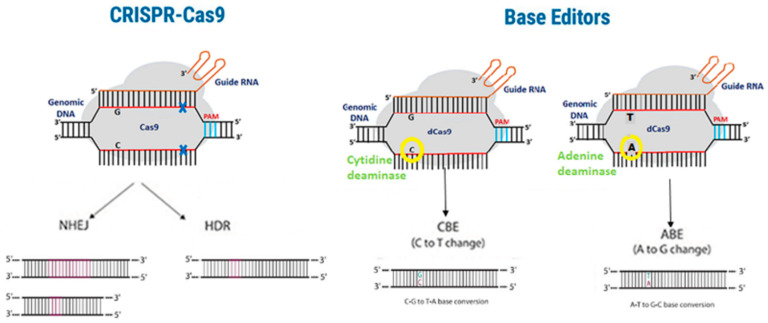
Hyperlipidemia is a medical condition characterized by high levels of lipids in the blood. It is often associated with an increased risk of cardiovascular diseases such as heart attacks and strokes. Traditional treatment approaches for hyperlipidemia involve lifestyle modifications, dietary changes, and the use of medications like statins. Recent advancements in genome editing technologies, including CRISPR-Cas9, have opened up new possibilities for the treatment of this condition. This review provides a general overview of the main target genes involved in lipid metabolism and highlights the progress made during recent years towards the development of new treatments for dyslipidemia.
Keywords: CRISPR-Cas9; LDL cholesterol; PCSK9; base editing; cardiovascular disease.
Conflict of interest statement
The author declares no conflict of interests.
Figures
References
-
- Akinc A., Querbes W., De S., Qin J., Frank-Kamenetsky M., Jayaprakash K.N., Jayaraman M., Rajeev K.G., Cantley W.L., Dorkin J.R., et al. Targeted delivery of RNAi therapeutics with endogenous and exogenous ligand-based mechanisms. Mol. Ther. 2010;18:1357–1364. doi: 10.1038/mt.2010.85. - DOI - PMC - PubMed
Publication types
MeSH terms
LinkOut - more resources
Full Text Sources
Other Literature Sources
Miscellaneous
