


Hst1/Gel-MA Scaffold Significantly Promotes the Quality of Osteochondral Regeneration in the Temporomandibular Joint
- PMID: 37888178
- PMCID: PMC10607535
- DOI: 10.3390/jfb14100513
Hst1/Gel-MA Scaffold Significantly Promotes the Quality of Osteochondral Regeneration in the Temporomandibular Joint
Abstract
Objective: Our aim was to evaluate the capacity of the human salivary histatin-1-functionalized methacrylic gelatin scaffold to control osteochondral tissue regeneration and repair in vivo in rabbits with major temporomandibular joint dimensional abnormalities.
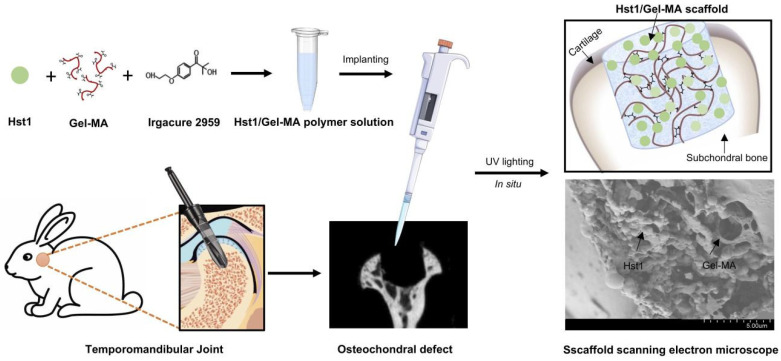
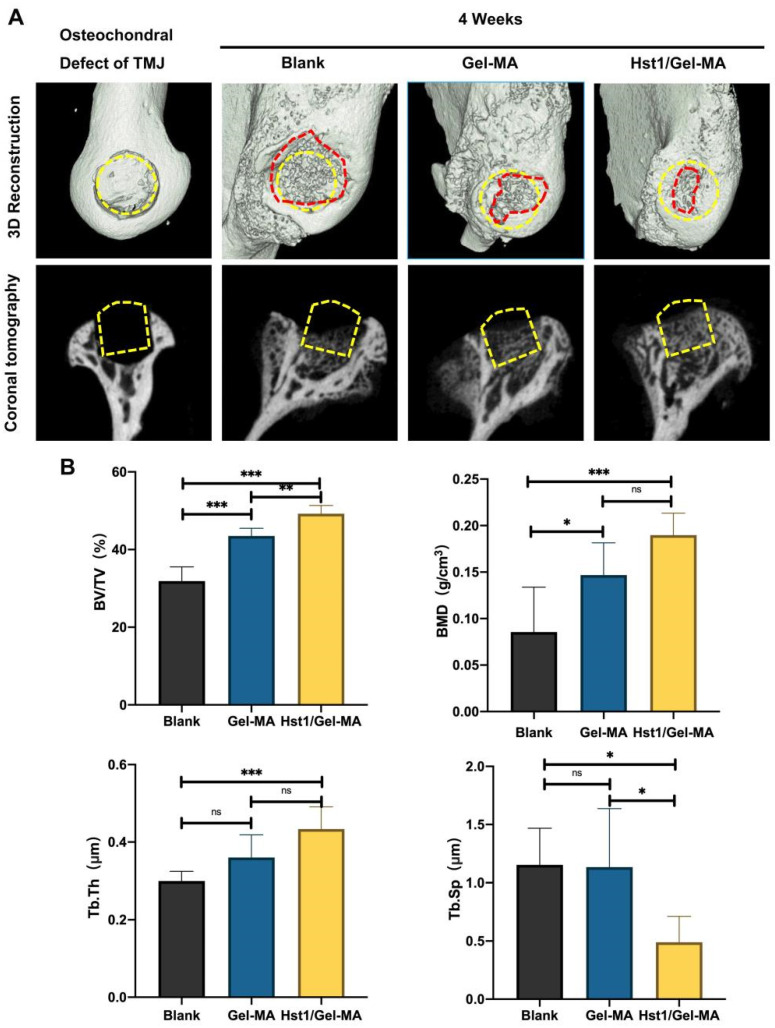
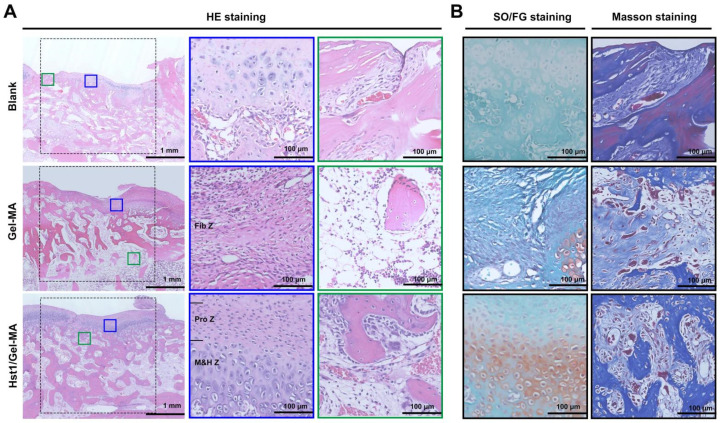
Materials and methods: In order to compare human salivary histatin-1-functionalized methacrylic gelatin scaffolds to the Blank and Gel-MA hydrogel groups, scaffolds were implanted into osteochondral lesions of a critical size (3 × 3 mm) in the anterior region of the condyle of the temporomandibular joint in New Zealand white rabbits. At 4 weeks after implantation, the repair was evaluated using macroscopic examination, histology, and micro-CT analysis.
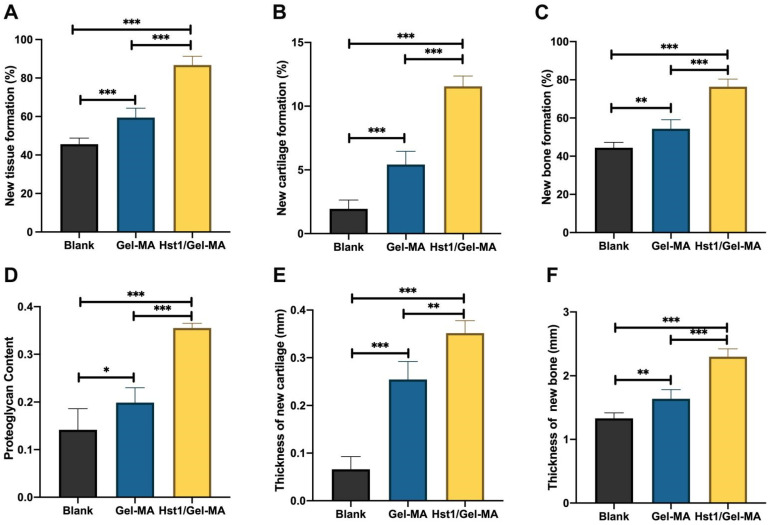
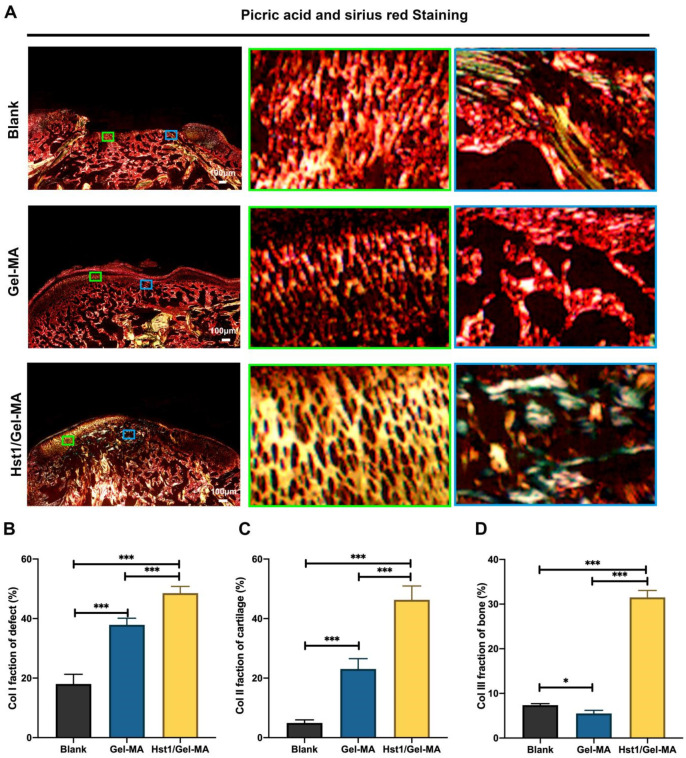
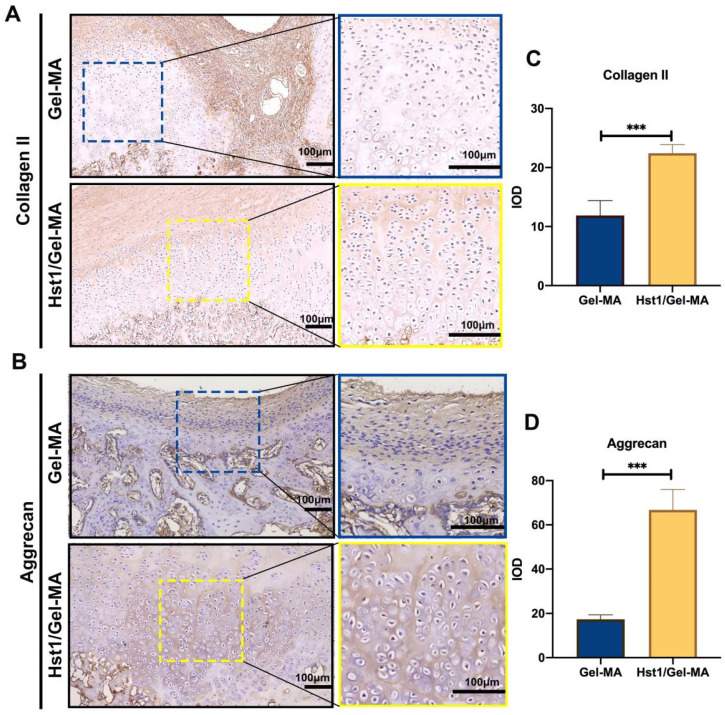
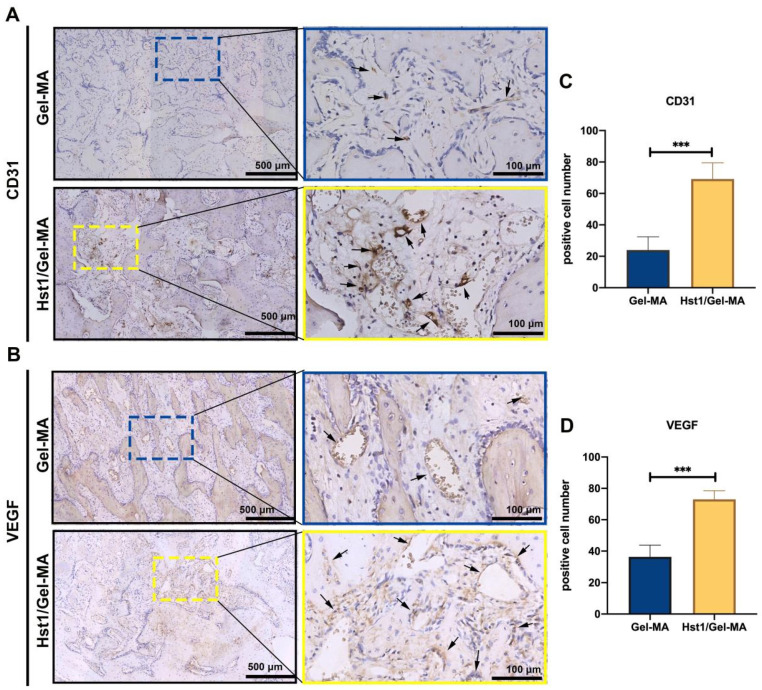
Results: In the comparison of the composite scaffold group with the Blank and Gel-MA groups, analysis of the healed tissue revealed an improved macroscopic appearance in the composite scaffold group. Regeneration was induced by host cell migration in the Hst1/Gel-MA scaffold group.
Conclusions: The current study offers a viable method for in vivo cartilage repair that does not require cell transplantation. Future clinical applications of this strategy's optimization have many potential advantages.
Keywords: cartilage; in vivo; osteochondral; tissue engineering.
Conflict of interest statement
The authors have stated that they have no possible conflicts of interest in relation to the research, writing, or publishing of this paper.
Figures
References
LinkOut - more resources
Full Text Sources
