


Multi-omic prediction of incident type 2 diabetes
- PMID: 37889320
- PMCID: PMC10709231
- DOI: 10.1007/s00125-023-06027-x
Multi-omic prediction of incident type 2 diabetes
Abstract
Aims/hypothesis: The identification of people who are at high risk of developing type 2 diabetes is a key part of population-level prevention strategies. Previous studies have evaluated the predictive utility of omics measurements, such as metabolites, proteins or polygenic scores, but have considered these separately. The improvement that combined omics biomarkers can provide over and above current clinical standard models is unclear. The aim of this study was to test the predictive performance of genome, proteome, metabolome and clinical biomarkers when added to established clinical prediction models for type 2 diabetes.
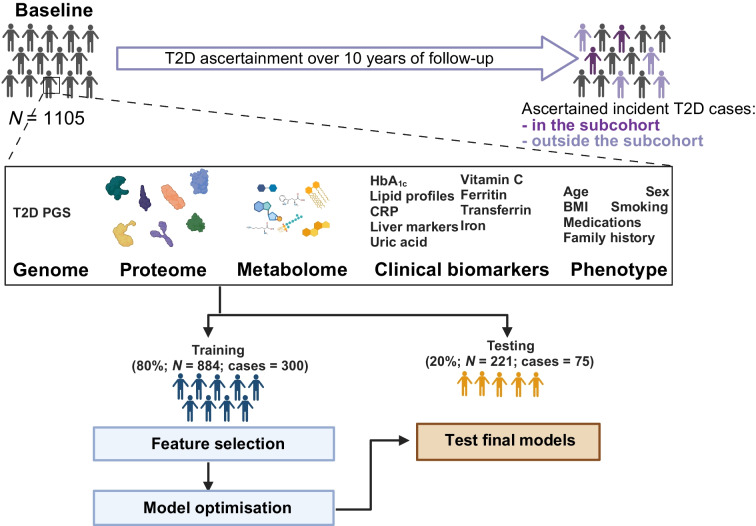
Methods: We developed sparse interpretable prediction models in a prospective, nested type 2 diabetes case-cohort study (N=1105, incident type 2 diabetes cases=375) with 10,792 person-years of follow-up, selecting from 5759 features across the genome, proteome, metabolome and clinical biomarkers using least absolute shrinkage and selection operator (LASSO) regression. We compared the predictive performance of omics-derived predictors with a clinical model including the variables from the Cambridge Diabetes Risk Score and HbA1c.
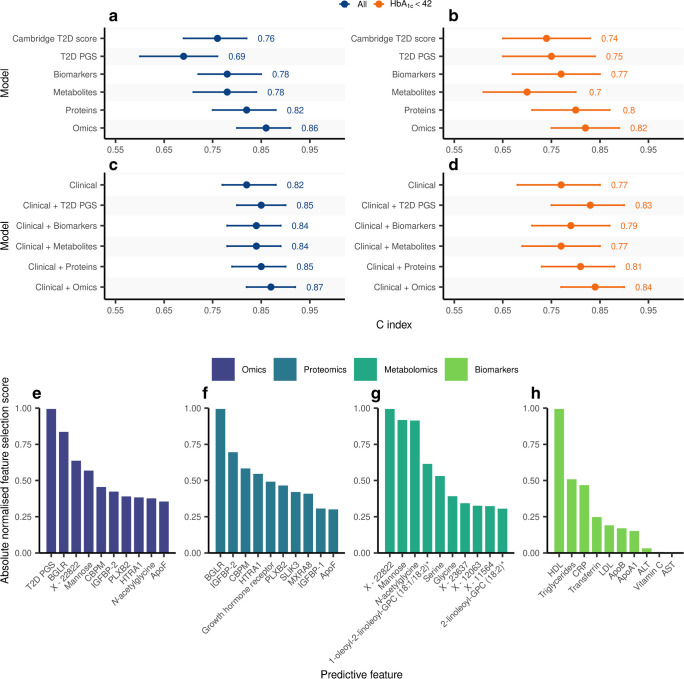
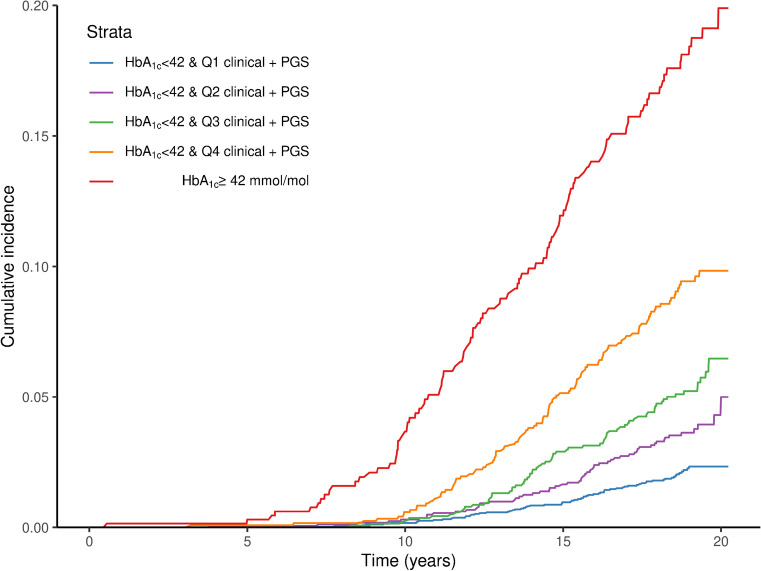
Results: Among single omics prediction models that did not include clinical risk factors, the top ten proteins alone achieved the highest performance (concordance index [C index]=0.82 [95% CI 0.75, 0.88]), suggesting the proteome as the most informative single omic layer in the absence of clinical information. However, the largest improvement in prediction of type 2 diabetes incidence over and above the clinical model was achieved by the top ten features across several omic layers (C index=0.87 [95% CI 0.82, 0.92], Δ C index=0.05, p=0.045). This improvement by the top ten omic features was also evident in individuals with HbA1c <42 mmol/mol (6.0%), the threshold for prediabetes (C index=0.84 [95% CI 0.77, 0.90], Δ C index=0.07, p=0.03), the group in whom prediction would be most useful since they are not targeted for preventative interventions by current clinical guidelines. In this subgroup, the type 2 diabetes polygenic risk score was the major contributor to the improvement in prediction, and achieved a comparable improvement in performance when added onto the clinical model alone (C index=0.83 [95% CI 0.75, 0.90], Δ C index=0.06, p=0.002). However, compared with those with prediabetes, individuals at high polygenic risk in this group had only around half the absolute risk for type 2 diabetes over a 20 year period.
Conclusions/interpretation: Omic approaches provided marginal improvements in prediction of incident type 2 diabetes. However, while a polygenic risk score does improve prediction in people with an HbA1c in the normoglycaemic range, the group in whom prediction would be most useful, even individuals with a high polygenic burden in that subgroup had a low absolute type 2 diabetes risk. This suggests a limited feasibility of implementing targeted population-based genetic screening for preventative interventions.
Keywords: Biomarkers; Genomics; Metabolomics; Prediction models; Proteomics; Type 2 diabetes.
© 2023. The Author(s).
Figures
References
-
- International Diabetes Federation (2019) IDF Diabetes Atlas, 9th edn. IDF, Brussels
-
- Herman WH, Ye W, Griffin SJ, et al. Early detection and treatment of type 2 diabetes reduce cardiovascular morbidity and mortality: a simulation of the results of the Anglo-Danish-Dutch study of intensive treatment in people with screen-detected diabetes in primary care (ADDITION-Europe) Diabetes Care. 2015;38(8):1449–1455. doi: 10.2337/dc14-2459. - DOI - PMC - PubMed
MeSH terms
Substances
Grants and funding
LinkOut - more resources
Full Text Sources
Medical
Miscellaneous
