


Advanced deep learning techniques for early disease prediction in cauliflower plants
- PMID: 37891188
- PMCID: PMC10611743
- DOI: 10.1038/s41598-023-45403-w
Advanced deep learning techniques for early disease prediction in cauliflower plants
Erratum in
-
Author Correction: Advanced deep learning techniques for early disease prediction in cauliflower plants.Sci Rep. 2023 Nov 24;13(1):20701. doi: 10.1038/s41598-023-47732-2. Sci Rep. 2023. PMID: 38001261 Free PMC article. No abstract available.
Abstract
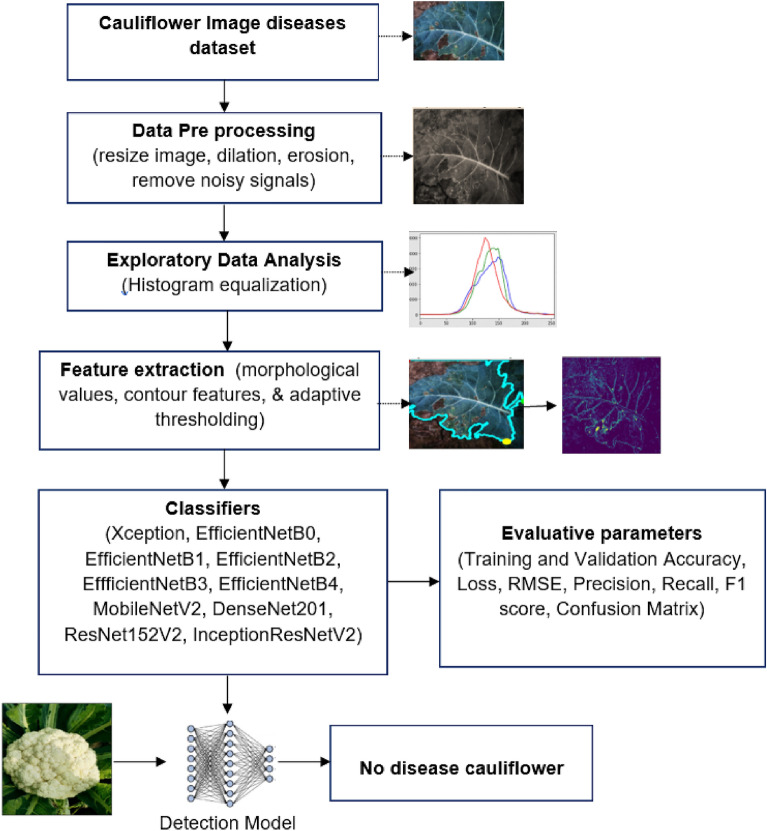
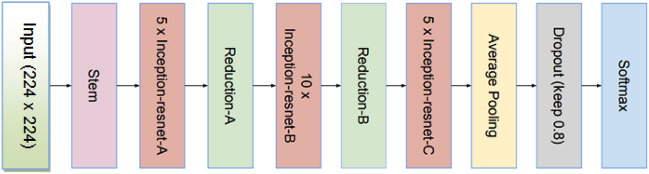
Agriculture plays a pivotal role in the economies of developing countries by providing livelihoods, sustenance, and employment opportunities in rural areas. However, crop diseases pose a significant threat to both farmers' incomes and food security. Furthermore, these diseases also show adverse effects on human health by causing various illnesses. Till date, only a limited number of studies have been conducted to identify and classify diseased cauliflower plants but they also face certain challenges such as insufficient disease surveillance mechanisms, the lack of comprehensive datasets that are properly labelled as well as are of high quality, and the considerable computational resources that are necessary for conducting thorough analysis. In view of the aforementioned challenges, the primary objective of this manuscript is to tackle these significant concerns and enhance understanding regarding the significance of cauliflower disease identification and detection in rural agriculture through the use of advanced deep transfer learning techniques. The work is conducted on the four classes of cauliflower diseases i.e. Bacterial spot rot, Black rot, Downy Mildew, and No disease which are taken from VegNet dataset. Ten deep transfer learning models such as EfficientNetB0, Xception, EfficientNetB1, MobileNetV2, EfficientNetB2, DenseNet201, EfficientNetB3, InceptionResNetV2, EfficientNetB4, and ResNet152V2, are trained and examined on the basis of root mean square error, recall, precision, F1-score, accuracy, and loss. Remarkably, EfficientNetB1 achieved the highest validation accuracy (99.90%), lowest loss (0.16), and root mean square error (0.40) during experimentation. It has been observed that our research highlights the critical role of advanced CNN models in automating cauliflower disease detection and classification and such models can lead to robust applications for cauliflower disease management in agriculture, ultimately benefiting both farmers and consumers.
© 2023. The Author(s).
Conflict of interest statement
The authors declare no competing interests.
Figures





References
-
- Yaseen AA, Ahmed SJ. Interaction effect of planting date and foliar application on some vegetative growth characters and yield of broccoli (Brassica olerasea var italica) grown under unheated plastic tunnel. J. Garmian Univ. 2017;4:405–418. doi: 10.24271/garmian.151. - DOI
-
- Rajbongshi, A., Sara, U. S., Shakil, R., Akter, B. & Uddin, M. S. VegNet: An extensive dataset of cauliflower images to recognize the diseases using machine learning and deep learning models. In Mendeley Data, V3. 10.17632/t5sssfgn2v.3 (2022).
-
- Sharma SR, Singh PK, Chable V, Tripathi SK. A review of hybrid cauliflower development. J. New Seeds. 2004;6(2–3):151–193. doi: 10.1300/J153v06n02_08. - DOI
-
- Dan A, Jain R, Dwivedi RK, Kumar A. Evaluation of socio-economic conditions of cauliflower (Brassica oleracea) growers in Chaka block of Allahabad district Uttar Pradesh. J. Pharmacogn. Phytochem. 2020;9(5):148–151.
MeSH terms
LinkOut - more resources
Full Text Sources
Medical
