


Pediatric Autoimmune Neuropsychiatric Disorders Associated with Streptococcal Infections (PANDAS): Myth or Reality? The State of the Art on a Controversial Disease
- PMID: 37894207
- PMCID: PMC10609001
- DOI: 10.3390/microorganisms11102549
Pediatric Autoimmune Neuropsychiatric Disorders Associated with Streptococcal Infections (PANDAS): Myth or Reality? The State of the Art on a Controversial Disease
Abstract
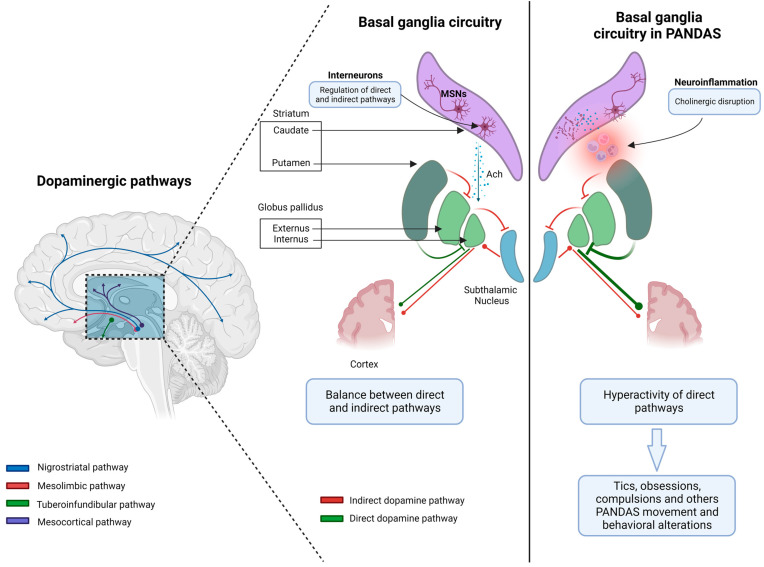
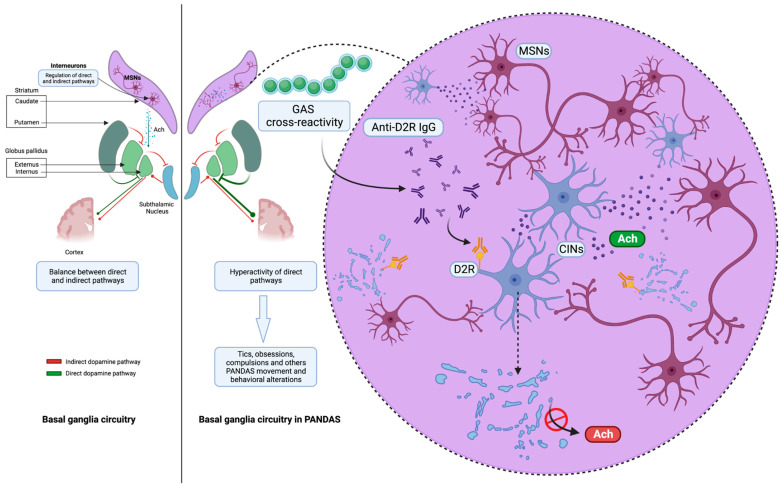
Pediatric Autoimmune Neuropsychiatric Disorders Associated with Streptococcal Infections (PANDAS) syndrome is one of the most controversial diseases in pediatric rheumatology. Despite first being described more than 25 years ago as the sudden and rapid onset of obsessive-compulsive disorder (OCD) and/or tic disorder symptoms as complications of a Group A beta-hemolytic Streptococcus (GAS) infection, precise epidemiological data are still lacking, and there are no strong recommendations for its treatment. Recent advances in the comprehension of PANDAS pathophysiology are largely attributable to animal model studies and the understanding of the roles of Ca++/calmodulin-dependent protein kinase (CaM kinase) II, disrupted dopamine release in the basal ganglia, and striatal cholinergic interneurons. The diagnosis of PANDAS should be made after an exclusion process and should include prepubescent children with a sudden onset of OCD and/or a tic disorder, with a relapsing/remitting disease course, a clear temporal association between GAS infection and onset or exacerbation of symptoms, and the association with other neurological abnormalities such as motoric hyperactivity and choreiform movements. Antibiotic medications are the primary therapeutic modality. Nonetheless, there is a paucity of randomized studies and validated data, resulting in a scarcity of solid recommendations.
Keywords: CaM kinase; PANDAS; PANDAS syndrome; Pediatric Autoimmune Neuropsychiatric Disorders Associated with Streptococcal Infections; molecular mimicry; neuropsychiatric disorder; obsessive–compulsive disorder; streptococcal infection; streptococci; striatal cholinergic interneurons.
Conflict of interest statement
The authors declare no conflict of interest.
Figures
References
-
- Swedo S.E., Leonard H.L., Garvey M., Mittleman B., Allen A.J., Perlmutter S., Dow S., Zamkoff J., Dubbert B.K., Lougee L. Pediatric Autoimmune Neuropsychiatric Disorders Associated With Streptococcal Infections: Clinical Description of the First 50 Cases. Am. J. Psychiatry. 1998;155:264–271. doi: 10.1176/ajp.155.2.264. - DOI - PubMed
-
- Gewitz M.H., Baltimore R.S., Tani L.Y., Sable C.A., Shulman S.T., Carapetis J., Remenyi B., Taubert K.A., Bolger A.F., Beerman L., et al. Revision of the Jones Criteria for the Diagnosis of Acute Rheumatic Fever in the Era of Doppler Echocardiography: A Scientific Statement from the American Heart Association. Circulation. 2015;131:1806–1818. doi: 10.1161/CIR.0000000000000205. - DOI - PubMed
-
- Kim S.W., Grant J.E., Kim S.I., Swanson T.A., Bernstein G.A., Jaszcz W.B., Williams K.A., Schlievert P.M. A Possible Association of Recurrent Streptococcal Infections and Acute Onset of Obsessive-Compulsive Disorder. J. Neuropsychiatry Clin. Neurosci. 2004;16:252–260. doi: 10.1176/jnp.16.3.252. - DOI - PubMed
Publication types
LinkOut - more resources
Full Text Sources
