


Rhodamine-Based Cyclic Hydroxamate as Fluorescent pH Probe for Imaging of Lysosomes
- PMID: 37894759
- PMCID: PMC10606023
- DOI: 10.3390/ijms242015073
Rhodamine-Based Cyclic Hydroxamate as Fluorescent pH Probe for Imaging of Lysosomes
Abstract
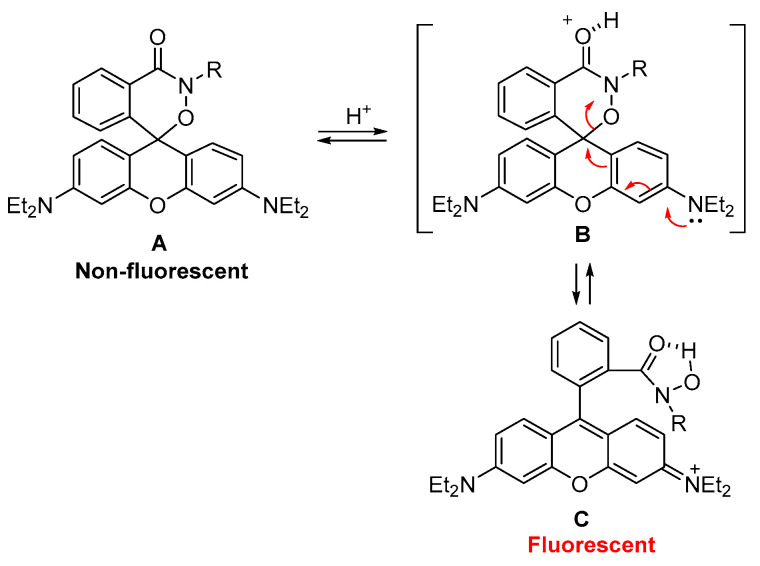
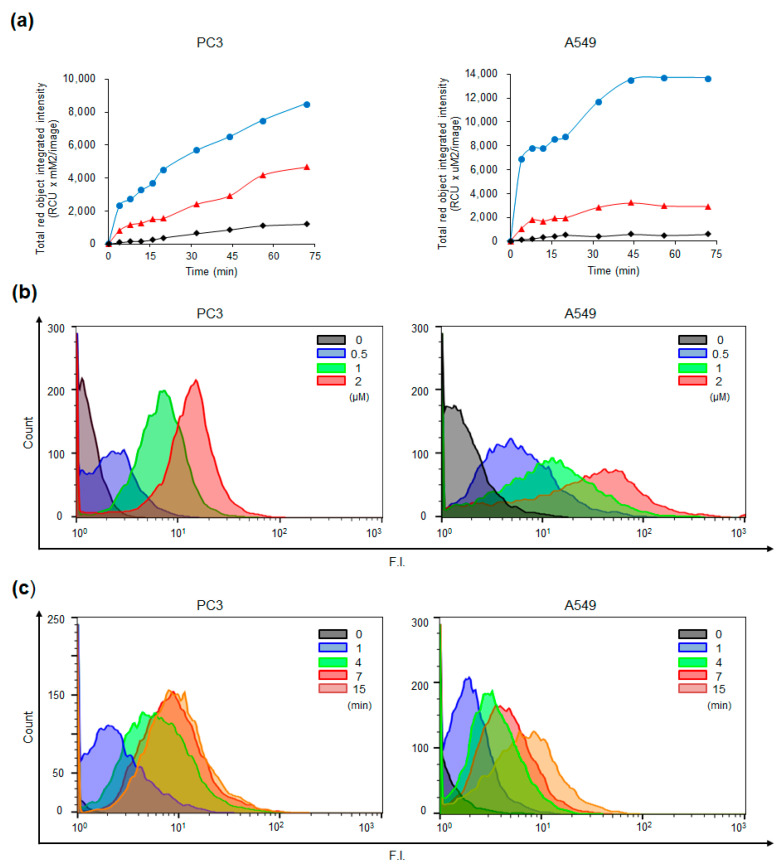
Monitoring the microenvironment within specific cellular regions is crucial for a comprehensive understanding of life events. Fluorescent probes working in different ranges of pH regions have been developed for the local imaging of different pH environments. Especially, rhodamine-based fluorescent pH probes have been of great interest due to their ON/OFF fluorescence depending on the spirolactam ring's opening/closure. By introducing the N-alkyl-hydroxamic acid instead of the alkyl amines in the spirolactam of rhodamine, we were able to tune the pH range where the ring opening and closing of the spirolactam occurs. This six-membered cyclic hydroxamate spirolactam ring of rhodamine B proved to be highly fluorescent in acidic pH environments. In addition, we could monitor pH changes of lysosomes in live cells and zebrafish.
Keywords: acidic pH; fluorescent imaging; fluorescent probe; hydroxamate; rhodamine B.
Conflict of interest statement
The authors declare no conflict of interest. The funders had no role in the design of the study; in the collection, analyses, or interpretation of data; in the writing of the manuscript; or in the decision to publish the results.
Figures




References
MeSH terms
Substances
Grants and funding
LinkOut - more resources
Full Text Sources
Miscellaneous
