


Therapeutic Effects of Oral Application of Menthol and Extracts from Tormentil (Potentilla erecta), Raspberry Leaves (Rubus idaeus), and Loosestrife (Lythrum salicaria) during Acute Murine Campylobacteriosis
- PMID: 37896170
- PMCID: PMC10610364
- DOI: 10.3390/pharmaceutics15102410
Therapeutic Effects of Oral Application of Menthol and Extracts from Tormentil (Potentilla erecta), Raspberry Leaves (Rubus idaeus), and Loosestrife (Lythrum salicaria) during Acute Murine Campylobacteriosis
Abstract
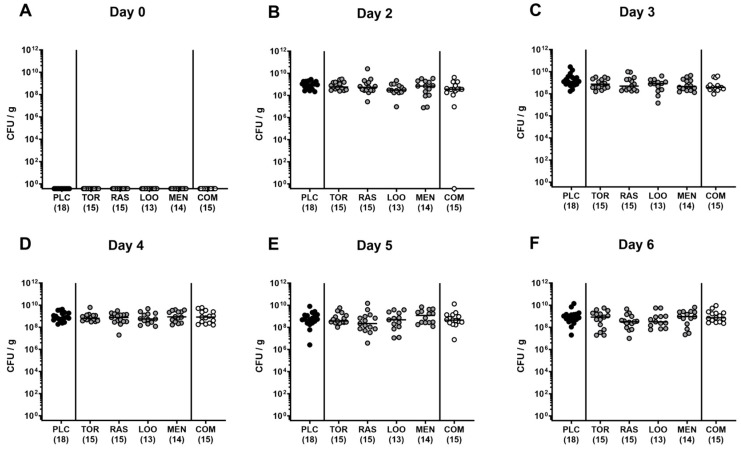
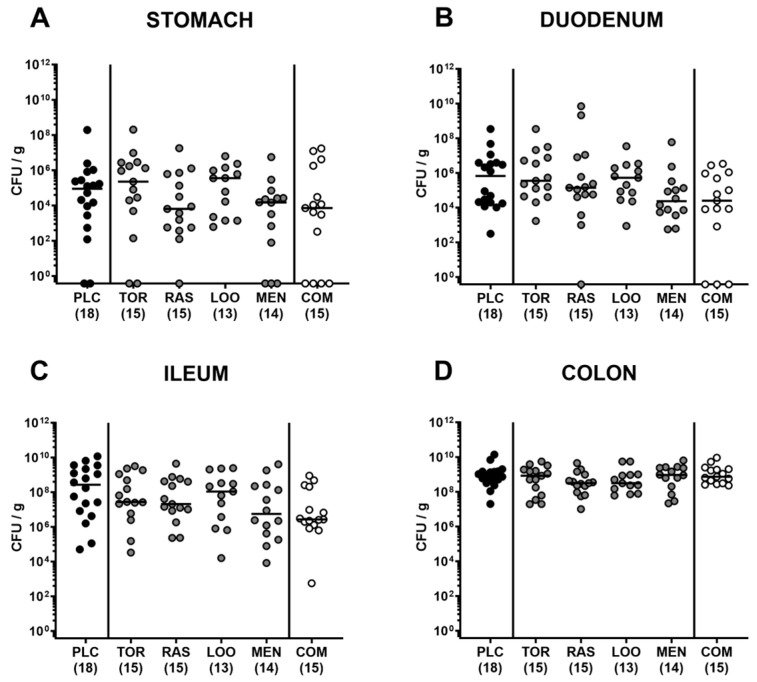
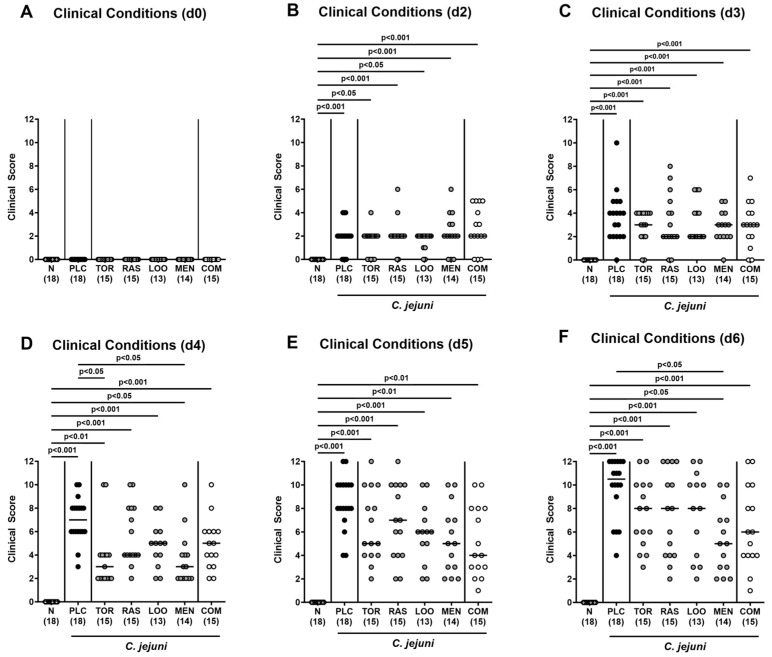
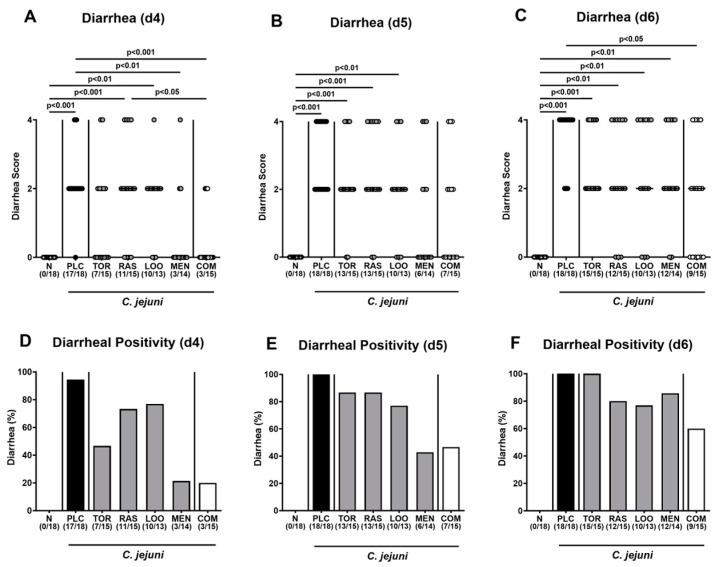
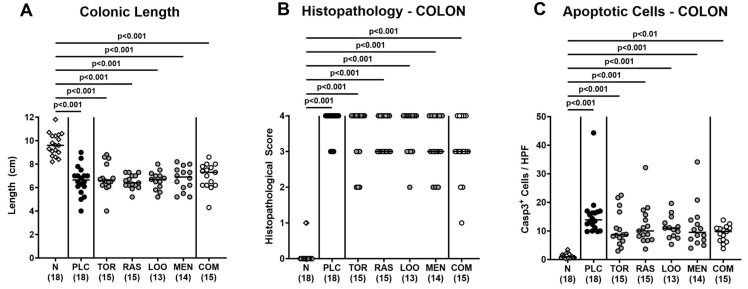
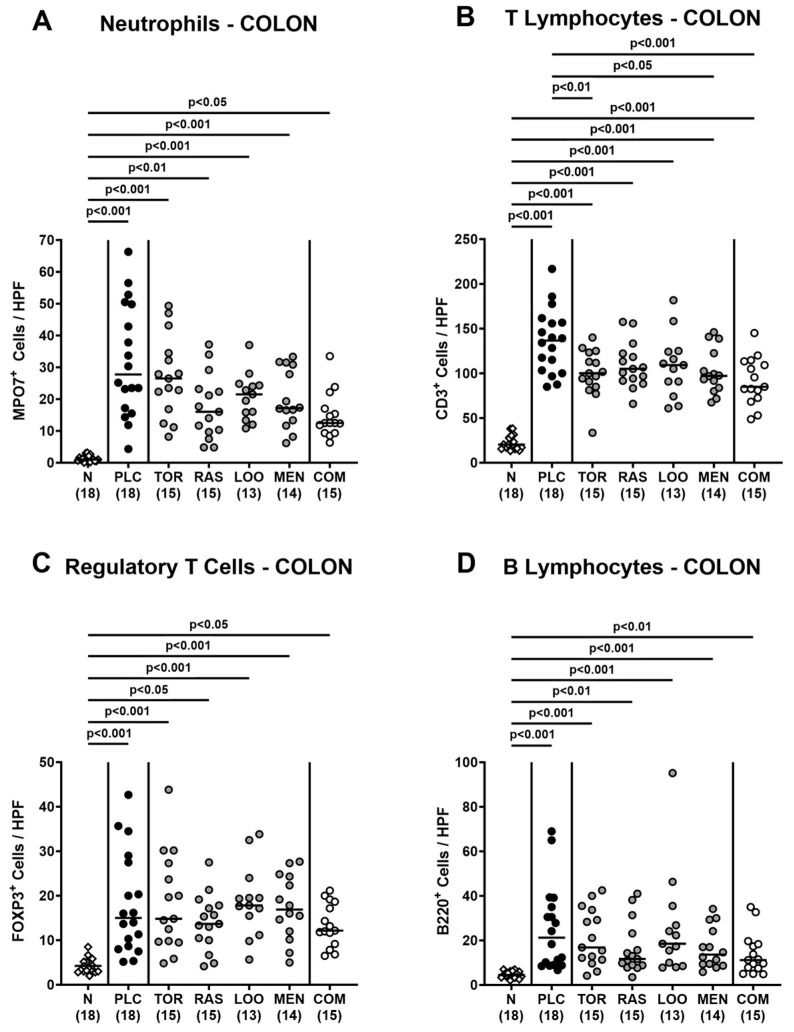
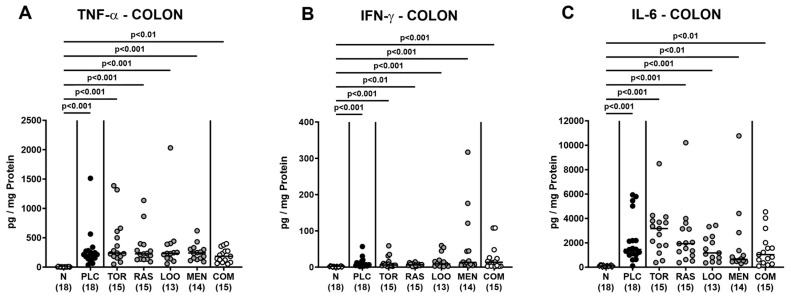
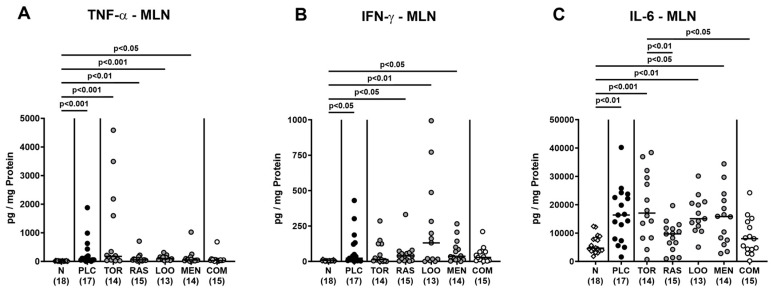
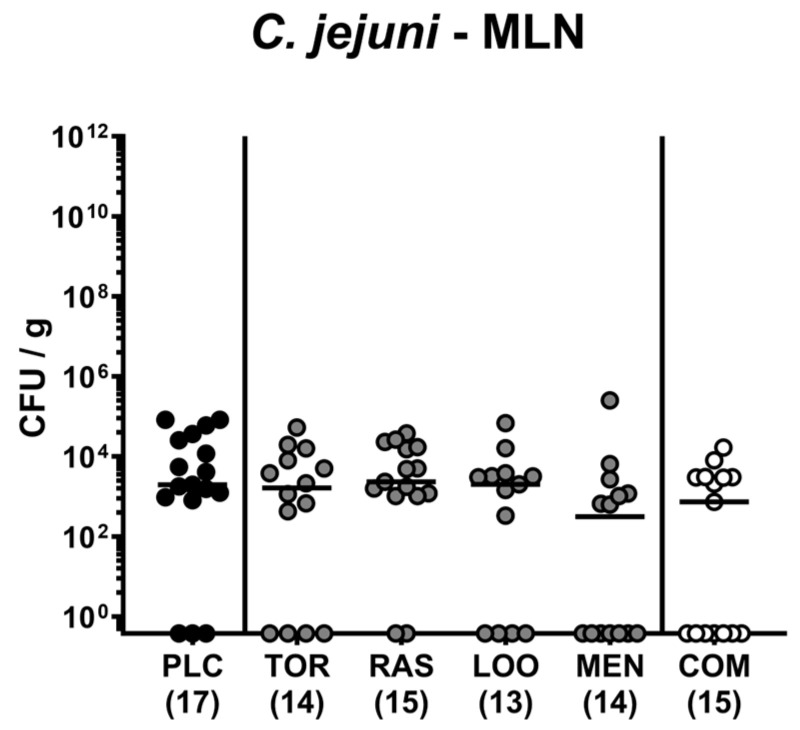
Human food-borne infections with the enteropathogen Campylobacter jejuni are becoming increasingly prevalent worldwide. Since antibiotics are usually not indicated in campylobacteriosis, alternative treatment regimens are important. We here investigated potential disease-alleviating effects of menthol and of extracts from tormentil, raspberry leaves, and loosestrife in acute murine campylobacteriosis. Therefore, C. jejuni-infected microbiota-depleted IL-10-/- mice were orally treated with the compounds alone or all in combination from day 2 until day 6 post-infection. Whereas neither treatment regimen affected gastrointestinal pathogen loads, the combination of compounds alleviated C. jejuni-induced diarrheal symptoms in diseased mice on day 6 post-infection. Furthermore, the therapeutic application of tormentil and menthol alone and the combination of the four compounds resulted in lower colonic T cell numbers in infected mice when compared to placebo counterparts. Notably, pro-inflammatory cytokines measured in mesenteric lymph nodes taken from C. jejuni-infected mice following tormentil, menthol, and combination treatment did not differ from basal concentrations. However, neither treatment regimen could dampen extra-intestinal immune responses, including systemic pro-inflammatory cytokine secretion on day 6 post-infection. In conclusion, the combination of menthol and of extracts from tormentil, raspberry leaves, and loosestrife constitutes an antibiotic-independent approach to alleviate campylobacteriosis symptoms.
Keywords: Campylobacter jejuni; acute campylobacteriosis; immune modulation; loosestrife (Lythrum salicaria); menthol; microbiota-depleted IL-10−/− mice; plant-derived compounds; raspberry leaves (Rubus idaeus); tormentil (Potentilla erecta).
Conflict of interest statement
The funders had no role in the design of the study; in the collection, analyses, or interpretation of data; in the writing of the manuscript; or in the decision to publish the results.
Figures
References
-
- Vos T., Lim S.S., Abbafati C., Abbas K.M., Abbasi M., Abbasifard M., Abbasi-Kangevari M., Abbastabar H., Abd-Allah F., Abdelalim A., et al. Global burden of 369 diseases and injuries in 204 countries and territories, 1990–2019: A systematic analysis for the Global Burden of Disease Study 2019. Lancet. 2020;396:1204–1222. doi: 10.1016/S0140-6736(20)30925-9. - DOI - PMC - PubMed
-
- Berthenet E., Thépault A., Chemaly M., Rivoal K., Ducournau A., Buissonnière A., Bénéjat L., Bessède E., Mégraud F., Sheppard S.K., et al. Source attribution of Campylobacter jejuni shows variable importance of chicken and ruminants reservoirs in non-invasive and invasive French clinical isolates. Sci. Rep. 2019;9:8098. doi: 10.1038/s41598-019-44454-2. - DOI - PMC - PubMed
Grants and funding
LinkOut - more resources
Full Text Sources
