. 2023 Oct 20;23(20):8609.
doi: 10.3390/s23208609.

Entropy-Based Machine Learning Model for Fast Diagnosis and Monitoring of Parkinson's Disease

Affiliations

Entropy-Based Machine Learning Model for Fast Diagnosis and Monitoring of Parkinson's Disease

Maksim Belyaev et al. Sensors (Basel). .

Abstract

This study presents the concept of a computationally efficient machine learning (ML) model for diagnosing and monitoring Parkinson's disease (PD) using rest-state EEG signals (rs-EEG) from 20 PD subjects and 20 normal control (NC) subjects at a sampling rate of 128 Hz. Based on the comparative analysis of the effectiveness of entropy calculation methods, fuzzy entropy showed the best results in diagnosing and monitoring PD using rs-EEG, with classification accuracy (ARKF) of ~99.9%. The most important frequency range of rs-EEG for PD-based diagnostics lies in the range of 0-4 Hz, and the most informative signals were mainly received from the right hemisphere of the head. It was also found that ARKF significantly decreased as the length of rs-EEG segments decreased from 1000 to 150 samples. Using a procedure for selecting the most informative features, it was possible to reduce the computational costs of classification by 11 times, while maintaining an ARKF ~99.9%. The proposed method can be used in the healthcare internet of things (H-IoT), where low-performance edge devices can implement ML sensors to enhance human resilience to PD.

Keywords: EEG; Parkinson’s disease; diagnosis; edge device; entropy; human resilience; machine learning; monitoring; smart IoT environment.


Conflict of interest statement

The authors declare no conflict of interest.

Figures
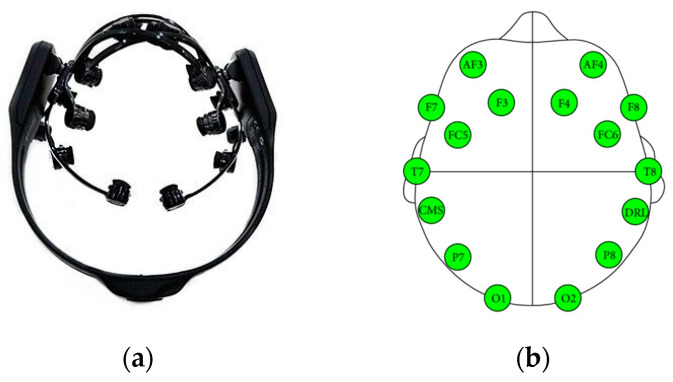
Figure 1
Figure 1
Emotiv EPOC wireless headset (a). Location of the electrodes on the head (b) [43].
Figure 2
Figure 2
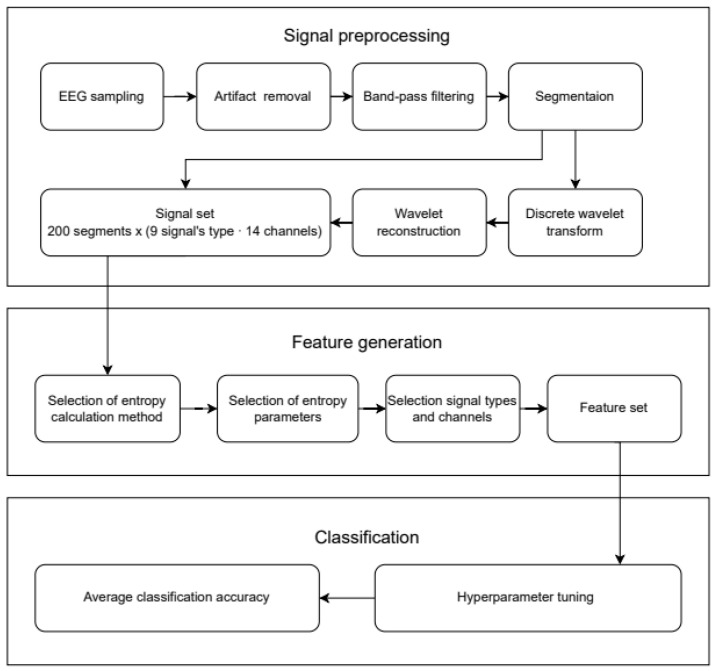
The workflow diagram of the proposed classification method.
Figure 3
Figure 3
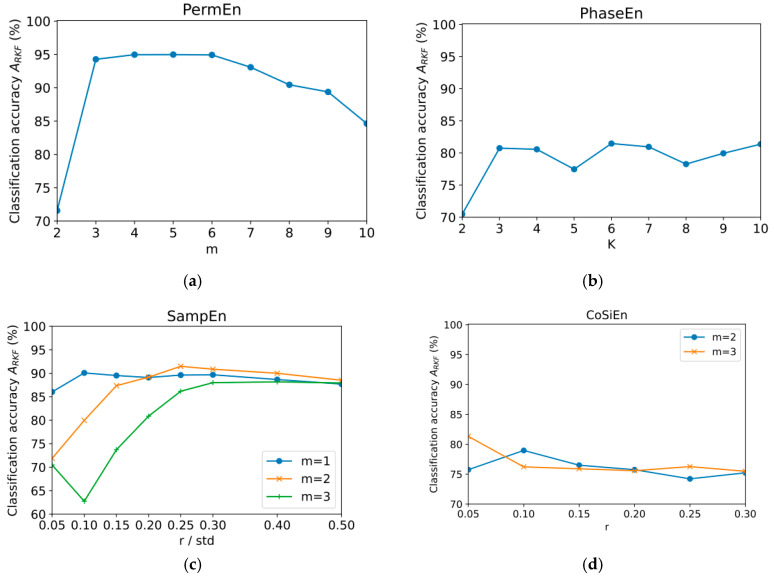
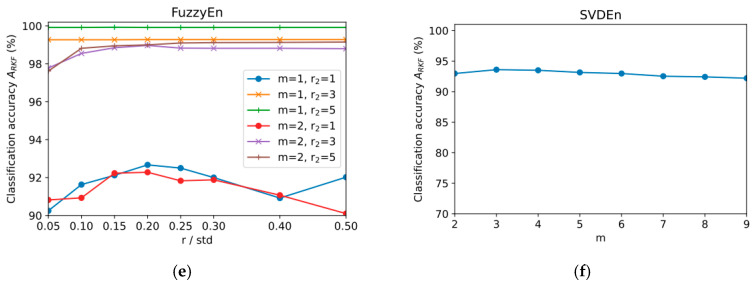
Dependence of classification accuracy ARKF on entropy parameters using all 126 features for PermEn (a), PhaseEn (b), SampEn (c), CoSiEn (d), FuzzyEn (e), and SVDEn (f).
Figure 3
Figure 3
Dependence of classification accuracy ARKF on entropy parameters using all 126 features for PermEn (a), PhaseEn (b), SampEn (c), CoSiEn (d), FuzzyEn (e), and SVDEn (f).
Figure 4
Figure 4
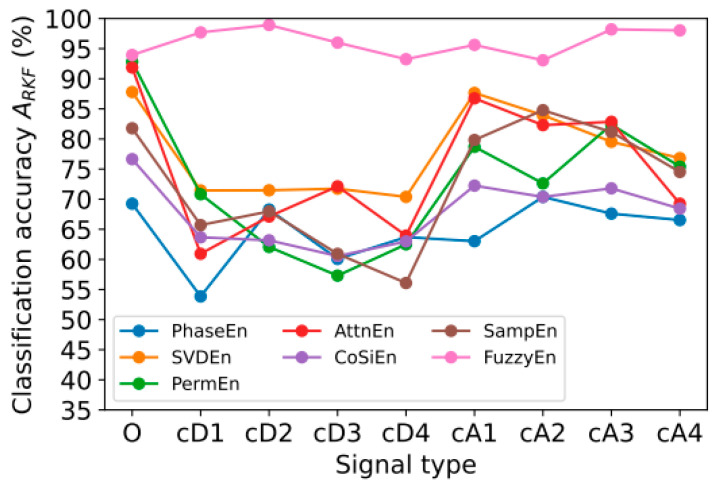
Dependence of classification accuracy ARKF on signal type for different entropy calculation methods: PhaseEn (K = 6), SVDEn (m = 3), PermEn (m = 5), AttnEn, CoSiEn (m = 3, r = 0.05), SampEn (m = 2, r = 0.25 × std), and FuzzyEn (m = 1, r = 0.15 × std, r2 = 5).
Figure 5
Figure 5
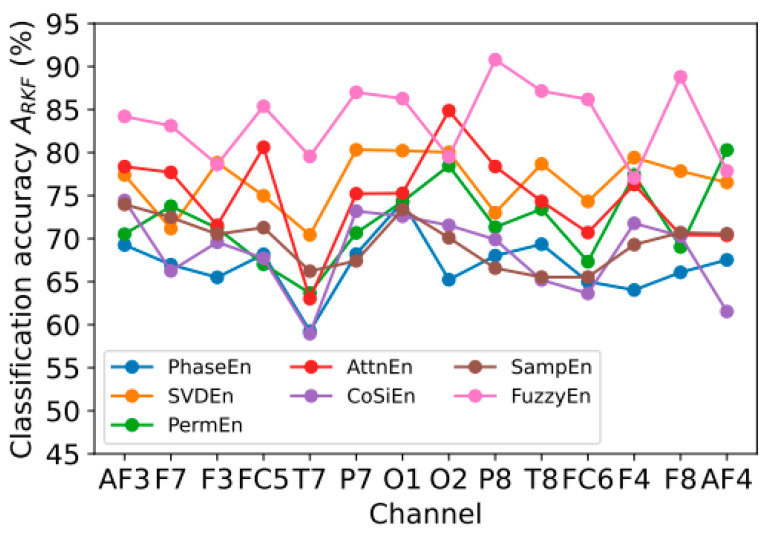
Dependence of classification accuracy ARKF on the channel number for different entropy calculation methods: PhaseEn (K = 6), SVDEn (m = 3), PermEn (m = 5), AttnEn, CoSiEn (m = 3, r = 0.05), SampEn (m = 2, r = 0.25 × std), and FuzzyEn (m = 1, r = 0.15 × std, r2 = 5).
Figure 6
Figure 6
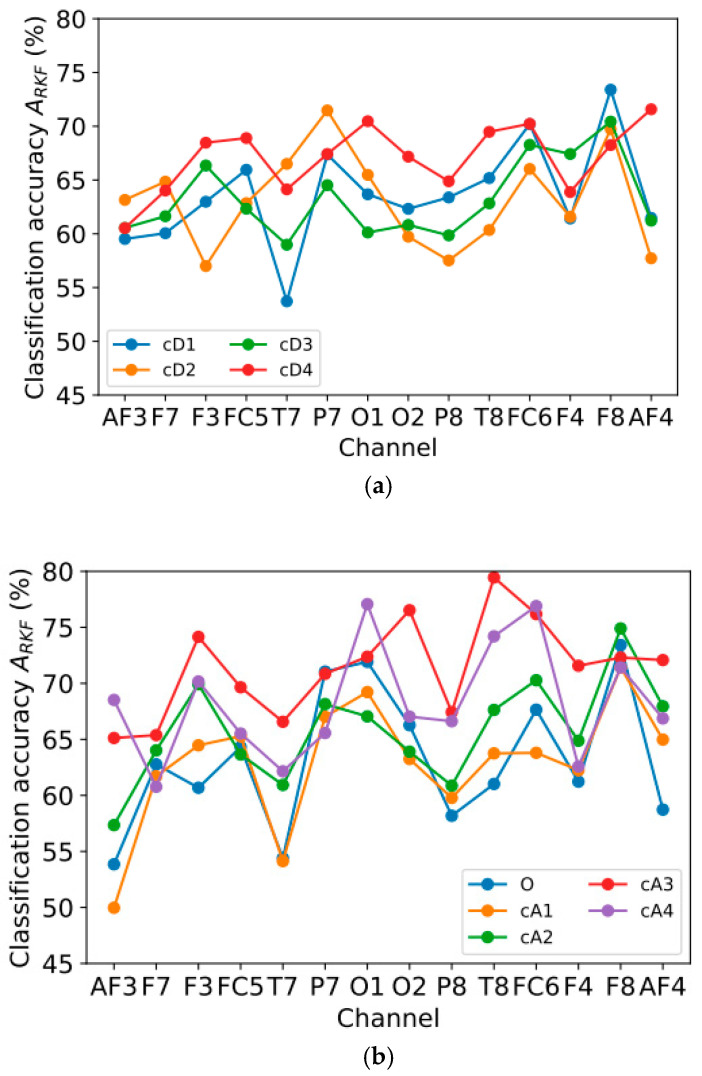
Dependence of classification accuracy ARKF on channel number for FuzzyEn method (m = 1, r = 0.15 × std, r2 = 5), grouped by signal types: (a) cD1, cD2, cD3, cD4; (b) O, cA1, cA2, cA3, cA4.
Figure 7
Figure 7
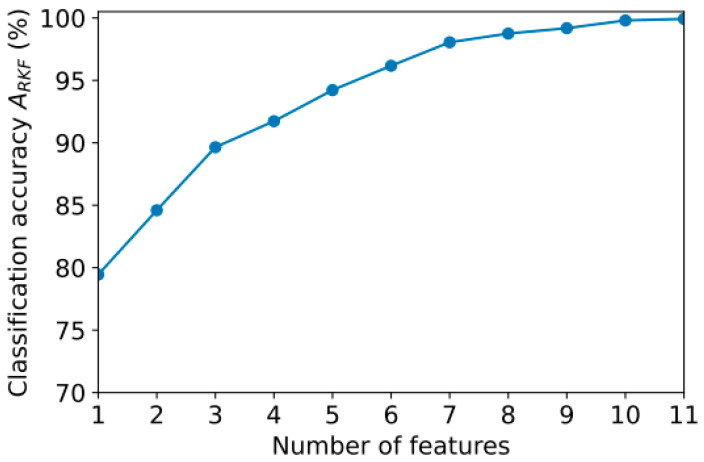
Dependence of classification accuracy ARKF on the number of features.
Figure 8
Figure 8
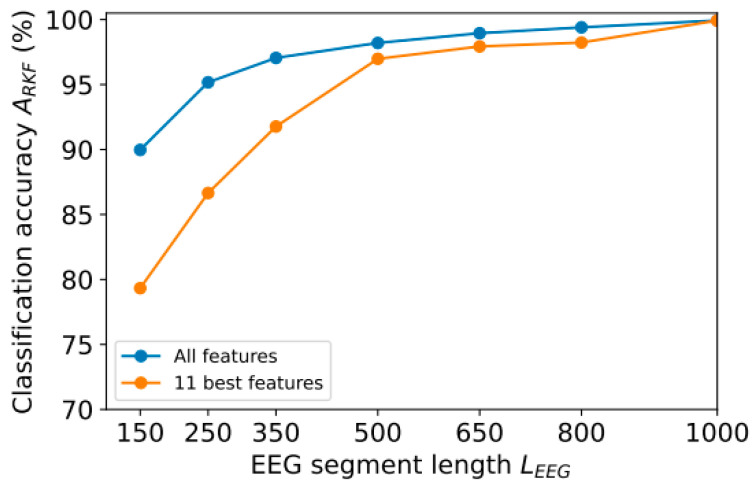
Dependence of classification accuracy ARKF on segment length LEEG.
Figure 9
Figure 9
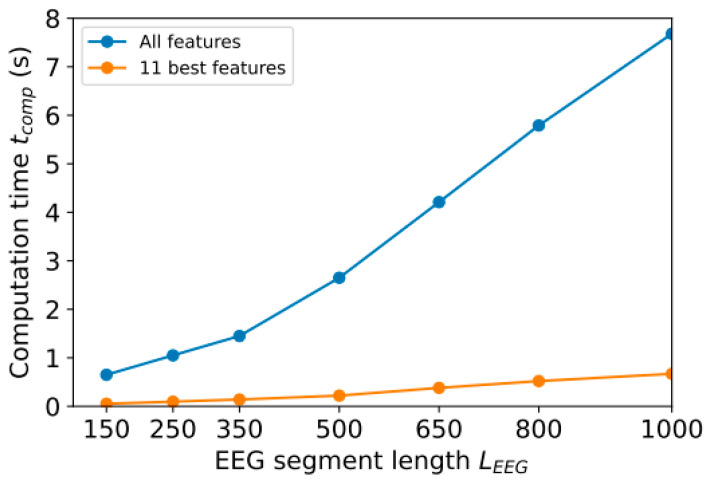
Dependence of computation time tcomp on segment length LEEG.
Figure 10
Figure 10
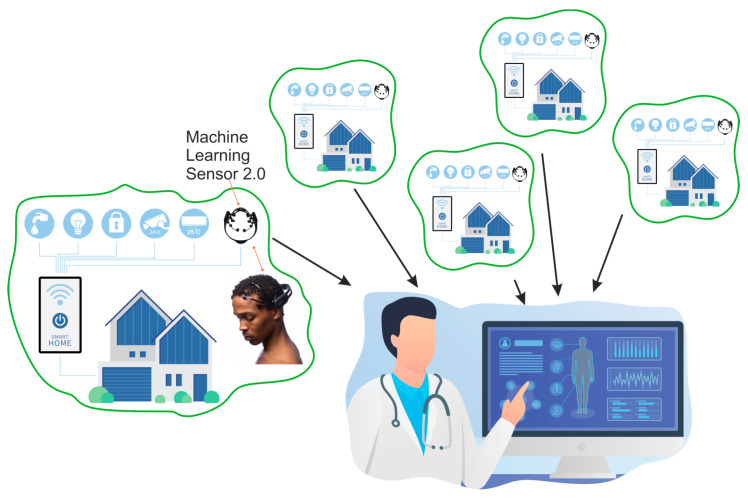
The concept of a smart IoT environment that can continuously monitor Parkinson’s disease patients.
Figure 11
Figure 11
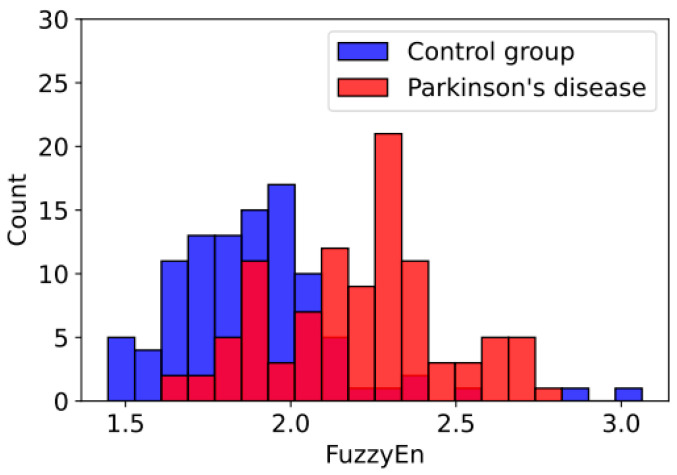
Histogram of distribution of FuzzyEn values for signal cA3 of channel T8.

References

    1. World Health Organization Aging and Health. [(accessed on 1 June 2023)]. Available online: https://www.who.int/news-room/fact-sheets/detail/ageing-and-health.
    1. Mayne K., White J.A., McMurran C.E., Rivera F.J., de la Fuente A.G. Aging and Neurodegenerative Disease: Is the Adaptive Immune System a Friend or Foe? Front. Aging Neurosci. 2020;12:572090. doi: 10.3389/fnagi.2020.572090. - DOI - PMC - PubMed
    1. Hou Y., Dan X., Babbar M., Wei Y., Hasselbalch S.G., Croteau D.L., Bohr V.A. Ageing as a risk factor for neurodegenerative disease. Nat. Rev. Neurol. 2019;15:565–581. doi: 10.1038/s41582-019-0244-7. - DOI - PubMed
    1. Erkkinen M.G., Kim M.-O., Geschwind M.D. Clinical Neurology and Epidemiology of the Major Neurodegenerative Diseases. Cold Spring Harb. Perspect. Biol. 2018;10:a033118. doi: 10.1101/cshperspect.a033118. - DOI - PMC - PubMed
    1. Gomez C., Chessa S., Fleury A., Roussos G., Preuveneers D. Internet of Things for enabling smart environments: A technology-centric perspective. J. Ambient Intell. Smart Environ. 2019;11:23–43. doi: 10.3233/AIS-180509. - DOI