


Individual-level risk factors for suicide mortality in the general population: an umbrella review
- PMID: 37898519
- PMCID: PMC10932753
- DOI: 10.1016/S2468-2667(23)00207-4
Individual-level risk factors for suicide mortality in the general population: an umbrella review
Abstract
Background: Deaths by suicide remain a major public health challenge worldwide. Identifying and targeting risk factors for suicide mortality is a potential approach to prevention. We aimed to summarise current knowledge on the range and magnitude of individual-level risk factors for suicide mortality in the general population and evaluate the quality of the evidence.
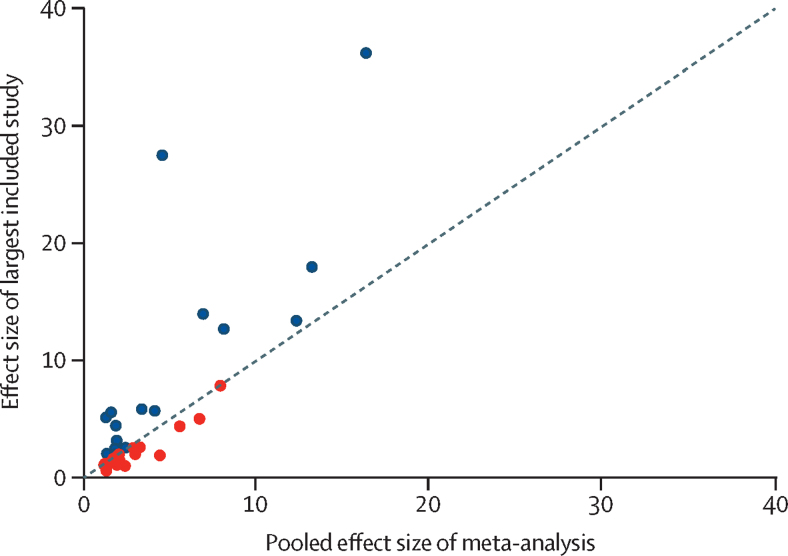
Methods: In this umbrella review, five bibliographic databases were systematically searched for articles published from database inception to Aug 31, 2022. We included meta-analyses of observational studies on individual-level risk factors for suicide mortality in the general population. Biological, genetic, perinatal, and ecological risk factors were beyond the scope of this study. Effect sizes were synthesised and compared across domains. To test robustness and consistency of the findings, evidence for small-study effects and excess significance bias (ie, the ratio between the overall meta-analysis effect size and that of its largest included study) was examined, and prediction intervals were calculated. Risk of bias was assessed by the Risk of Bias in Systematic Reviews instrument. The protocol was pre-registered with PROSPERO (CRD42021230119).
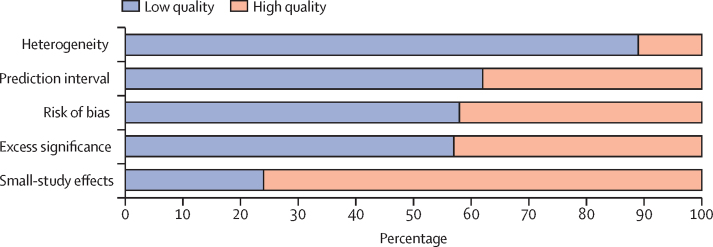
Findings: We identified 33 meta-analyses on 38 risk factors for suicide mortality in the general population. 422 (93%) of the 454 primary studies included in the meta-analyses were from high-income countries. A previous suicide attempt and suicidal ideation emerged as strong risk factors (with effect sizes ranging from 6 to 16). Psychiatric disorders were associated with a greatly elevated risk of suicide mortality, with risk ratios in the range of 4-13. Suicide risk for physical illnesses (such as cancer and epilepsy) and sociodemographic factors (including unemployment and low education) were typically increased two-fold. Contact with the criminal justice system, state care in childhood, access to firearms, and parental death by suicide also increased the risk of suicide mortality. Among risk factors for which sex-stratified analyses were available, associations were generally similar for males and females. However, the quality of the evidence was limited by excess significance and high heterogeneity, and prediction intervals suggested poor replicability for almost two-thirds of identified risk factors.
Interpretation: A wide range of risk factors were identified across various domains, which underscores suicide mortality as a multifactorial phenomenon. Prevention strategies that span individual and population approaches should account for the identified factors and their relative strengths. Despite the large number of risk factors investigated, few associations were supported by robust evidence. Evidence of causal inference will need to be tested in high-quality study designs.
Funding: Wellcome Trust.
Copyright © 2023 The Author(s). Published by Elsevier Ltd. This is an Open Access article under the CC BY 4.0 license. Published by Elsevier Ltd.. All rights reserved.
Conflict of interest statement
Declaration of interests We declare no competing interests.
Figures

References
-
- Turecki G, Brent DA, Gunnell D, et al. Suicide and suicide risk. Nat Rev Dis Primers. 2019;5:74. - PubMed
-
- WHO . World Health Organization; Geneva: 2012. Public health action for the prevention of suicide: a framework.
Publication types
MeSH terms
Grants and funding
LinkOut - more resources
Full Text Sources
Medical
