


Predicting survival of advanced laryngeal squamous cell carcinoma: comparison of machine learning models and Cox regression models
- PMID: 37898687
- PMCID: PMC10613248
- DOI: 10.1038/s41598-023-45831-8
Predicting survival of advanced laryngeal squamous cell carcinoma: comparison of machine learning models and Cox regression models
Abstract
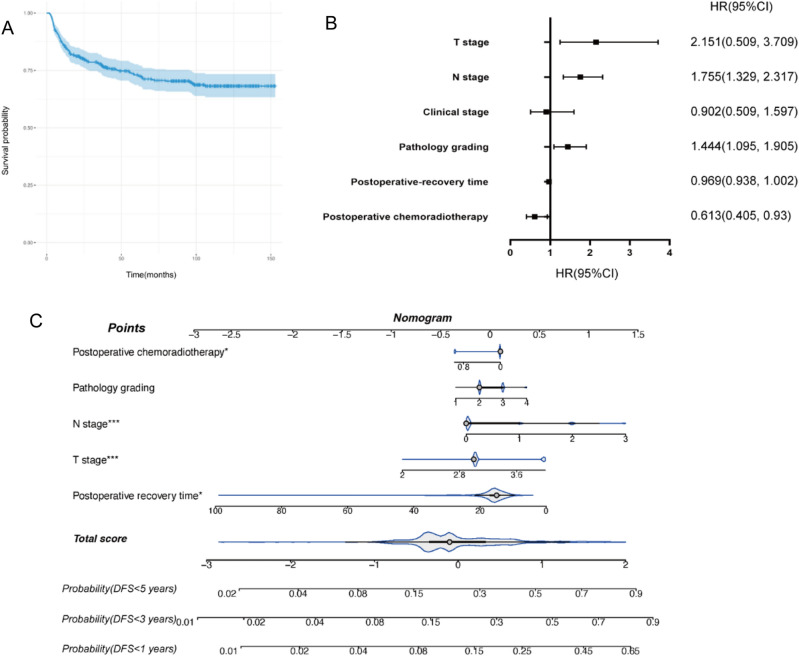
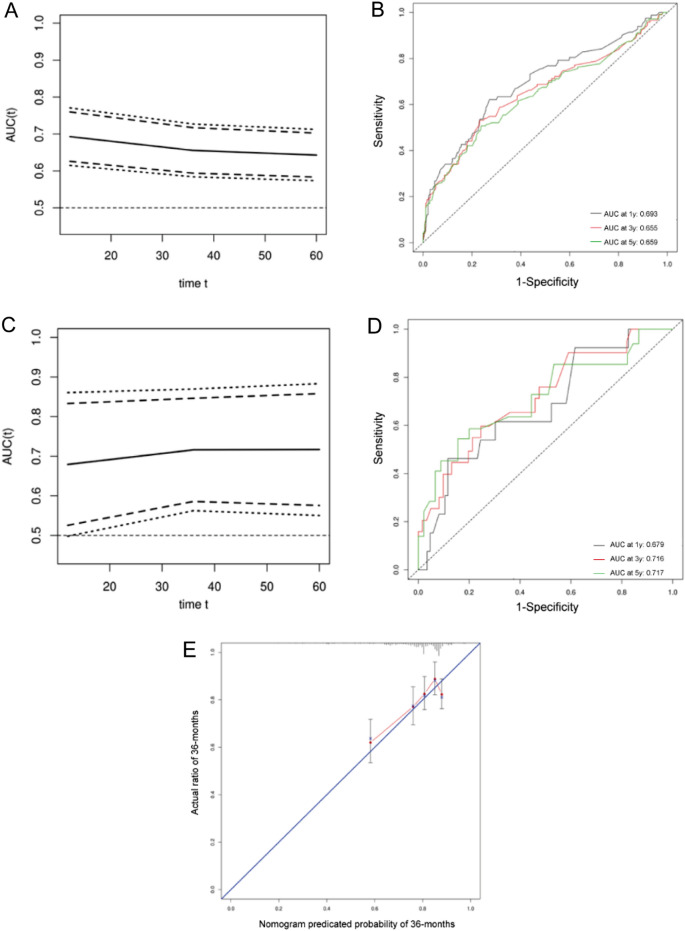
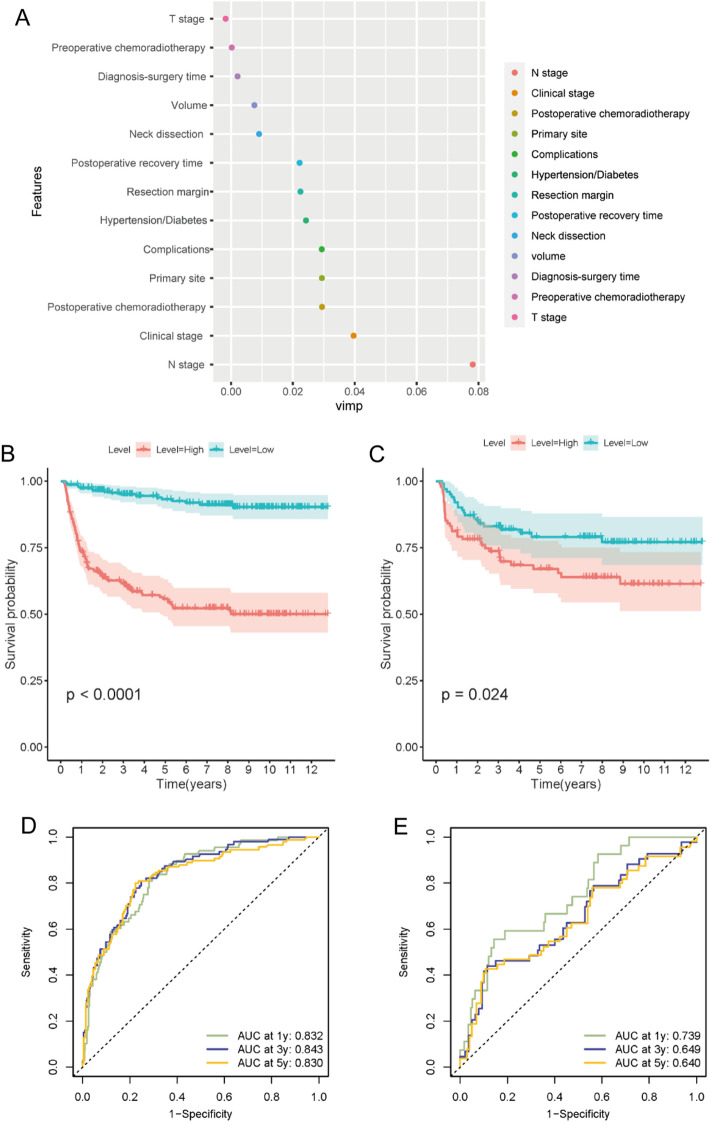
Laryngeal squamous cell carcinoma (LSCC) is a common tumor type. High recurrence rates remain an important factor affecting the survival and quality of life of advanced LSCC patients. We aimed to build a new nomogram and a random survival forest model using machine learning to predict the risk of LSCC progress. The study included 671 patients with AJCC stages III-IV LSCC. To develop a prognostic model, Cox regression analyses were used to assess the relationship between clinic-pathologic factors and disease-free survival (DFS). RSF analysis was also used to predict the DFS of LSCC patients. The ROC curve revealed that the Cox model exhibited good sensitivity and specificity in predicting DFS in the training and validation cohorts (1 year, validation AUC = 0.679, training AUC = 0.693; 3 years, validation AUC = 0.716, training AUC = 0.655; 5 years, validation AUC = 0.717, training AUC = 0.659). Random survival forest analysis showed that N stage, clinical stage, and postoperative chemoradiotherapy were prognostically significant variables associated with survival. The random forest model exhibited better prediction ability than the Cox regression model in the training cohort; however, the two models showed similar prediction ability in the validation cohort.
© 2023. The Author(s).
Conflict of interest statement
The authors declare no competing interests.
Figures
References
Publication types
MeSH terms
LinkOut - more resources
Full Text Sources
Medical
