


Using a Novel Connected Device for the Collection of Puffing Topography Data for the Vuse Solo Electronic Nicotine Delivery System in a Real-World Setting: Prospective Ambulatory Clinical Study
- PMID: 37902830
- PMCID: PMC10644193
- DOI: 10.2196/49876
Using a Novel Connected Device for the Collection of Puffing Topography Data for the Vuse Solo Electronic Nicotine Delivery System in a Real-World Setting: Prospective Ambulatory Clinical Study
Abstract
Background: Over the last decade, the use of electronic nicotine delivery systems (ENDSs) has risen, whereas studies that describe how consumers use these products have been limited. Most studies related to ENDS use have involved study designs focused on use in a central location environment or attempted to measure use outcomes through subjective self-reported end points. The development of accurate and reliable tools to collect data in a naturalistic real-world environment is necessary to capture the complexities of ENDS use. Using connected devices in a real-world setting provides a convenient and objective approach to collecting behavioral outcomes with ENDS.
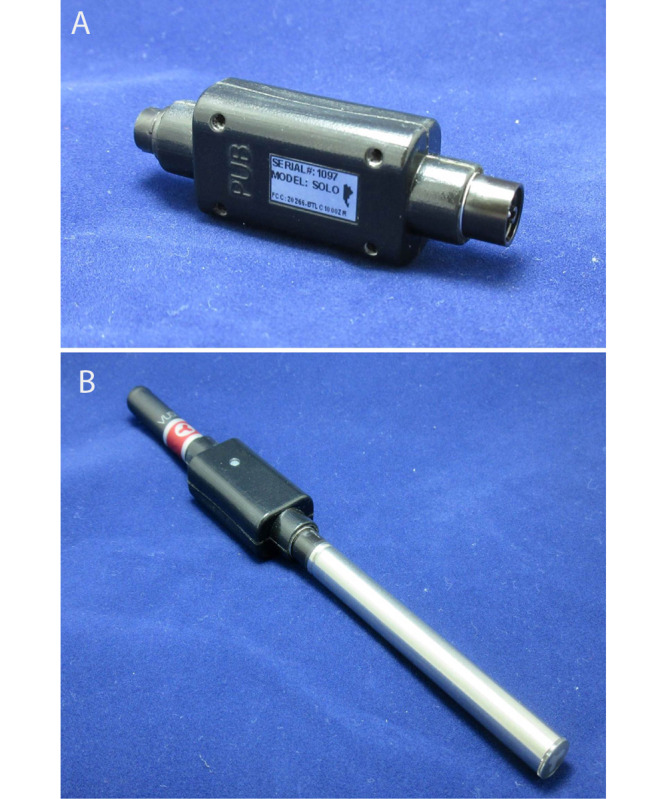
Objective: The Product Use and Behavior instrument was developed and used to capture the use of the Vuse Solo ENDS in an ambulatory setting to best replicate real-world use behavior. This study aims to determine overall mean values for topography outcomes while also providing a definition for an ENDS use session.
Methods: A prospective ambulatory clinical study was performed with the Product Use and Behavior instrument. Participants (n=75) were aged between 21 and 60 years, considered in good health, and were required to be established regular users of ENDSs. To better understand use behavior within the population, the sample was sorted into percentiles with bins based on daily puff counts. To frame these data in the relevant context, they were binned into low-, moderate-, and high-use categories (10th to 40th, 40th to 70th, and 70th to 100th percentiles, respectively), with the low-use group representing the nonintense category, the high-use group representing the intense category, and the moderate-use group being reflective of the average consumer.
Results: Participants with higher daily use took substantially more puffs per use session (6.71 vs 4.40) and puffed more frequently (interpuff interval: 32.78 s vs 61.66 s) than participants in the low-use group. Puff duration remained consistent across the low-, moderate‑, and high-use groups (2.10 s, 2.18 s, and 2.19 s, respectively). The moderate-use group had significantly shorter session lengths (P<.001) than the high- and low-use groups, which did not differ significantly from each other (P=.16).
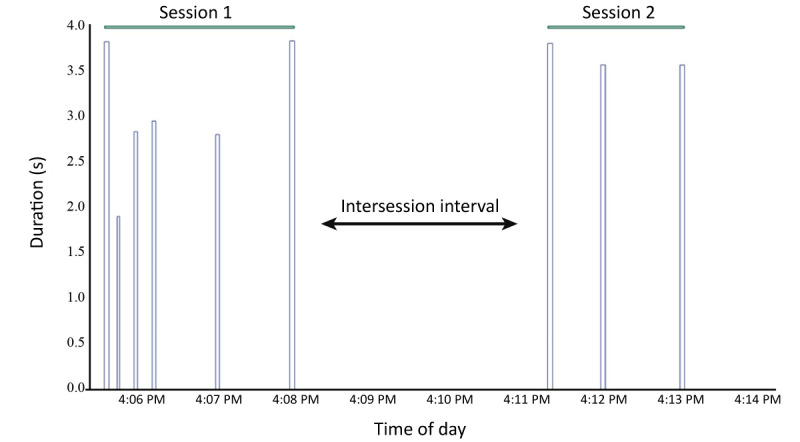
Conclusions: Using connected devices allows for a convenient and robust approach to the collection of behavioral outcomes related to product use in an ambulatory setting. By using the variables captured with these tools, it becomes possible to move away from predefined periods of use to better understand topography outcomes and define use sessions. The data presented here offer a possible method to define these sessions. These data also begin to frame international standards used for the analytical assessments of ENDSs in the correct context and begin to shed light on the differences between standardized testing regimens and actual use behavior.
Trial registration: Clinicaltrials.gov NCT04226404; https://clinicaltrials.gov/study/NCT04226404.
Keywords: ENDS; ambulatory puffing; e-cigarette; electronic cigarette; electronic nicotine delivery system; mobile phone; sessions; topography; use behavior.
©Robert Underly, Gary M Dull, Evan Nudi, Timothy Pionk, Kristen Prevette, Jeffrey Smith. Originally published in JMIR Formative Research (https://formative.jmir.org), 30.10.2023.
Conflict of interest statement
Conflicts of Interest: All authors are current or former employees of RAI Services Company, a wholly owned subsidiary of Reynolds American Inc, which is a wholly owned subsidiary of British American Tobacco plc.
Figures
References
-
- Cahours X, Prasad K. A review of electronic cigarette use behaviour studies. Contrib Tob Nicotine Res. 2018 Sep 19;28(2):81–92. doi: 10.2478/cttr-2018-0009. - DOI
-
- Eversole A, Budd S, Karaoghlanian N, Lipato T, Eissenberg T, Breland AB. Interactive effects of protonated nicotine concentration and device power on ENDS nicotine delivery, puff topography, and subjective effects. Exp Clin Psychopharmacol. 2023 Apr;31(2):443–54. doi: 10.1037/pha0000576.2022-70963-001 - DOI - PMC - PubMed
-
- Goldenson NI, Fearon IM, Buchhalter AR, Henningfield JE. An open-label, randomized, controlled, crossover study to assess nicotine pharmacokinetics and subjective effects of the JUUL system with three nicotine concentrations relative to combustible cigarettes in adult smokers. Nicotine Tob Res. 2021 May 24;23(6):947–55. doi: 10.1093/ntr/ntab001. https://europepmc.org/abstract/MED/33486526 6104644 - DOI - PMC - PubMed
Associated data
LinkOut - more resources
Full Text Sources
Medical
