Observational Study
. 2023 Oct 30;13(1):18574.
doi: 10.1038/s41598-023-45939-x.

Circulating DNA and frequency of colorectal cancer brain metastases in a presumed high-risk group

Affiliations
Observational Study

Circulating DNA and frequency of colorectal cancer brain metastases in a presumed high-risk group

Louise Bach Callesen et al. Sci Rep. .

Abstract

This explorative prospective observational pilot study investigated if suggested risk factors, rectal cancer and lung metastases, could add to a relevant detection rate of asymptomatic brain metastases (BM) from colorectal cancer (CRC). Secondary, prognostic biological aspects were investigated by translational analysis of plasma samples. The study enrolled patients with rectal cancer and lung metastases. At inclusion, patients underwent a standard MRI scan of the brain. Cell-free DNA (cfDNA) level was measured by a direct fluorescence assay (DFA), and circulating tumor DNA (ctDNA) by ddPCR. BM was detected in one of twenty-nine included patients. Patients had higher cfDNA levels than healthy subjects (p < 0.01). Patients with the primary tumor in situ had higher cfDNA levels than those with resected primary tumor (p < 0.01). Patients with liver involvement had higher cfDNA levels (p = 0.12) and circulating tumor DNA levels (p = 0.01) than those without liver involvement. In conclusion, the modest incidence of BM does not justify routine MRI of the brain in this selected population. cfDNA by DFA could be a valuable tool when planning treatment and follow-up for CRC patients. Future studies should focus on identifying further characteristics and biomarkers associated with a high risk of BM, enhancing the possibility for early intervention.


Conflict of interest statement

The authors declare no competing interests.

Figures
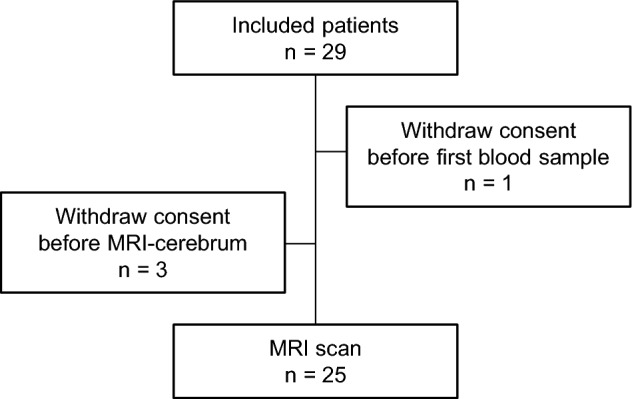
Figure 1
Figure 1
Study flow.
Figure 2
Figure 2
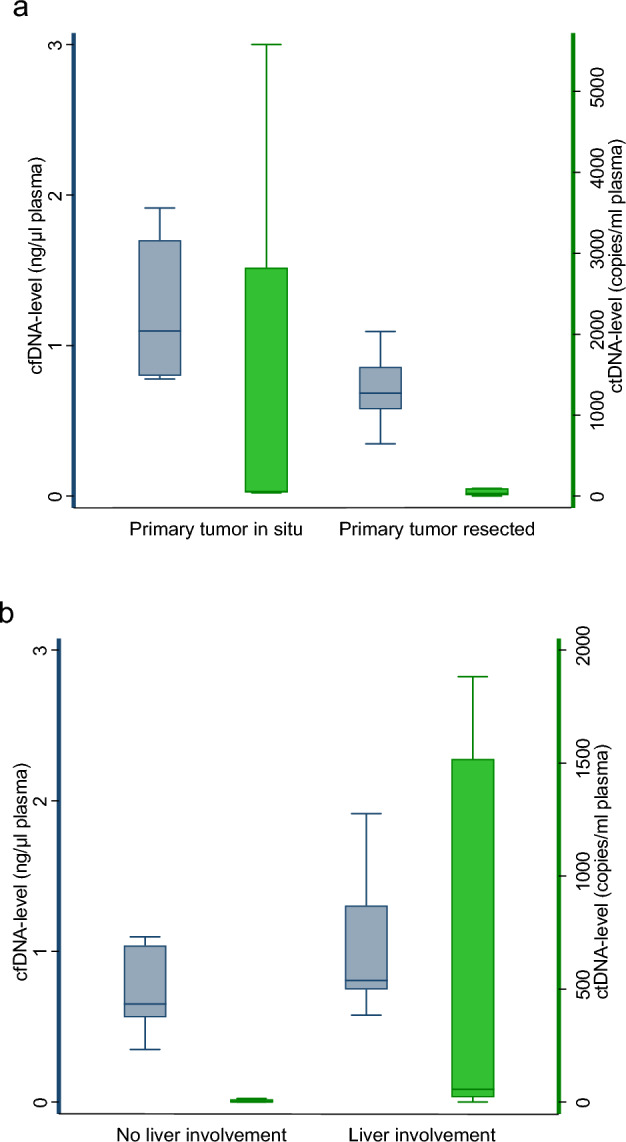
Cf- and ctDNA levels and patient characteristics. Association of baseline plasma cfDNA levels (n = 27) and ctDNA levels (n = 13) with primary tumor status (a) and liver involvement (b) in patients with lung metastases from rectum cancer. Box and whisker plot with 25th, 50th, and 75th percentiles, upper and lower adjacent values of cfDNA levels. Outliers not shown. cfDNA, cell‑free DNA; ctDNA, circulating tumor DNA.
Figure 3
Figure 3
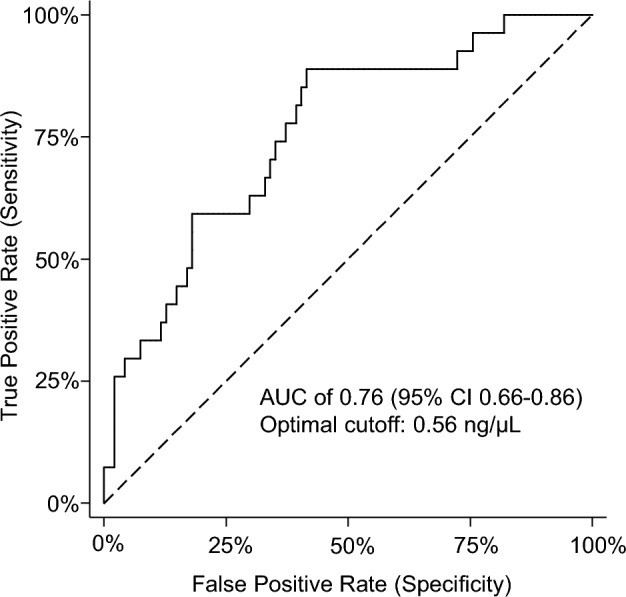
Receiver Operating Characteristic of baseline plasma cfDNA levels between the healthy cohort and the studied cohort. The AUC was 0.76 (95% CI 0.66–0.86). The optimal cut-off was estimated to 0.56 ng/μL with a sensitivity of 89% and a specificity of 59%.

References

    1. Christensen TD, Spindler K-LG, Palshof JA, Nielsen DL. Systematic review: Brain metastases from colorectal cancer: Incidence and patient characteristics. BMC Cancer. 2016;16:2290. doi: 10.1186/s12885-016-2290-5. - DOI - PMC - PubMed
    1. Müller S, et al. Brain metastases from colorectal cancer: A systematic review of the literature and meta-analysis to establish a guideline for daily treatment. Cancers. 2021;13:900. doi: 10.3390/cancers13040900. - DOI - PMC - PubMed
    1. Boysen AK, Ording AG, Astradsson A, Høyer M, Spindler K-LG. Metastasis directed treatment of brain metastases from colorectal cancer: A Danish population-based cohort study. Acta Oncol. 2020;59:1118–1122. doi: 10.1080/0284186X.2020.1769861. - DOI - PubMed
    1. Spindler K-LG, et al. Cell-free DNA in metastatic colorectal cancer: A systematic review and meta-analysis. Oncologist. 2017;22:1049–1055. doi: 10.1634/theoncologist.2016-0178. - DOI - PMC - PubMed
    1. Callesen LB, et al. Circulating tumour DNA and its clinical utility in predicting treatment response or survival in patients with metastatic colorectal cancer: A systematic review and meta-analysis. Br. J. Cancer. 2022;127:500–513. doi: 10.1038/s41416-022-01816-4. - DOI - PMC - PubMed

Publication types