. 2023 Oct 30;13(1):18568.
doi: 10.1038/s41598-023-45972-w.

Alzheimer's disease: new insight in assessing of amyloid plaques morphologies using multifractal geometry based on Naive Bayes optimized by random forest algorithm

Affiliations

Alzheimer's disease: new insight in assessing of amyloid plaques morphologies using multifractal geometry based on Naive Bayes optimized by random forest algorithm

Elshaimaa Amin et al. Sci Rep. .

Abstract

Alzheimer's disease (AD) is a physical illness, which damages a person's brain; it is the most common cause of dementia. AD can be characterized by the formation of amyloid-beta (Aβ) deposits. They exhibit diverse morphologies that range from diffuse to dense-core plaques. Most of the histological images cannot be described precisely by traditional geometry or methods. Therefore, this study aims to employ multifractal geometry in assessing and classifying amyloid plaque morphologies. The classification process is based on extracting the most descriptive features related to the amyloid-beta (Aβ) deposits using the Naive Bayes classifier. To eliminate the less important features, the Random Forest algorithm has been used. The proposed methodology has achieved an accuracy of 99%, sensitivity of 100%, and specificity of 98.5%. This study employed a new dataset that had not been widely used before.


Conflict of interest statement

The authors declare no competing interests.

Figures
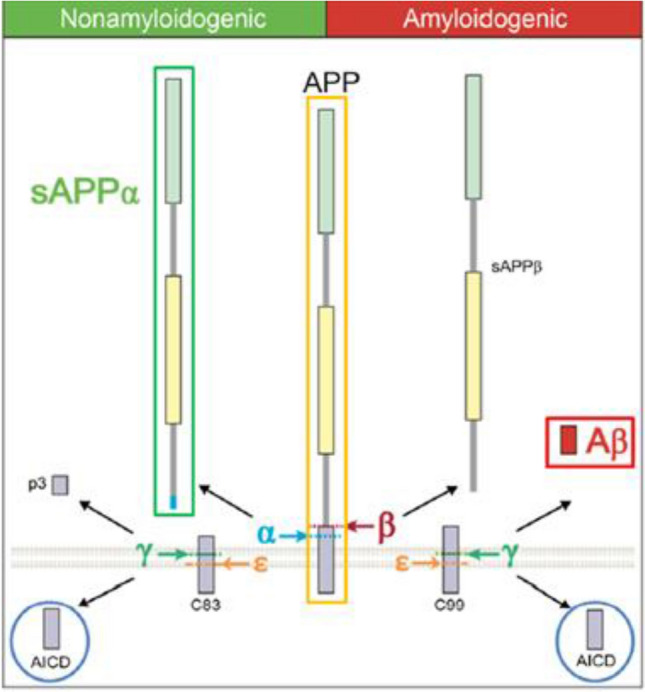
Figure 1
Figure 1
Cleavage of amyloid precursor protein (APP) by nonamyloidogenic and amyloidogenic pathways.
Figure 2
Figure 2
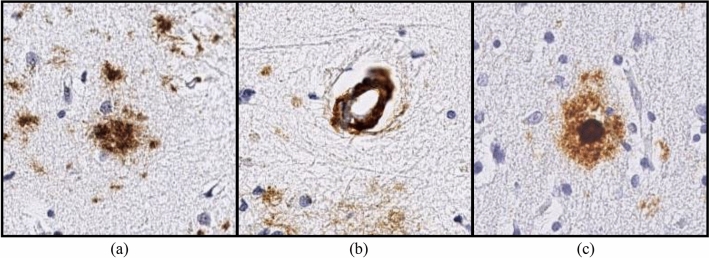
Amyloid-beta (Aβ) plaques morphologies: (a) diffuse, (b) cerebral amyloid angioplasty (CAA), and (c) dense-core.
Figure 3
Figure 3
Sample fore image processing step (a) the raw image (b) the image in gray scale (c) the binary image.
Figure 4
Figure 4
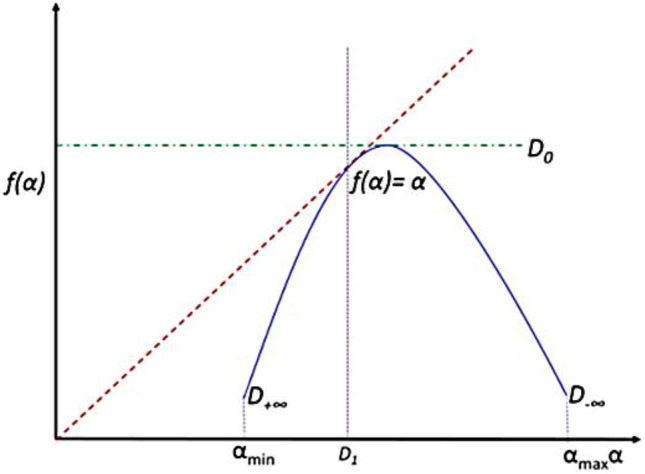
The singularity spectrum.
Figure 5
Figure 5
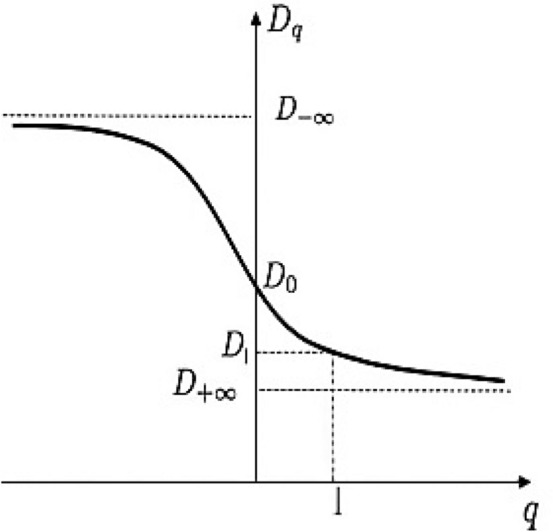
The multifractal generalized dimension.
Figure 6
Figure 6
The extracted features.
Figure 7
Figure 7
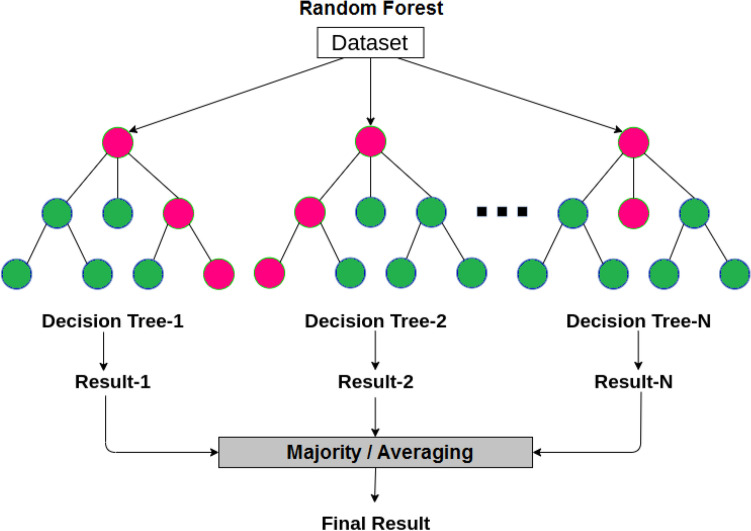
The random forest algorithm.
Figure 8
Figure 8
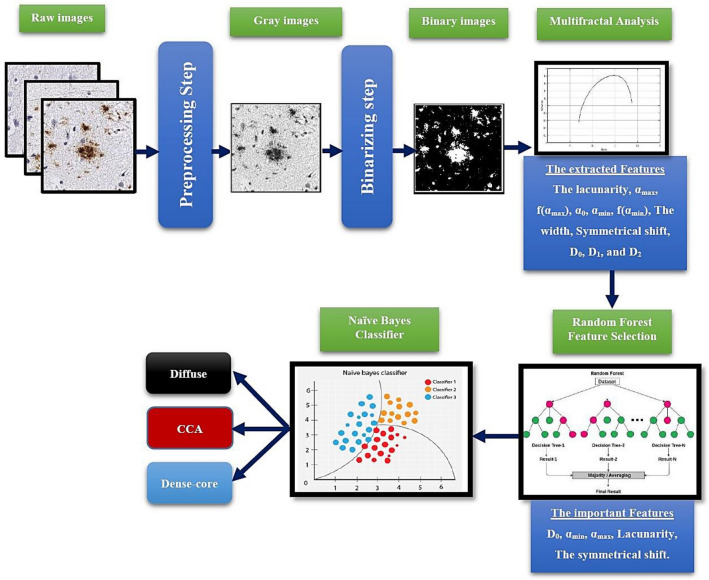
The workflow of the proposed methodology.
Figure 9
Figure 9
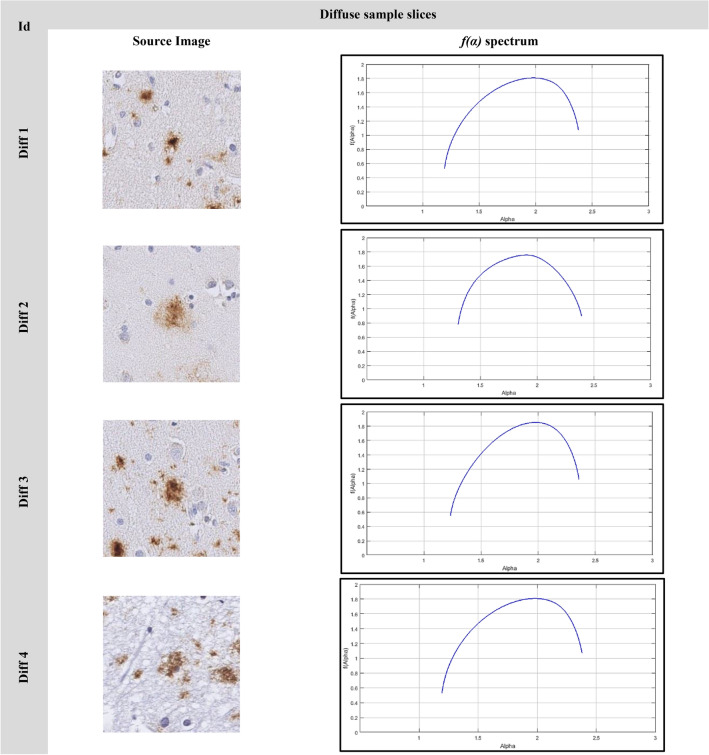
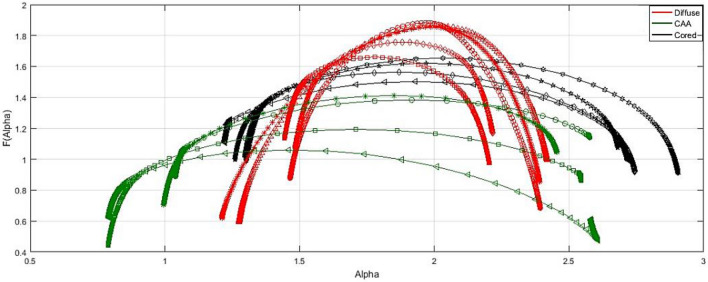
The Diffuse images singularity spectrum.
Figure 10
Figure 10
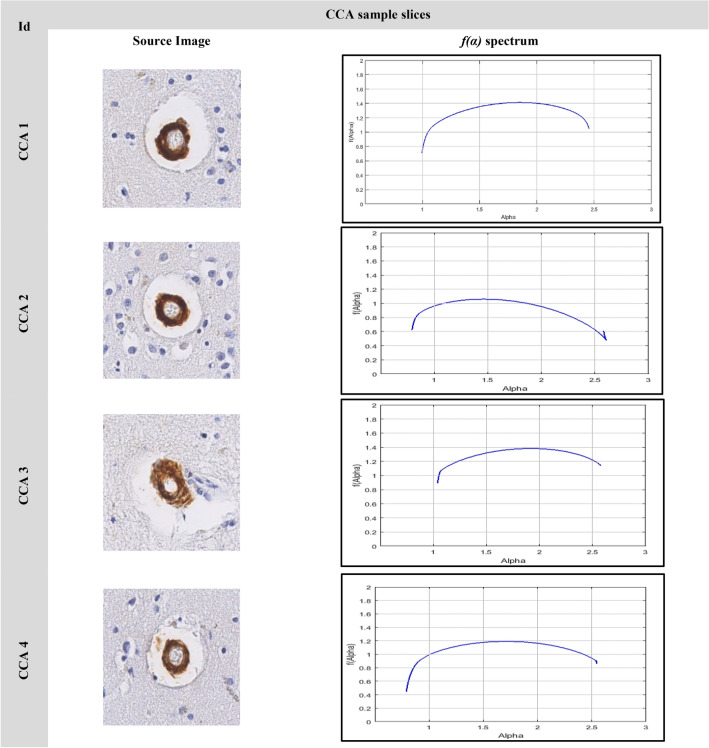
The CCA images singularity spectrum.
Figure 11
Figure 11
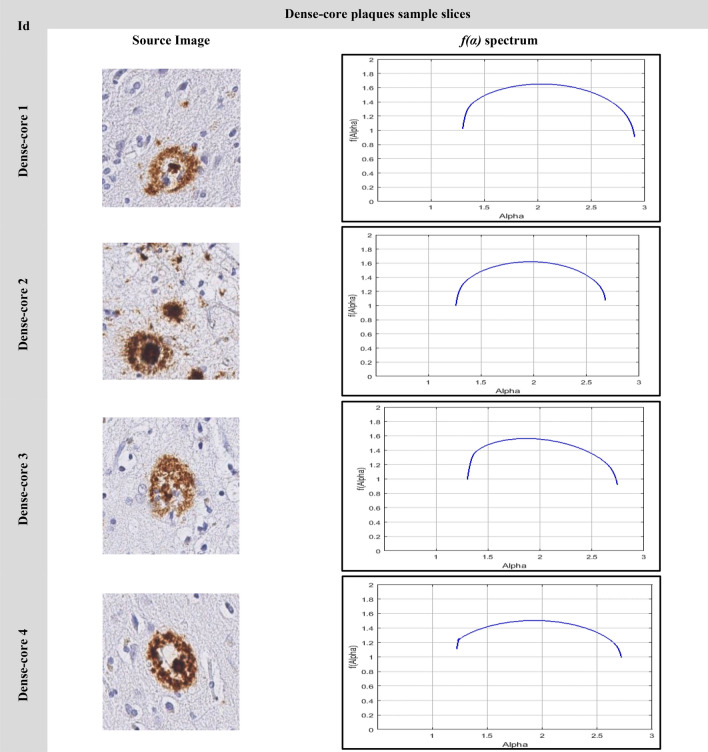
The Dense-core images singularity spectrum.
Figure 12
Figure 12
The singularity spectra for the AD stages.
Figure 13
Figure 13
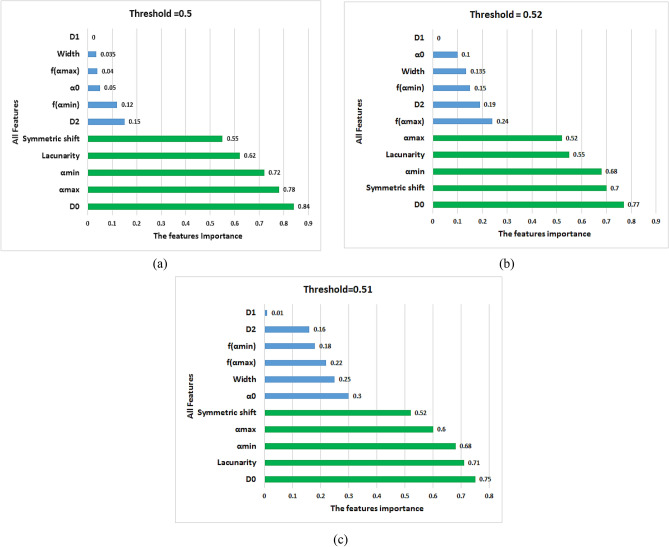
The features importance using RF algorithm 1) The lacunarity, 2) αmax, 3)f(αmax), 4) α0, 5) αmin, 6) f(αmin), 7) The width, 8) Symmetrical shift, 9)D0, 10) D1, and 11) D2.
Figure 14
Figure 14
Raking of the feature importance provided by RF.
Figure 15
Figure 15
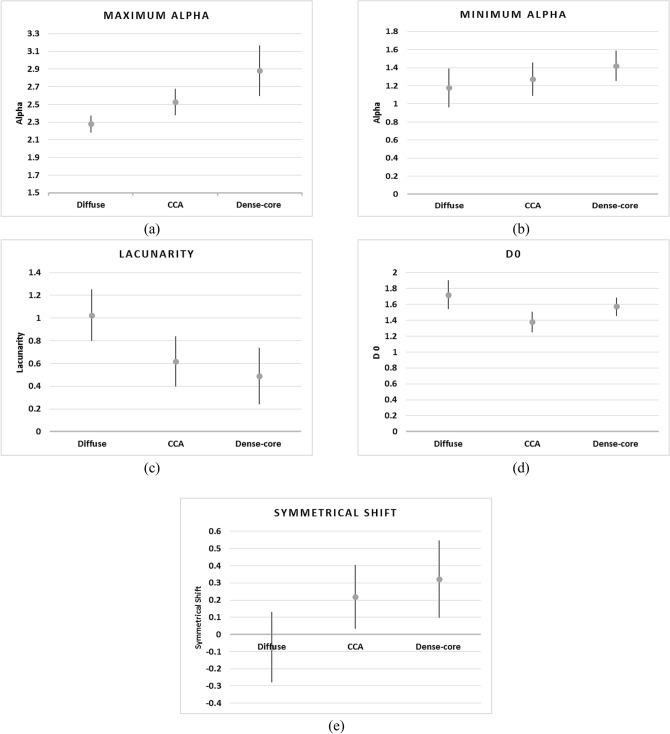
The statistical representation of the most important features of the AD stages.
Figure 16
Figure 16
The confusion matrices analyses for (a) Naïve Bayes (b) K-Nearest Neighbor.

References

    1. Pirici D, et al. Fractal analysis in neurodegenerative diseases. Fractal Geom. Brain. 2016;23:233–249. doi: 10.1007/978-1-4939-3995-4_15. - DOI
    1. Morris GP, Clark IA, Vissel B. Inconsistencies and controversies surrounding the amyloid hypothesis of Alzheimer's disease. Acta Neuropathol. Commun. 2014;2:1–21. - PMC - PubMed
    1. Kojro E, Falk F. The non-amyloidogenic pathway: structure and function of α-secretases. Alzheimer’s Dis. Cell Mol. Aspects. Amyloid. 2005;12:105–127. doi: 10.1007/0-387-23226-5_5. - DOI - PubMed
    1. Chen G-F, et al. Amyloid beta: structure, biology and structure-based therapeutic development. Acta Pharmacol. Sin. 2017;38(9):1205–1235. doi: 10.1038/aps.2017.28. - DOI - PMC - PubMed
    1. Hampel H, et al. The amyloid-β pathway in Alzheimer’s disease. Mol. Psychiat. 2021;26(10):5481–5503. doi: 10.1038/s41380-021-01249-0. - DOI - PMC - PubMed

Publication types

Substances