


Herpes Zoster virus infection and the risk of developing dementia: A systematic review and meta-analysis
- PMID: 37904465
- PMCID: PMC10615483
- DOI: 10.1097/MD.0000000000034503
Herpes Zoster virus infection and the risk of developing dementia: A systematic review and meta-analysis
Abstract
Background: Herpes Zoster, commonly known as shingles, is a viral infection that affects a significant portion of the adult population; however, its potential role in the onset or progression of neurodegenerative disorders like dementia remains unclear.
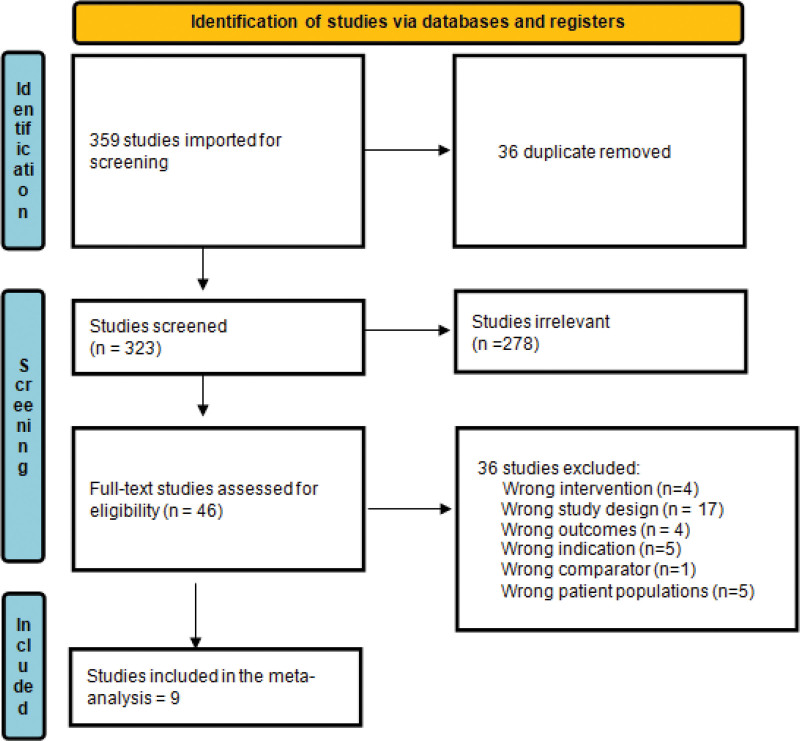
Methods: We searched the following databases: PubMed, Scopus, Cochrane library, and Web of Science. We included any randomized control trials and controlled observational studies as Cross-sectional, prospective, or retrospective cohort and case-control studies that investigated the prevalence of dementia in Herpes Zoster Virus (HZV)-infected patients and HZV-free control group or if the study investigated the prevalence of HZV in demented patients. Also, if the studies measured the levels of dementia biomarkers in patients with HZV compared with a healthy control group.
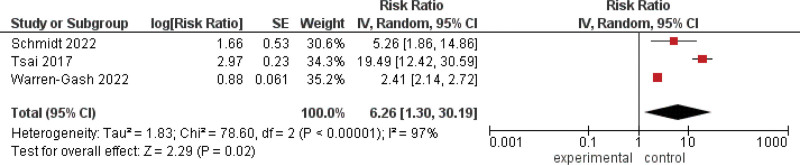
Results: After the complete screening, 9 studies were included in the meta-analysis. In the outcome of the incidence of HZV, the pooled analysis showed no statistically significant difference between the dementia group and the No dementia group (RR = 1.04% CI = 0.86-1.25, P = .70). In the outcome of incidences of dementia and Alzheimer's disease, the pooled analysis showed no statistically significant difference between the HZV group and the incidence of dementia (RR = 0.99, 95% CI = 0.92-1.08, P = .89), (RR = 3.74, 95% CI = 0.22-62.70, P = .36) respectively. In the outcome of incidences of Herpes Zoster ophthalmicus (HZO), the generic inverse variance showed a statistically significant association between patients who have HZO and increased incidence of dementia (RR = 6.26, 95% CI = 1.30-30.19, P = .02).
Conclusion: Our study showed no significant association between HZV and the incidence of dementia or Alzheimer's disease, but it shows a significant association between HZO and the incidence of dementia. More multicenter studies are needed to establish the actual association between the HZV and dementia.
Copyright © 2023 the Author(s). Published by Wolters Kluwer Health, Inc.
Conflict of interest statement
The authors have no funding and conflicts of interest to disclose.
Figures







References
-
- Sacks D, Baxter B, Campbell BCV, et al.; From the American Association of Neurological Surgeons (AANS), American Society of Neuroradiology (ASNR), Cardiovascular and Interventional Radiology Society of Europe (CIRSE), Canadian Interventional Radiology Association (CIRA), Congress of Neurological Surgeons (CNS), European Society of Minimally Invasive Neurological Therapy (ESMINT), European Society of Neuroradiology (ESNR), European Stroke Organization (ESO), Society for Cardiovascular Angiography and Interventions (SCAI), Society of Interventional Radiology (SIR), Society of NeuroInterventional Surgery (SNIS), and World Stroke Organization (WSO). Multisociety consensus quality improvement revised consensus statement for endovascular therapy of acute ischemic stroke. Int J Stroke. 2018;13:612–32. - PubMed
-
- Organization WH. Dementia: A Public Health Priority. World Health Organization. 2012.
-
- Prince MJ, Wimo A, Guerchet MM, et al. World Alzheimer Report 2015-The Global Impact of Dementia: an analysis of prevalence, incidence, cost and trends. 2015. (Doctoral dissertation, Alzheimer's Disease International)
Publication types
MeSH terms
LinkOut - more resources
Full Text Sources
Medical
