


Combined effect of serum carcinoembryonic antigen and hepatic steatosis on new-onset ischemic heart disease among middle-aged and older Korean adults: a cohort study
- PMID: 37904789
- PMCID: PMC10613517
- DOI: 10.3389/fnut.2023.1275450
Combined effect of serum carcinoembryonic antigen and hepatic steatosis on new-onset ischemic heart disease among middle-aged and older Korean adults: a cohort study
Abstract
Background: Carcinoembryonic antigen (CEA) is a commonly used tumor marker in cancer screening. However, it has also been associated with metabolic alterations. Hepatic steatosis, the accumulation of fat in liver cells, is associated with various cardiovascular risk factors. This study investigated the risk of ischemic heart disease (IHD) in individuals with elevated CEA levels, hepatic steatosis, and their co-occurrence.
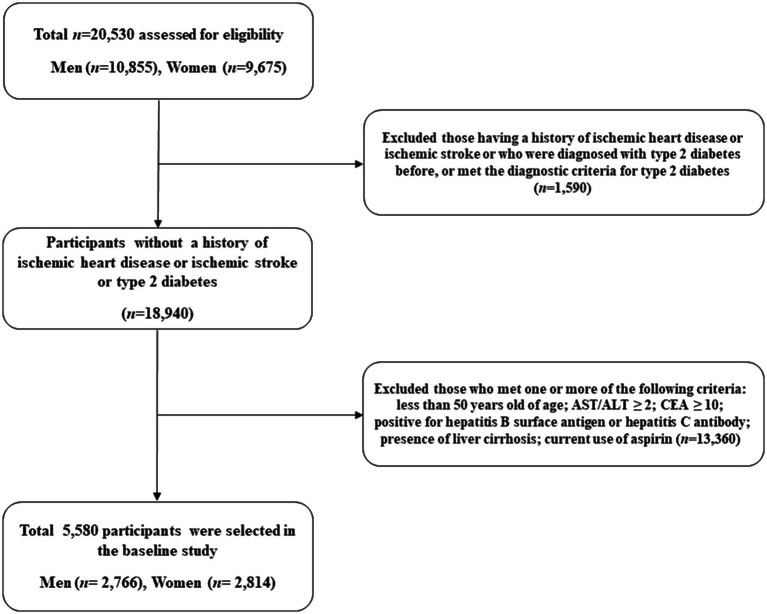
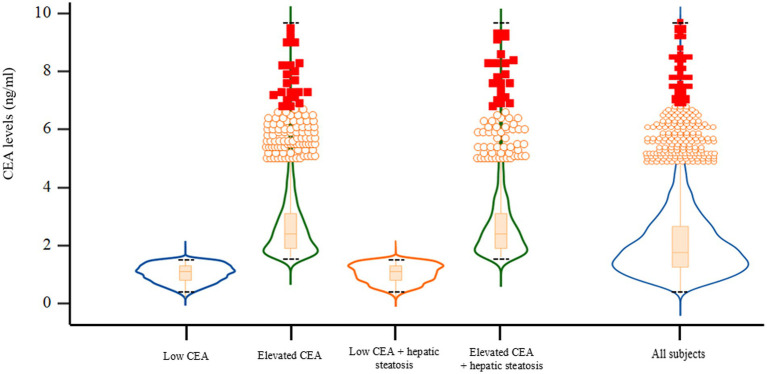
Methods: The study cohort comprised 5,580 Korean adults who underwent health examinations between November 2006 and June 2010. Data regarding baseline CEA levels, hepatic steatosis status, and development of IHD were collected. Hepatic steatosis was defined as more than two findings: deep attenuation, vascular blurring, and increased liver echogenicity on abdominal ultrasound. Participants were divided into four groups based on their CEA and hepatic steatosis status: no hepatic steatosis and low CEA (group 1), no hepatic steatosis and elevated CEA (group 2), low CEA and hepatic steatosis (group 3), and elevated CEA and hepatic steatosis (group 4).
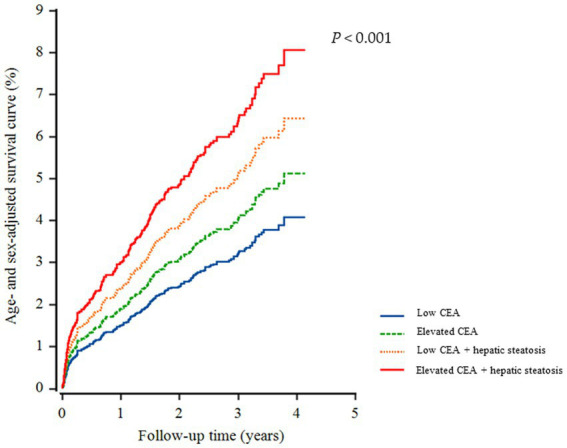
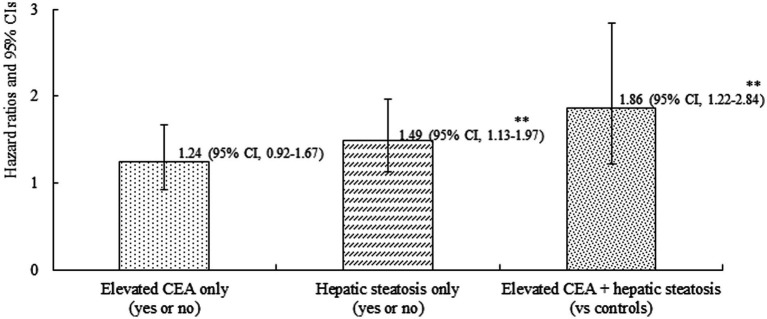
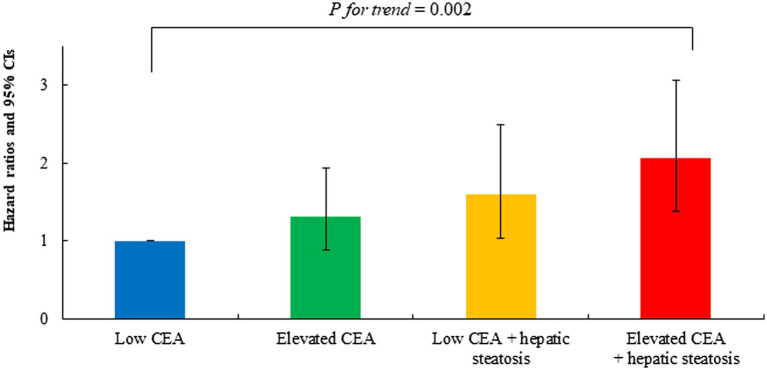
Results: A total of 226 (4.1%) participants developed IHD during the follow-up period. Participants with elevated CEA levels and hepatic steatosis (group 4) had the highest cumulative incidence of IHD in comparison to other groups (p < 0.001). The combined effect of elevated CEA levels and hepatic steatosis showed significantly greater area under the receiver operating characteristic curve than hepatic steatosis alone (p < 0.001). Furthermore, participants with elevated CEA and hepatic steatosis (group 4) had higher risk of developing IHD compared to those with low CEA and no hepatic steatosis (group 1) (hazard ratio: 1.63, 95% confidence interval: 1.04-2.55, p = 0.034).
Conclusion: Co-occurrence of elevated CEA levels and hepatic steatosis increases the risk of IHD. Comprehensive risk assessment is crucial to guide interventions and improve cardiovascular health in individuals with both the conditions.
Keywords: carcinoembryonic antigen; cohort study; hepatic steatosis; ischemic heart disease; middle-aged and older adults.
Copyright © 2023 Kwak, Lee, Park and Jung.
Conflict of interest statement
The authors declare that the research was conducted in the absence of any commercial or financial relationships that could be construed as a potential conflict of interest.
Figures
References
LinkOut - more resources
Full Text Sources
